The Scarcity-Abundance Paradox

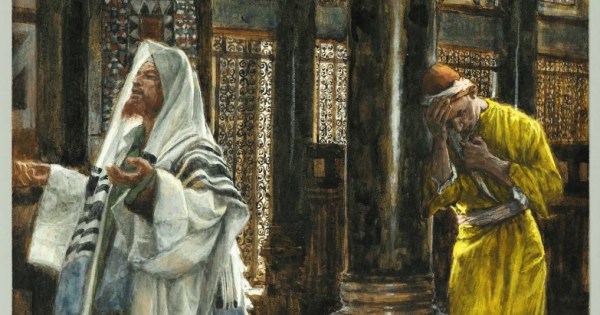
Image: The Pharisee and the Tax Collector, James Tissot, 1886-1894

Any attempt to speak about money in the church runs the risk of provoking a cynical or defensive response. We’ve all heard it before — “the church just wants my money.” But this reaction misses the point.

Money, in the life of faith, is only ever a metaphor for values. When we commit to financially supporting an organization — especially the Church — our hope is not only to contribute value but also to derive a sense of value. Both are essential to living meaningfully with purpose.

One of the great paradoxes at the heart of Christian life is that spiritual renewal is so much more than money, and yet financial generosity is a key expression of our deepening awareness of our need for God. But money and religion often make for a volatile mix.

Putting religion aside for a moment, our attitudes and feelings about money evoke in many of us a deep-seated anxiety — the scarcity–abundance paradox.

I can trace my own anxiety about money back to my parents arguing about it. As the eldest child, I witnessed the early days of their marriage when money was the powerful metaphor for their fears of scarcity as they struggled to build a stable life.

What about you? What are your earliest memories of family conversations around money? Was money, in your home, a metaphor for enoughness or for scarcity?

We internalize — without being conscious of doing so — the anxieties transmitted to us during infancy and childhood. In my case, an expectation of scarcity was implanted in me, even though enoughness — even abundance — has been a much stronger feature of my adult life.

This tension between expectation and experience is exactly where God begins to work.

The Old Testament reading from Joel speaks into this space. After years of drought, famine, and devastation, Joel delivers a word of hope:

The threshing floors shall be full of grain,
the vats shall overflow with wine and oil.

That would have been miracle enough — but Joel goes further:

Then afterward, I will pour out my spirit on all flesh;
your sons and your daughters shall prophesy,
your old men shall dream dreams,
and your young men shall see visions.

God’s promise is not only enough to survive, but enough to dream again.

We often associate “abundance” with endless surplus. That’s why I prefer the word enoughness. Abundance means sustained enoughness — a way of living rooted in trust rather than fear.

Trusting this promise is risky. It requires relinquishing the illusion of being in control — the illusion that we are the authors of our own security. For those of us shaped by scarcity fears, God’s promise of abundance is not easily believed.

So we must ask: Which is more real — our fear of scarcity, or the evidence of our own experience?

Scarcity says: there won’t be enough.
Enoughness says: there is always enough.

Fear blocks generosity. Trust makes generosity possible. When we look honestly at our lives, we discover how often fear has misled us. Most of us live every day with enough — and more than enough. The critical question becomes: Which story do we choose to inhabit?

America may well be the most prosperous society in human history — and yet, paradoxically, we experience the highest levels of scarcity anxiety fueled by the myth of self-sufficiency. In the land of plenty, we too easily condone poverty and inequality, justifying these conditions as the consequences of personal and moral inadequacy.

To abundance understood as enoughness, God calls us to add the practice of justice. Generosity is not just an act of kindness — it is a protest against the myth of scarcity and the injustice that flows from it.

In today’s Gospel, Jesus tells of two men who go up to the Temple to pray: a Pharisee and a tax collector.

The Pharisee believes himself the author of his own salvation. He stands tall, proud of his accomplishments, loudly proclaiming them before God.

We know we are supposed to side with the tax collector, and yet — if we are honest — many of us live more like the Pharisee, designing our lives so we will never need anything from anyone.

But the tax collector — standing apart, unable even to lift his eyes — knows his need of God. In that posture of honest dependence, he discovers a truth the Pharisee cannot: everything — even the good we do — flows from God’s grace, not our control.

The source of all our loves in life flows from God’s love for us. Only when we acknowledge this can we begin to understand our need for God.

Generosity is not a financial transaction — it is a spiritual practice, a way of saying:
I trust in God’s unstinting generosity.

This stewardship season invites us to remember that none of us is an island — our lives are bound together in God’s shared abundance. Through mutual generosity we accomplish far more than any one of us can do alone. Through giving, time, participation, and compassion, we remind each other that abundance is not personal achievement but the fruit of life in community.

Between now and November 24th, I invite each of us to cultivate practices of generosity — for our spiritual, emotional, and societal flourishing. Generosity is not simply about sustaining a budget — it is about extending ourselves to realize God’s promise of enoughness.

Every act of generosity participates in God’s dream for justice.

And so we return to Joel’s vision:

I will pour out my Spirit upon all flesh;
our sons and our daughters shall prophesy;
our old men shall dream dreams;
our young men shall see visions.

So this Stewardship season, let’s dream of unleashing our generosity to achieve yet-to-be-imagined possibilities.

And Then There Were Nine

Image courtesy of Redeeminggod.com

Today is the launch of our public stewardship renewal campaign for 2026. It will run until November 9th. Letters with educative documentation, along with an estimate of giving card, allowing for the vagaries of the US postal service, should land in your mailboxes by the end of this coming week or hopefully sooner. Now, no one wants to hear – even on the Stewardship launch Sunday, a sermon distorted into a harangue for more money. So you can rest easy, I’m not interested in doing that either.

I want you to picture the scene Luke depicts in today’s gospel.

Ten men stand at a distance. Ten voices cry out—not for justice, not even for understanding, but simply: Jesus, Master, have mercy on us. And Jesus—without touch, without spectacle—says, Go, show yourselves to the priests. They go. Ten are cleansed. But only one turns back.

And Luke pauses here to let us feel the implication of the story – one not lost on Jesus’ immediate 1st-century audience. Because the one who returns is a hated foreigner, a Samaritan who falls at Jesus’ feet, giving thanks. His gratitude becomes an act of recognition, an awakening of something within him, as he becomes overwhelmed by hope. For gratitude is never just backward-looking; it is the soil in which the future grows.

Five centuries before this moment, the prophet Jeremiah wrote to another group of people living outside the fold of inclusion—a people rendered strangers in a foreign land -Israel’s exiles in Babylon. They were displaced, disheartened, and desperate to go home to rebuild what had been lost. So Jeremiah’s letter would have shocked them. He didn’t say, Hold on, you’ll be back next year.  He said: Build houses and live in them. Plant gardens and eat their produce. Seek the welfare of the city where I have sent you. (Jer. 29:5–7)

In other words: Hope is not waiting for escape—it is beginning again where you are. Jeremiah’s hope was not naïve optimism. It was a fierce, grounded trust that God is still at work, even in exile. Like gratitude, hope starts by paying attention to what is already possible. For gratitude is never just backward-looking; it is the soil in which the future grows.

The healed Samaritan and Jeremiah’s exiles are kin in spirit. Both live outside the center of inclusion. Both find hope in despair. Both embody what we might call resilient gratitude—the capacity to thank God even before everything is fixed.

The Samaritan’s turning back is his equivalent to planting a garden in exile. He does not rush back into a normal life, the life he must have longed to return to during his years of being shunned. He turns toward the source of his gratitude. And in that turning, he is not only cured but discovers a new kind of wholeness.

Jesus’ final words to him—Your faith has made you well—echo Jeremiah’s promise: For surely I know the plans I have for you, says the Lord, plans for your welfare and not for harm, to give you a future with hope.

Stewardship is about the fostering of our sense of gratitude for what God has already given. From gratitude, hope emerges, trusting that the same God will bring future abundance to life.

Stewardship, then, is nothing less than the practice of hope in action. It requires attentive care. St Benedict loved to tell his monks that stewardship is the exercise of tender competence in ordinary things. Jeremiah said, Build houses… plant gardens… seek the welfare of the city. Stewardship does precisely that—it tends, builds, and plants for the future even when the present feels uncertain.

Every pledge of financial generosity, every act of service, every hour given in ministry is an act of trust that God’s future – already coming to fruition through us is worth investing in. It says, With our time and our treasure, we believe our story isn’t over.

In the Samaritan’s turning back, we glimpse the same truth: gratitude is never passive. It propels us forward into participation—into giving, healing, reconciling, and most importantly investing in the future in a community where our commitment to one another becomes more important than our prized self-sufficient individuality. The key to recognizing gratitude is to never resist for too long, an opportunity to express generosity towards another.

To give thanks in the midst of uncertainty is to refuse to be ruled by fear. To give generously, even when anxious about the future, is to declare that God’s promise of abundance is greater than our fear of scarcity.

When we live this way, we become what Jeremiah envisioned—a community that plants gardens in exile, a people who embody hope through gratitude expressed in generous living. People who make possible a future we cannot yet see.

As I often remind us, it’s only together that we can achieve so much more than any one of us alone. As we enter our own season of stewardship, the fostering in us of our tender competence and love for one another in community, we need to remind ourselves that it is to God we must continually give thanks for the enjoyment of our abundance amidst the experience of change, challenge, and uncertainty.

Like Jeremiah’s exiles, we are called not to wait for the perfect moment— but to build now, plant now, give now, hope now. You and I may not be here tomorrow, yet through what we tend today, the community we build will remain.

Every pledge, every gift, every offering of time and skill says that we believe that God still has plans for us. We believe that love will have the last word. That is when we turn back, as the healed Samaritan did—when we give thanks and offer ourselves anew—we open the way for God to create a new future together. Gratitude is not the end of faith. It is the beginning of renewal. Jeremiah calls us to build despite our present experience of alienation and exile from an America we still cherish in our hearts.

Gratitude is the seed of hope, and hope is the architecture of the future God is already building through us.

Ten men stand at a distance. Ten voices cry out—not for justice, not even for understanding, but simply: Jesus, Master, have mercy on us. And Jesus—without touch, without spectacle—says, Go, show yourselves to the priests. Ten go but only one turns back in gratitude. Nine are cleansed, but only one is made whole. And just to rub it in for his xenophobic Jewish audience harboring an aversion and hostility towards Samaritans, Jesus asks: Were not ten made clean? Was none of them found to return and give thanks to God except this foreigner?

For gratitude is never just backward-looking; it is the soil in which the future grows.

Lest We Forget

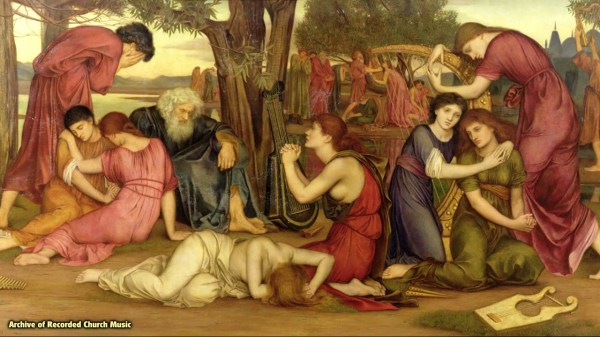
Image: By the Waters of Babylon, by Herbert Sumsion in Ripon Cathedral

In our increasingly visual age, thoughts translate through images. For example, Lamentations 1:1-6 and Psalm 137 offer a remarkably powerful textual pairing. Most of us will choose to read them as text using the  Lectionary page insert, yet, for those of us brave enough to put down the insert and allow ourselves to simply listen, the words strike a different kind of effect on us. You may think I’m splitting hairs, but think about the experience of attending a performance of a play.  I suppose you might follow along with a copy of the script in your lap. But most of us prefer to raise our heads so we can watch and listen.

There’s reading and then there’s watching and listening; they are not the same kind of experience. In a highly visual age, the evocative power of words heard fills our imagination with visual images. As visual images, Lamentations 1:1-6 and Psalm 137 can be viewed on a split screen as disturbingly complementary images.

Textually, they take the literary form of lament. Although scholars debate the authorship of Lamentations, the weight of consensus in both Jewish and later Christian traditions ascribes or at least associates the authorship with the prophet Jeremiah, also known as the “weeping prophet,” the voice of divine heartbreak. Psalm 137 is also a lament, but one of the human heartbreak experienced by those in exile from all they love.  

Developing the idea of words translating into images, when we view Lamentations and Psalm 137 on a split screen, what do we see?

On the left split screen we see the immediate aftermath of Jerusalem’s destruction by Babylon (586 BCE). Lamentations depicts life among those who were too lowly, too poor to be worthy of transportation to Babylon. The tone is one of profound grief and lament over the city’s devastation, depopulation, and humiliation – How lonely sits the city that once was full of people! How like a widow she has become, she that was great among the nations! The poet personifies Jerusalem as a bereaved widow, stripped of her children and her dignity.

On the right side of the split screen, Psalm 137 offers a view set among the exiles now in Babylon. By the waters of Babylon we sat and wept when we remember Zion. The tone is equally anguished – the voice of a deported community remembering Zion from afar, weeping, and vowing never to forget Jerusalem.

Both insist that Jerusalem is not just a place, but the very heart of God’s people. In Lamentations, we see loss and trauma reverberating inwardly as grief and shame. In Psalm 137, we hear loss and trauma reverberating outwardly as longing and rage.

Side by side, these two readings give us a portrait of trauma:

  • In Jerusalem: emptiness, silence, the unbearable loss of God’s dwelling place.
  • In Babylon: memory, resistance, a fierce clinging to identity in a hostile land.

Both cry out to God. Both ask: how long can a people endure when the center of their life has collapsed?

But let’s now divide the two-fold split screen into a four-fold split screen. In the upper two quadrants, viewed from left to right, we still see the images depicted in Lamentation and Psalm 137. But now in the lower two quadrants, we add the image of a devastated Gaza beneath that of the ruins of Jerusalem. Alongside and beneath the images of Psalm 137, we place an image of American exile among those mourning the loss of the nation they continue to cherish in their hearts.

On the left of the screen, moving not from left to right but now from top to bottom, we see images of entire neighborhoods reduced to rubble, defenseless people slain in the street, families torn apart, thousands driven from their homes seeking shelter among biblical images of broken wood and stone and more contemporary ones of twisted rebar and shattered concrete.

Our hearts break along with the breaking of God’s heart at Gaza images of grief and death, of three premature newborns forced to share one ventilator because the incubators have been destroyed; of widows and orphans, of families displaced again and again and forced to inhabit the hell envisaged in Lamentations now recreated before our eyes. – How lonely sits the city that once was full of people – words of grief in the city laid waste, echoes of ancient Jerusalem in present-day Gaza.

On the right side of the screen, from top to bottom, our eyes move between images of displacement. From the rivers of Babylon and the refugee camps of Gaza and the West Bank to America’s political disintegration – we hear the exiles cry of anguish: How can we sing the Lord’s song in a foreign land? When will we be able to once more open the doors to the houses we were driven from 75 years before with the keys we’ve passed from generation to generation throughout our long exile? How long, O Lord, can we endure in a nation where the public square, once at least aspiring toward justice, feels captured by cruelty and resentment, and where our institutions fold and our democracy fractures?  

We may not have walls of stone toppled like Jerusalem’s, or like Gaza’s shattered rebar and concrete, but we do know what it feels like when moral foundations crumble. When truth is mocked. When compassion is despised and mercy rejected. When neighbors are targeted—immigrants, transgender people, the poor—while the powerful and the corrupt continue in plain sight to enrich themselves. We cry aloud: What has happened to us? Who have we become?

Like the survivors in a ruined Jerusalem, we grieve for what has been lost. Like the exiles by Babylon’s rivers, we pivot between despair and rage. The horrors we see on the four-quadrant split-screen confront us with humankind’s inhumanity. When weeping is over and tears are wiped away, what do these texts—transformed into searing images — ask of us?

What are we to do with our grief and rage as we struggle in the tension between mercy and revenge?

The danger in Psalm 137 is clear: grief can also harden into vengeance. Its final verses cry for revenge of the most brutal kind. In our reading of this psalm, we must resist the strong desire to sanitize it by omitting its final three verses with a false justification that this is not who we are anymore. But do we not know this temptation only too well today, when grievances, real or imagined, find their expression through violent words designed to inflame violent action; when political opponents become enemies to be crushed, not neighbors to be persuaded?

We are Christ’s own. And in Christ, we are called to stop the spiral of vengeance—not by denying grief, but by the transformation of sorrow when we weep honestly with those who weep; when we remember fiercely the values of compassion and justice, even when our rulers mock them; when we witness faithfully that exile is not the end. Ruins are not the last word. For as both Lamentations and Psalm 137 ultimately attest, our God remains faithful to those who refuse to forget Jerusalem.

For our story is resurrection. From rubble, God builds anew. From exile, God leads home as we stand between Lamentations and Psalm 137—between grief for what is lost and hope that refuses to die. In the temptation of despair, we nurture the courage to remain true and to hold fast.

The anguished cry If I forget you, O Jerusalem, becomes our metaphor as we refuse to forget who we are as Christ’s own. We do not have the luxury of surrendering to rage and despair. Let future generations look back at us and say, They remembered. They resisted. And by God’s grace, they rebuilt.

Amen.

Blog at WordPress.com.

Up ↑