The Moment of Inevitability

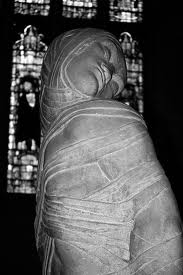
Sculpture: Lazarus by Joseph Epstein, 1951. Now in New College, Oxford.

John the Evangelist tells the best stories.

Yes, he has a habit of placing long, theologically dense speeches on Jesus’ lips—speeches that can test the patience of modern listeners. Yet even there, John gives us lines that land with force: servants are not greater than their master, or by this everyone will know that you are my disciples, if you love one another. Those still cut through the noise—perhaps especially for today’s political class.

But it’s really in his storytelling that John shines.

Everything he wants us to understand about Jesus unfolds through seven stories—what we call the signs of the kingdom. And these are among the most compelling narratives in the New Testament.

The raising of Lazarus is the seventh—and the turning point.

It is not just another story. It is the hinge on which everything swings toward what will unfold, just two weeks from now, over the course of a Thursday night and a Friday morning.

Let me offer a way into this story.

Roberto Assagioli, the founder of Psychosynthesis, once worked with Sigmund Freud before breaking away—like Jung—over Freud’s refusal to take the spiritual dimension of human life seriously.

Assagioli developed a way of listening he called bi-focal vision: the ability to attend simultaneously to two levels of experience—the personal and the transpersonal. The human, emotional story, and the deeper, spiritual one. Distinct, yet intertwined.

That turns out to be exactly what we need for John 11.

Because this is not just one story. It is two stories, woven together. A theological drama about the glory of God—and, at the very same time, a deeply human story of love, loss, and grief.

If we don’t learn to see both, we will misunderstand both.

So, the story so far. Jesus receives word: his friend Lazarus is gravely ill. The message comes from Martha and Mary.

And Jesus… does nothing.

Or at least, nothing that makes sense to us. He says this illness will not lead to death but will reveal God’s glory—and then he delays. Two full days.

By the time he finally sets out, Lazarus is already dead and buried.

When Jesus announces that it’s time to go to Bethany, the disciples are alarmed. Judea is dangerous territory. Last time, he barely escaped with his life. But they go.

Martha, ever the doer, is watching the road. She runs to meet him. Mary, the contemplative one, remains inside—until Martha quietly tells her Jesus has come. Then she too goes out.

Both sisters say exactly the same thing:

Lord, if you had been here, my brother would not have died.

And from here, the story splits—two strands, two levels, unfolding side by side.

First, the encounter with Martha. Here, Jesus speaks in the key of theology.

Martha’s words carry an edge—grief, yes, but also accusation. Why didn’t you come? And Jesus responds not with comfort, but with a question about belief. He presses her: Do you believe in the resurrection?

It’s not, frankly, his most pastoral moment.

But then he makes the claim that stands at the center of John’s Gospel: I am the resurrection and the life. Martha rises to meet him there: Yes, Lord, I believe.

On this level—the transpersonal, theological level—Lazarus’ death is not tragedy but opportunity. The outcome is already oriented toward the revelation of God’s glory. From that vantage point, there is no anxiety, no urgency.

But then—John shifts the lens.

Now, the encounter with Mary.

Same words. Same grief. Same accusation. But a completely different response. Jesus does not argue. He does not teach. He does not examine her belief.

He is overcome.

John tells us he is deeply disturbed, shaken, moved to the core. And then, the shortest and perhaps most powerful line in all of Scripture:

Jesus wept.

Here, we are no longer in the theological register. We are in the human one. This is not about glory—it is about love. About loss. About the raw, unfiltered reality of grief. And in this moment, Jesus is as vulnerable as anywhere in the Gospels.

He stands with Mary, not above her. And together, weeping, they go to the tomb.

And it is there—at the tomb—that the two strands come together.

The human and the divine. The tears and the glory.

Jesus weeps publicly for his friend. And then, just as publicly, he turns toward God: so that they may believe that you sent me.

What follows—Lazarus, come out!—is both.

It is an act of profound human compassion. And it is a revelation of divine power. It is love speaking—and glory breaking through. And Lazarus comes out. Still wrapped in the cloths of death.

If we stop the story there, it sounds like a happy ending.

But John won’t let us do that.

Because this is not a resolution. It is a trigger. Yes, some who see this come to believe. But others do not. Instead, they go straight to the authorities. And from that moment, the decision is made: Jesus must die.

The raising of Lazarus is not a detour around the cross. It is the event that sets the cross in motion.

And make no mistake—the cross is not just religious. It is political. The authorities justify their actions in the language of national security, of stability, of protecting the people.

Some things have not changed.

And one more thing.

What happens to Lazarus is not resurrection. It is resuscitation.

He comes back—but only to the same life he had before. Which means, sooner or later, he will die again. This is a temporary reprieve, a limited-time restoration.

For John, the point is not Lazarus. The point is trajectory. What begins here—in resuscitation—will end somewhere else entirely: in resurrection.

But that is not a truth we can grasp from a distance.

It is one we can only understand by walking the road that lies ahead. By following Jesus into Jerusalem. Into conflict. Into suffering. Into death.

Only then will we know the difference.

So for now, we pray:

Almighty God, whose most dear Son went not up to joy before he suffered pain, and entered not into glory before he was crucified: Mercifully grant that we, walking in the way of the cross, may find it no other than the way of life and peace; through Jesus Christ our Lord. Amen.

Moving From Sight to Insight

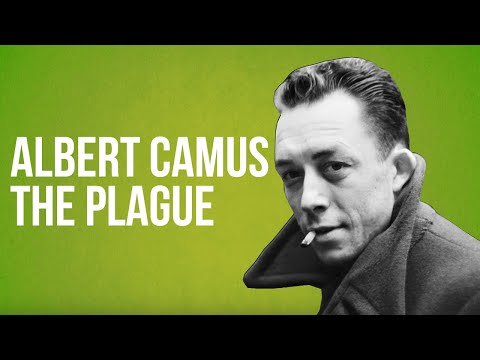
A few years ago, in a review in The New York Times, the philosopher Alain de Botton reflected on Albert Camus’ famous 1947 novel The Plague. Camus believed that plagues—what we now call pandemics—are not simply medical events. They are moments when a deeper truth about the human condition becomes impossible to ignore.

What plagues reveal, Camus suggested, is something that is always true: human beings are radically vulnerable. At any moment our lives can be interrupted—by illness, by accident, or by the actions of our fellow human beings.

Once we recognize that truth, another question quietly emerges. If life really is this fragile—if none of us is immune from suffering—then perhaps the most important question is not why suffering happens, but how we choose to live with one another in the midst of it.

In Camus’ novel, the citizens of the Algerian city of Oran struggle to accept this reality. Like many modern people, they assume that disasters of this magnitude belong to the past. Surely modern medicine and technological progress have changed the rules. Surely the plagues that devastated earlier centuries cannot happen to us.

Camus dismantles that illusion with unsettling clarity. In terms of the unpredictable fragility of human life, history marks no real progress. We remain just as vulnerable as our ancestors were.

As de Botton summarizes Camus’ insight:

“Being alive always was—and always will remain—an emergency.”

Those words land differently today than they might have only a few years ago. The daily terror of the COVID pandemic may now lie behind us, but its aftershocks remain. Our sense of stability has been shaken. The world that once felt predictable now feels far less secure.

We have been reminded—rather abruptly—that the structures on which we build our lives are more fragile than we like to admit.

And so many of us quietly find ourselves asking a simple question:

Where can we stand when the ground beneath us keeps shifting?

It turns out that this question is not unique to our time.

In John’s Gospel, Jesus and his disciples encounter a man who has been blind since birth. The disciples immediately ask a question that seems instinctively human:

“Rabbi, who sinned, this man or his parents, that he was born blind?”

It is a revealing question. The disciples are trying to impose moral order on suffering. They want a cause. They want someone to blame.

If misfortune can be explained—if it can be tied to sin or failure—then perhaps it can be contained. Perhaps it can be kept safely at a distance. If suffering happens because someone did something wrong, then perhaps the rest of us can reassure ourselves that we are safe.

It is a question as old as humanity—and as modern as today’s headlines.

Whenever tragedy strikes, we instinctively search for explanations that shield us from confronting a deeper truth: that we too are vulnerable.

But Jesus refuses the premise entirely.

“Neither this man nor his parents sinned,” he says.

In other words, you are asking the wrong question.

The man’s blindness is not a moral puzzle to be solved. It is simply part of the brokenness of the world we inhabit.

Throughout his ministry Jesus repeatedly challenges the human impulse to divide the world into categories of deserving and undeserving, pure and impure, sinner and righteous. Religion itself can become a tool for maintaining these distinctions—and when it does, it hardens the human heart.

Camus saw a similar pattern in The Plague. In the novel, a parish priest declares the epidemic to be God’s punishment for human sin. But the town’s doctor refuses that explanation. Rather than searching for meaning in suffering, he focuses on confronting it.

When asked how one fights a plague, he gives a simple answer:

“The only way to fight the plague is with decency.”

Pressed to explain what he means, he replies that “Decency means doing my job.” In other words: showing up for others. Caring for others. Refusing to let fear harden the heart.

The Gospel story moves toward a remarkably similar insight. When Jesus heals the man born blind, the miracle is not only physical. The man receives more than sight. His understanding deepens. At first he simply knows that someone named Jesus healed him. Then he begins to see Jesus as a prophet. Finally he recognizes that the one who healed him stands within the very life of God.

The miracle becomes a journey from blindness to sight to insight.

Meanwhile those who are most certain they already see—the religious authorities—remain spiritually blind. Confident in their explanations, they never move beyond judgment.

And that raises an uncomfortable question for us.

If our eyes were truly opened, what might we see?

Perhaps we would see that the fragile condition Camus described is simply the human condition itself. Perhaps we would see that suffering is not something that happens to “them” rather than “us.” Perhaps we would see that we are bound together by our shared vulnerability.

And if we could truly see that, something remarkable might happen.

Fear might loosen its grip. Our hearts might soften. And we might discover the same insight shared by both Jesus and Camus’ doctor.

In the face of uncertainty and suffering, our calling is not to explain the world, control it, or judge it. Our calling is simply to live with courage and decency.

Not the illusion that faith protects us from suffering. Not the fantasy that progress has eliminated our vulnerability. But a deeper hope rooted in solidarity and compassion.

Because in the end the truth the man born blind discovers is also the truth we are invited to see:

We are all in this together—equally fragile, equally dependent on grace.

And perhaps the most faithful response to that fragile condition is simply this:

to show up for one another,
and to do the work that lies before us—with human decency.

Misreadings

Many of us sense that we are living through unsettled and increasingly dark times. It is not only our own nation but much of the world that seems buffeted by the return of strongman politics and renewed great-power rivalry. Political leaders animated by grandiose visions of national destiny promise stability through domination while the global order fractures into competing spheres of influence.

Whenever such moments arise, religion often becomes entangled in political ambitions. Biblical language is invoked to legitimize territorial claims and nationalist visions. Faith itself is recruited to serve projects of power.

We see this dynamic in different places and forms—whether in the revived rhetoric of Manifest Destiny in American politics, in the religious nationalism of Russia’s Ruski Mir, or in modern, politically expansionist interpretations of Zionism.

At such moments, confusion about Scripture does not necessarily arise because the Bible is unclear. Confusion arises because we forget that the Bible itself is a complex historical record—one that bears witness to communities over the long span of history as they wrestle with land, justice, identity, belonging and exile.

More troubling still, confusion sometimes emerges from deliberate misreadings of what the biblical promises actually say.

In his recent interview with Tucker Carlson, Mike Huckerbee the current Administration’s choice as ambassador to Israel, and a Christian Zionist zealot, mixed a dangerous cocktail of biblical promise with contemporary political discourse to make the bold claim that God’s promise to Abraham grants the modern state of Israel a permanent divine entitlement to the land stretching from the Nile to the Euphrates.

This interpretation distorts the biblical narrative by collapsing two distinct covenants into one. God’s promise to Moses and the Israelites is misread through the lens of  God’s promise to Abraham, for the purpose of justifying contemporary Zionist expansionism. Here we must tread carefully. For the Bible is telling a far more complex story.

For two Sundays now, the Old Testament and Gospel readings have echoed a recurring theme of divine promise spoken within the unfolding, turbulent story of human history.

Last week, we heard the account of God’s encounter with Abram, a childless man, who would become Abraham, the father of many nations. This week, the echo returns centuries later in the encounter between God and Moses at a decisive moment in Israel’s exodus journey from slavery. Out of the wilderness of that journey would emerge another defining event—the covenant sealed at Mount Sinai.

Two encounters. Two promises. Two covenants taking shape within the long narrative of God’s relationship with humanity.

John’s Gospel mirrors this pattern. Last Sunday we listened to the story of Nicodemus, a prominent Pharisee and member of the Sanhedrin, who approaches Jesus cautiously and under cover of night, anxious about the reputational cost of being seen asking questions. Today we overhear another encounter, this time between Jesus and a Samaritan woman at Jacob’s well.

At first glance, the encounter at Jacob’s Well appears to be a simple exchange. Yet the location itself carries centuries of tension. Jacob’s well stood in a place long contested between Jews and Samaritans—two peoples with intertwined origins and rival claims to the same ancestral story. Their dispute was not only about land but about the very place – Jerusalem, the holy city of the Jews, or Mount Gerizim, the sacred mountain of the Samaritans, as the location for the right worship of God.

As the French proverb reminds us, plus ça change, plus c’est la même chose—the more things change, the more they remain the same. As in Jesus’ time, the well lies within land contested by rival communities, and the geography has not lost its tension.

The covenant with Abraham is God’s promise that this childless wandering Aramean to become the father of all nations and a blessing to all peoples. The covenant with Moses, centuries later, serves a different purpose. It forms a people committed to living justly within the designated land they will come to inhabit.

Neither covenant functions as a timeless political title deed. Indeed the Torah itself resists such an interpretation. In Leviticus God reminds Israel:

“The land is mine; you are but aliens and tenants with me.” (Leviticus 25:23)

In other words, the land ultimately belongs to God. Israel’s presence within it was always conditional, dependent upon its practice of justice, faithfulness, and care for the vulnerable. The prophets repeat this warning relentlessly: when injustice grows, dispossession and exile follow.

In biblical theology, land is never an absolute possession. It is a vocation before it becomes a habitation—a sign of gift rather than entitlement.

Genesis and Exodus therefore present two foundational covenants: two promises, two lineages, and two ways of understanding belonging to God. Much misunderstanding—ancient and modern—arises when these covenants are collapsed into one.

The Gospel of John provides a remarkable lens through which to see this distinction more clearly. John places two conversations side by side: one with Nicodemus and another with the Samaritan woman at Jacob’s Well.

Nicodemus represents the world shaped by the covenant through Moses. A Pharisee, a scholar, and a leader of Israel, he embodies the religious tradition formed by the Law. Yet when he encounters Jesus he hears something unsettling: he must be “born from above.” Belonging to God cannot rest solely upon ancestry, law, or religious status. It requires new life—a life begun again through water and Spirit.

In his conversation with Nicodemus, Jesus speaks words that reopen the horizon first glimpsed in Abraham’s promise. John captures this in Jesus’ phrase:

“For God so loved the world.”

Not one family. No longer one nation, but again the world.

Immediately after this conversation the scene shifts from Jerusalem to Samaria. There, at Jacob’s Well, Jesus meets a Samaritan woman. Both Jews and Samaritans traced their ancestry to Abraham. Both believed themselves heirs of God’s covenant. The tension between their communities lies just beneath the surface of their exchange.

This rather bold woman asks Jesus about the question that had divided their peoples for centuries. She says that:

“Our ancestors worshiped on this mountain, but you say that Jerusalem is the place where people must worship.”

Which mountain is holy? Which land truly belongs to God? Which claim to covenant is correct? Jesus’ answer is startling in its simplicity:

“The hour is coming when you will worship the Father neither on this mountain nor in Jerusalem … but in spirit and truth.”

In a single sentence Jesus relocates holiness. No longer confined to Mount Gerizim. No longer secured by Jerusalem’s temple. God’s presence is no longer anchored to geography.

It is encountered in living relationship. And the first person to recognize this is not a priest or scholar but a Samaritan woman—an outsider by every conventional measure of religious authority. She runs back to her village and invites her neighbors to come and see.

John’s point here is that Jesus’ messiahship is first recognized in foreign territory beyond Jewish boundaries. John shows Jesus echoing Abraham’s promise in a new key. For these foreigners, without any reluctance or hesitation, proclaim:

“We know that this is truly the Savior of the world.”

Not the savior of one people or a single nation, but now the Savior who is to be a blessing to the whole world.

Seen together, the trajectory of Scripture becomes clear. Abraham reveals God’s promise to bless all nations. Moses shapes a people called to be an example of a society based on the practice of justice. Jesus reaffirms the trajectory of the promise to Abraham – a movement from one family, to beyond the possession of a single nation, to a blessing to all nations.

The movement of Scripture is toward widening the boundaries of belonging. A timely warning to those who might follow Mike Huckerby in his biblical misreading . Christians must tread carefully whenever biblical covenants are invoked to justify modern-day territorial claims.

The Bible itself resists such simplification. The promise to Abraham is a blessing to all nations. The covenant through Moses imposes on a specific community the obligation to live responsibly in harmony with one another and with the land, guided by principles of justice underneath the umbrella of God’s universal blessing.

At Jacob’s Well two ancient rivalries meet—rival claims of ancestry, rival claims of covenant, rival claims of sacred land. Yet Jesus does not resolve the dispute by choosing one mountain over another. Instead, he points beyond both of them to the future of God’s promise, which will not depend on who controls sacred ground but who receives the living water God offers to the whole world. Alas, however, the sad trajectory in most human affairs is plus ça change, plus c’est la même chose.

Amen.

Blog at WordPress.com.

Up ↑