God Calling

We mark the Sundays from The Epiphany to Lent as the Epiphany Season. On the second Sunday after Epiphany we pick up the theme of the call of discipleship. Over and over, we hear how Jesus met people who accepted his invitation to join him. From a cursory reading it appears that those whom Jesus met, just dropped everything – left their lives and existing obligations to go off into new lives as his disciples – they literally followed him.

Isaiah paints a movingly intimate picture of his sense of God’s call in the Old Testament reading for the second Sunday after the Epiphany. He announces: Listen to me you coastlands, pay attention, you peoples from far away! The Lord called me before I was born, while I was still in my mother’s womb, he named me. Isaiah is describing God’s call as his awakening realization of his life’s purpose. His is a life changing realization of encompassing spiritual intensity. Oh, that we could feel so intensely.

The psalmist in Psalm 40 captures the life-changing nature of God’s call: I waited patiently upon the Lord; he stooped to me and heard my cry. He lifted me out of the desolate pit … He put a new song in my mouth. Waiting with longing and patience – who can bear such things? He then connects his call with his passion. He finds his song, and it’s not the same old song of his frustrated life.  He finds himself singing a new song. He cries out – for the new song in his mouth is a song of praise of God that excites not only him alone – but the many who experience his joy and passion. Hearing his song – they will be deeply moved – and like him be encouraged to listen for their own call from God.

Likewise, Paul’s opening words in his first letter to the Corinthians. In 14 words he hints at the life transforming nature of his experience of God’s call. Paul was a man who had never lacked zeal or passion. As Saul, he had been the most zealous hound and persecutor of the followers of the way – who were for him a heretical Jewish sect. In 14 words he is recalling his bruising encounter with God’s call on the road to Damascus when suddenly blinded he fell from his horse and heard Jesus saying to him: Saul, Saul why are you persecuting me? From that moment his priorities were violently reordered so that years later he is able to write: [I] Paul, called to be an apostle of Christ Jesus by the will of God.

The Evangelist John paints for us the amazing domino-like effect of God’s call to follow Jesus. John the Baptist testifying to his experience of baptizing Jesus, seeing Jesus’ approach whispers to his disciples standing near –Here is the Lamb of God who takes away the sins of the world. This is the one I’ve been telling you about – the one who confirmed everything I had been dreaming about. John continues into an impassioned account of how Jesus came to him for baptism -electrifying his disciples nerve endings – exposing in them a longing they didn’t know they had. The next day – by the way this is an important rhetorical device for John the Evangelist – momentous events always unfold over a sequence of days – the next day the same thing happens. John and his disciples are once again loitering with intent – observing the goings-on along the lake shore as Jesus walks by. Two of John’s disciples break off from the group. Their hearts pumping, their ears deafened by the surging of blood, pulsing – as if in a trance, they follow Jesus. Jesus aware of being followed turns and looks at them.

Have you ever had the experience of secretly admiring someone from a distance and getting caught out? Thinking you are unobserved, the object of your admiration spots you. Bamm! You’ve been rumbled – you feel exposed – stripped bare – feeling shame as a red blush spreads across your cheeks.

Making due allowance for the somewhat distanced and polite translation of the NRSV – we can detect that this is the kind of experience the Evangelist is describing when he tells us that Jesus, seeing them – a better rendering might be – that Jesus, spotting them asks: what are you looking for? Imagine the men stuttering and spluttering before finally their tongues untied they get out a few words: Rabbi –where are you staying? I mean what else is there to say in the heat of such an intoxicating moment? Jesus simply says: come and see.

The dominos keep falling– Andrew, one of the men who has spent the whole day with Jesus – as evening comes rushes off to find his brother Simon. Finding him – out of breath he exclaims we’ve found him. Yes, HIM, the one we’ve been waiting for. Andrew, returning to Jesus with his skeptical brother in tow, brings Simon to Jesus. And what happens? Jesus – as if expecting Simon’s arrival gives him a new name.

Remember my message of two Sunday’s ago on the feast of the Holy Name on New Year’s Day – that names really matter? Well, here we are again. Simon is renamed Peter which means rock. There is an echo to Isaiah here. Peter is the name as if given to him by God while he was still in the womb, unknown to him until the moment when it was awakened in him by Jesus’ call.

Let me recall for us and image I’m sure we will all be familiar with from World War II movies where a small group in Nazi occupied Europe have secretly gathered around a radio dangerously tuned into the BBC broadcast frequency. Knowing the German radio detector van might not be far away, they wait – feeling a mixture of trepidation and expectation. Finally, the airwave crackles to life and they hear the announcer’s voice: This is London calling! This is the call they have been waiting for. A voice that calls them to hope -reviving their longing to be free.

Listen to me you coastlands, pay attention, you peoples from far away! The Lord called me before I was born, while I was still in my mother’s womb, he named me.

I waited patiently upon the Lord; he stooped to me and heard my cry.

I Paul, called to be an apostle of Christ Jesus – by the will of God.

Jesus asked them what are you looking for? Stuttering and spluttering before finally their tongues untied, they get out a few words: Rabbi –where are you staying?  Jesus says to them: come and see.

This is London calling! The callsign of hope in their liberation.

We may not feel much like it, but we are those who probably without knowing quite why – have amidst the cacophony of busy lives filled with petty preoccupations have responded to God’s call to worship and got ourselves somehow, to church.  ourselves together enough to get to church this morning. We are the ones who have woken early enough to tune-in to the livestream of this service in real time. Or maybe we will be those who will remember later in the day or week to click on the livestream link. The point I’m making is that we are present to worship God because we have for reasons maybe unclear to us, chosen to do so.  

Despite competing pressures, worship remains important to us – although we are a dwindling constituency among those who nevertheless remain committed to this church community. Gathering for worship in the New England of 2023 is God’s call to engage in an increasingly countercultural practice. So let us be encouraged by this suggestion while keeping in mind the deeper question for those of us whose expression of faith is often muted by our too close alignment with prevailing culture and social trends.

God is calling. The message from the scriptures this morning is that unless we are listening – unless we are expecting, unless we are hopeful, unless our expectation is tinged with enough patience to tolerate waiting, we may not hear God’s call when it comes because we have stopped listening. It’s one thing to listen and quite another to expect to hear something.

If the weekend when we commemorate the call and life changing mission of Dr. Martin Luther King is not the time to question are receptivity to God’s call, then when will be the opportune time?

A Rose by Any Other Name?

Image: Rose by Alan Jones

This year the Sunday after Christmas falls on New Year’s Day – a day dedicated to the Holy Name of Jesus. When the two major public holidays of the year – Christmas and New Year’s Day coincide with Sunday religious observance, I thought it best to scale back to a single service today. Call me a realist if you like. But having only one spoken service on New Year’s Day gives a necessary break for our wonderful church musicians.

In the media we are being treated to endless reflections on the year-gone-by, but today I want to review a more focused timeframe with you – that of the week falling between Christmas and New Year’s Days.

The Calendar for the week following Christmas Day is – unfortunately – crammed full of commemorations. On the 26th the Calendar commemorated St Stephen, first Christian martyr. I feel so sorry for churches like our near neighbor, Smoky Steve’s whose patron saint is St Stephen because I guess the day after the Christmas highs is not the best time to hold your patronal festival. Churches dedicated to St John, Apostle, and Evangelist fare little better with December 27th being his commemoration.

On December 28 the Calendar commemorated Holy Innocents, as the massacre of Bethlehem’s male infants born around the time of the birth of Jesus. I’m in mind of Marcus Borg’s throwaway line that the Bible is true and some of it actually happened. The corollary of this is that many events in the Bible are not historical but symbolic or metaphorical. Josephus, the most reliable Jewish historian of the 1st-century makes no mention of this infanticide despite amply chronicling Herod’s extensive abuses of power.

The massacre of Bethlehem’s boys aged one and under is part of Matthew’s dramatic account of the context in which the birth of Jesus took place – a context of political violence and instability. Herod the Great, alerted by the Magi’s search for the birth of Isaiah’s prophesied king is determined to snuff out all possible rivals. Matthew tells us that Joseph being warned in a dream, takes Mary and Jesus, and immediately flees to Egypt for safety.

The Incarnation celebrates the Creator’s entry within the tent of creation through the precariousness of a human birth. To celebrate this great festival with any integrity requires us to struggle with the deep human pain of the refugee crisis even though no satisfactory solution seems in sight.

In my Christmas Eve Sermon, I drew on the Matthew account with a particular reference to the Holy Family’s flight on the refugee road to safety in Egypt because I wanted to counteract our treatment of Jesus’ birth as a delightful, if imaginary, fairy story. The birth narrative details matter much less than the significance to which they point. To highlight the refugee element in Matthew’s story concerning the Holy Family’s flight functions as a challenge to our humanity in the face of an unprecedented world-wide migration and refugee crises. The Incarnation celebrates the Creator’s entry within the tent of creation – made visible in the precariousness of a human birth. To celebrate this great festival with any integrity requires us to struggle with the deep human pain of the refugee crisis even though no satisfactory solution seems in sight – well no satisfactory solution, enough of us, can agree upon.

Is this not the function of religious story – to alert us to what remains uncomfortably yet profoundly true to our human experience?

Matthew and Luke’s stories of Jesus’ birth function on several levels but chiefly, they function as good drama. As good drama, they construct details to reveal a profoundly truthful picture of the world. The construction of the massacre of the innocents is the way Matthew connects the birth of Jesus with Moses’ birth recorded in Exodus 2. Like Moses, Jesus also survives a threat to his infant life. For Matthew this connection is significant. For Moses is Matthew’s template for the Messiah Jesus. Jesus, like Moses, is the savior of his people.

On Thursday, December 29, the Calendar takes a particular English turn with the commemoration of St Thomas-a-Beckett, Henry II’s former chancellor and enabler turned archbishop and chief critic. In the year 1170, acting on the king’s mafia-like, unspoken yet strongly hinted at suggestion, three knights took it upon themselves to murder the archbishop on the steps of the high altar in Canterbury Cathedral – thus silencing the king’s most vociferous critic. It’s a story many will be familiar with having been immortalized by T.S Elliot in his play Murder in the Cathedral.

We arrive at the first Sunday following Christmas Day, which in 2023 is also New Year’s Day. In other years, on the first Sunday after Christmas, the Calendar gives a gospel proclamation from the Prologue of John’s Gospel – in the beginning was the Word etc. This year, New Year’s Day is actually the eighth day after Jesus’ birth. On the eighth day the Calendar commemorates the Holy Name of Jesus.

I do not recall ever having preached on the Holy Name in 38 years of ministry because Holy Name usually falls on a weekday and so for Episcopalians, like most weekday commemorations, it goes unnoticed except by a very few. The commemoration of the Holy Name records Jesus’ circumcision on the eighth day following his birth as according to Jewish custom.

Circumcision presented a major conflict between the early Jewish and gentile followers of Jesus. The issue was finally settled at the Council of Jerusalem where Paul persuaded the other Apostles to lift the circumcision requirement on gentile male converts. As a result, the Church was ambivalent about commemorating so Jewish a practice in the life of Jesus. Instead it chose to focus on the naming element of the circumcision ritual – as a commemoration of the eighth day after his birth.

Matthew does not record Jesus’ circumcision – being the most Jewish of the gospels I guess he assumed it as a matter of course and so felt no need to mention it. Recording the event of the circumcision falls to the ethnically ambiguous Luke. Luke’s ethnicity remains contested. Was he a gentile or more likely, was he a highly Hellenized Jew?  Either way, Luke writes for a gentile readership for whom it seems important enough to Luke to remind them of Jesus’ Jewish cultural identity.

What’s in a name? Shakespeare has Juliette in the famous balcony scene exclaim A rose by any other name would smell as sweet – to argue that names do not affect the way things really are. Juliet compares Romeo to a rose saying that if he were not named Romeo he would still be handsome and be Juliet’s love. This states that if he were not Romeo, then he would not be a Montague and she would be able to marry him without hindrance.

I wonder though about Juliet’s desire to believe that a name does not denote anything essential in the real world. Most cultures treat names as things of the essence of personhood. Either a name is the mystical expression of our personhood, or being given such and such a name, dictates and subsequently molds us into the persons we become.

Modernity follows Juliet’s reasoning. Remember Shakespeare is the greatest English wordsmith of the early modern period. The words he gives Juliet prefigure modernity’s view that names do not reflect anything real or of the essence about a person.

Many of us feel free to change our names at will – an action unthinkable in traditional societies. Yet, why would we want to change our name – unless we felt it a poor fit with who we feel ourselves to be? Most of us would find it hard to seriously imagine being called by any other given name. For me, I am a Mark. Mark is part of my identity, and I could not seriously contemplate being called by any other name. Robert is my other given name- what we call my middle name. But Robert is a family name. It’s not personal to me. It was the name in various combinations given to all the males in my paternal family line. I say was, because being the only childless son – the practice dies out with me. Yet, I know of people who have reversed the order of their given names because having been given a family name as their first name, they adopt their middle name to express their essential individuality.

Yet, why would we want to change our name – unless we felt it a poor fit with who we feel ourselves to be?

Luke records that after eight days had passed, Jesus was circumcised and given the name mandated by the angel before he was conceived in the womb. That’s Luke code for the name God gave to Jesus. And here we come to the main point about names being and expression of unique personhood. It’s important for us to remember that Jesus is the Greek iteration of the Hebrew name Yeshua, which means YHWH saves. Yeshua – savior is the clearest statement we have as to who Jesus was born to be. Just to ram the point home, the early Christians tagged onto Yeshua or Jesus another name, Christos in the Greek or Mashiac in Hebrew – meaning Messiah.

Yeshua is not simply the one who was prophesied would save his people – YHWH saves. For Christians Yeshua is also the Christ – the one who came to save not only his Jewish people, but all humankind.

It’s hard to disagree with Shakespeare but in this instance I think we must. Names matter! A rose by any other name may well smell just as sweet – but would it still be a rose?

And It Came Upon A Midnight Clear

Photo courtesy of Al Jazeera

It came upon the midnight clear,
That glorious song of old,
From angels bending near the earth,
To touch their harps of gold;
“Peace on the earth, good will to men,
From Heav’n’s all-gracious King.”
The world in solemn stillness lay,
To hear the angels sing.

On Christmas eve what have we come to see, what are we looking for? For many of us we’ve come to indulge in a bit of whimsy –for an hour or so to participate in the reenactment of a fairy story. Why do we come? We come because stories – fairy – or otherwise matter. We are storied beings, and this story is about God with us.

Many of us fear that our culture no longer understands the nuanced p ower of story.  Stories are things we tell our children as an entertainment before they absorb a scientific simplified picture of the universe. Thus, we fail to see just how much our experience of reality is still story-shaped because we easily forget that we are storied beings. So, the important question concerns which stories are shaping us? The wrong stories – stories that support domination are as Ukraine is witness to – dangerous stories.

In one Peanuts cartoon, Lucy complains to Linus that she doesn’t want opinions, she wants answers – to which Linus asks her if true or false would be alright?

Like Lucy, we love to reduce life’s complexities to a series of true or false answers.  But the best stories are never simply true or false. Instead, we might better ask – is this story effective or not? How complete or incomplete a description of experience is it? Is it expansive or restrictive – inclusive or exclusionary? Stories that are more complete, more expansive, more inclusionary are more effective than stories that restrict human experience, imprisoning us in definitions of identity and worldview that are too small and cramped to allow us to flourish.

For Christians, the birth narratives told by Matthew and Luke are stories that create meaning and a sense of purpose – from which flow our actions that shape the way we are in the world.

When it comes to the story of the birth of Jesus it’s impossible to banish Luke’s version we heard tonight from our minds. The props and cast of Luke’s story mean we now can’t think of the Christmas story without the mental images of a ruined stable, bestrewed with straw; with grazing sheep, lowing cattle, incredulous shepherd yokels, and an angel or two singing: glory to God in the highest and peace among all people on earth.

On Christmas Eve is this the story we’ve come to hear, and to for brief moment reflect upon, even though many of us still fall into the trap of wondering if it’s true or not. Many people today, among them many Christians, question the truth of the Jesus birth stories. N.T. Wright asks – if someone was going to invent a story of the Creator becoming one with all of creation, why on earth would you write it this way? If you wanted to make a convincing case for the Creator’s entry within the tent of creation, you probably would write a more historically persuasive story from the ones we have from Luke and Matthew.

I suggest that perhaps what appears to the modern mind as highly improbable, might just conceivably be, the best evidence for its authenticity.

Luke, and much less so Matthew, offer accounts of enchantment. But the modern mind is suspicious of enchantment. For us, truth emerges only after we’ve edited out all elements of enchantment. We prefer the cold hard facts of a disenchanted view of things. It’s the facts, ma’am, just the facts. As Dragnet’s Sgt. Joe Friday reminds us, only the facts matter. Or that seem to matter.

I say seem to matter because while our modern minds reject stories of enchantment – after all that’s why we call them fairy stories – we crave a steady diet of enchantment through the books we read, the TV dramas and the films we devour. We’ve banished the elements of enchantment from our intellectual diet, only to find ourselves surreptitiously binging on enchantment as entertainment.

Still through the cloven skies they come
With peaceful wings unfurled,
And still their heav’nly music floats
O’er all the weary world;
Above its sad and lowly plains,
They bend on hov’ring wing,
And ever o’er its Babel sounds
The blessed angels sing.

There’s Luke’s story – a story with universal appeal – and then we also have Matthew’s story. Last Sunday in How did Joseph really feel?, I offered a somewhat controversial take on Matthew’s Jesus birth story. I have to say I’ve received more feedback than usual from this sermon – for which I am thankful. It seems we pay attention only when we’re jolted into listening.

Yet with the woes of sin and strife
The world has suffered long;
Beneath the angel strain have rolled
Two thousand years of wrong;
And man, at war with man, hears not
The love-song which they bring;
Oh, hush the noise, ye men of strife
And hear the angels sing.

Matthew sets his account of the birth of Jesus within a context of insecurity, danger and violence – which in all its implied horror – is so utterly familiar to us today. His is a story set in a context of political tyranny and ruthless dynastic violence. His is a story of flight from violence, the perils of refugee existence. No sooner born, the Christ child must be protected from the threat of imminent death by his parents seeking political refuge.

Joseph and his young family probably fled southwest from Bethlehem – along a well-trodden route – crossing into Egypt at the narrow Isthmus of al Qantara. They would have followed the refugee road taken by Abraham (Gen 12:10), Jacob and his sons and a long list of unnamed others before them. After murdering every year-old male child in the region of Bethlehem in an attempt to catch the infant Christ in his infanticidal net, it’s unlikely that Herod would have been content to let them quietly slip away. After arrival in Egypt, how many times did the family have to move to escape his spies?

Joseph, Mary, and Jesus remained in Egypt for about 2-years – the time estimated between Jesus’ birth and the death of Herod the Great. Matthew does not provide us with this level of detail, but the point to note is that his narrative sets the birth of Jesus in the borderlands. It’s possible to read into Matthew’s narrative the borderland as not simply a place separating danger from safety, but also as a metaphor dividing Israel’s past trauma from its future hope – the separation between fear and hope. As we are daily called to witness events on our Southern border, borders are places where fear and hope collide.

Today it’s estimated that upwards of 300 million men, women, and children are travelling on the refugee highways and byways, over back roads, and through barely passable jungle tracks, over mountain ranges and across seering deserts.  In the last year the US has accepted a million refugees – and we still don’t have enough people to fill the jobs in crucial sectors of the economy.

Despite Matthew’s more patriarchal tone (it’s all about Joseph and Mary is just wallpaper) sounding in our modern ears – it is Matthew’s setting for the birth of Jesus that carries an uncomfortable power to confront us. The question remains –this Christmas Eve why have we come, what are we looking for? Can I suggest we’ve come to find Emmanu-El, God with us.

And ye, beneath life’s crushing load,
Whose forms are bending low,
Who toil along the climbing way
With painful steps and slow,
Look now! for glad and golden hours
Come swiftly on the wing.
Oh, rest beside the weary road,
And hear the angels sing!
I came upon a midnight clear- Edward H Sears

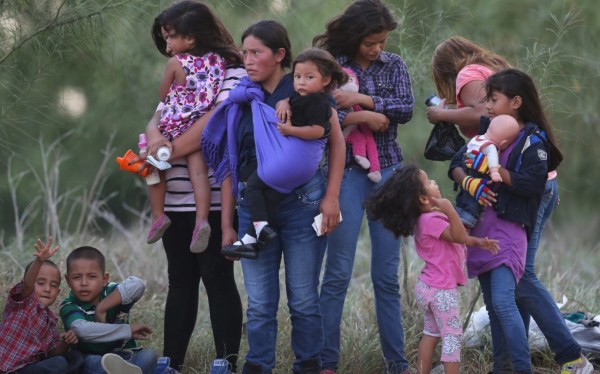
Matthew’s is a story that can only discomfort us. It leaves us with an uncomfortable suspicion. We constantly push awareness of refugee plight to the back of our minds – averting our gaze, or spouting copious facts to explain it all away. We harbor an uncomfortable suspicion that perhaps it’s among the crowds of mothers and fathers wearing only the clothes on their backs, carrying infants in their arms, toddler and older children clinging to their legs with tear-stained cheeks and fear in their eyes – patiently waiting on Mexico’s side of our border fence -that this is what Emmanu-El -God with us looks like– a God who is to be found on any border or boundary fence where fear and hope collide.

How did Joseph really feel?

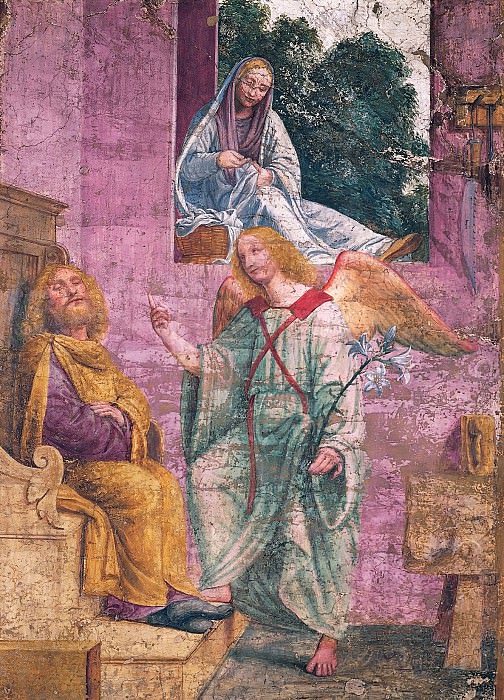
Image: The dream of St Joseph. Bernardino (Bernardino de Scapis) Luini (c.1480-1532)

Advent IV’s gospel spiritual panorama opens upon Matthew’s version of the events leading to the birth of Jesus. For most of us, our sense of the nativity narrative emerges from merging Luke and Matthew together to give us the typical manger scene depicted in countless churches and nativity plays. In doing so we miss the significance of each Evangelists distinctive and strikingly different portrayal of events surrounding Jesus’ birth.

Luke’s focus is on Mary, his birth narrative is Mary’s story – depicting a birth taking place in primitive farmyard conditions surrounded by sheep and cattle and witnessed by common shepherds – representative of those on the margins of society – and of course let’s not forget the angels.

Matthew’s version of events gives us Joseph’s story – the story of Jesus’ birth told from Joseph’s perspective -no manger, no shepherds, no cattle or sheep – a birth witnessed not by common people but by foreign emissaries in the persons of three Magi – representatives of the wider world’s homage to the infant king of the Jews. Matthew’s angel appears not to Mary as in Luke’s account, but to Joseph in a dream.

Having located Jesus’ identity within the long genealogy stretching back through Jewish mythological time to Abraham, Matthew’s intensely Jewish story places the birth of Jesus within the turbulent political context of 1st-century Palestine. Here we have all the ingredients for a tense political drama – a brutal ruler in Herod the Great – the puppet of Roman occupation, whose murderous intent drives the Holy Family into exile as political asylum seekers. The Holy Family escapes, but every other year-old male child born in the region of Bethlehem is slaughtered as Herod, alerted by the indiscretion of the Magi, endeavors to neutralize Isaiah’s prophecy of the birth of a rival king.

Matthew’s is a rich narrative, one that sets the birth of Jesus within a political context completely familiar to us today in a world where literally millions of fathers and mothers with young children are daily forced to undertake the perils and dangers as refugees escaping in fear for their lives. Perhaps the greater significance to be drawn from Matthew’s birth narrative lies in an exploration of the political and humanitarian themes buried within his version of events – perhaps a fruitful exploration for a Christmas Eve sermon.

Matthew’s is an approach to the Jesus story very much from within the perspective of the Jewish patriarchal world view of the men-in-charge. I think my unease with this feature of his approach is quite personal. As a gay man I learned early to fear the power of the patriarchy and to be deeply suspicious of the presentation of scripture through the exclusive lens of the men-in-change – in whose worldview there was no place for someone like me.

Richard Swanson is – at least to my way of thinking – a delightfully provocative biblical commentator who never misses an opportunity to take the patriarchal voice – that is – the traditional interpretation of scripture from the restrictive perspective of the men-in-charge – down a peg or two. Swanson coins the delicious phrase Holy Baritones to describe scripture’s patriarchal voice. My not infrequent uneasiness with Matthew’s voice is that at times he seems to me to epitomize the role of section leader in the Holy Baritone chorus.

Matthew, having spent the first 17 verses in his 25 verse first chapter establishing Jesus’ identity at the heart of Jewish patriarchal transmission, finally gets around to telling us about Jesus’ birth at verse 18 – by announcing to us that:

When his mother Mary had been engaged to Joseph, but before they lived together, she was found to be with child.

In a society with strictly no sex before marriage – a central convention in all patriarchal societies – Matthew chooses to introduce the birth of Jesus by telling us that Mary was found to be with child.

Was found to be is a grammatical structure known as the divine passive. It’s a way of telling us that so and so happened while obscuring causality. For the Hebrew writers it was a way of showing that something had happened by the hand of God without referring to the name that could not be written or uttered. Matthew does make clear that the hidden hand of action in Mary’s pregnancy is God’s. But unlike Luke’s portrayal of a direct encounter between Mary and Gabriel leaving Mary with the chief agency in her decision making – the thrust of Matthew’s narrative is that Mary’s pregnancy has been discovered i.e., shamefully exposed – but we are not told by whom. Matthew clearly sees Mary as having no agency, reserving all agency in decisions to Joseph.

Matthew presents Joseph in a predicament. His reputation through no fault of his own is endangered by this turn of events. His solution is to become resolved to quietly break off the engagement. Ah, what a mensch! But here’s my problem with Matthew’s Joseph-focused version of events. In a religious society with draconian laws against sex before marriage, the risk of public disgrace relates not to Mary’s but rather, to Joseph’s predicament. His, is the fear of being publicly disgraced. Why do I conclude this? Because if the truth got out the risk to Mary was not public disgrace but being stoned to death – in the first instance by her father – and if he could not bring himself to do the deed then by another male relative – an uncle, or brother, or male cousin conveniently waiting in the wings. The reality of honor killing is a nasty detail that the Holy Baritone voice skips over by silence.

So how is Joseph to be extricated from the prospect of public disgrace? Matthew rescues Joseph through an angel appearing to him in a dream – telling him not to be afraid. Afraid of what we might ask – if not reputational disgrace. The angel instructs Joseph to go through with the marriage because it’s really God who has caused Mary’s pregnancy. On waking, Joseph, with his mind now reassured against his fear of social opprobrium, does as the angel had commanded him.

We might expect Matthew to end his chapter here. Joseph the mensch, rescues his betrothed from calamity by marrying her. But as cheerleader for the Holy Baritone voice Matthew is not done yet. He rather tellingly – to my mind at least – mentions that while Joseph married Mary, he declined to consummate the marriage until after the [troublesome?] child was born.

Why does Matthew feel the need to tell us this? Well, one of the pervading themes of the Holy Baritone voice is an over preoccupation with genital penetration. Inappropriate penetration – that is – who puts what where – provokes the patriarchal fear of spiritual contamination. As today’s conservative obsession with the restriction of women’s reproductive and homosexual and transgender rights continues to demonstrate –this preoccupation continues a story older than time.

Let’s listen again to Matthew’s voice:

When Joseph awoke from sleep, he did as the angel of the Lord commanded him; he took her as his wife but had no marital relations with her until she had borne a son; and named him Jesus.

Although Joseph did as he was commanded, I wonder how he really felt?

For whom do we wait?

Advent is a time that refocuses us spiritually on the thorny experience of hope. While hope is a universal trait of the human spirit, its thorniness lies in the way hope raises both expectation and fear of disappointment.

I cannot reflect on hope and the nature of expectation without hearing the voice of my fatalistic grandmother saying don’t hope- never be disappointed. I think we all instinctively know what she means. To hope is to risk wanting – and wanting raises the possibility of disappointment. But my grandmother’s expression, while it captures our fear of risk, nonetheless misses the essential point about hope. Hope is not primarily – a picture of a longed-for future – realizable or not. Hope is the compass setting that establishes a direction of travel in the present.

Hope is the compass setting that establishes a direction of travel in the present.

You see, hope is not a future dream – although we often think of hope in this way. Hope is a vision for a desired future but the purpose of hoping is to reorient ourselves in the present through future expectation. Don’t hope -never be disappointed is not simply a protection against future disappointment. It’s a severe limitation on present time action and future possibility.

We are the ones we have been waiting for is a saying the origin of which has multiple attributions. We are the ones we have been waiting for is however the title of Alice Walker’s Pulitzer Prize winning book in which she comments that:

We are the ones we have been waiting for because we live in an age in which we are able to see and understand our own predicament. With so much greater awareness than our ancestors – and with such capacity for insight, knowledge, and empathy – we are uniquely prepared to create positive change within ourselves and our world.

We are the ones we’ve been waiting for was a phrase that Barack Obama borrowed – not to indicate that he or his administration were necessarily the ones desperately awaited – but that present generations of our society have the potential to really change American society’s direction of travel towards an – as yet – unrealized future. At the everyday level of experience we know the truth of this as we live through the chaos and upheaval of a period of momentous change – the kind of change that beckons us towards a future that will be so much more than a repetition of our past.

The shape of our future hope is important but too much dreaming or foreboding about the the future is a distraction. The purpose of hope is not to inhabit the future before it emerges but to focus our attention on the quality of our present time actions – both those we boldly embrace and those we fail to take.

Don’t hope -never be disappointed is not simply a protection against future disappointment it’s a severe limitation on present time possibility. Hope is a lifetime’s work. Advent reminds us that hope also requires courage in a world that often – like my grandmother’s saying – plays up the risk of hope’s disappointment.

The book of Isaiah begins around 740 BCE with the figure known as 1st Isaiah (chapters 1-40). The book concludes with the prophecies of the 3rd Isaiah (chapters 56-66) over two centuries later after the ending of the Babylonian Exile in 515. The combined prophecies of 1st, 2nd (chapters 40-56), and 3rd Isaiah form the mainstay of Advent’s O.T. lessons. In chapter 25, appointed for the 3rd Sunday in Advent we hear 1st Isaiah’s words: Be strong, do not fear! Here is your God.

Where is our God? Our God is here! How do we know God is here? We know because the eyes of the blind shall be opened, the ears of the deaf unstopped; the lame shall leap like a deer, and the tongue of the speechless sing for joy. Isaiah’s hope is ambiguous with regard to time. His use of –shall– is suggestive of future events – but events determined by actions in present time.

If our Advent hope causes us to raise our eyes heavenwards waiting for future divine rescue from the mess we are making of the world – we will miss Advent hope as a present time statement that God is already here – among us – journeying alongside us through the turbulence of the present time.

The Gospels ascribe a prophetic quality of premonition to John the Baptist because we prefer to view prophets as visionaries of future time. But the prophet speaks first and foremost into present time – no matter how future oriented his words. As we all know, the present time fear of disappointment plays havoc with our expectations. And so we see in Matthew 11 that even the legendary John the Baptist is subject to the fear of disappointed expectation. John – languishing in Herod’s prison – has become anxious because Jesus seems not to be fulfilling his expectations. The doubt arises in his mind – maybe he’d got it wrong and Jesus is not the promised one – afterall. So he sends his disciples to enquire of Jesus – are you the one or are we to wait for another?

Jesus quotes Isaiah 25 back to John telling John’s disciples to go tell him what you hear and see! The blind receive their sight, the lame walk, the lepers are cleansed, the deaf hear – and just to up the ante he adds – the dead are raised, and the poor have good news brought to them. Here the point not to be missed is that Jesus takes Isaiah’s words – couched as future hope – and renders them a description of present time reality.

The point of future hope lies in the beginning of its realization in the present.

We are the ones we have been waiting for focuses our attention firmly on the present time in which hope is not a future dream but a present-time activity. Of course, there is a hidden irony here. Our usual Advent question: what are we waiting for and why are we still waiting? – is not perhaps the question after all.

The great 20th-century theologian Paul Tillich wrote:

The power of that for which we wait is already effective within us. Those who wait in an ultimate sense are not that far from that for which they wait.

On the 3rd Sunday in Advent – what are we waiting for becomes who are we waiting for? Allowing for an appropriate sense of humility, if we are not to be the ones we have been waiting for – then who will be?

A Reset to Factory Settings

A few weeks ago, I referred to the Amazon production of Rings of Power – a contemporary interpretation drawing from Tolkien’s unpublished manuscripts which his son Christopher later published after his father’s death in Unfinished Tales. Rings of Power is beautifully filmed – full of dramatic special effects that depict both elysian and hellish depictions of fictional reality.

I was and continue to be struck by these words of Elrond, one of the High Elves, quoting a memory of his father.

The way of the faithful is committing to pay the price event if the cost cannot be known – trusting that in the end it will be worth it. Though the cost is dear, we have little choice but to keep serving.

Two weeks ago, I used these words in the context of my second sermon in this year’s annual renewal campaign Time, Talent and not just Treasure.

If we really take the implications of these words to heart, the prospects for Christian service in the world are truly awstriking.

Elrond’s remembrance of his father’s wisdom triggered another cinematic memory – this time from the delightful movie The Best Exotic Marigold Hotel in which the hapless hotel manager Sonny Kapoor, played by the very talented British Indian actor Dev Patel exclaims:

Everything will be alright in the end... if it's not alright then it's not yet the end.

These quotations are watchwords for our current deeply troubled times.

Watchwords are spiritual reference points that act like points on the dial of a compass. Paying close attention to our spiritual watchwords shows us the way forward when the familiar signposts of stability and continuity on which we once relied are no longer visible or even more alarmingly, remain visible but now misdirect through disinformation to point us in opposite directions from the ones we need to be setting out on.

Misdirectional signposts lead us into the dark places of the past rather than forward into the promise of the future.

Back to the future is another example of a watchword phrase, but this time one we should be wary of. Back to the future is really a statement about the prospect of our future being a repetition of the worst in our past. It’s another way of saying that society seems incapable of learning from past collective experience. Part of the explanation for this is that we have become a society characterized by amnesia. Our memory span is so short we’ve forgotten the most important lessons not only from our distant but more worryingly, even from our recent past. I’ve quoted Freud’s comment many times the gist of which is what we cannot remember we are destined to repeat.

One of the sad lessons from our collective past resurfaces in the way autocratic and anti-democratic tendencies – always latent in our collective unconscious – return to the surface. We see this so clearly when we survey the international scene whether it be Putin’s Russia, Xi Jing Ping’s China, Iran’s Ayatollahs; the infantile omnipotence of autocrats dictating the course of nations through a steady ahistorical diatribe of perceived grievances. We in America know first-hand the autocratic and antidemocratic impulses resurfacing from our own history.  

As we approach the midterms an article in the Atlantic Daily summed our situation up in a short article titled More than the Price of Gas in which Tom Nichols a staff editor noted how our voting dictated by hot button single issues of the moment not only corrodes our democracy but in the long run lead to nowhere new. He wrote:

Voters concerned about democracy should remind their fellow citizens that a GOP majority will not fix the economy or face down the Russians. Instead, state-level Republicans will issue partisan challenges to our constitutional process while cowardly national Republicans nod their approval. By 2025, Republicans at the state and national level might be able to simply ignore any election result they happen not to like.

In the First Reading on Pentecost 21 we hear the words of the minor prophet Habakkuk writing during a period of national emergency either at the time or shortly after the destruction of Jerusalem in 587. It’s helpful to situate the office of prophet as the antidote in Ancient Israel to the authoritarian centralizing of power in the King. Israel had a constitution called the Covenant, and it was the prophet’s role to remind those in power of its constraints on autocracy. Br. Garret Galvin O.F.M writing about this reading notes that:

Part of a prophet’s job was to reflect on the world as it is rather than predicting the future, as is so often misattributed to prophets. Verse 1:4 demonstrates Habakkuk facing up to the challenges of his time. The one who lives by faith must encounter many others who choose to live by a different standard. The necessity of living by faith does not always produce a comfortable life. 

Habakkuk understood that the cure for the deep-seated corruption of power required a dramatic restoration of Covenant values. What worried him was he also understood that any restoration must first be preceded by collapse. Using the analogy from computers and smart devices Habakkuk understood Judah’s need for a reset to factory settings. Yet, he laments the cure being worse that the disease.

How long shall I cry for help, you will not listen? Or cry to you, ‘Violence’, and you will not save?

In the following verse he chronicles his nation’s woes in a voice that sounds to us remarkably contemporaneous:

Destruction and violence are before me; strife and contention arise. So the law becomes slack and justice never prevails.

In response he simply commits himself to take a principled stand – not running away or shirking his responsibilities.

I will stand at my watchpost, and station myself on the rampart.

God finally answers Habakkuk by reminding him:

For there is still a vision for the appointed time; it speaks of the end and does not lie. If it seems to tarry wait for it; it will surely come [when] the righteous live by their faith.

Taking up our responsibilities we must stand on the metaphorical ramparts of democracy reminded that the way of the faithful is through service no matter the cost because we can do none other. Yet, there is a cost. Br Garret Galvin O.F.M reminds us that the one who lives by faith – confronting those who choose to live by a different standard – will not always produce a comfortable life. 

I believe that the troubles of our present time are signs of a divine reset – reboot to return us to our original factory settings as creatures made in the image of an all-loving creator. Our having failed to live by faith in the goodness of God in creation, is the cause of all our current challenges:

  • pandemic,
  • the collapse of economic globalism with all the knock-on consequences of breakdowns in the supply-chains feeding our rampant consumerism,
  • spiraling prices and inflation,
  • the resurfacing of old grievances leading societies back into the cul-de-sacs of history from which no meaningful solutions emerged last time we found ourselves here.

Finally, God is saying to us enough is enough!  Failure of systemic reform is now inevitably leading us towards the uncomfortable experience of a massive world-wide recalibration. As Habakkuk recognized in catastrophe – what I’m preferring to call recalibration is the necessary precondition for reset.

If we find the cost of paying the price in the defense of democracy’s freedoms – simply consider the alternative – of folding in the face of tyranny’s insatiable violence – whether facing down a Putin, or a Trump, and their legions of orcs.

Together we must stand in solidarity with the Ukrainian people who are forging a new future for themselves as they bear the brunt of the antidemocratic onslaught of Putin’s tyranny. Americans’ must raise our heads to look beyond the immediate grimness of gas prices at the pump, the effects of inflation on the supermarket shelves. Europeans’ must raise their heads to look beyond the grimness of this winter’s massive energy crisis. We in the West – by which I mean the global network of free democracies with the rule of law as the basis for governance must not let the immediate discomforts of the present time misdirect us from the longer-term direction of travel. We must keep faith that

Everything will be alright in the end… if it’s not alright [at the moment] then it’s not yet the end.

Sonny Kapoor

We hold fast – the cost may be high – the reset has begun – but it will be worth it in the end!

Need for God?

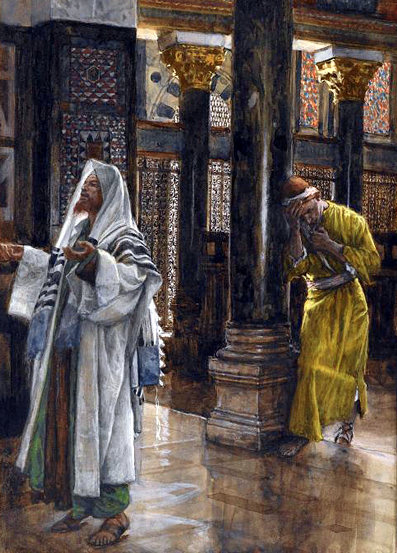
Image: James Tissot, The Pharisee and the Publican

Storytelling is a fine art. I remember back some years ago now, attending a BBC live studio interview with John Berendt about his then recently published novel Midnight in the Garden of Good and Evil. I remember him commenting on how in the South people embroider their stories with anecdotal asides.

He gave an illustration suggesting that an English writer might tell us simply:

Mrs. Green, while walking down the high street in her fine fur coat, suddenly caught a glimpse of herself in the store window. “How fine this coat looks” – she mused.

He contrasted this with voice of a Southern narrator:

Mrs Green, while walking down main street in her fine fur coat – you know the coat her husband bought her after he made all that money from the shady real estate deal, you know the one he made with that big Yankee corporation buying up the whole town. Catching a glimpse of herself in the store window and remembering her husband’s last year’s birthday present of the face lift - “How mighty fine this coat looks” – she mused smugly to herself.

I wish I had Jesus’ knack for storytelling. His stories confront his listeners with something profound and potentially life changing. But have you noticed how simply most of Jesus’ stories begin? There was this woman or this man.We want to know which woman, what man? So, he then tells us a little more – Oh yes, this woman who was coming to draw water. Or this man who’s name was Zacchaeus – the one who had climbed up a tree.

And so, Jesus begins Two men went up to the temple to pray. Which two men? One a Pharisee the other a tax collector. Immediately, his 1st-century audience would begin to draw conclusions from the stark contrast between these two men – one a righteous practitioner of the law, a faithful Jew – and the other a collaborator with the hated Roman occupation. We, that is his 21st-century audience also immediately draw conclusions – although the opposite ones from his original hearers because we are primed to think bad thoughts when we hear that one of the men was a Pharisee. Of course, for us its different because we have heard the story many times – at least once every three years – and we know the ending. But are we any wiser as to the deeper significance of this story?

The question we might ask at this point is which of the two men do we identify with? While you’re thinking about this let me remind you, we’re hearing this story within the context of the annual renewal campaign commonly known as stewardship.

We tend to think of stewardship as an activity for this time of year and unfortunately, not as a whole year-round activity – a year-round exercise of the three T’s – time, talent, and treasure as the practice of gentle competence in the service of all things.

There is a natural tendency to overvalue the treasure component of the three T’s. In Small Hearts enlarged by Gratitude (Oct 8th) I spoke about how treasure is really a symbol for the way we express gratitude through living generously. In Time, Talent, and not just Treasure  (Oct 16) I fleshed-out time and talent as symbols of both our desire to serve and also our realization that as disciples we have little choice but to keep serving – for a disciple who does not serve is an oxymoron – a linking of two incongruous images in one idea.

Given that Christian community is the historic template for a serving community, I think that if asked to pause and reflect more deeply – the thing many of us would say is that we miss the satisfaction of service inspired by gratitude. Gratitude produces and stimulates generosity – and generosity like living water – flows through service – irrigating a parched world. Remember that money is like water – it only does any good if it keeps flowing. Dam it up and stagnation ensues.

Back to the question: which of the two men do we identify with? It would be interesting to call for a show of hands. But I suspect that most of us would identify with the tax collector because in the story we are prejudiced towards the pharisee from the outset and distanced from the socio-political contradiction of a tax collector praying in the temple. Conditioned by 2000 years of Christian teaching on the virtue of humility we see in the tax collector’s prayer a level of humility and self-abasement we wish we could emulate. Few of us -publicly at least – would want to identify with the haughty self-righteousness of the religious Pharisee.

This is a story that presents us with two images of the human response to God. Most of us intuit that we should identify with the tax collector, and yet we design our lives to model that of the pharisee – and feel pretty good about doing so. He’s not only confident in his own salvation, but loudly proclaims his self-confidence before the Lord of heaven and earth. In other words, this is a man who by following the rules takes control of his own salvation – look God – see how well I’m doing!

The tax collector on the other hand, makes no claim of being in control of his life let harbor any expectation of salvation. He lives a morally dubious and compromised life.  He may be deeply sorry about his collaboration with the Roman administration, but the sorry fact is what else can he do.  Like many he is caught in the traps that life sets.  He needs the work; he needs to do what he needs to do to get by – and so he is caught.

Jesus makes clear that for God it’s not what the tax collector does – it’s not his occupation that matters. It’s not even a matter of his being among the religiously impure – those on the outside of Jewish religious life. What matters is his response – his humble recognition that he has no claim on God’s mercy. He offers no excuses – he offers no defense. The very nature of his inability to do much about his situation is what brings him to his knees, beating his breast in acknowledgement that he stands before the Lord of heaven and earth as one in need of God’s mercy.

Like the pharisee we expend a lot of energy ensuring that we will not find ourselves in a position of needing anything from anyone – so self-assured are we of our ability to make our own way in life we easily confuse our success for something of our own making; that the good things in life are ours to enjoy and not share. The pharisee – that part of us that sneakily believes we have no need of God – is very much alive and kicking in all of us.

Yet, the unpalatable truth in the face of our assertions of self-sufficiency is that the source of all our loves in life flow to us from God’s love for us. Whether we want to admit it or not – we are in fact dependent beneficiaries of divine generosity. Only when we acknowledge our dependence can we come to know our need of God. Thus to acknowledge our need of God is an uncomfortable experience for us.

We are surrounded by good people – who do what good people do – but who seem to have no need for God. We know many who once sat alongside us in this church but do so no longer. Maybe they are no longer here because they were never here for anything other than fitting God into their own priorities. Maybe they came because it was part of a well-rounded education for their kids. Or being seen at St Martin’s was good for business networking. Whatever the reason they were never here as an acknowledgment that they needed anything from God. After their priorities were met, they ceased to come.

The conventional wisdom goes that if God exists at all then of course he will be accepting of those who after all – are good people. However, that is not the conclusion we can legitimately draw from this story. For only one man goes home justified.

To understand the way Jesus uses the term justified we need to think about what happens in a court of law. Neither the plaintiff nor the defendant is in control of the verdict of the court. It’s only the judge who can acquit or condemn. So it is with being justified. The Pharisee’s religious virtues in no way justify him in God’s eyes, neither does the tax collector’s sinfulness condemn him. Justification turns on a single question. Which one knows his need of God? Jesus tells us this is the only consideration for God. Being justified or not is a divine verdict not anything we can earn as if by right or lose because of compromised circumstances in life.

I’m not sure we can rid ourselves of conflating stewardship with the autumn renewal campaign. But it’s a worthy ambition to cultivate. Therefore, I am encouraging us to use this season of the Annual Renewal Campaign, as an invitation to take spiritual inventory in which we review:

  • What and where are our priorities and how are these shaped by our faith and our experience of Christian community? What is our attitude to our finances and possession? Are these simply the fruit of the sweat of our own cleaver brow or can we find in them a freedom from self-congratulation that comes with gratitude expressed through generosity?
  • Spiritual inventory as an opportunity to reexamine our attitude towards the call of discipleship. With whom do we really align – the pharisee or the tax collector?
  • Spiritual inventory as a rediscovery of the single thing that ultimately matters – namely our coming to know again the depth of our need for God.

Two weeks ago, in Small Hearts enlarged by Gratitude I shared from my personal experience of gratitude. Mine is a story of the way connection with gratitude wanes in the face of the illusion of my self-sufficiency. This period of spiritual inventory is an opportunity for me to be reminded of the course of my life journey and to stand with the tax collector – openly acknowledging that there is nothing about me that is deserving of God’s love – and to remember with gratitude expressed in generous living that all the good things of my life come to me as an expression of divine gift.

Time and Talent and not just Treasure

I’ve been watching Rings of Power – the prequel drama that draws on a compilation of J.R.R. Tolkien’s unpublished materials set thousands of years before the events of the Lord of the Rings. After his father’s death Christopher Tolkien published these in The Unfinished Tales. The action takes place on Middle Earth during its Second Age – laying out the timeline of events that burst forth in the Lord of the Rings Trilogy.

There’s a curious national stereotyping in this Amazon Prime presentation. The Harfoot – ancient forebears of the Hobbits have rural Irish accents as befitting the acorns and wheat sheaves in their hair. Contrastingly, the Dwarfs in the Mountain speak with the broad burr of the lowland Scots – somehow betokening their stolid dour industriousness. Of course, the druidic mystical imagery associated with the HIgh Elves requires the lilting cadences of the Welsh. The humans of Middle Earth have accents that range from Standard Received English for the seemingly higher born descending into the broad regional accents of the West Country for the peasant types. I’m not sure what conclusion to draw from this but it’s interesting to note how accents denote cultural associations for us.

In a recent scene the Elf, Elrond speaking with Galadriel recalls his father’s words:

The way of the faithful is committing to pay the price even if the cost cannot be known – trusting that in the end it will be worth it. Though the cost is dear, we have little choice but to keep serving.

Last week I launched the Annual Renewal Campaign for 2022-23. I likened the campaign process to that of a spiritual inventory – inviting us to consider with reawakened eyes the quality and nature of our gratitude for the fruits of God’s generosity in our lives. It’s even more imperative in chaotic and fearful times that by strengthening our connection to a deep and abiding sense of gratitude for all we enjoy as gift from a God whose nature is pure generosity – generosity becomes like living water flowing through us to irrigate a barren and thirsty world.

It’s tempting for all of us to think – well now the rector has done his annual pep talk about money we need say no more about stewardship. But this would be to mistake stewardship only for treasure i.e., for money. Instead, I offer a good working definition of stewardship inspired by St Benedict’s invitation to his monks to exercise a tender competence in the service of all things.

A good working definition of stewardship inspired by St Benedict’s invitation to his monks to exercise a tender competence in the service of all things.

Inspired by St Benedict

Service is the expression of the faithful trusting that even though we may not see the result or be able to anticipate the cost – the end will be worth it because though the cost is dear our nature as Christian disciples is to keep serving.

Christian stewardship involves the practices of the three Ts’ – time, talent, and treasure. If we confine stewardship to writing checks – although I’m aware that most of us no longer write many checks as a form of payment – we are falling short of the dream that God has for us as agents in the divine work of renewing the creation. We are also shortchanging our deepest desires for ourselves, for those we love, and for our concern for change in the world because as the divine nature cannot stop loving, so we have little choice but to keep serving.

Our community is dependent for the quality of its common life on our willingness to share our time and talent as much as our treasure. In an increasingly frenetic world where we struggle with impossibly overscheduled lives, time is increasingly in short supply.  Pressure on our time from competing priorities renders us reluctant to share our gifts, abilities, and passions with one another.

In a world where we’ve come to dread overcommitment – where is the Christian notion of service as something that may well cost more than we imagine we have to spend?

I recently had lunch with Rabbi Sarah from Temple-Beth-El. As we were commiserating with each other over the burdens of faith community leadership in the current context I quipped that we have fewer and fewer people willing to step forward for the traditional ministry roles. In response, the staff is having to do more and more and then the parishioners complain about this. She replied – same with us!

So, here’s the rub. It’s wonderful to be financially generous, but money alone is no substitute for our engagement in service.

A memory from my first months at St Martin’s resurfaced the other day. I remembered feeling astonished at the human richness and potential of the congregation. I marveled at the levels of skill, sophistication of vision, and curiosity about ideas. While I knew that returning the parish to a more secure financial basis would be challenging, I was deeply encouraged and sustained by the quality of the people I was called to work among. I still am.

Seven-years on we’ve returned to as secure a financial base as the volatility of a changing world allows, yet we’ve continued to watch a steady erosion of our traditional culture of service.

A good example here is – you’ve heard me say before that we are an every-member-community, by which I mean that we cannot afford to carry passengers who make no contribution to building up our common life and work. When you think about something that you would like to see happen, remember that if you are not going to make it happen, then there is no one else available to do so.

Given the world we must contend with – the regrettable fact is that church as the focus for the spiritual journey made in the company of others within a network of social relationships is no longer a central foundation stone in modern lives. In the modern world we are continually scratching the itch we don’t recognize we have. Christian faith communities are the original template of serving communities. In the words of the great reformer and wartime Archbishop of Canterbury, William Temple:

The church is the only society that exists for the benefit of those who are not its members.

I think that if asked to pause and reflect more deeply – the thing many of us would say is that we miss the satisfaction of service inspired by gratitude. Gratitude causes generosity – like living waters – to flow through us in service of a parched world.

In a world of conspiracy theories and a constant barrage of contradictory social and political messaging the only safe option for many today is to hide – ignore what’s going on – keep our heads down and get on with our lives as best we can.

The Pauline author of Second Timothy could well have been writing to us in our day and age when he predicted:

The time is coming when people will not put up with sound doctrine, but having itching ears, they will accumulate for themselves teachers to suit their own desires and will turn away from listening to the truth and wander away into myths. 

That time seems to have already well and truly arrived. What’s to be done?

After diagnosing the malady, the writer of Second Timothy gives us the solution:

As for you, always be sober, endure suffering, do the work of an evangelist, carry out your ministry fully.

Or in Elrond’s father’s words: The way of the faithful is committing to pay the price even if the cost cannot be known – trusting that in the end all will be worth it. Though the cost is dear, we have little choice but to keep serving.

Stewardship has three T’s – time, talent, and treasure. Last week I spoke about treasure as the expression of our gratitude to God for the good things we have been given to enjoy – so that like our creator we may also live lives in which generosity is like living water flowing through us to irrigate a barren and thirsty world.

Today, I’m reminding us that through the other two T’s, time, and talent – we find our gratitude expressed in service. At the ordination of a deacon – a word which means servant – we pray:

To let the whole world see and know that things which were cast down are being raised up, and things that had grown old are being made new.

Collect of the ordination of a deacon, Book of Common Prayer.

Stewardship, tender competence in the service of the world requires us to take to heart the words in second Timothy – to carry out our ministry to the faithfully so that the whole world will see and know that things which were cast down are being raised up, and things that had grown old are being made new.

Ours is to carry out our ministry to the fullest extent possible through lives of faithful committed service – trusting that in the end it will be worth it because though the cost at times may be more than we thought we were signing on for, we have little choice but to keep serving.

Small Hearts enlarged by Gratitude

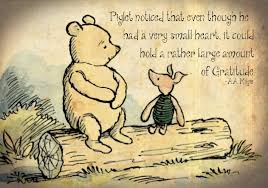
The featured image above shows AA Milne’s Pooh Bear with his friend Piglet sitting side by side on a log. Piglet is gazing up at Pooh as he observes that he’s noticed that even though he has a very small heart – it could hold a rather large amount of gratitude.

I struggle with gratitude – it’s a difficult word. I hate being reminded that I should be more grateful. The moment I hear the word grateful old memories arise of parental figures wagging their fingers at me – telling me I should be more grateful.

What is gratitude? Well, it’s an impulse – a response to the experience of generosity. But generosity is also a difficult word. How many times is our seeming ingratitude a response to another tagging conditions onto their generosity. See all the things I’ve done for you – you should be more grateful. Conditional generosity is no generosity at all.

The story of the cleansing of the 10 lepers in Luke 17 offers a window on gratitude. Like all Jesus stories its more complex than it at first appears. This is a story about gratitude, but with a subtext. As usual with Jesus it’s the subtext that carries the punch. At this juncture I will simply say that gratitude touches the most unexpected of people.

Jesus feigns surprise that gratitude should touch the most unexpected of people. He asks:

Were not 10 made clean? Was none of them found to return and give praise to God except this foreigner. 

Remember only the despised Samaritan leper returns to give praise to God. The symbolism of this would not be lost on Jesus’ xenophobic audience. Gratitude affects the most unexpected of people.

It’s a well observed phenomenon that when we have little else in life, in a world of scarcity, generosity and gratitude become tools for survival. Genuine scarcity compels people to rely on one another.  That reliance takes the form of gratitude and generosity. We find an echo of this in the final collect for Compline or night prayer where we pray:

that we may never forget that our common life depends upon each other’s toil.

Insecurity deepens our encounter with gratitude. I remember having this experience after arriving in this country. Married for many years to an American, I nevertheless arrived at a time when same gender marriage afforded me no immigration rights.  I entered the US in 2008 on an 18-month professional development visa – wondering how Al’s and my dream of being a meaningful part of our 3-year-old granddaughter’s life would be realized. Looking back, I’m astonished by the audacity of my trust in the generosity of God during this period of my life.

I’m now a citizen with a purposeful and comfortable life having realized not only the dream of being part of our granddaughter’s life – but so much more than – at the time of arrival – I was even capable of imagining. It’s odd to me now looking back how deeply I trusted God’s generosity with an intensity of gratitude that – now I am comfortable and secure – I struggle to reconnect with.

Now the temptation for me is to fall into the illusion that the building of a new life of security and success has been all my own doing. This illusion of self-sufficiency everyday threatens to insulate me from my encounter with gratitude. I mention this only because I know the temptation of viewing all the goodness in my life as only the fruits of my own skill and labor and not God’s freely given gift.

In contrast to communities of scarcity, in communities of abundance – self-sufficiency – the illusion of autonomous independence – is the curse of the comfortable. For those of us who fall into this category the question we might ask is do we feel grateful to God for all that we have been given to enjoy in life – or does our comfortableness make us more anxious about holding onto what we have as if all we enjoy is ours by right and not gift?

I believe this question lies at the heart of our Christian responsibility to live lives of good stewardship – the exercise of tender competence in service to the world.

I’m brought up short by the line in today’s epistle from Second Timothy.  Without getting into the controversy over whether this letter was penned by Paul or not – the Pauline author builds a rhetorical crescendo with:

if we have died with him, we will also live with him; if we endure, we will also reign with him; if we deny him, he will deny us 


if we are faithless ....  

We might reasonably expect the next words to be:

he will be faithless. 

We get the reciprocal picture. But then we read: But no! We are stunned to read:

for if we are faithless, he will be faithful

breaking the rhetorical pattern.

It seems God cannot deny God’s own nature – which is fundamentally to be loving, faithful, and generous.

We in the parish’s leadership are beginning the budget the planning cycle for next year. There are stages that will mark this process over the next three months. Today, I’m launching the annual renewal process and in two weeks or so you will receive the wardens’ annual stewardship letter along with the estimate of giving card (EGC)- unfortunately known as the pledge card. At this stage we will ask you to complete and return your EGC’s at the latest by November 13th which appropriately is two Sundays before Thanksgiving.

With the EGC we are not asking you to pledge -as in- sign in blood on the dotted line. We are seeking from you information about your anticipated level of financial support for St Martin’s in a coming year in order for us to complete the 2023 budget process. We all know that this next year is going to test our courage, faith, and resolve to the maximum. In the mailing you will also receive additional information designed to inform and help you assess the appropriate level of your financial support.

The financial backbone of our community has been our older pledging generation who are now passing on to greater glory. Theirs has been a generation who experienced the local church as one of the foundation stones of community life. We who come after them have different expectations for organized church life and among our younger generations there will be many who may well view church as an institution, with a more skeptical eye. Because of this generational shift our pledging numbers are falling. The immediate challenge is not simply to raise the dollar amount of pledges but to increase the overall size of the pledging base.

As your rector my primary message is not to up our giving, although I do hope many of us in a position to – will do so – as we face into the winds of what by all accounts will be a more difficult year in every sense. We are fortunate to welcome new members into the community – some of whom may not yet have become pledging members. As a response to this year’s renewal campaign, I do hope you will consider becoming one.

No, my primary message is to ask us to take an honest look at the role of gratitude in our lives; to conduct a spiritual inventory – as a response to the generosity of God. My message is to remind us to review the good things we value and enjoy in life and celebrate them not as a sign of personal success – something that’s ours alone – but as the fruits of God’s generosity and faithfulness – gifts entrusted to us to enjoy through the responsibility to likewise – live generously.

I am inviting all of us to consider once again the quality and nature of our gratitude in considering the fruits of God’s generosity in our lives with reawakened eyes – reconnecting or strengthening our connection with a deep and abiding sense of gratitude – recognizing the signs of God’s generosity – like living water flowing through us – irrigating a barren and thirsty world .

If we are faithless God will be faithful. Among the 10 only one of them gave praise to God – and this man – a foreigner, a despised stranger. God’s nature is to be generous, and the divine generosity invites our response to – in turn – live lives marked by generous impulse – so like Piglet we can say:  although our heart maybe small it holds a rather large amount of gratitude.

Buying a Field

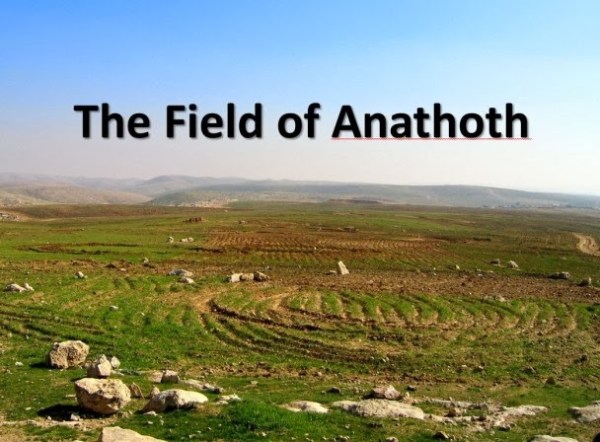
On the eve of catastrophe what farsighted actions will we take – in the spirit of Jeremiah’s purchase of the field in Anathoth?

For several Sunday’s we’ve been listening to the prophet Jeremiah in our O.T. readings. He was born into a priestly family in Anathoth – a village in the territory of Benjamin around 650 BC. He’s believed to have died in Egypt probably around 570 BC. He’s the major prophet active during the particularly turbulent decades preceding and following the fall of Jerusalem in 587 BC.

In today’s passage Jeremiah is imprisoned on king Zedekiah’s orders in the court of the palace guard as the Babylonian forces besiege Jerusalem. Silencing a prophet is always a fruitless task. Deprived of his personal liberty and access to the king Jeremiah dictates to his scribe Baruch – who then publicly proclaimed his master’s words of warning to the Temple congregations.

While locked up in the guardhouse, the word of the Lord came to him saying that his cousin Hanamel will offer him the right of redemption on a field in his home village of Anathoth. One might speculate that Hanamel, surveying the dire situation clearly wants to liquidate his assets in preparation for possible hasty flight. His luck’s in. On the eve of destruction, one might think Jeremiah would have more pressing things on his mind than to buy a piece of land that to all intents and purposes will be of no use to him.

The similarities between 6th-century Judah and 21st-century America may at first sight not seem obvious to the historically untutored eye. Yet, his was, like ours is, a world on the precipice of unprecedented upheaval and crisis. As a consequence of Zedekiah’s foolish foreign adventurism, the armies of Nebuchadnezzar – for the second time in 10 years -had arrived at the gates of Jerusalem- this time to end, once and for all, the Judahite problem.

After the fall of the Northern Kingdom of Israel 721, Judah had benefited from a refugee influx of Israel’s elite. They brought with them cultural and economic expertise that transformed Judah from an underpopulated backwater into a successful and economically prosperous trading nation – an ancient Singapore on the Jordan.

The parallels with today’s America are uncanny. In the years preceding 587 trade was strong, the equivalent of the stock market was buoyant, Judah’s GDP was growing.  But economic prosperity fostered in Zedekiah dangerous foreign policy ambitions – ambitions that led directly to the destruction of the city and state in 587.

As in contemporary America 6th-century Judah’s prosperity was very unequally distributed with all the predictable societal consequences of inequality of wealth. Money corrupted politics hastened the decline in moral and ethical standards in public life because as Carlos Lozada in the New York Times on September 22nd writes the big lie is predicated on the big joke. The big joke is that if everyone is lying and everyone knows that everyone is lying – so no harm done.

Jeremiah warns against external threats brought about by the kings ill-judged foreign policy adventures, while at the same time he decries the greed and abuse of power that was leading directly to a collapse in moral and ethical standards in public life. When the wellspring of prosperity is poisoned – as we well know – such prosperity paradoxically exacerbates institutional and moral decline.  Jeremiah’s message is a call for repentance among the haves for their corruption and exploitation, and among the have-nots for their willingness to be conned and bought off with lies.

Like the 8th-century prophet Hosea, Jeremiah is a prophet of lamentation known some quarters as the weeping prophet. A major theme of Hosea’s is the land’s lament. Hosea is writing some 200 years before Jeremiah – during the social and political instability prior to the Assyrian destruction of the Northern Kingdom in 721 BC stress the land’s lament. Interestingly, archeological evidence points to serious changes in climate patterns during this period may well have impacted international relations and been a factor in Israel’s decline.  

Andi Lloyd writing in The Land Mourns  in the latest edition of Christian Century Magazine notes that for Hosea the land’s lament is not the equivalent of our modern environmental grieving over:

…. pollution or strip-mining or any material injury to itself. The land’s lament, to which Hosea gives voice, is wider than that. The land’s lament speaks a foundational ecological truth: when one part of creation goes awry, the whole suffers. The land’s grief at what the people have done points to the fundamental reality of our interconnection. …. Therefore the land mourns …. because the people have gone astray, in all the familiar ways: There is no faithfulness or loyalty, and no knowledge of God in the land. Swearing, lying, and murder, and stealing and adultery break out; bloodshed follows bloodshed. (Hosea 4:1–2)

The land mourns is a metaphor for a fundamental imbalance between the interconnected elements in the creation. The prophetic vision was a correction to this imbalance – restoring a vision of a world as it ought to be. However, the prophets lived as we do, in a world of too much injustice and too little love fraying the threads that bind the creation together. Andi Lloyd writes:

Now, as then, the fabric that connects all of creation is badly torn: torn by manifold injustices wrought and perpetu­ated by the exploitative systems in which we live, torn by ideologies of scarcity that teach us to love too narrowly and too little. To mourn is to speak that truth to the lies that prop up the denial on which the status quo depends.

One of the major consequences of a world out of balance is the loss hope. We become despondent. Our confidence in progress and belief in a future better than the past is undermined – and despair distorts our vision.

Through repentance Jeremiah preaches the restoration of lost hope. Before the fall of Jerusalem, he sounds the voice of warning. But after the fall of the city rather than a voice of I told you so – amid the destruction of the nation he proclaims a message of present time faith in future hope.

In contrast to Psalm 137’s voice of lament: 

How can we sing a song of the LORD in a foreign land?  If I forget you, O Jerusalem, may my right hand wither. May my tongue cling to the roof of my mouth if I do not remember you, if I do not exalt Jerusalem as my greatest joy!…

Jeremiah counsels the Exiles to:

Build houses and settle down; plant gardens and eat what they produce. Marry and have sons and daughters; find wives for your sons and give your daughters in marriage, so that they too may have sons and daughters. Increase in number there; do not decrease.  Also, seek the peace and prosperity of the city to which I have carried you into exile. 

The realization of future hope begins now through faith as present time action. On the eve of destruction, one might think Jeremiah would have more pressing things on his mind than to buy a piece of land that to all intents and purposes will be of no use to him – which at first sight seems a futile thing to do. He pays the price, signs the deed, instructing Baruch to place it into an earthenware vessel:

in order that they may last for a long time.  For thus says the Lord of hosts, houses, and fields and vineyards shall again be bought in this land.

Today, we are living in the face of multiple crises; national, international, and environmental. We struggle against despair and despair’s bitter fruit – helplessness. In our disempowerment we fail to see the interconnections that link all our current crises together so that to take steps to address one is to impact the larger whole. For instance, to tackle the corruption fueled by dirty money and special interests in political life is also to increase transparency and reduce the temptation for dishonesty in public life.  In raising the moral and ethical standards of politicians by no longer voting for politicians who habitually lie about climate change we will make progress in addressing the environmental crisis. In standing up to regimes who exploit their carbon extraction wealth to threaten and wage war on their neighbors, we have a strong incentive to wean ourselves off carbon dependance thus lessening the inevitability of environmental catastrophe.

So you see we are far from helpless!

On the eve of catastrophe what farsighted actions will we take – in the spirit of Jeremiah’s purchase of the field in Anathoth?

Blog at WordPress.com.

Up ↑