It’s not Defeat, but Failure We Should Fear

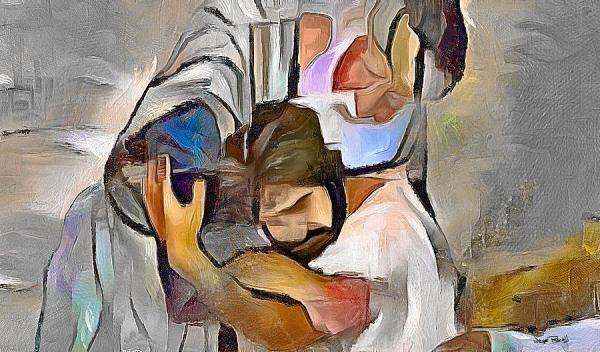
Image: Call of Isaiah, Marc Chagal

Then I said, "How long O Lord?" And he said: " Until cities lie waste without inhabitant, and houses without people, and the land utterly desolate; vast will be the emptiness in the midst of the land."

Normally, my alarm is set for 5 am – which at this time of the year seems an indecently early time to awaken – greeted by the cold and dark of a winter’s morning. Even if my 5 am alarm does not go off, Mable Rose, my 2-year-old English Cocker Spaniel has her own mysterious time clock which she signals to me by moving from the foot of the bed where she’s slept peacefully through the night to sitting as close to my face as she can get with tail wagging. The intensity of her quiet staring penetrates my attempt to fake sleep by keeping my eyes closed. She knows. I know she knows. What’s even more uncanny is that she knows that I know she knows I’m faking it.

Yet, in these past few weeks, it seems that a 5 am alarm is no longer necessary. For some weeks now, my equivalent to Mable Rose’s internal alarm clock seems stuck at 3 am when suddenly wide awake I begin another cycle of rumination on the all-consuming state of the nation and the world. Even conscious efforts and evasive actions to filter out the deluge of noise masquerading as news – fail to keep troubling thoughts and painful feelings at bay. A sense of profound unease so pervades our cultural spaces that by osmosis it seeps into neurocircuits and body cells alike.  

In the modern world of the all-consuming 24/7 news cycle, the prophetic words from T.S. Eliot’s Choruses from The Rock sound.

The Eagle soars in the summit of Heaven.

The Hunter with his dogs pursues his circuit ........

The endless cycle of idea and action,

Endless invention, endless experiment,

Brings knowledge of motion, but not of stillness;

Knowledge of speech, but not of silence;

Knowledge of words, and ignorance of the Word.

Today, Eliot’s soaring eagle becomes a reference to the 24-hour surveillance culture, and the hunter with his dogs a reference to the draconian actions of immigration and customs agents – hunting down frightened immigrants.

The worry awakening me at 3 am – which then cycles endlessly until at day’s end sleep once again offers a brief few hours of respite – is deeply personal. New worries challenge the illusion of overlap between assumed shared societal values and my Christian-shaped conscience. Yet, my worry is also born of empathy for those to whom I am both a priest and pastor. This is the worry I see etched on the faces of some who fear the withdrawal of funding will affect their own livelihood. I see it on the faces of aging parents consumed with worry for their adult children who have chosen careers in government agencies from USAID to the forestry service, not to mention the intelligence and federal law enforcement agencies.

Government is so much more complex than running a tech company or social media platform. So much of it remains invisible to the naked eye until – that is – services taken for granted cease to function. Increasingly this reality will come as an unexpected surprise to those who have little idea of the extent to which their lives are impacted by the immanent disappearance of government services, structures, and protections.  

On Friday I attended a Dorcas International – one of Rhode Island’s three refugee resettlement agencies – webinar update on the chaos affecting RI refugee resettlement agencies struggling to make sense of how to keep operating following the immediate cancelation by executive fiat of across-the-board funding for the legal resettlement of refugee programs. As a Dorcas long-term community partner, for St Martin’s this dire situation is of particular concern to us.       

My reference to Eliot is so much more than the predilection for the poetic mind. It’s an attempt to find words strong enough to frame a description of current reality. Eliot’s words frame the current dilemma consuming us. He notes that:

All our knowledge brings us nearer to our ignorance,

All our ignorance brings us nearer to death,

But nearness to death no nearer to God.

Eliot asks:

Where is the Life we have lost in living?

Where is the wisdom we have lost in knowledge?

Where is the knowledge we have lost in information?

He concludes:

The cycles of Heaven in twenty centuries

Bring us farther from God and nearer to the Dust.

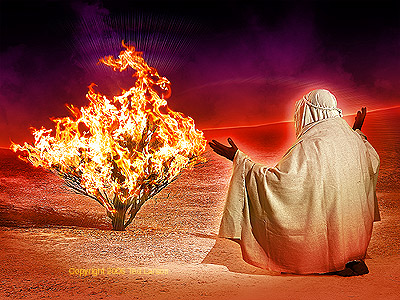
In the OT lesson on the fifth Sunday after Epiphany we hear of the call of the prophet Isaiah – the first of three to be known by this name. We are ushered into his powerful mystical encounter with the radiant glory of the divine presence in the form of a robe filling the whole temple and shaking the very foundations. The divine presence is surrounded by the six-winged seraphim – not pudgy cheeky cherubs – but fierce and frightening angelic beings deafening this man of unclean lips living among a people of unclean lips with their repetitive chorus of Holy, Holy, Holy is the Lord of heaven and earth.

It is significant that Isaiah accurately dates his mystical encounter with the divine presence in the year that King Uzziah died. Uzziah, also known as Azariah, reigned in Judah from approximately 792 to 740 BCE. Ascending the throne at a young age, around 16, following the death of his father, King Amaziah his reign is noted for both his military successes and his ambitious building projects, contributing to a period of prosperity for Judah.

However, his reign was not without challenges when eventually his pride led him to overstep his boundaries. He attempted to burn incense in the Temple, a duty reserved exclusively for the priests. When confronted by the high priest and other priests, he became enraged. Struck with leprosy as a consequence of his actions, Uzziah was forced to live in isolation, with his son Jotham managing the kingdom’s affairs for the remainder of his life.

It’s curious that the call of Isaiah comes at a pivotal moment in Judah’s political history. Uzziah is remembered for both his accomplishments and his tragic downfall, and he serves as a cautionary tale about the dangers for any ruler who allows pride to overstep legitimate authority. Let those who have ears to hear- listen!

Isaiah is given a mandate to speak God’s truth to power, and God’s rebuke to a people’s collective folly. But God it seems has no illusions about the likelihood of Isaiah’s success in speaking to a people who in listening do not comprehend, who in looking do not understand – whose minds are clouded, whose ears are stopped, and whose eyes are shut, who fail to recognize the urgency of the moment facing them.

Isaiah asks how long O Lord? In an allusion to future exile, the Lord tells him that things must run their course until cities lie waste without inhabitants, houses without people, and the land utterly desolate – vast will be the emptiness in the midst of the land. Yet like the stump of a burned tree, the seeds of new growth will survive.

Jesse Zink – in Faithful, Creative, Hopeful: Fifteen Theses for Christians in a Crisis-Shaped World – the text chosen for our Lent 2025 Tuesday evening book study, draws out a crucial yet misunderstood distinction between defeat and failure, which we do well to remember in these days. In these days, as the bearers in our time and place of God’s timeless message to the world – the forces that rule our society by the laws of self-interest will always conspire to defeat the message of truth. But as the Lord counsels Isaiah it’s not defeat he should fear but failure.

Eliot reminds us:

The world turns and the world changes,

But one thing does not change.

In all of my years, one thing does not change.

However you disguise it, this thing does not change:

The perpetual struggle of Good and Evil.

There is a price to be paid for singing “Holy, Holy, Holy Lord God Almighty” in the face of an oppressive force that thinks otherwise. Amidst challenges, anxieties, failures, disappointments, discouragement, and loss, our awareness of the sovereignty of God’s transformative expectations for the coming of the kingdom empowers us to face defeat at the hands of the conspiracy of power ranged against us. However, defeat is not the same as failure. We speak out and risk defeat yet even in the face of defeat we remain undaunted for the fire-ravaged stump of the tree still contains the seeds of future fruitfulness. No, it’s failure we should fear. Failure lies simply in the refusal of God’s call for us to speak truth to power and folly to the foolish!

Let the Scriptures be fulfilled in our hearing

The 8th chapter of the book of Nehemiah throws a historical spotlight on post-exilic life among the returning Jews in Jerusalem. Remember that in 586, Nebuchadnezzar had sacked Jerusalem taking into captivity the upper echelons of Judahite society. In 538 following the edict of Cyrus the Great, the first wave of returnees led by Zerubbabel arrived among the ruins of Jerusalem to begin the restoration process. A second wave followed in 458 led by the priest Ezra escorting the return of the sacred vessels for the new Temple construction. A third wave led by Nehemiah arrived in 445. Nehemiah had been a cupbearer to King Artaxerxes I, who is now entrusted with the civil administration of the restoration project.

The returning exilic community faced serious opposition. A group described as the people of the land represented the original Judahite indigenous peasantry who had been left behind after the Babylonian deportation of the upper echelons of Judahite society in 587. They clearly resented the returning exiles. Together with Judah’s Canaanite neighbors – the old traditional adversaries – they fiercely resisted the restoration project – frequently sending messages and envoys to lobby the Persian court against the exiles and further returns.

Therefore, the restoration project proceeded in fits and starts, as much hampered by the internal struggles within the returnee community between rich and poor, powerful and powerless – just to add into the mix with the constant guerilla attacks mounted by both indigenous and surrounding peoples.

In Nehemiah 6, we read of the completion of the wall around Jerusalem—an exhausting but significant achievement. With a modicum of physical security achieved, in chapter 8, attention now turns to the spiritual renewal of the people who gather before the Watergate to hear the Torah—the book of the law—proclaimed before them.  

We read that all the people, both men and women gathered in the open square before the Watergate outside the newly constructed wall to hear the priest and scribe Ezra read from the law of Moses. Imagine the scene – from dawn until midday, standing on a raised platform before the Watergate, surrounded by the Levites and Scribes, Ezra read from the book of the law. We don’t know quite what this included but it is likely portions from the Deuteronomic corpus of Genesis, Leviticus, and Numbers.

With the completion of the physical city walls, it was time to build a different kind of wall – a spiritual wall within which the community reaffirmed its distinctive identity shaped by their covenant obligations not only to God but to one another. We read that the gathering included men, women, and all who could understand – reflecting a collective commitment to heal communal divisions under the guidance of God’s word.

We note that for many gathered to listen to Ezra, much of what he read was unfamiliar for it seems that among the assembly knowledge of the covenant heritage had been largely, lost. Added to this was a language problem – for Aramaic had replaced Hebrew as the lingua franca of the people. Hence the importance of the Levites flanking Ezra who acted as interpreters so that the people could understand the message being proclaimed. Like good preachers the Levites and Scribes rendered the message accessible and its application practical.

Standing under the judgment of God is for any community a bittersweet experience and we are told that hearing the words of the law evoked both weeping and rejoicing – repentance paving the way to reencountering the generosity of God’s promises.

In our St Martin’s community, the last Sunday in January is by divine decree designated Annual Meeting Sunday. And so, on this Annual Meeting Sunday when we move from celebrating the achievements of the past year we also are looking ahead to the challenges and opportunities of the coming one. 2025 from its outset promises to be the first year in a political cycle reflective of a nation deeply at odds with itself and with the wider world beyond. A political cycle that will have to grapple with the irreconcilable tension between the further privileging of the rich and powerful and the demands of a restless and angry electorate hungry for an improvement in their lives. Ahead lies a period in which many events will test our Christian allegiance to Kingdom values.

The span of centuries marking the passage through linear time separating us from the event recorded in Nehemiah’s 8th chapter evaporates like mist before the lens of Kairos time – where there’s no separation between past, present, and future. Therefore, we too stand -imaginatively speaking- alongside the exiles before Ezra’s reading from the law. Like the men and women gathered before the Watergate – the question remains – how do we understand the message of the law? How will we interpret and apply our understanding?

In the importance of hearing and receiving God’s Word, we acknowledge the centrality of Scripture in shaping the life of our community faithful to the vision of a just society – a deeply rooted vision of covenantal community guided by God’s desire for a society built on justice as the communal expression of love – upon compassion as the outward working of mercy – a community faithful to the good news of Jesus Christ that the Kingdom of God is already among us.

Justice and righteousness are fundamental to social order. Justice ensures fairness and accountability, while righteousness emphasizes compassionate mercy and ethical behavior in recognition that everyone is entitled to be treated with dignity as children of God. Justice is blind to the artificial distinctions maintaining unequal systems favoring discrimination against and neglect of those whose difference renders them among the most vulnerable in society.

Justice has an economic face. The effective exercise of justice is a bulwark against monopolistic practices leading to the economic exploitation of the poor by the rich and the steady impoverishment of everyone in between. Today we most clearly experience this as institutions privilege shareholder returns over the duty to benefit those they were created to serve. We are living in a world where further tax cuts for the wealthiest are presented as a benefit for all and where the powerful take all the profits while demanding that we – the rest -shoulder the risks – compensating their losses from the public purse.

Justice has an environmental face. The primary command in creation is to exercise responsibility for the care of creation and to confront environmental depredation by the powerful and profits hungry from whom we hear that the environmental crisis is too costly to address. Yet, creation’s message could not be plainer – the reality is upon us – that it is infinitely more costly not to.

Standing alongside the crowds gathered before the Watergate we also hear the commandment to treat the stranger with dignity and with mercy for we were all once strangers in a new land. The tragic paradox was that while Ezra was proclaiming the care for the stranger as a divine decree – he was already working on measures to reinforce the ethnocentricity of Jewish society- prohibiting intermarriage and forcing Jewish men to expel their non-Jewish wives and biracial children. We are no strangers in our own time to the construction of physical walls as the first step in the completion of ethnic cleansings.

The just society envisioned in the Torah and central to Jesus’ preaching of the kingdom is a community where divine expectations shape individual and communal relationships – where individual rights are balanced with communal responsibilities.

This vision is not merely theoretical – it’s practical, designed to ensure a harmonious and flourishing society. Many today feel the demands of justice are impractical, too costly to implement and give away too much power to those less deserving than we are. It’s sobering to realize that every ill we experience in the operation of our society today, every corruption we lament, is an expression of our rebellion and rejection of the template of God’s vision of a just society. The question we should ask is not whether we can afford the demands of a just society – but whether can we afford to ignore them!

We have long prattled on about the arc of the moral universe bending toward justice. If we didn’t realize it before – we now must confront the seeming unpalatable truth – the moral universe bends only through our commitment to realizing justice, practicing mercy, and our courageous walking in step with our God.

As we celebrate the past year and prepare for the new one ahead, we will do well to remember that the Spirit of the Lord is upon us, because the Lord has anointed us to bring good news to the poor. The Lord sends us to proclaim release to the captives and recovery of sight to the blind, to fight oppression, and to proclaim the year of the Lord’s favor. Welcome to the coming year in which God’s invitation is to let the scriptures be fulfilled in our hearing.

Baptism?

A contributor to Sermons.com shares a humorous story about three pastors lamenting their shared problem: bats in the belfry. The first pastor tried scaring them away by shooting at them, but all he succeeded in doing was making holes in the roof. The second pastor captured the bats, transported them 50 miles away, and released them, only to find they returned to the church before he did. The third pastor stunned his colleagues by announcing he no longer had a bat problem. When asked how he achieved this, he replied, “I baptized them—and I’ve never seen them again.”

This amusing anecdote illustrates the saying, “Many a true word is spoken in jest.” It raises a serious question: What is the meaning and purpose of baptism?

William Temple, a revered Archbishop of Canterbury in the mid-20th century, once observed, “The Church is the only society that exists for those who are not its members.” This sentiment sheds light on the Anglican tradition’s unconventional view of boundaries. Becoming a member of the Episcopal Church often feels effortless—attending regularly can subtly integrate you into the community before you even notice.

This approach is unusual among contemporary American churches. The Episcopal Church’s open boundaries express Temple’s assertion. However, this openness creates challenges in distinguishing the Church from the world. Worship is open to all, but only the baptized are invited to communion—though no one is turned away.

To Christians from other traditions, this may seem inconsistent. Yet, it reflects a theology that regards baptism as entry into a saving community, nourished by Holy Communion. It also acknowledges that the altar rail is not the place to turn away those who approach with faith and good conscience.

In Mark’s Gospel, Jesus’ baptism is profoundly personal—his adoption as God’s Son is a secret known only to him and John the Baptist. By contrast, Luke’s account portrays Jesus’ baptism as a communal event:

“Now when all the people were baptized, and when Jesus also had been baptized and was praying…”

Mark presents Jesus stepping onto the world stage, becoming the Son of God through adoption at baptism. Luke, however, emphasizes that Jesus has always been the Son of God, with his baptism confirming this preexisting truth.

These differences reflect an ongoing theological debate: Are we saved through baptism, or is baptism a recognition of salvation already granted?

Evangelicals often view baptism as a personal act of faith—a believer’s conscious decision and a ticket to heaven. Anglicans, however, generally see baptism as a celebration of God’s grace, marking entry into a community where salvation is encountered and witnessed.

Returning to Temple’s statement, “The Church is the only society that exists for those who are not its members,” we recognize the Church often falls short, behaving as though it exists solely for its own benefit.

Protestants view the Church as a temporary gathering, existing only when believers come together. In contrast, Anglicans and Catholics see the Church as the mystical body of Christ, existing beyond any specific gathering. Accordingly, Protestants see baptism as entry into an individual relationship with Christ, while Anglicans and Catholics view it as entry into the communal life of the Church—a saving experience.

For Roman Catholics, salvation is bound within the Church, necessitating rigorous boundaries. Anglicans, however, see the Church as leaven in the loaf of the world. The Episcopal Church exists not to confine God’s salvation but to witness to its presence already at work.

Why does this matter? For me, it challenges the Calvinist preoccupation with personal salvation. I reject the idea that my salvation depends on choosing Jesus while my neighbor faces damnation. God loves us both without distinction. The real question is: How do we live out this truth?

Baptism is not a one-time event but a daily commitment to live out God’s purpose in the world. In the Episcopal Church, this commitment is articulated in the Baptismal Covenant, which includes five promises:

    1.   Faithfulness in community: Participate in the life of the Church, practicing faith daily.

    2.   Resistance to evil: Fight evil and return to the path of repentance when you fall short.

    3.   Proclamation of the Gospel: Share the good news that God has already saved the world in Christ.

    4.   Service to others: Love and serve your neighbor as yourself.

    5.   Justice and dignity: Strive for justice, peace, and the dignity of every human being.

As Episcopalians, we embrace fuzzy boundaries intentionally. Guided by Temple’s vision, we affirm that belonging precedes believing.

Through baptism, we join a community that witnesses to God’s salvation as a gift for all. Christians live in tension—balancing engagement with the world’s values and dedication to a life of service and witness shaped by the Baptismal Covenant.

In These Days –

In a time long ago, in a galaxy far, far away– oh, sorry, this is the beginning of the wrong story. Let me try again. Now, what is it? Ah – here it is – to boldly go where no one has gone before. No, that’s still the wrong story. What about – once upon a time there was – no, no, no, this won’t do either.

Let’s try again.

In those days, a decree went out from Emperor Augustus that all the world should be registered. This was the first registration and was taken while Quirinius was governor of Syria. Phew! Finally, the beginning of the right story.

By mentioning Augustus, Qurinias, and the first census, Luke firmly locates the birth of Jesus in an exact historical moment of linear time. Among the other three gospel evangelists, Luke is the only one who does this. But Luke is not simply interested in accurate historical reporting. He’s more concerned with showing Jesus’ birth as a kairos moment – a moment in which time itself becomes permeable to the influence and action of the divine life of the universe – welling up and breaking through the surface of linear time.

In Saving Belief: A Discussion of Essentials, Austin Farrer, the renowned 20th-century Anglican priest and theologian, with poetic eloquence, wrote:

In the saving action of the incarnation, God came all lengths to meet us and dealt humanly with human creatures... He came among them, bringing his Kingdom, he let events take their human course.  He set the divine life in human neighbourhood. Men discovered it in struggling with it and were captured by it in crucifying it. What could be simpler? And what more divine?

This Advent, I’ve been exploring the interplay of Kairos and linear time as integral to understanding resistance as future hope embodied in present-time action. This past Sunday, I was delighted when K Casenhiser – without knowingly echoed Austin Farrer when she noted the significance of the divine life embodying in the child Mary bears as the means for God to involve human bodies in the Kingdom’s work. She said that 

God insists that bodies are the systems through which the world of the Kingdom will be built. God articulates God’s dependence upon us human creatures when God says: humanity is how I wish to become recognizable in the world. Critically, though, before God takes this action, God chooses to get the consent of the actors involved.

The Kingdom is a set of values and expectations revealing God’s desires for the world. We are invited rather than commanded to participate in the divine project of the Kingdom’s coming. Farrer rightly notes that the presence of the Kingdom creates tension in his wonderful image of the neighborhood because Kingdom values and expectations are not easy for us to live up to.

Hence, we struggle against the Kingdoms’ coming, and as Farrer noted – at an extreme moment in that struggle, we tried to get rid of the Kingdom altogether by killing Jesus, only to discover that through his death, the ultimate victory of God becomes ensured. While resisting, we become captive to Kingdom expectations because they demonstrate that love proves stronger than death – or, in Farrer’s words – Men discovered it in struggling with it and were captured by it in crucifying it.

On this Christmas Eve, we come looking for comfort and solace—a brief respite from the world’s buffetings. We come to find comfort in familiar memories of Christmas past, with a desire to once again hear the message the angels proclaimed of glory to God in the highest and peace on earth to all people of goodwill. Note the qualification – people of goodwill – here.

On Christmas Eve, we come to hear the good news of our Savior’s birth. In some churches, it will be enough to bathe worshippers in a warm bath of manger scene nostalgia of shepherds, angels, and, eventually, wise men. In others, however, something edgier will be offered – capable of speaking the good news of our Savior’s birth into the pain and chaos of the world in these times.

What many of us may not be prepared for is that in such times as these, the good news of our Savior’s birth carries an uncomfortable message. For how can we sing O Little Town of Bethlehem and ignore our fellow Christians in modern Bethlehem – for whom the commemoration of Jesus’ birth requires digging deep in their suffering for the wellsprings of joy and resilience – in a town ringed by walls and watchtowers that witness the brutalities of human inhumanity.

This Christmas finds many of us demoralized by a challenging direction of events in the nation and the world. The drift toward extreme right-wing and nationalist parties is disconcerting to anyone who knows a modicum of mid-20th-century history. Yet, among those for whom the neo-liberal economic order of deregulation, global capital flight, and the exportation of once good-paying jobs has destroyed their confidence in liberal democracy – in communities where dignity and pride once resided in a proud tradition of making useful things – a bitter cynicism has taken root among men and women who no longer feeling useful. In many small towns and large, in the depth of rural poverty – the growing fentanyl epidemic is a solution of sorts to the loss of hope.

History tells us that in times such as these – many will flock to embrace the illusory certainties of right-wing and ultra-nationalist rhetoric – that so effectively channels resentment by inflaming primitive tribal fears of difference and diversity. and the artful identification of scapegoat stereotypes labeling the most vulnerable as enemies within.

The shock of this has come home to those of us in the more insulated reaches of the middle class, presenting a strong temptation to retreat into self-protective complicity with despair (there’s nothing to be done), while quietening our consciences by a conspiracy of silence in the face of the evils of unashamed racism, gender and transgender scapegoating, Christian nationalism, and the seemingly unstoppable rise of a homegrown oligarch class of which Musk and Bezos are only two of the usual suspects. That a tyrant like Vladimir Putin had the good sense to banish the oligarchs from politics is a lesson we seem to be slow to learn from.

To meet the challenges and seize the opportunities in our world, we need to locate ourselves in the right story – the deeper message beneath my somewhat whimsical beginning. As Luke begins: In those days, how would this story read if we begin its sequel with – in these days …?

Through the lens of history, we can look back on Jesus’ birth as a moment in linear time when the divine life entered our human neighborhood to deal humanly with humanity. What it is not is a supernatural event now firmly in the rearview mirror of history. It is an event that presents us in our here-and-now with a question: in the face of a world where evil continues its grip on the human heart, will you answer yes or no to the invitation to through the choices you make, the actions you take, and the paths you refuse to travel – embody the values and expectations of the Kingdom?

We are faced with the urgency of this question as our confidence in the march of progress – the arc of the moral universe bending in the direction of justice is shown to have been naïve in its inference that somehow unknown to us, things are moving in the right direction without any help from us.

Comfortable Christianity’s conflation of low-risk belief with a moderate political agenda – whether it be center left or center right – is now rudely shaken. Across the democratic West, centrism is now dying – both in its political and religious form.

For us hitherto safe armchair Christians, a more radical sense of allegiance is now being asked of us. For us, the Incarnation is a new story that must begin with – in these days …??

In these days, when Donald Trump is President and Elon Musk, oligarch-in-chief and co-president– the divine life that has taken up residence in our human neighborhood is inviting us to embody the dream of the Kingdom.Given that God must await our response – yes or no – how do we want this story that begins with – in these days – to end?

Resistance of Becoming

Advent spiritually refocuses us on the thorny experience of hope. While hope is a universal trait of the human spirit, its thorniness lies in how hope raises both the promise of fulfillment and the fear of disappointment.

I cannot reflect on hope and the expectation of fulfillment without hearing the voice of my fatalistic grandmother: Expect nothing, and you will never be disappointed. We all instinctively know what she means.

To hope is to risk wanting – and wanting raises the possibility of not getting – of disappointment. While my grandmother’s expression captures our fear of risk, it misses the essential point about hope. Hope is not primarily – a picture of a longed-for future fulfillment. We don’t yet know if it will or even can be realized. More crucially, hope is the compass setting that orients us in responding to present time challenges and grasping opportunities – the compass setting that tells us we are here – and from here, establishing a direction of travel ahead.

Don’t hope—never be disappointed is not simply a protection against future disappointment. It’s a severe limitation on present-time action – inhibiting our possibility thinking.

On Advent Sunday, I ended with the line– we are the ones we have been waiting for. We are the ones we have been waiting for is the title of Alice Walker’s Pulitzer Prize-winning book in which she comments that:

We are the ones we have been waiting for because we live in an age in which we are able to see and understand our own predicament. With so much greater awareness than our ancestors – and with such capacity for insight, knowledge, and empathy – we are uniquely prepared to create positive change within ourselves and our world.

A brief survey of current world and domestic events might lead us to question her confident assumption, yet she points to our capacity to understand and effect change – if we choose to.

We are the ones we’ve been waiting for was also a phrase that Barack Obama borrowed—not necessarily to indicate that he or his administration were the ones desperately awaited—but that present generations of our society have the potential to change American society’s direction of travel towards an—as yet—unrealized future. Such a future is shaped by the courage to hope.

At the everyday level of experience, we have begun to doubt the truth of this assertion as we live through the chaos and upheaval of a period saddled with the rigidity of a two-party political system and an increasingly self-serving political class disinterested in responding to voter dissatisfaction. The shape of our future hope is bedeviled by the paradox that as we increasingly dream of utopian futures, we become more cynical about the possibility of change.

The purpose of hope is not to inhabit the future before it emerges but to focus our attention on the quality of our present-time choices—both those we boldly embrace and those we fail to make. Hope is a lifetime’s work requiring courage in a world that often—like my grandmother’s saying—plays up the risk of disappointment.

In the OT reading for this third Sunday in Advent, we hear a section from the prophet Zephaniah. Zephaniah is the 9th in a group of 12 – known as the minor prophets. The designation minor refers not to the lesser importance of their message but to the shortness of their prophecies. Compared to the major prophets whose prophecies unfold at greater length – Isaiah’s cover 66 chapters; Jeremiah’s, 52; Ezekiel’s a mere 48, Zephaniah’s prophecy is only 3 chapters long – reminding us that in this case, less is more!

Zephaniah wrote in the middle of the 5th century BC, around the pivotal period of King Josiah’s reforms in the 620s. The overall mood in Zephaniah is exceedingly gloomy about the present-time outlook but holds strong hope for a future better than the past—a future in which God will save the lame and gather the outcast, changing their shame into praise and bringing them home. It’s important to note that while Zephaniah looks to divine action to rescue Israel from its current predicaments, history reminds us that divine action is effective only when channeled through human agency.

In chapters 8:7-18, Luke develops a picture of  John the Baptist’s attraction to all conditions of people flocking to flee the wrath to come – that is, seeking reassurance against future anxieties. He charges the pious, comfortable, and despised security thugs of the oppressive regime—Jewish as well as Roman—to bear fruit worthy of repentance. They ask him, “What then should we do?” John’s answer must have left them wishing they had never asked.

John lays out a template for ethical behavior as a prequel to the upwelling of God’s kingdom among them. He instructs the rich to share their abundance with those who have little. He warns those with power to manipulate the economic system against dishonesty and abuses motivated by greed. To those with police and military powers of coercion, he decries their practices of intimidation through violence and extortion with menaces, telling them to be satisfied with their wages.

John impresses upon the crowds the urgency of the moment. He warns them that the axe is already laid to the roots of the trees—a metaphor for an attack on the societal pillars supporting injustice. The hope of liberation that the crowds hear in John’s message understandably leads them to misidentify him as the Messiah. John disavows, prophesizing that there is no time to lose as one more powerful than he is following close on his heels.

Last week, I spoke about the call to follow Jesus as an inauguration of a Christian resistance movement. In the Christian resistance, there is no hiding place from the frightening realities of the world. Being part of the Christian resistance asks us to reject self-protective complicity with despair (there’s nothing to be done) and a hard-hearted conspiracy of silence in the face of evil.

Instead of passively pining for God to beam us up out of the mess we have made – as a Christian resistance – transformed by the teaching of Jesus, we embody the change we long to see. Together, we courageously face the challenges and seize the opportunities of the present time in recognition that our hope in a future where justice becomes the byword – is already working effectively upon us.

On the 3rd Sunday in Advent, we are reminded that we are already the ones we have been waiting for. Allowing for an appropriate sense of humility, if we are not – then who will be?

Resistance!

On the second Sunday in Advent this year, we hear Malachi’s prophecy concerning the expectation of a messenger to prepare a way before the Lord as he enters his temple. As we know today, expectations are risky. Malachi echoes this when he cries, Who can abide the day of his coming, and who can stand when he appears?

Malachi’s messenger has a very specific task—to purify Levi’s descendants. This refers to the corruption of the Levitical priesthood in the restoration period following the return of the Babylonian exiles.

Generally speaking, the messenger’s task is to redeem the present-time experience. He is a transitional figure—a punctuation point in the linear flow of time—uniting the uncertainty of future hope with happier memory—happier, at least in hindsight.  

The suggestion here is that the flow of time is not linear but circular. In the language of T.S. Eliot – to reach the end is to be reminded of the beginning – and to know it as if for the first time opens the possibility for different choices.

Luke draws on Isaiah’s messenger – a voice crying in the wilderness announcing the way of the Lord through a dramatic terraforming project that reminds us of the modern excavations required for freeway building. Every valley will be filled in, and every mountain and hill will be made low, paths will be straightened, and rough terrain will be smoothed out. Isaiah’s messenger is to proclaim that all flesh shall see the salvation of God, a statement marking an astonishing leap forward in Jewish post-exilic understanding of the extent of God’s embrace –  a central theme for Luke.

Luke incarnates Isaiah’s messenger – the voice of one crying in the wilderness in the figure of John, the baptizer. John bursts onto the scene very much as the prophet messenger -clothed in the power and authority of Elijah to fulfill the expectation of Elijah’s return to announce the Messiah’s immanence.  Like the messengers of Malachi and Isaiah, John is, even more, a transitional figure – a punctuation point on the historical timeline between Old and New Testamentary periods – the last of the Hebrew prophets and the forerunner of the Messiah.

The days and weeks since the recent election have personally felt like a period of enforced withdrawal from my addiction to the 24-hour news cycle. I feel rather pathetic in confessing this, but there is some small comfort in knowing that I am not alone in enduring a sense of being unplugged.

Like all addiction recovery experiences, the immediate problem is how to fill the empty spaces hitherto filled by the daily fix of news subjected to endless opinionated spin. How do I fill the emptiness when reading the NY Times and the Washington Post, along with the daily ritual of sitting down with a drink in hand to view the 6 pm PBS News Hour, have become anxiety-triggering events?

I’ve found some solace in retreating into reading espionage fiction and listening on Spotify to historical podcasts such as The Rest is History, Empire, and The Rest is Classified. I find watching documentaries about World War II comforting because no matter the suffering involved, democracy’s triumph reassures me that all will be well in the end, if not today, then soon. But more than providing nontriggering distraction, I find being exposed to the sweep of various historical perspectives offers a much-needed frame of reference within which to locate the current cycle of national and international events. As they say – history may not repeat itself, but it certainly rhymes.

Yet novels and podcasts offer only temporary respite—a brief interlude before facing up to the increasingly alarming realities of the world around me. They’re an escape—a respite—rather than a long-term refuge.

Luke intentionally situates John’s ministry and Jesus’ arrival on the scene within a historical context in which Tiberius is the Roman Emperor; Pilate is governor of Judea; Herod, Philip, and Lysanias are Tetrarchs – vassal rulers of Galilee, Idumea, and Syria, respectively, and Annas and Caiaphas are the High Priests in Jerusalem.

Though something close to a 1st-century historian, Luke’s purpose goes beyond a desire for historical accuracy. David Lose notes that Luke is keenly interested in the impact his gospel story will have not simply on the world as kosmos — the world, that is, conceived most generally — but also on the world as oikoumene — the world as it is constituted by the political, economic, and religious powers. Luke wants us to be in no doubt that John’s preaching of repentance is a direct challenge to those invested in the political, economic, and religious status quo.

Naming the rulers of oikoumene — the world of political, economic, and religious power, goes to the heart of the theology he is weaving – which, in summary, is that those named and the powers they represent – were and will always remain in opposition to Jesus and those who heed his message that the kingdom of God is here!

Last Sunday, I spoke about change as the only certainty in life. Opportunities arise, and challenges are confronted—some overcome, and others accommodated as we learn to live with what we cannot control. Time passes, memories accrue, and future expectations arise, while in the present, we celebrate successes and weather disappointments.

Jesus’ birth as the Christ Child and his ultimate return as the Cosmic Christ are the two bookends bracketing our resurrection lives in the here and now. Living resurrection lives challenges our avoidance of unpalatable realities – remembering Bonhoeffer’s comment that silence in the face of evil is evil itself.

The call to live as a follower of Jesus is an invitation to become members of a Christian resistance movement. In the Christian resistance, there is no hiding place from the frightening realities of the world. Being part of the Christian resistance asks us to reject self-protective complicity with despair and hard-hearted collusion with evil. In the time of the resurrection – the time between the Incarnation – Jesus’ birth, and Parousia – his ultimate return – we live by the light of faith and the inspiration of hope as we work tirelessly to become the change we long to see. Putting future hope into present-day practice, we forge new pathways for realizing the expectations of the kingdom of God, taking one step and one breath at a time.

There is no time like the present

The only certainty in life is change. Opportunities arise, and challenges are confronted—some overcome, and others accommodated as we learn to live with what we cannot control. The other great certainty in life is the passing of time. Time passes, memories accrue, future expectations arise, while present-time successes are celebrated, and disappointments are weathered.

The future is unpredictable because however we imagine it, the sorry truth is we just don’t know what it will bring. Uncertainty leads us to hold two conflicting illusions at the same moment—that change can be resisted by turning back the clock and that time flows only in one direction, from past to future, and not the other way around. Advent is a season for the contemplation of change – signifying God’s intrusion, disrupting the smooth running of our broken world by playing fast and loose with the linear flow of time. Advent’s message speaks of new beginnings and ultimate endings in the same breath. Only in the depiction of the ending is the deeper meaning of the beginning revealed.

In a recent piece for Christian Century, Brian Bantum noted the difference between our experience of time and God’s—the feeling of being stretched between past, present, and future—akin to singing a song where the words we’ve just sung are still in our mind as we sing new words in the moment—anticipating the words still to come.

Bantum notes that we live in a current of time that flows like a great river of being within God’s life. For us, time is segmented and linear. For God, past, present, and future could be imagined as braided together, flowing like drops moving and twisting in a river.

Advent Sunday in 2024 coincides with the commemoration of Nicholas Ferrar, who, in 1625, in a place called Little Gidding – a tiny hamlet on his family estates in Huntingdonshire northeast of Cambridge – formed a small religious community centred on a disciplined life of prayer, work, and pastoral care modelled on the liturgical heart of the daily offices in the Book of Common Prayer. In 1941, the poet T.S. Eliot – in the depths of war-time winter, made a pilgrimage to the church at Little Gidding with the memory of Ferrar’s brave little community very much in mind.

In the final quartet, Eliot reflected on this visit, appropriately titled Little Gidding of his Four Quartets. Here, he articulates the multidirectional interplay of past, present, and future. He challenges the notion of time as only linear, with a single flow of direction flowing from the past to the future. For example, he wrote, We shall not cease from exploration/ And the end of all our exploring will be to arrive where we started/ And know the place for the first time.

If the past is memory and the future expectation, the present time is opportunity. Advent, if seen as only a future-oriented expectation, runs the risk of consigning the present to a period of passive waiting for the real action to begin. Advent becomes rather like sitting in the cinema, playing with our phones as the ads and previews play – distractedly anticipating the imminent arrival of the main feature. Seen like this, Advent becomes a period of marking time – a season marked by passivity – as the possibility and opportunity pass us by unnoticed. Future-oriented expectation has only one purpose – that is to guide and shape the actions we are called upon to take now.

There’s that time-honoured saying most recently placed in the mouth of Sonny, the manager of the Exotic Marigold Hotel – when seeking to offer reassurance, he says that everything will be OK in the end—if it’s not OK now, that means it’s not yet the end.

But Sonny’s advice is a false comfort. Today, things are not OK – in fact, things are very far from being OK in our world!  We wait passively – enduring the evils around us in the reassurance that things will all work out in the end? We look toward future expectations while missing the more important question of what do we need to be doing now? If we wait for our future expectations to come to realization we miss the point of them because the purpose of our vision of the future is to guide and energize our actions in the present. Our expectation of the future is realised in our actions in the present time.

Jeremiah predicts the fulfilment of God’s promises as future event. The past becomes realized only as future fulfilment. In projecting the past into the future like this, he seems to leapfrog the present. But perhaps this is understandable. The Babylonians are at the gates of Jerusalem. Destruction and exile seem the most likely outcomes, and maybe Jeremiah can be excused for skipping over the present – facing an impending catastrophe, there is nothing to be done. Yet, although not recorded in this passage, Jeremiah does have a sense of the importance of present-time action. Imprisoned in the palace guard room as the hostile army masses at the city gates – he instructs his scribe to exercise a purchase option on a piece of family land. Amidst the impotence of crisis – Jeremiah still believes in a future he will not live to see. The purchase of land he will not live to enjoy is still planting a marker of resistance to fate in the earth.

In Luke 21:25-36 Jesus shows us a vision of the ultimate fulfilment of the journey that must begin with his birth. Despite predictions of fear and woe – in the parable of the fig tree, he draws our attention away from future speculation to the necessity to act now. The fig tree’s leafing is not a future expectation of summer to be passively awaited but a recognition that summer has already arrived, demanding an action response now. The intrusion of God’s kingdom is already here. It’s now time to act.

Advent is a time for the expectation of things to come as an inspiration to plant in the present time the seeds that will one day mature into our future hope. Advent means consciously rejecting the self-protective foreboding and striking out with courage to boldly embody our future expectations because they are already effective within us.

In memory and imagination, time flows back and forth. Past mistakes are mitigated by present-time action. Future expectation – while still only potential becomes realized not in waiting but through action in the here and now shaped by the anticipation of its arrival.

The novelist Alice Walker wrote we are the ones we have been waiting for. My question to us this Advent is – are we not already the people we have been waiting to become?

Temple Stones

The Photo shows stones from the Second Temple in Jerusalem thrown by the Romans who destroyed the city in the 1st century AD. Robinson’s Arch is visible above the Herodian street in the southwestern corner of the Temple Mount. It was named after scholar Edward Robinson who discovered it. The arch supported a large staircase which was buit by Herod the Great as part of the expansion of the Temple Mount. Ophel Archaeological Park. GPS: N31.77580°, E35.23594°.

Note on the recording: the recording from No one wants this that comes towards the end of this recording is garbled but you can hear the clear version below in the text.

It is not an exaggeration- though it may come as a surprise to some when I say that the Roman destruction of the Second Temple in 70AD was a seismic event – the shock waves from which continue to ricochet down the historical timeline. In the Jewish Revolt from 68-70AD, the Romans laid waste across the Jewish homeland in town and countryside – culminating in the catastrophe of the Temple’s destruction along with much of Jerusalem around it.

It’s interesting to speculate had the Temple continued as the national and religious center of Jewish life might the subsequent course of Jewish-Christian relations have followed a different trajectory? If the Jews had not been forced into diaspora by Roman devastation of town and countryside – becoming the perpetually resented other at the heart of Christian Europe – might the long and sorrowful history of antisemitism have been avoided?

Imagine, no antisemitism, no Holocaust, no need for the Zionist project and the creation of a Jewish state – no Nakba expulsion of Palestinians from their historic lands -no Jewish-Israeli Arab conflict – no Intifada – no Gaza or West Bank – no denial of Palestinian statehood through military occupation and illegal settlements. What if there had continued an evolution of Jewish life in the biblical homeland whatever the wider imperial superstructure of the region. What if no post-1914 British and French power grab – drawing impossible nation-state borderlines in the sand. Instead, imagine a collage of Jewish and Arab communities living side by side – enjoying the same rights and freedoms of religious and community expression in contrast with the drawing of sharp ethnic divisions between Jewish and Arab identities. As with all alternative visions of history, we can only dream.

For fledgling Christianity, the destruction of the Temple was also a seminal event reshaping early Christian memories of Jesus and redefining the subsequent development of post-Temple Jewish-Christian rivalries as the early Church and Rabbinic movements vied for supremacy in an increasingly hostile race for the heart and soul of post-Temple religious reconstruction.

For Mark, writing around 70AD, the destruction of the Temple is a contemporaneous event of such significance that surely Jesus must have prophetically predicted it 40 years before it came to pass. In service of the theological purpose of his narrative – Mark, therefore, puts words into Jesus’ mouth – establishing a long gospel tradition of projecting late 1st and 2nd-century Christian-Jewish tensions into Jesus’ relations with the Pharisees and other Jewish sects in the early 1st-century Jewish homeland.

In chapter 13, Mark presents Jesus after several days teaching his disciples in the Temple precincts. Mark records him leaving the Temple with his disciples – one of whom remarks on the massive stones in the Temple’s construction. Even with our contemporary engineering capabilities the construction of Herod’s great Second Temple is still awe-inspiring. Standing before the Wailing Wall we can still imagine the size of the original Temple Mount platform upon which the Muslim Dome of the Rock now stands. Jesus responds with a prophecy that not one stone shall remain upon another – for all will be thrown down. Mark makes no mention here of Jesus’ claim to rebuild the ruined Temple in three days. We need to wait for John to embellish his version of Mark’s story in 2:19 with this detail.

On the Mount of Olives facing the Temple Mount across the Kidron Valley, his disciples ask for clarification on when his prophecy of the Temple’s destruction will happen. Jesus avoids the direct question and begins to warn them about the dangers of mis and disinformation campaigns that will sow the seeds of confusion – seducing many and leading them astray by false claims of leadership in his name. He warns them not to be alarmed by news of conflict and rumors of wars – such will be necessary to herald a true vision capable of taking them into the future. But for the future to arrive it must begin in the painful stage of birthing that must first destroy the familiar patterns of life as they knew it.

Jesus in Mark 13 is presented as laying out his eschatological vision. Eschatology is theology of expectation that constructs a sweeping view of events that will mark the end of the present age in preparation for an end time. In chapter 13 Mark reminds the first Christians that Jesus’ conception of Messiahship begins not in a triumph in the present age but in a series of events of impending disaster culminating in his eventual triumphal coming again at the end of time as judge and savior of the whole world. But first, the kingdom of God must be born through a process marked by great convulsions and upheavals heralding the arrival of the end time.

When you hear of wars and rumors of wars, do not be alarmed; This must take place, but the end is still to come. For nation will rise against nation, and Kingdom against Kingdom; there will be earthquakes in various places; there will be famines. This is but the beginning of the birth pangs.

Christians throughout history have associated major convulsion and upheaval in the socio-political and economic fabric as heralding the imminence of the end time.  Yet for most of us whose lives have been lived in the peace and predictability of the post-1945 Pax Americana – an expectation of the end time has been confined to millenarian sects while the rest of us accepted that the world – as we experienced it – had now come of age  – marked by a time of social and scientific progress accompanied by the steady growth of economic prosperity.

Yet, we now awake to find ourselves in a world where war and rumor of wars disrupt our sleep. A world in which many are being led astray by the dark arts of dis and misinformation – perpetrated by foreign actors and aided and abetted by the charlatans of the political class who have no interest other than the accumulation of power beyond limit.

The last four years of the Biden Administration may well be seen in the rearview mirror of history as that last gasp of a world we grew up to expect. From now on things are going to be markedly different.

Last week Bishop Nicholas commented on the recent election results suggesting we don’t yet know what any of this means. Well, maybe?  What is clear is that a majority of voters voted for change. Motives for doing so seem mixed with no clear vision for what change will look like. It’s the time and tested response – of repeating failed choices in the hope of a different result.

As a scientist, Bishop Nicholas in essence reframed the gist of Jesus’ words in Mark 13 with the scientific observation of large systems transitioning from one stable phase to another. He commented that as it nears that point of change, fluctuations in a system become larger and more frequent. This is why water gets cloudy before it freezes or boils—the fluctuations signal that a significant change is coming. In our current political system, the jury’s still out on whether the direction of change is towards freezing or boiling.

Beyond endless analysis of what has now happened the more pressing question is – so how will we weather the convulsions and upheavals of the large socio-political paradigm change that is upon us?

Reading Mark 13 our attention is captured by the dire nature of Jesus predictions – because they mirror the instabilities we are now experiencing. Adding to the socio-political instabilities we should not fail to note instability in the largest system of all – the environment of the planet. Thus we are likely to miss the line where Jesus tells us not to be alarmed by the process that must take place – a process he identified as the beginning of the birth pangs. What are birth pangs other than the signal that new life is on the way?

In the Netflix romcom, Nobody Wants This – a sexy, youngish rabbi and his remarkably godless gentile girlfriend find themselves in a restaurant talking about the meaning of Shabbat. Listen

Buildings – and the systems they represent – may crumble – but that doesn’t matter – what matters is gathering with people we care about and who care for us. In the time that is upon us – solidarity, caring for one another in communities of solidarity and support – together sheltering within the protection of belonging – this has always been for Christians – and is now for us – the best survival strategy for enduring the birth pangs that will in the end result in the arrival of new birth.  This is Jesus’ message to us about the promises of God – and God is always faithful.

Today I will lick my wounds

A friend happened upon these words by Bob Martin. I don’t know who he is but his words captured my feelings on this dark day of the morning after.

Today, I Will Lick My Wounds
Bob Martin

Today, I will lick my wounds
and feel the deep ache of losing not just candidates,
but a way of life I thought I understood.
Everything feels distant, unfamiliar—
as though I’ve awoken in someone else’s country.
The urge to disappear presses down on me,
a heavy fog that whispers,
“Quit. Hibernate. Let the world move on without you.”

But I think of Frankl in the camps,
Mandela in his cell,
the Dalai Lama without a homeland,
Anne Frank dreaming of skies beyond her attic walls.
They refused to let the world steal their happiness,
refused to let suffering define their spirit.

I remind myself:
No decisions in this state of mind.
Just a breath,
then another.
Today, I rest and gather strength,
for tomorrow, I teach.

I have my practice—
a sanctuary built in the tolerance of discomfort,
and twelve bright souls,
who depend on me to rise.
For them, I will stand in front of the class,
share what I know,
and keep moving forward.

I will not let this darkness take more than it already has.
I will survive.
I will teach.
I will find, somehow, a way to be at peace
even when my country does not feel like my own.

The path is uncertain, but it is still mine to walk.

Justice Deferred

Image: The Book of Job, William Blake

In her sermon two weeks ago, Linda+ introduced us to the recent series of OT lessons from the Book of Job, saying that the much-used statement “Everything happens for a reason” is one of the five cruelest words in the English language to someone who is suffering—right up there with “It’s all in God’s plan.

I’ve coined the term fable morality for the popular attitude that luck – the avoidance of tragedy in our lives is a sign of God’s grace. Linda+ asked: where are the blessings and the grace of God for your neighbor who has lost everything? You get grace and blessings, and they don’t? What kind of God allows that? What kind of God would do that? She concluded her introduction with Welcome to the Book of Job.

Welcome indeed!

We are mostly familiar with the story of Job – a non-Israelite yet righteous man – whose faith in God is tested in severe adversity. Job is so righteous that God boasts about him in the heavenly council – holding him up as an example of human faithfulness arousing the angelic adversary – the satan’s invitation to enter into a small wager. Here we make a curious discovery – that the Lord God is a bit of a gambler who likes nothing better than a flutter on the forces of fate.

God seems to have allowed himself to be manipulated by the satan with the expectation of a safe bet. Expecting a quick an easy win – the Lord is utterly unprepared for what happens next. At first Job responds as God expects. Twice he refuses to curse the Lord. But then Job does something God didn’t expect – he seeks an explanation as to why his life has taken this calamitous turn. In doing so he appeals to the Lord’s justice as the better side of the divine nature.

Here lies the central theme in the story: Job continues to insist on his righteousness while refusing to acknowledge that the sorry turn of events in his life is the result of sin. Job demands an explanation from God on the basis that the Lord is a just god. In insisting on justice as an essential attribute of the Lord God’s identity, Job exposes God’s betrayal of God’s own better nature.

There’s an old joke among preachers concerning a marginal note in the sermon text that reads – argument weak here so shout and pound the pulpit. From the voice within the whirlwind, God now tries to deflect Job’s questions with a display of pulpit thumping designed to intimidate and silence Job. Pounding the divine pulpit, the Lord roars -who are you to question me? Can you do what I’ve done? Were you there to see my power at creation? Do you know more than I know?

But Job is not questioning God’s power. For Job, God is God not simply because God is all-powerful. God is God because justice is an essential and integral aspect of the divine nature without which God cannot be God.

God begins to realize the bind he finds himself in. He cannot respond to Job in terms of justice because confident of quick victory in his wager with the satan – he has allowed a manifest and brutal injustice to be perpetrated on Job. Thus, God draws the robe of the power around himself – blustering and stomping about in the hope that Job won’t notice that God is changing the subject. Job lies in abject suffering while God waxes lyrical about creating crocodiles and whales.

In Chapter 42:1-6 we have Job’s response. Unlike his earlier speeches in self-defense – Job’s final response is brief and concise. Most English language Bibles use the following translation.

I know that you can do all things and that no purpose of yours can be thwarted. I uttered what I did not understand, things too wonderful for me, which I did not know. I had heard of you by hearing of the ear, but now my eye sees you; therefore, I despise myself and repent in dust and ashes.

All’s well that ends well – in other words with the explicit warning – who are we – mere mortal beings – to question the Almighty? Repentance before the Lord even in the face of what seems inexplicable injustice is the only acceptable response.

However, this traditional interpretation makes no sense and does serious violence to the integrity of Job’s complaint. Jack Miles in his revolutionary book God: A Biography offers a very different approach to interpretation. Miles justifies this by demonstrating how the traditional interpretation relies on a repentance gloss on the original Hebrew introduced in the 2nd-century Greek translation in the Septuagint. After his long and passionate presentation of his case before the Lord – Miles questions why Job would suddenly abandon his cause at the very end.

Miles contends that when freed from the presumption of the later Greek repentance gloss – the inherent ambiguity of the Hebrew suggests a very different translation of 42:1-6.

[You] know that you can do all things and that no purpose of yours can be thwarted. [You say] who is this that hides counsel without knowledge? Therefore, I spoke more than I realized. [You say] Hear and I will speak, I will question you, and you declare to me. [Ahh], I had heard of you by hearsay (the words of my comforters) but now that my eyes have seen you I shudder with sorrow for mortal clay.

Miles suggests that this translation fits within the larger context of Job’s consistent refusal to back down in the face of God’s attempt to intimidate him. What seems to upset Job at this point is the realization that if God insists on deflecting questions of justice with displays of power– then all humanity is done for.

Job may have been reduced to silence but so has God been silenced by being brought face to face with the internal tension between his better and darker selves. The Lord now seeks to avoid facing his inner conflict by restoring Job’s fortunes. In the Lord’s time-honored behavior when he realizes he has gone too far – he makes double restitution without admitting culpability. Might we see in this a hidden expression of divine remorse?

Throughout the historical development of the Tanakh the Jewish scriptures struggle to reconcile the unfettered exercise of divine power with the constraint of divine justice. In other words, how can the split nature of the divine be understood – for the Lord God seems to have a dark as well as a light side to his identity, or in Job’s words the Lord gives, and the Lord takes away; yet blessed be the name of the Lord.  

In the Psalms, we find the main divine assertion – I am the Lord whose power is made manifest through justice. Earlier in the Torah, we find Abraham repeatedly appealing to God’s better nature – invoking the attribute of justice as a necessary curb on God’s darker power-driven impulses. In effect, this is the argument Job now uses with God. Like Abraham, Job reminds God of the human expectations for God to live up to his assertion that divine power is made manifest through justice.

Accordingly, Jewish tradition understands that justice is imperfect – guaranteed by God but also at the mercy of his darker impulses. Time and again the Tanakh witnesses God’s justice winning over his power impulses. But as Job reveals this struggle is sometimes touch and go.

The encounter between God and Job has reduced both to silence. After the book of Job, the Lord God never speaks again in the Tanakh. In all the books that follow – God is either absent with the focus being on human interaction or heard through human repetition of God’s historical statements quoted from earlier passages in the Torah or the prophets. God makes a fleeting appearance in the book of Daniel but as the very remote and silent Ancient of Days.

The book of Job leaves a somewhat bitter aftertaste in the mouth.  Yes, God restores Job’s fortunes and doubles his prosperity, and his better self eventually wins out over his darker impulses. But as Jack Miles notes – no amount of compensation can make up for Job’s loss of his previous family and servants – all merely the collateral damage flowing from the misjudged wager with the devil.

As for the Tanakh’s image of divine justice – well it’s mixed. In the books that follow Job, the simplistic fable morality – God rewards the good and punishes the bad – reasserts itself. We do find attempts to deal with unpredictability with the assertion that God will do neither good nor bad – somehow remaining detached and impartial. Only in the book of Job do we encounter a groping after a deeper and more paradoxical wisdom– that the lord will often do good but sometimes do bad. Justice is imperfect. From now on Job not only knows this about the Lord, but the Lord cannot escape knowing this about himself.

Blog at WordPress.com.

Up ↑