Apocalypse now: An Advent Reflection

images-3Advent Sunday sees the gospel focus switch from Luke, our guide through Jesus’ ministry over these last 12 months to Matthew, who will be our guide over the coming year. Advent Sunday 2016 opens with Matthew 24:36-44. In this little apocalypse  Jesus addresses the experience of uncertainty, loss, and expectation about the day and the hour no one knows. In a nutshell, Jesus tells his hearers that in the end, all is going to be as it should be according to the mind of God. However, the period of time between now and then involves a great deal of uncertainty and suffering. Can there be a worse message than this with which to open a new Church year? Uncertainty fills the imagination with dark foreboding.

So much of the way we manage our experience is to minimize uncertainty as much as possible. We are compelled to do this even if we are self-aware enough to recognize that our sense of certainty is nothing more than enveloping ourselves in an illusion of predictability. We need, it seems, a certain level of certainty predicated upon our faith in life as predictable. The past colors the present and sets the parameters for the future. What we can expect is conditioned by what we already know. How safe, and yet how limiting.

Apocalyptic writing emerges over and over again in the Biblical record. Its presence identifies periods of history when our ability to successfully envelop ourselves in the illusion of predictable continuity becomes impossible to sustain. When things get so bad, when social conditions break down under the weight of persecution, then the only option for believers is to project their hope onto the event horizon variously referred to as the end times, the Day of Judgment, the Second Coming of the Lord.In periods when apocalyptic language is the only language powerful enough to express a current experience of acute uncertainty and profound disappointment, hope leapfrogs into an imagined future.

Yet, apocalyptic writing is misleading if you think its attention is only directed to the end time event horizon. Apocalyptic writing is also focused on the response of the faithful to their experience in the present time. Scholars are divided on whether Jesus’ words in Matthew 24 are predictive of the fall of Jerusalem or a reframing by the Evangelist writing after the event itself. The use of apocalyptic language and imagery is uncharacteristic in Jesus’ teaching and this tends to lend weight to the opinion that chapter 24 is Matthew writing from within the acute social and religious dislocation following the destruction of Jerusalem.

Differing interpretations

Christian communities across America listening to this gospel reading on Advent Sunday will approach the text in three broad ways. [1]

  1. Strongly fundamentalist-separatist congregations whose approach to the world is inherently adversarial will see Jesus’ words as an accurate description of their experience in the present time filtered through a prediction of the immediate future. For these Christians, the battle is already joined and the victory of Christ’s return is nigh. In the meantime, the work is to remain pure, uncontaminated, and in some extreme cases to be prepared to take up arms to hasten the glad day of the Lord’s coming.
  1. Evangelical Christians, within the mainstream of evangelical thought, will tend to wonder more about the immediate predictive nature of Jesus’ words. For them, the Second Coming is a firm expectation, yet attending to the literal meaning of Jesus’ words will lead them to focus less on the when of the Second Coming and more on the need to be ready for it, no matter when it comes. Being ready is a matter of being watchful, vigilant, prepared for its arrival at any moment. In the meantime, it’s a matter of individual accountability in the work of conversion of souls as well as the transformation of society. Through whatever political means at hand, souls must be won and society must be conformed to an evangelical Christian belief in the Bible as an internally consistent rule book for modern government.
  1. Mainline and progressive Christian communities will understand Jesus’ use of apocalyptic language as metaphor, or even hyperbole, i.e. exaggeration for effect. Among these Christians, the Second Coming is no longer thought of as a once-and-for-all event, but as an evolutionary or unfolding process. Thus their understanding of the Kingdom is that it is already here and yet still in the process of unfolding – it is now and also not yet. Making the Kingdom a reality crucially depends on the capacity of God’s people to work in covenanted partnership with God as collaborative agents – working in the present time for justice and peace.

Confusing overlap

There is a temptation to mistake peace and justice for the metrics of the Kingdom’s coming. We so long to feel in control of events yet as Jesus reminds us all we can know is that in the fullness of God’s vision and in God’s own time the trajectory of the Kingdom always bends towards justice.

As a preacher, I believe my task is to address Jesus’ words for a community within a mainline-progressive Christian perspective. For many in my community, it feels the work of agitating for the expectations of the Kingdom just got a little bit harder with the loss of an attentive ear of government. Understandable though this perception is, it is nevertheless mistaken. Progressive Christian and secular humanist perspectives overlap considerably, yet they have quite different origins and motivations.

One of my tasks as a preacher within a mainline-progressive Christian context is to more clearly differentiate between the coming of the Kingdom and the Post-Enlightenment socio-political agenda. The latter focuses on the perfectibility of human society by its own means and according to its own insights. This is a boastful agenda that believes it has grown up and moved beyond any need to recognize the spiritual dimension in human experience.

In differentiating between a progressive Christian vision and a secular-humanist agenda, this Christian vision’s emphasis falls on the partnership between God and human agency. it is this partnership that provides the engine for social change as a fulfillment of the expectations of  God’s reign.

In contrast to the secular humanist belief in human society’s potential for self-perfectibility through political progress, i.e. with the right policies things will always get better and better, the mainline-progressive Christian vision is a sharing of the divine vision. This is a vision in which human beings’ have a part to play, but the vision does not originate with us and will not be accomplished by us without God.

A theology of covenant

This is the tradition of Covenant Theology, a continuous theological thread woven into the heart of the Hebrew and Christian understandings of the human-divine relationship. How does this task look on Advent Sunday 2016 in which we continue to find ourselves living in a world of increasing uncertainty? How do we maintain a hope-filled orientation to the world?

In confronting our experience  Jesus reminds us that uncertainty is not only natural but might even be desirable. Because we cannot know the day or the hour, we live in the hope of God’s promises. We implement our hope through the agency of human action, i.e. doing our part in partnership with God. If we do our part, God promises to do God’s part. This is not a matter of contingent promise – I will do my part only if you do yours – it’s a recognition that in accordance with our creation in God’s image as beings with free will, God chooses not the encroach into the areas for which we are the accountable party in the contract or covenant.

The paradox

We remember that to have hope, to expect is to live as if that for which we hope is already available to us. Hope moves well beyond any notion of pie-in-the-sky wistfulness. Hope costs, hope pains, hope risks. Hope is somewhat paradoxical in that it is the transformation of our experience of loss and disappointment into an alliance with the purposes of God.

Advent is a time for facing our disappointments and letting them become for us an opportunity for the transformation of our experience of pain, loss, and disappointment. Through grace pain, loss, and disappointment become reframed within a larger meaning.
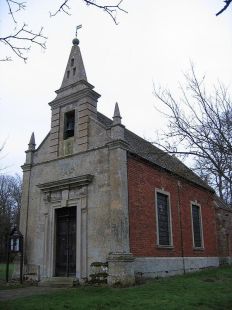
st_johns_church_little_giddingWith the commemoration of Nicholas Ferrar, Deacon 1637, in the first week of the Advent Season, I am taken back once more to T.S. Elliot’s poem Little Gidding -the fourth in his extended series Four Quartets. The poem was inspired by his visit to the little church in the Huntingdonshire village of Little Gidding during the depths of the dark, war-weary winter of 1941. If you are looking for an Advent meditation, I commend the poem to you. In a Wikipedia entry, the editor speaks of the poem:

as a discussion of time and winter with attention paid to the arrival of summer. The images of snow, which provoke desires for a spiritual life, transition into an analysis of the four classical elements of fire, earth, air and water and how fire is the primary element of the four. Following this is a discussion on death and destruction, things unaccomplished, and regret for past events.

Jesus’ words in Matthew 24 are echoed in Elliot’s exploration of the play on time – endings being also beginnings, and the familiar providing an opportunity to know something for the first time. In juxtaposing winter and summer, regret and hope Elliot makes Little Gidding particularly pertinent for Advent reflection.

As we commence our own Advent preparations amidst the  commercial distractions of a premature Christmas, we might pay especial attention to the actions of God’s grace. Grace (Elliot’s fire) transforms thwarted emotional energy to become the engine of our hope. In hope, we discover the paradox that hope does not need to know the day or the hour, the time or the place. Being a transformation of the energies of loss, hope becomes the compass, the directional finder aligning us with the expectations of God’s Kingdom.

This Advent Sunday what kind of place is it we have arrived at? Are we not so sick and tired of ourselves that we long for something to be different and so are ready to risk in order to move forward? The apocalyptic language of Matthew 24 is a reminder to us of Elliot’s immemorial lines:

What we call the beginning is often the end
/And to make and end is to make a beginning.
/The end is where we start from. …. We shall not cease from exploration and the end of all our exploring will be to arrive where we started and to know the place for the first time.

[1] http://www.workingpreacher.org/preaching.aspx?commentary_id=3089

Modelling Resistance and Reconciliation

CHrist the King

I

This Sunday, the last in the season after Pentecost is Christ the King. Christ the King is a relative newcomer in our Anglican-Episcopal calendar, having been adopted only with the Three-Year Ecumenical Lectionary. The Sunday before Advent was traditionally known to us as stir-up Sunday because of the opening words of the Collect: 

STIR up, we beseech thee, O Lord, the wills of thy faithful people; that they, plenteously bringing forth the fruit of good works, may by thee be plenteously rewarded; through Jesus Christ our Lord. Amen. 

The English joke that the name stir-up Sunday derived from this Sunday marking the first occasion for the many stirrings of the Christmas Pudding, presents a lighter side to this day. There is, however, a more serious side to the designation of Christ the King for the last Sunday of the calendar year. In 1925 Pius XI proclaimed the feast of Christ the King as an assertion of the Catholic Church’s protest against the rise of fascism and the growing threat of communism.

Against these forces, Pius XI asserted the old Constantinian power of the Church as the only center of allegiance for Roman Catholics. At a considerable cost to liberty and freedom of thought within the Church, he marshaled the Catholic legions against those he perceived as the enemy.

The historical context for the origins of the commemoration sounds a tone today that is also problematic. This is an old story of one authoritarian system asserting itself against competing, equally authoritarian rivals. This is problematic because the Episcopal Church lays no such claims to this style and exercise of political-monarchical authority. Consequently, we have to find our own more authentic understanding of Christ as King.

II

Luke 23:33-43, a section of Jesus’ Passion Narrative appointed to be read on Christ the King this year points us back to Jesus’ arrest, trial, and crucifixion in our search for a model of Christ as King that is authentic to our tradition.

The crucifixion is the end phase of a process that has Jesus embroiled in a complex three-way political power play between the Temple Authorities, the Roman Governor, and an angry and anxious populace. Finally, the Temple priests have Jesus in their grasp. Yet, they fail to get Pilate to easily do their bidding. Pilate thinks he has adroitly outmaneuvered the Chief Priests in finding no charge against Jesus. However, as he prepares to release him he is confronted by the third force in this political quagmire – the people who on realizing Pilate’s intention clamor for the release of Barabbas, a much more dangerous yet popular rabble-rouser. Throughout history, crowds seem to have an attraction for bullies who appear to be men who will upset things and get things done. Pilate is trapped. Although fully prepared to thwart the designs of the Chief Priests he caves before the pressure of the threat of popular agitation.

III

Politically, there is nothing new under the sun. Like many at the moment, I find myself transfixed and at the same time repulsed by the drama of the Trump presidential transition appointments. I know that there are others who like me are also transfixed, but yet unlike me, are excited by this process and its prospects. At times, I do approach a feeling of excitement as I catch glimpses of the possibility that Donald Trump might be, inadvertently so to speak, the catalyst for the change we all so yearn for. In other moments, I am filled with fear at the dangers and uncertainties opening before us.

Amidst our uncertainties and deep soul questioning in this post-election period, we have a sense that something fundamental has changed. Whether fearful, or celebratory, or merely curious we all remain so close to events that it’s difficult to see clearly, exactly what it is that has shifted and whether this shift is for better or worse?

I read calls for reconciliation. I hear calls for resistance. I suspect both will be needed yet I am mindful that both reconciliation and resistance involve negotiating confusing tensions. When does reconciliation become simply a cover for appeasement? When does resistance degenerate into a party politically motivated refusal to accept democratic process?

Yet, I am increasingly aware of a third call beginning to emerge; a call for repentance. How has the Left lost the popular support of working men and women? It is sobering to remember that the block who unequivocally voted for the Trump ticket are the people who supported Roosevelt and the New Deal, and who most recently returned Barak Obama to two terms in the presidency. As the Democratic mainstream faces up to a need for repentance, it’s not a matter of diversity politics or jobs to combat poverty. Why not both at the same time, wouldn’t that be a novel idea?

In the interests of even-handedness, it’s also salutary to remind the Right, that although the Republican electorate, in the end, threw itself behind a Trump victory, this is not the wider electorate’s endorsement for Repbublican policies which overwhelmingly favor the 1%. One thing becomes clear, the working class electorate is not stupid as many had begun to fear, it seems to have simply become desperate.

IV

I suspect as we move forward, the specificity of unfolding events will offer greater clarity to each of us about how we need to respond. In Luke 23 Jesus’ ministry has led him to such a moment. Hanging on the cross he makes the ultimate offer of reconciliation. Yet during his trial, he has presented a powerful if perplexing model of resistance in his refusal to play the tit-for-tat power game. Jesus’ strength lies in his very vulnerability and is this not why we overlook him as our model for our political response?

The vulnerability of non-violence reveals Jesus’ truth; that God can do nothing with our pretense of strength. Our pretense of strength squeezes God from our frame of reference. Our vulnerability, on the other hand, offers God an invitation to enter into our picture of the world and to partner with us. Jesus’ vulnerability becomes an opportunity for God to act for the crucifixion is not the end of the story.

That the fear of being vulnerable unleashes a virulent strain of paranoia in any culture, is not a new discovery. We see this coming to the fore as the voices of racial, religious and cultural purity gain ascendancy across the world as otherwise helpless politicians and leaders seek to advantage themselves through the exploitation of fear. Everywhere we see the mounting consequences for populations whose fate is to pose the specter of the utter helplessness we defend against recognizing in ourselves.

It’s a sorry story of history that Pius XI didn’t foresee his increasing resort to authoritarianism to confront authoritarian assaults would lead to a distortion that ultimately made it hard to distinguish between friend and foe.

V

The deepest insight of the Judaeo-Christian Tradition is that humanity is made in the image of God. The implications of this are rather far reaching to contemplate. So instead the Church has always had a tendency to reverse this central insight and to see God as refracted through our image of ourselves; Christ as an  earthly potentate.

When God becomes remade in our image the result is one where violence, oppression, hatred, and fear become divinely sanctioned – Christ dons the trappings of our earthly rulers’ pretense of strength. To realize that we are made in the image of God requires us to embrace vulnerability and be changed by this experience. This impels us to focus on solving problems at source. This is what it means to be agents, not of a worldly rule given the fig leaf of divine sanction, but of the continued in-breaking of the Kingdom of God that moves one heart, one mind, one breath at a time.

We have been silent witnesses of evil deeds: we have been drenched by many storms; we have learnt the arts of equivocation and pretence; experience has made us suspicious of others and kept us from being truthful and open; intolerable conflicts have worn us down and even made us cynical.

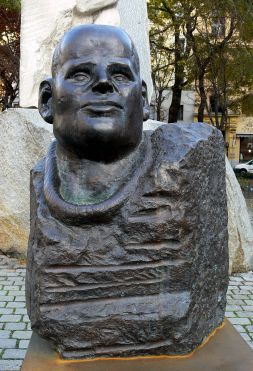
Dietrich Bonhoeffer continues:800px-hrdlicka_portrait_bonhoeffer_wien

Are we still of any use? What we shall need is not geniuses, or cynics, or misanthropes, or clever tacticians, but plain, honest, straightforward men [and women]. Will our inward power of resistance be strong enough, and our honesty with ourselves remorseless enough, for us to find our way back to simplicity and straightforwardness?  

As with Jesus, we may discover there is a cost attached. In searching for an interpretation of Christ the King that is more authentic to our own tradition, Luke’s gospel directs our attention back to the iconic image of Jesus, not robed in kingly power, but hanging on a cross. Perhaps here we can see an image of reconciliation as the ultimate expression of resistance. 

An anonymous Franciscan blessing goes:

God bless us with discomfort at easy answers, half-truths, and superficial relationships so that we may live deep within our heart. May God bless us with anger at injustice, oppression, and exploitation of people, so that we may work for justice, freedom and peace.  May God bless us with tears to shed for those who suffer from pain, rejection, starvation and war so that we may reach out our hand to comfort them and to turn their pain into joy. May God bless us with enough foolishness to believe that we can make a difference in this world so that we can do what others claim cannot be doneAmen

Things Take the Time they Take


images-1

I

On Veterans Sunday, we honor the serving members of the armed forces. On Veterans Sunday we also confess our hypocrisy, for we praise these men and women while on the battlefront and ignore them when they return home with bodies broken and minds scarred.

Throughout the British Commonwealth, this is Remembrance Sunday. Both Veterans and Remembrance Days originate in Armistice Day, the day when in 1918 at the 11th hour of the 11th day, of the 11th month, the guns on the Western Front fell silent. It was to be the war to end all wars. This was a hope unrealized. A hope added to a long list of broken dreams. Across the globe, nations will remember their war dead with these solemn words from the third stanza of Robert Lawrence Binyon’s poem: For the Fallen.

For they shall not grow old and we that are left grow old: age shall not weary them, nor the years condemn. At the going down of the sun and in the morning we will remember them.

On Armistice Day in 1918, the first rector of St Martin’s, Dr. Washburn celebrated the Eucharist in France where he was serving as a chaplain in the American Expeditionary Force. The significance of the day for Dr. Washburn lay not only in its contemporaneous importance but also because it was Martin’s Day -the feast day of the St Martin of Tours, our patron saint. He wrote home to the Vestry of his feelings on this day and we have his letter in our archives.

II

In the hymnal we find at number 591 the words:

O God of earth and altar bow down and hear our cry. Our earthly rulers falter, our people drift and die. The walls of gold entomb us, the sword of scorn divides. Take not thy thunder from us, but take away our pride.

So begins the first stanza of a poem penned by G.K. Chesterton in 1906. Following a meeting of the Church Socialist League in 1912 the delegates marched on Lambeth Palace with a petition to the Archbishop of Canterbury. They marched through central London and across Lambeth Bridge singing the words of Chesterton’s poem to the tune of Kings Lynn.

This was a particularly difficult time in British national life. The Christian Socialists[1] marched against the background of viral militarist jingoism gripping the national imagination as the arms race with Germany intensified. They marched against the backdrop of deep labor agitation with a national coal miners strike in progress. The prospect of civil war was suggested as a solution to the nation’s ills. The First World War was welcomed by many in the Establishment because it provided the opportunity to cleanse the bloodlines of the nation – as Winnington-Ingram, Bishop of London -proclaimed on the eve of war in 1914.

G.K. Chesterton came late to Christianity and only became a Roman Catholic in 1922. He came from the Left and is reported to have said that:

the only alternative to being a Socialist was not being a Socialist- and not being a socialist was a perfectly ghastly thing. It meant being a small headed and sneering snob, who grumbled at the rates (property taxes) and the working-classes.[2]

The words seem both quaint and yet poignant for us living in another time and national context. O God of earth and altar rang out through the tumultuous years leading up to the First World War. These words continued to inspire the Christian Left during the tensions of the interwar years . They remind us that our own time of tumult is not unprecedented within living memory. The powerful and polarizing sentiments that suggest civil war as a solution to the ills that besiege us, is I fear, not far from some people’s minds.

We have been living through a period of increasing national polarization during which confidence in the integrity and functionality of our democratic institutions has been called into question.  Contempt for democracy and the Constitution has marked the very party that claims superior allegiance to the Constitution on the floors of both the Senate and the House. The recent election evidences at least, the integrity of the electoral process.

We can all take heart from this. The fact that a candidate for the presidency can win the popular vote and lose the Electoral College is a perennial complexity of the American system. Yet it is not an indication of any deficit in the democratic integrity of our electoral process. Therefore, we echo Mrs. Clinton, President Obama, and Bishop Knisely when we call upon all to respect the outcome and now to pray for the President Elect.

III

Mr. Trump seems now to be something of a blank canvas as we wait to see how the campaigning Trump transforms into the presidential Trump. Shakespeare reminds us that:

All the world’s a stage, and all the men and women merely players; They have their exits and their entrances, And one man in his time plays many parts.

I despise the way Mr. Trump campaigned. As I mentioned last week, his style of campaigning has unleashed dark forces into civic consciousness that will be hard to banish back into our collective unconsciousness. Yet he won on the promise of a real departure from business as usual in the corridors and chambers of political power. Many of us are still struggling with our grief and fear. Yet, whether as supporters or detractors, we all find common cause in earnestly desiring an end to our political culture of fiddling while Rome burns. Whether or not our hopes are fulfilled, time will tell.

IV

In her poem Don’t Worry Mary Oliver pens:

Things take the time they take. Don’t worry.

Oliver’s words bring an important nuance to Jesus’ words of dire prediction in Luke 21 in which he confronts his disciples as they marvel at the grandeur and beauty of the Second Temple, a source of great national pride for them. Jesus’ words cut them off at the knees – as it were, as he warns them of the Temple’s eventual destruction accompanied by complete social breakdown – a prediction that must have seemed inconceivable to them.

Within the prediction of calamitous events of social and environmental collapse Jesus tells us that the in-breaking of the Kingdom of God will take the time it takes and we are not to worry about that – frustrating, even frightening, certainly disappointing for us though this may be.

Jesus foretells the destruction of the Temple and with it the last semblances of a Jewish Nation. Luke records Jesus’ prophecy from the other side of the actual historical experience. It is tempting to draw parallels between this period and our own national situation in the second decade of the 21st century.

Mid to late 1st Century Jewish society had fragmented into conflicting factions -violently opposed to one another because of their disagreement over how to respond to increasing Roman oppression. As the increasing impossibility for religious accommodation to the political order mounted, different groups found different solutions[3].

Instead of Roman Oppression, today we divide along similar lines in response to a new imperialism of globalization with its propensity to favor technology and transnational capital flow over the human and societal interests of labor.

We have an urgent need to learn how to walk in one another’s shoes. Our differences reflect the way our own personal experience colors the way we see the world. Personally, I find the best way to do this, is, to be honest about what scares me and to invite others to do likewise. We all fear the experience of  the underdog in a culture where abundance is masked by anxiety and a general assumption of scarcity. Hense the rich get richer while everyone else stagnates if not become poorer in real terms. We all fear being oppressed and discriminated against by the imposition of someone else’s rulebook.

Consequently, there is an underdog experience somewhere in all our lives. We hide from this experience by uber-dogging one another. What if we begin to relate to one another across the seeming chasms that divide us with the assumption that what unites us is the shared underdog experience?

V

Despite the time it takes, Jesus’ message is that the Kingdom even when it is attended by the rumor of war, civil conflict, and familial betrayals, is one of assurance for God is a God of liberation –I am the Lord your God who brought you out of the land of Egypt– and his purposes cannot long be delayed.

In the meantime, we have work to do as we daily fulfill the five promises of our Baptismal Covenant. These commit us to redouble our fight for justice, equality, and freedom from the oppressions of racism, homophobia, and misogyny. In the meantime, let’s hope Mr. Trump does mean what he says about breaking open the Washington logjam by challenging the corruption of political and vested interest privilege. If he does this we might hear Jesus speaking through Mary Oliver’s words:

Things take the time they take. Don’t worry! How many roads did St. Augustine follow before he became St. Augustine? 

So we pray for President Elect Trump. We pray that God will shape him in new ways as he takes on the mantle of leadership. As we do so we continue to sing songs of expectation, marching to the promised land!

[1] Americans need to be reminded that British Socialism grew not from the root of Marxism but from the Gospel imperatives as championed by Christians especially Methodism and other ‘Non-Conformist Protestant Traditions and by Anglo-Catholicism within the Church of England.

[2] Cited by Christopher Howse writing in the Telegraph, Sept 12th 2015

[3] The Essenes retreated into wilderness regions where they kept a strict separation from everything outside their communities, hunkering down to wait for the end-times. The Zealots took up armed conflict and took the fight to the Romans, at one point driving them from Jerusalem for a period of time. The Sicarii carried out street-level guerilla warfare assassinating Roman officials and Jewish collaborators. The Sadducees, the ultimate accommodationist party, fared poorly at the hands of the Zealots. The Pharisees suffered also as their ability to hold a middle way of fidelity to God and obedience to civil authority became less and less tenable. Those who did not take up arms found solace in an apocalyptic vision of their present suffering portrayed in future language and images of the immense final conflict that would usher in the reign of God and the vindication of the persecuted.


Multiple Reflections on All Saints-All Souls

I

The human race has a collective unconscious principally accessed through the vehicle of culture. Through culture, we gain access to the universal (common to all humanity) and the particular (located within the particularity of a culture) repositories of the collective unconscious. The word repository is a good one here.The collective unconscious houses the violent impulses of a society or culture. This is material too dangerous to allow free reign because the destructive nature of such collective unconscious material poses a threat to the stability of a civilized society.The collective unconscious is where a culture or society’s primal instincts, impulses, memories are banished through the mechanism of repression – a form of collective forgetting.

Because the mechanism of repression is a form of forgetting, we are easily lulled into a false assumption that what is forgotten has been deleted from our cultural experience. We are surprised when unconscious material resurfaces into the field of conscious awareness. Cultures and societies often imagine they have moved on from the memories of a more violent past. Like material we imagine has been deleted from the hard drive on a computer, the cultural violence of the past lurks out of sight and out of collective mind. On a computer hard drive deleted material simply awaits the right program to unlock its retrieval. In the case of a society or culture circumstances of uncertainty and conflict weaken the mechanism of repression; allowing the primitive phobias rooted in hatred and fear to re-emerge into the conscious awareness of the civic space.

The idea of a collective unconscious is one of Carl Jung’s important contributions to the field of depth psychology. Yet, the core idea of the unconscious is best summed up by a maxim of the great Sigmund Freud who said that what we can no longer remember we are destined to repeat.

II

I begin this reflection on the significance of the commemorations of All Saints- All Souls on November 1st and 2nd this year with this brief exploration of the workings of the collective unconscious because underneath the Christian carapace of All Saints and All Souls lie very ancient pagan spiritualities. Pagan spiritualities speak to a more primal level of collective experience. These continue to be represented to the modern American consciousness in the rituals of the Celtic Halloween and the Aztec Dia de los Muertos.

Celtic Halloween and the Aztec Dia de los Muertos represent an uncanny similarity. Each is historically and culturally distinct, completely unrelated to the other, yet, their similarity evidences the universal – transcultural – elements of the collective unconscious still very much in play. They both represent cultural responses to the fear of the power of Otherness – that which cannot be seen but remains strongly felt through its malignant influence upon everyday experience. The Halloween custom of disguise expresses our ancestors fear of death. They disguised themselves with costume, mask and face paint in an attempt to hide personal identity from the demons let loose at this time to roam the earth.

This All Saints-All Souls tide, we continue in the nightmare of dark collective and cultural forces reawakened and revitalized, demons of our collective past, which many of us naively believed had been deleted from the cultural hard drive. The endless cycles of an invasive news media communicate into our waking and sleeping the incontrovertible proof of the dark fears of Otherness let loose upon our civic landscape.  Xenophobia, homophobia, racism, or misogyny, fears we thought we had become either liberated from or had at least made social and cultural progress against once again slip their chains in our collective unconscious to re-emerge into the conscious awareness of our shared civic/cultural conversations.

These collective phobias of Otherness never go away. They have never really been forgotten. Our only protection against them lies in a constant conscious remembering to avoid the ambush of unexpected repetition.

III

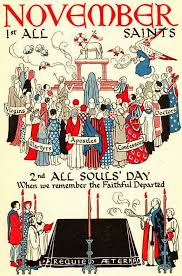
images-2Everything in the universe is interconnected and interdependent, nothing is really forgotten. The Medieval Church understood this only too well in the grand panorama of a three-tiered universe comprised of the Church Militant here in earth, the Church Expectant – those having passed through death into a state of preparation for eventual entry into the third tier of the Church Triumphant – the saints in heaven who now worship night and day before the throne of the Lamb of God. Prayer as an expression of love and affection, of a sense of indissoluble interconnectedness and the ongoingness of relationship, flowed up and down along a two-lane highway connecting the tiers of the three-fold universe.

The 21st-century mind is not the medieval mind. Between them lie the vicissitudes of a process Charles Taylor has called disenchantment. For us the three-tiered universe is at best a wonderful metaphor that stimulates imagination, or is at worst a fairy story explanation, which having grown up, the Western mind is no longer in need of. Yet, at the heart of the three-tiered metaphor lies a profound understanding of the nature of interconnection communicating the indissolubility of relationship.

For many today, myself included, the medieval imaginary is now replaced by a quantum imaginary. The metaphors of web and network, particle and wave, and the structure of parallel dimensions provide the metaphors for interconnection and communication within a culturally syntonic (culturally compatible) expression of ancient realities.

IV

Descending from a cosmic panorama to the human dimension we encounter the central truth at the heart of All Saints and All Souls. All Saints is the only festival that can be transferred to a Sunday so as to take precedence over the celebration of Jesus’ resurrection. The reason for this is that spiritually and psychologically, All Saints-All Souls, link light and dark, white and black, joy and sorrow. These linked commemorations express the fundamental truth that for human beings death is an ambiguous experience.

All Saints expresses the truth that death is merely a biological event at a point along a continuum of life change. As the Eucharistic preface for the dead puts it – for to thy faithful people O Lord,  life is changed but not ended, and when our mortal bodies lie in death, there is prepared for us a resting place, eternal in the heavens. 

This expresses the belief that the life now and the life to come are interconnected by the ongoing nature of relationship continued and sustained through prayer. Thus in the saints, we rejoice with those who have been made complete in the love of God. We continue to request their spiritual concern and the support of their prayer so that the love of those who now worship from a nearer shore continues to strengthen us in our task to be the Church in the world.

Yet, unremitting cheerfulness in the face of death denies our wrenching experience of physical loss and separation from those we love but see no longer. Grief is the response to loss as we experience loved ones kidnapped by death. In the commemoration of All Souls, we give expression to this human dimension of death and although they do not need our commendation, we need to commend them to the mercy and love of God. For us, this is an expression of our continued sense of involvement with them. We ask their prayers and in return, we pray for them as they move into the next phase of a life that is eternal.

Therefore, since we are surrounded by such a great cloud of witnesses, let us throw off every encumbrance and the sin that so easily entangles, and let us run with endurance the race set out for us. Hebrews12:1

The Liminal Millisecond of Risk: Luke 19:1-10

A sermon from The Rev. Linda Mackie Griggs

Kenny Smith could have been a teacher, a preacher, or a politician when he grew up. Last week on the phone, he said, somewhat ruefully, “Wouldn’t you know I’d choose the worst of the three…” He’s a city council member in Charlotte, North Carolina; a white conservative representing a majority-white, mostly, prosperous district in a city that recently joined the ranks of those communities rocked by racial unrest after the shooting death of a Black man, Keith Lamont Scott, by a police officer. Not long after the shooting and the street protests and violence that followed, the Charlotte City Council met to discuss a way forward. The council chamber was full to overflowing, mostly with angry citizens demanding justice for the Black community. Kenny was a target of much of their anger as people demanded answers and vented their frustration. According to a news report Kenny’s family had been threatened. He was a despised government official.

As the meeting approached its end without resolution and with tempers and anxiety still running high, Mayor Jennifer Roberts and the council were advised to leave by a side door. But Kenny stopped and looked again at the angry crowd. Even as his wife, at home and watching the meeting on t.v., texted him to lay low and play it safe, he rose from his chair to speak.

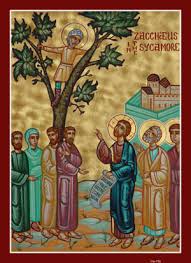
images-1Had Zacchaeus been in that city council chamber he might have known what Kenny was going through. He knew what it was to be despised. He too was a government official; a tax collector for an occupying authority who made his money, and plenty of it, by cheating people. That’s the way it worked; as long as the Romans got their cut, anything else the tax collectors could squeeze out of people was theirs. That’s why Luke regularly refers to tax collectors and sinners in the same breath.

We don’t know what prompted Zacchaeus’ desire to see Jesus. It may have been simple curiosity; he knew the Teacher was coming to town and he wanted to see what the fuss was about. Or it could have been something deeper. Perhaps he knew his own need for healing; he surely knew that his stature in his community was as minuscule as his own physical height. But whatever prompted his interest, he was energetic in his pursuit of Jesus; he ran ahead of the crowd. He climbed a tree to see over the heads of the others. And Jesus saw him in the tree and beckoned to him. By name.

“Zacchaeus, hurry and come down; for I must stay at your house today.”

Let’s rest for a moment in this liminal millisecond between Jesus’ call to Zacchaeus and the tax collector’ scramble down to the ground. In the space between the tree where he perched and Jesus was a crowd of people who hated Zacchaeus. He represented the Roman occupation. He had stolen from these people. The wealth that he had—that he wore in his nice clothes, that he displayed in his comfortable home, and possibly extra land and livestock— Zacchaeus had effectively taken all of this from the mouths of his neighbors and their children. Imagine looking down at these people as they stare angrily back at you, grumbling in wonder that Jesus had chosen to honor you with his presence at dinner, and not one of them.

It looks like a pretty hostile gauntlet to run, doesn’t it?

What happened inside of Zacchaeus’ heart in that liminal millisecond? Did he look into the eyes of Jesus and see God’s mercy? Did his soul break open to reveal a well of gratitude for God’s abundant love and compassion—God’s ‘tender competence’, as we have heard it called? Whatever it was, it was strong and compelling, and it was enough to propel Zacchaeus down from that sycamore, sending pieces of bark flying hither and thither, straight. through that hostile crowd to stand breathlessly before his Lord. He had figuratively leapt into the arms of God, somehow knowing he would be caught and held safely and securely.

And his grateful response was to give. To give half of his wealth and to repay fourfold what he had taken from his community. And Jesus’ response in turn to the questioning crowd was that Zacchaeus, one of the lost, had now been found.

Kenny Smith wasn’t in a sycamore tree in 1st century Jericho, but he might as well have been on that recent Monday night in Charlotte. He sat on a dais behind a table in the council chamber; looking at a crowd of people who projected upon him all of their feelings of years of neglect and injustice toward their community. And when he looked back, in that liminal millisecond after the council was told to leave by a side door, what did he see? What happened inside of his heart?

When Kenny and I spoke about it last week, his voice was reflective. He said, “It must have been some kind of divine inspiration.” Even as his wife was frantically texting him from home not to do it, he did it anyway.

Peter St. Onge, the reporter who wrote the story for the Charlotte Observer, tells it this way:

“I heard your anger,” [Smith] said. “I have three kids. I heard your damn anger.”

Then he stood up and walked toward the crowd. As council member Vi Lyles started speaking, Smith met a black man at the first row of seats. They hugged, and Smith reached for his business card. Then he did it again, a couple steps higher.

He found some who had singled him out earlier. He told them what he had tried to say on the dais, that he’s a conservative from a part of town where people are angry at the demonstrators, but that those constituents and those demonstrators need each other if we want repair.

“I told them we needed to talk,” he says now.

It’s a simple thought, maybe a little quaint. It’s also true.

…Maybe this was a political maneuver, you think, a way for a Republican to look better in a Democrat-heavy city. …But no matter what you think, you should also see this: That moment you most want to retreat to safety might be the moment you most need to reach out.

Because without that, no one will reach back.

Kenny Smith was up against it. He had a choice. He could retreat into safety or take the risk of leaping forward into the unknown. He realized, in that liminal millisecond, that safety was the dead end, while taking the risk—the leap—admitted of the opportunity for the arc of history to bend just a hair closer toward justice and reconciliation. He says he didn’t have a clue how it would turn out. He was terrified. His family had been threatened—his wife was panicking—but somehow deep down he knew that he could depend on God’s sustaining mercy—God’s tender competence. And in that millisecond he was transformed from a despised politician into a catalyst for healing.

And so, he leaped.

And his neighbor caught him by the hand. And another, and another. And this tentative group of former adversaries continues to hold on to one another to this day; meeting for coffee, lunch, conversation. There is still so much work to do, and a great deal to learn on both sides, but they have made a beginning by first getting to know each other.

Zacchaeus’ tale isn’t as open-ended as Kenny’s. We have a distinct sense of a happy ending for the wee little tax collector: salvation has come to his house. Kenny’s story, on the other hand, and that of his community, is still to reach its final chapter, and it is probably quite a ways down the road. We so yearn for a happy ending here, and what we have heard so far—this story of humility and courage, and the generosity born of a heart broken open by the Spirit, gives us hope.

Kenny’s story could easily be ours—the facts and names may change, but perhaps we can identify a time when that liminal millisecond has been all that stood between facing a fearful dead end or accepting an invitation to open our heart to God’s grace and abundance. We look out and see every reason in the world to cling to the status quo arrayed against us, glaring angrily and pronouncing our inadequacy for the task ahead. And then by the sheer grace of God we see beyond that to the truth of belovedness that challenges all of that anxiety; we see through to the healing and wholeness that comes from welcoming God’s tender mercy, offered to each of us by name.

And we take the leap.


Gratitude: Reflected in 3 Movements

First movement

On the 22nd of December 2008, Al and I arrived at Heathrow’s Terminal 5 with an astonishing number of bags; many more than two people could reasonably manage. In those days, we were frequent transatlantic travellers, visiting our young family who until the previous year had been living in College Park, Maryland and now in Phoenix, Arizona. This time, however, we were embarking on a journey of a different kind, one of those great life journeys, the destination of which remains unknowable at the time of departure. Until our granddaughter Claire’s birth in 2005 it would have been inconceivable to either of us that we should ever leave London. Yet, after 35 years we were nevertheless, leaving.

In our different ways, Al and I both represent a particular kind of migration experience. London represented a particular time earlier in our lives when we risked making new beginnings. Now, at a later point in life, when according to conventional expectations we should have been comfortably drifting towards the enjoyment of the fruits of years of hard work and effort, we were throwing the pieces of our lives up into the air with no sense of how or where the pieces might land in a reconfigured life.

In a highly mobile society, our experience is not in any way an uncommon one. Countless others have similar stories of uprooting and transplanting to tell. Millions of these stories are infinitely more traumatic than ours. At the start of our 2017 annual stewardship campaign I share my experience because the theme and title of our campaign is Tender Competence.

Second movement

Tender Competence is a phrase I associate with St Benedict when he instructs his monks in the art of right relationship with one another and tender care of the structures supporting their common life. Tender competence, in the form of hospitality becomes charity. Charity-Caritas is one of the objective actions of love. Benedict’s experience was that when a community practiced tender competence in all aspects of life then charity would flow out through the gates and into the needy world beyond. Essential to Benedict’s thought is the adage charity begins at home. For if we cannot practice tender competence in the ordinary places, in the everyday mundane experiences among the familiar faces that people our lives, then we fool ourselves. Charity without engagement that roots it in time and place; without relational involvement fails to awaken in our fearful and barricaded hearts, the fruits of gratitude.

In 2008, our coming to America was a decision shot with the perils of uncertainty and unpredictability. Our same-gendered relationship enjoyed all the legal recognitions and civil rights afforded all married persons in the UK. Despite Al being a US citizen, in 2008 no such rights and recognitions were accorded us under Federal immigration law. This meant for me that the only way to come to America was as a student on an 18-month study visa. What was to happen after 18 months – neither of us knew?

What we did know was that our desire to be an active part of our young family’s life meant that coming to America was more than an 18-month experiment. For us leaving London was a decision upon which there was no going back. So began an 18-month period in our lives when we ate, drank and breathed the corrosions of uncertainty amidst the anxieties of waiting; waiting for the yet to become known to emerge into focus.

My relating this brief overview of my experience in the context of the start of our 2017 annual stewardship campaign is an attempt to embody that which I invited all of us to consider in this Thursday’s weekly E-News Epistle.

I invited us to use this short three-week campaign as an opportunity for taking a spiritual inventory of the role of gratitude, generosity, and service play in our lives. I offered three suggestions to assist our inventory process:

  • Recall a past experience when you took a risk to be generous. Remember how risky it felt. After taking the leap, how did this leave you feeling? Conversely, if you were afraid to leap, how did you feel?
  • Or, remember a time when you really felt up against it- in the sense that you knew you were totally dependent on God’s generosity for your hope or desire. Looking back how did a sense of reliance on God bear fruit for you?
  • Another approach – recall the consistent generosity that God has shown towards you throughout the ups and downs of your life. As you ponder, can you locate a deep source for gratitude? That no matter how often you have feared or doubted that you would be all right, that things would be OK, with hindsight you can see that God was caring for you, has always been, and therefore will continue to care for you.

First movement returns

In sharing my story of coming to America I want to give an example of the operation of gratitude, at least in my own experience. 2008-2012 represented a period during which my sanity was preserved in the face of the enormous uncertainty by the discovery of an that at the heart of stress lies and invitation. The invitation was to accept my experience of being utterly dependent upon God’s sustaining generosity. It’s only when the illusions of self-sufficiency fall away that the full power of God’s tender competence breaks into our barricaded hearts. It was at this point that I was reminded that God’s generosity towards me had always sustained me again and again throughout the ups and downs of the whole of my life, and would do so now.

When I speak of gratitude for God’s generosity I speak of several interconnected and interdependent elements. I speak of the people around me who through affection respect, and generosity encouraged, supported, and facilitated unfolding processes and events that opened doors to my future. But chiefly, I speak of an experience of the cultivation within of a deep trust in God born of utter dependence. This is not the fruit of my ability to trust, but is an experience of trust being cultivated within me by the tender competence of God.

Third movement

imagesIn the parable of the tax collector and the Pharisee, we are invited into the pitfall of making moral judgments. Our 21st-century ears have been conditioned by the unrelenting drumbeat of anti-Semitism, the roots of which undoubtedly have been fed by a willful misinterpretation of the Gospels. Therefore, we are automatically predisposed against the self-righteousness of the Pharisee, and in so judging him commit the same error we condemn in him, i.e. that of self-righteousness.

We should remember that the Pharisees were the good guys. They aspired to live faithfully and with integrity. They shared with Jesus a progressive and compassionate understanding of Torah as a response to, rather than an imposition riding roughshod over the demands of everyday life. In his speech before the altar, the Pharisee rehearses the values he aspires to live by. He does not rob, exploit, or extort. He remains faithful to his wife and seeks an honorable accommodation with the Roman occupation that enables him to stay on the right side of the civil authority while keeping God as the focus of his ultimate allegiance.

The tax collector trades in a dirty business that often involved threats, extortion, and robbery. He is one of Rome’s debt collectors and he made a comfortable living out of his fellow citizens as an extortionate middleman.

So what is the deciding factor between each man for Jesus? It’s clearly not integrity and honesty. It’s not fidelity and fulfillment of duty. For Jesus, one man stands within a framework of comfortable self-assertion, confident in his ability to do the right thing and win God’s approval, while the other bows low, consumed by the realization of his utter helpless dependency upon the generosity of God. He is the one Jesus tells us goes home justified – made right again with God.

Utter dependence flows from the painful realization that there is nothing we can do other than to entrust ourselves to God’s tender competence. The tax collector has nothing going for him except he knows his need of God. It’s the very protections of an upright and faithful life that insulate the Pharisee from this crucial experience. He remains righteous, yet not justified.

Finale; first, second, and third movements combine

Are we not both Pharisee and tax collector? From my perspective in 2016, with the passing of time, the rawness of the time of uncertainty and vulnerability fades allowing the Pharisee in me to once again come to the fore. The Pharisee in me asks: am I not the author of my successful migration? Is not all I enjoy the fruits of my own success? After all, I am someone capable of risking, someone able to navigate complex bureaucratic systems and cultivate crucial relationships to help me at each step of the journey. In short, as Pharisee, I can see my successful migration to America and eventual arrival at St. Martin’s as the evidence of my undisputed qualities of discipline, diligent hard work, and personal social and relational skillfulness, not to forget access to the financial resources to make things happen. Viewed from here I am simply enjoying the desired reward that comes to a capable and resourceful person like me.

But is this really how things work? The tax collector in me knows that underneath my Pharisee facade there lies an experience of utter dependency on the generosity of God’s tender competence towards me. The tax collector in me knows only too well the encounter with helplessness. I was surprised by the power of love for our granddaughter. I felt compelled by that love to throw life up in the air without any idea of how this was actually going to work out. In doing so, I came to know the intensity of utter dependency on God generosity. Within all of us, the Pharisee’s self-confidence is always at war with the tax collector’s dependence upon God’s tender competence.

We face together the responsibility of rising to the challenges ahead in 2017. Speaking personally, I face into the challenges ahead with my sense of gratitude in the forefront of my awareness. I feel so privileged and thankful for having arrived at this point in my life. I feel a deep gratitude to God for calling me to be a part of this community. I am energized by the opportunity to build on our community’s past in order to prepare us for a future in which we will only grow more and more fit for the purpose God intends for us. In short, it is from my experience of gratitude that I find the energy to invest myself measured out within time, talent and treasure- in the life of the St. Martin community.

At the start of our 2017 campaign of Tender Competence, my theme is that of gratitude, which is the first impulse of the spiritual life. Over coming weeks I will speak about generosity and service as the other points in the virtuous cycle flowing from an awareness of gratitude for God’s tender competence. My charge to us all is to connect with the sources of gratitude in our own experience and at least between now and November 13th to make the cultivation of gratitude our enduring meditation. As we do this we will discover we are in for some surprising discoveries.

Will he find faith on earth?

Sermon for October 16, 2016,  from by John P. Reardon


“When the Son of Man comes, will he find faith on earth?” “When the Son of Man comes, will he find faith on earth?” How odd to hear Jesus ask such a question. I’ve always assumed it to be a rhetorical question. After all, if you take Scripture as a whole, there is no doubt as to the outcome of history. God wins. Indeed, in Christ, God has already won. But what if, in the midst of his historical, earthly life, Jesus really doesn’t know? What if he is left to wonder, like the rest of us, what the human race will do with its history, and whether upon his return he will find anyone having kept faith?

As the calendar and liturgical years come to an end, it is natural for our thoughts to be directed toward ultimate things, to the end of things, to the outcome for which we hope and the outcome we fear. The readings we encounter on Sundays begin to speak more of end times, of judgment, of Christ’s Second Coming. They invite us to contemplate the ultimate meaning of history—of our personal stories and of all history. They invite us to take stock of our faith.

That is a particularly vivid challenge in this year, this most surreal of election years when so much of what has been our common life appears to be coming unraveled. In this country and throughout the world, there has been an intensification of verbal, physical, and emotional violence, a hardening of hearts and minds in which beliefs are presented as caricatures of themselves. Amplified by social media, we appear to be at one another’s throats a good deal of the time. Reflecting on the current tenor of the times in which we are living, I find myself contemplating a nearly 100- year-old poem written by William Butler Yeats after the end of the first World War, as discord was heating up in his native Ireland. He, too, found himself contemplating the idea of a Second Coming. He, too, felt that the outcome had to be framed in the form of a question.

The Second Coming

Turning and turning in the widening gyre
The falcon cannot hear the falconer;
Things fall apart; the center cannot hold;
Mere anarchy is loosed upon the world,
The blood-dimmed tide is loosed, and everywhere
The ceremony of innocence is drowned;
The best lack all conviction, while the worst
Are full of passionate intensity.

Surely some revelation is at hand;
Surely the Second Coming is at hand.
The Second Coming! Hardly are those words out
When a vast image out of Spiritus Mundi
Troubles my sight: somewhere in sands of the desert
A shape with lion body and the head of a man,
A gaze blank and pitiless as the sun,
Is moving its slow thighs, while all about it
Reel shadows of the indignant desert birds.

The darkness drops again;  but now I know
That twenty centuries of stony sleep
Were vexed to nightmare by a rocking cradle,
And what rough beast, its hour come round at last,
Slouches towards Bethlehem to be born?

Jeremiah tells us that the parents have eaten sour grapes and the children’s teeth are set on edge. What a visceral image for the ways in which one generation seems only to benefit from its negative actions while future generations are stunned when the bill comes due. Whether it is the cycle of war, terrorism, and other forms of violence, the increasing fragility of our environment in the face of our demands, or the pent-up rage of people on the short end of things—the economically destitute, people discriminated against due to race, gender, or sexuality, or people who feel their familiar culture and mores slipping away and hear themselves accused of bigotry for espousing beliefs that were considered common sense when they were growing up—our world is finally vexed to nightmare by the rocking cradle of injustice, and we all find our teeth set on edge.

In the cacophony of angry voices trying to make sense of their grievances, it is hardly surprising that, as Saint Paul tells Timothy, we have arrived at a time when people coming from multiple perspectives and experiences are no longer able to put up with sound doctrine and wander away to explanatory myths spun by would-be demagogues who know how to tickle people’s ears. The falcon cannot hear the falconer. Things fall apart. The center cannot hold. The best lack all conviction, while the worst are full of passionate intensity.”

In this painful context, it is vitally important to hear the encouragement today’s Scripture readings offer us, cheering us on to pray always and never to lose heart. Jeremiah tells us that God is at work in all the messiness of human history, even ascribing negative events and destruction to God’s overall purpose would-ber away what has gone bad and to plant anew. Jeremiah tells us of God’s purpose—not just the restoration of the Southern Kingdom of Judah, but the full restoration of both the Southern and the Northern Kingdoms. No dream is too big for God.

Jesus tells us of a tough and determined widow who will not quit until justice is done for her. To be a widow in Biblical times was to be utterly vulnerable and helpless, dependent on the protection and care of others. The Torah commanded special care for widows. But the world often does not conduct itself according to divine precepts, and this widow’s fate lies in the hands of a corrupt judge who has no regard for God or for other people. But even if that judge cannot be inspired, he can be worn down by persistence. If the persistence of a powerless widow can get results from a corrupt judge, how much more can our constant return to prayer, alone and together, accomplish, when the God to whom we pray is the very one who cares for us and has chosen us to live in God’s Kingdom and to accomplish God’s work in the world? This is the God who, the Psalmist tells us, neither slumbers nor sleeps.

Returning again and again to prayer, we can find the strength to steer clear of the temptation to become one more loud voice in an ongoing squabble. We are able to persist, in a spirit of patience, in the holy work of convincing, rebuking, encouraging, and teaching, not our own views or agendas, but the truths of God’s reign that manifest themselves through Scripture. And we can hear and respond to God’s voice speaking to us through the voices of those who, like the widow in today’s Gospel story, do not give up demanding justice.

When the Son of Man comes, will he find faith on the earth? Of that there is no doubt. As we know, God wins. But will he find your faith? Will he find my faith? He will if we follow the example of this poor widow and pray always, never losing heart.

Only One in Ten: Luke 17

Francis of Assisi provided the focus this last week for my E-news epistle that comes out imagesevery Thursday. In it, I asked do we have the courage to allow ourselves to be touched by the generosity of God? Like Francis, to be touched by the generosity of God is to become a conduit for the flow of God’s generosity into our spiritually parched world? Individually, we may not match up to Francis. Yet, as a community, we can become opaque screens upon which God projects the change he longs for us to be. As Pope Francis seeks to do, we too must strive to emulate Francis’ in the face of the calculated hardness of the human heart. Do we have the courage to take such a risk?

Stepping into the text

The middle chapters of Luke’s Gospel describe Jesus on the move as he makes his way from Galilee to Jerusalem. In chapter 17 Luke places Jesus in the no-man’s-land region between Galilee and Samaria. Only Luke reports a number of encounters that Jesus has along the way, either with Samaritans or in the region of Samaria.

Samaria was once the Northern Kingdom of Israel destroyed by the Assyrians in 721. The Samaritans of Jesus day were the descendants of the Israelite peasantry left behind when the nobility was sent into captivity, never to return. The Assyrians resettled Samaria with foreign groups with whom over time the Israelite peasantry intermarried, thus defiling themselves in the eyes of Galilean and Judean Jews.

Luke 17:11-19

The particular story in chapter 17 involves Jesus healing of ten lepers. The gist of Luke’s account is that of the ten who follow Jesus’ instruction to go show themselves to the priests as a confirmation of being healed, only one returns to give thanks. You guessed it. The one who displays gratitude is not a Judean or Galilean, but a Samaritan.

Gratitude is the key

Gratitude touches the most unlikely of people. Gratitude is encountered often in those areas of our experience in life where we might least be looking for it. For gratitude and the experience of outsider-ness and exclusion seem to be universally connected. Surveys reveal that gratitude lies not among those who enjoy abundance but flows among those whose experience is marked by limitations of various kinds. Likewise, within ourselves, we encounter our gratitude not so much in the areas of personal experience where we feel confident and strong, but in the areas where we feel most vulnerable and aware of our poverty.
The healing miracles of Jesus are not the equivalent of medical cures. Their primary function is to signal the boundless extent of God’s generosity. God’s unbounded generosity is an offer requiring an act of acceptance. Without our acceptance, God’s generosity remains only something offered; not yet realized. The realization of God’s generosity comes only through our encounter with gratitude. The stronger our gratitude, the more open we are to receiving generosity, making us more likely to risk living generously.

Forging connections

ten-lepers-iconWhat distinguishes the Samaritan who returns to give thanks is that his whole perspective on life is radically transformed by his experience of gratitude. We don’t know about the other nine lepers who went off to show themselves to the priests. Yet, we detect a hint of something provisional about their healing. Jesus tells the Samaritan who returned to give thanks to God that his healing is the result of his faith, which alone has made him well. This raises the question about the other nine. Is it possible they were cured but not healed? Jesus’ final command to the Samaritan is: Get up and go on your way; you faith has made you well. The man is not only cured of his illness, he is made well. In other words, his return to give thanks for God’s generosity, occasions his healing!

Cure, healing, and human well-being

In our materialist medical worldview to be cured is seen as the miracle. If we long to emulate the magnetism of Francis then we will find ourselves longing for more than cure. For us, the longed-for miracle is to be healed of what ails us. We long for wellness, a quality of wholeness. In our pursuit of becoming whole, we want something beyond an eradication of illness.

Amazing advances in the ability to cure more and more illness marks the achievement of medical science. We thank God for such advances. Or, do we really? For most of us, after an initial sense of relief, in a loose way of speaking we are thankful for a return to the status ante, i.e. life, as we knew it before illness struck us down. I say, thank God I have my life back. Yet in so many instances to be cured of illness is not the same as being healed of what ails us.

Human well-being sometimes referred to as wellness or wholeness, or as Francis demonstrates holiness, requires the alignment of body, mind, and spirit. A physical or somatic cure can be part the process of healing but healing may also take place without being accompanied by a somatic cure. For healing is a holistic process of realignment that affects body, mind, and spirit, – soma, psyche, and pneuma. Wholeness-wellness -holiness – the interconnected elements that when realigned produce a transformation of perspective we call, healing.

It’s this transformation of perspective that is hinted at in Jesus’ words to the Samaritan. He is not only cured of his leprosy, his life is transformed in a new way that is so much more than the absence of illness. This is the experience of healing as practiced by Jesus. To be healed is to be ushered into a new dimension of perception and perspective that unblocks the wellspring of gratitude to overflow in us, and it is this that results in our becoming healed – reclothed in gratitude for God’s generosity.

Healing’s fruit

My reflections this last week on Francis reminded me that if we as a parish community are to meet the challenge facing us it will require more than the good stewardship of bricks, mortar, and institutional life. It will require of us to risk becoming healed. Francis was touched by the generosity of God and this made him a conduit through which the generosity of God flowed into a spiritually parched world. A man who in many ways remained a broken human being became a magnet for others drawn to the experience of God’s generosity.  Do we have the courage to allow ourselves to be similarly touched by the generosity of God? Individually, we may not match up to Francis. Yet, as a community, we can display Francis’ quality of magnetism and so change our world as he changed his? Do we have the courage to take such a risk?

Our materialism hides so much from us concerning what truly ails us. Cure for whatimages-1 afflicts the body brings us no nearer to a healing of that which ails our hearts and souls.The fruit of gratitude is to no longer resist new opportunities to be generous. As we transition from October to November, towards our great act of national Thanksgiving, the interconnections between gratitude as the response to the experience of generosity and generous living as the fruit of gratitude – form a virtuous cycle. A virtuous cycle that we will need to more fully explore.

In the meantime let’s meditate on the question: Will we be the one who returns to thank God?

Where Does It Hurt?

Sermon from The Rev. Linda Mackie Griggs for Pentecost 20, Year C (Proper 22)                                    Lamentations 1:1-6 & Psalm 137


Of all of the comments that I have heard regarding the Bible over the past few months, the one issue that rises to the top of the list in frequency and level of concern is that of violence. Though it has been phrased any number of ways, the question is basically: “How can this sacred book, the inspired word of God, contain scenes of such brutality and cruelty?” The usual response of people who encounter passages like the ones that appear in, to name a few, Joshua, Judges, Esther, Kings, Psalms, and Revelation is to figuratively squeeze their eyes shut and stick their fingers in their ears as if to block out the offending words and images; to declare that such images don’t reflect our faith and therefore we can safely ignore them.

Would that it were that simple. Yes, God is good and we are God’s beloved people; after all, Jesus called us Children of Light. But to ignore the presence of violence in the Bible would be the equivalent of ignoring the fact that light casts a shadow. Our sacred scriptures contain violence because they are about US. They are about God’s love and call to us in all of our sinfulness and frailty. And cruelty to each other. We can’t ignore it. Violence is in the Bible because violence, whether physical, emotional, intellectual, or spiritual, is in us, like it or not.

So rather than set aside the difficult passages, we’re called to the challenge of engaging with them; understanding first that the inspiration of Holy Scripture didn’t stop with the writing. It continues with the reading and the wrestling. And when we engage this way, in this community, we can become better equipped to engage with the violence and suffering that confronts the world outside these walls.

There are two strategies that I find helpful in engaging with Scripture. One is imagination; being able to read between the lines and to place oneself in the narrative. This is actually a part of Ignatian spiritual practice, and it is valuable for gaining new perspective—seeing things from new points of view. The second strategy is interrogation. I’ve always maintained that the most important part of a life of faith isn’t the answers; it’s the questions. So what is the question today? A Good question!

But first, the passage. Our psalm for today—Pslam 137 is notorious in psalm-reading circles as one that could be classified as a Text of Terror because of one verse. One verse that I confess I left out of our reading this morning, because it is that disturbing. You can find it on page 792 of the Prayer Book. The revenge hinted at in verse 8– Happy shall they be who pay you back what you have done to us!– is detailed in verse 9 –a horrid description of killing children, and it makes us wince. It should. And the first reaction is to turn away. But we want to know how God can possibly be speaking to us through these words; between these lines. And to discover that, we go back to the beginning.

In 587 B.C. the kingdom of Babylon under King Nebuchadnezzar destroyed Judah’s capital of Jerusalem, and took the people of Judah into captivity. The Book of Lamentations which we heard from this morning is an expression of the wrenching grief that Judah bore. And psalm 137 is an even more personal and intimate view of Judah’s trauma, from the point of view of those who were forced to walk over 500 miles to a hostile foreign land, without a clue as to what fate awaited them. This psalm draws us into a scene of heartbreak and exhaustion. Imagine enduring such a journey, coming to rest for awhile in a grove of willow trees somewhere between the Tigris and Euphrates rivers. Imagine the sense of desolation and loss—the bitter tears shed at the memory of the traumatic destruction of home and Temple. And then to be bullied and ridiculed by your captors: “Our tormentors asked for mirth, saying, ‘Sing us one of the songs of Zion!” The resentment and anger build from a slow simmer of defiance to a rolling boil of rage as the writer remembers witnessing the destruction: “Tear it down! Tear it down!” Emotionally out of control, the writer vows revenge, not just upon the enemy standing over him, but upon the enemy’s children—revenge upon generations to come. The psalm ends violently, with an image that makes us recoil. And then silence.

We’re called to enter that silence, not to walk away. We’re called to ask a question. Where does it hurt?

Ruby Sales was seventeen in 1965 when a young seminarian named Jonathan Daniels threw himself in front of the shotgun blast that was intended for her. He was killed instantly. Ruby is now a public theologian and one of 50 African Americans spotlighted in the new Smithsonian National Museum of African American History and Culture. In an interview she tells a story of being in the hair salon one day when a young woman, the daughter of her hairdresser, came through the door. She looked terrible, from self-neglect, illness and self-destructive behavior. Ruby speaks of this defining moment in her ministry: “And she had sores on her body, and she was just in a state, drugs. So something said to me, “Ask her, ‘Where does it hurt?’” And I said, “Shelly, where does it hurt?” And just that simple question unleashed territory in her that she had never shared with her mother…[S]he literally shared the source of her pain.”

Ruby entered the silence of one in pain and sat with her. And listened to her story. Listened to grief, fear, disillusionment, anger. Listened to a cry for help.

Might we see this psalm as a cry for help? Might we see it as a call to us to come between the world and its pain; to try to transform that pain into generative and healing relationships?

To enter into that space of silence and hurt, with a simple question, is a risky proposition. We become vulnerable to the heart and pain of another, and the risk is that we can become weighed down with it. The thing to remember is that we are never alone in that silence. God is there. God has been listening through it all; through the lament, the memory of trauma, and the angry lashing-out. God hears the cries of the abandoned and the suffering.

God listens between the lines. We’re invited to do the same.

Psalm 137

1 By the rivers of Babylon—untitled1
    there we sat down and there we wept
    when we remembered Zion.
On the willows[a] there
    we hung up our harps.
For there our captors
    asked us for songs,
and our tormentors asked for mirth, saying,
    “Sing us one of the songs of Zion!”

How could we sing the Lord’s song
    in a foreign land?
If I forget you, O Jerusalem,
    let my right hand wither!
Let my tongue cling to the roof of my mouth,
    if I do not remember you,
if I do not set Jerusalem
    above my highest joy.

Remember, O Lord, against the Edomites
    the day of Jerusalem’s fall,
how they said, “Tear it down! Tear it down!
    Down to its foundations!”
O daughter Babylon, you devastator![b]
    Happy shall they be who pay you back
    what you have done to us!
Happy shall they be who take your little ones
    and dash them against the rock!

Ere Long We Tremble: Commentary on Jeremiah 32.


imagesPersonally, I have great difficulty thinking of time other than in the seeming watertight compartments of past, present, and future; time passing by minutes, hours, days, weeks, months and years etc. Kronos is the Greek word we have adopted to refer to this arrangement, one where time flows in a linear fashion.

Greek has a second word for time. Kairos refers to a notion, not of the linear flow of time, images-1but of the arrival of the appointed time, the opportune moment. We speak of kairos moments to refer to the experience of something happening in a window of timeliness.

You have this great new discovery about yourself or your understanding of the world in some way, or things just fall into place for you, a long and difficult problem is resolved suddenly, the world looks different and you ask why haven’t I seen this or why has this not happened before now? Really crucial things seem only to happen when a correct alignment comes about – the dynamic operation of which appears mysterious to us.

Greek is an incredibly rich language for conveying subtleties of meaning. So it comes as no small surprise that another Greek word teleios communicates a third conception of time. images-2Teleios means far-reaching, fulfillment, mature as in the end of time when the process that reveals itself only by painful step after painful step, is finally complete.
Teleological time plays havoc with chronological time – obfuscating the clear delineations between past, present, and future. That which we look forward to has already arrived. It is present and still yet to come.

Contemporary Western Society is overly dominated by time as Kronos. We measure the flow of time down to the smallest millisecond. Our lives are regulated by the chronology of time passing in intervals of the minute and hour hands of the clock, the day-by-day passage of the calendar. The privileging of chronological time followed upon the invention of the mechanical clock, which paved the way for the technological ascendancy of Western Culture. Yet, Kronos is a hard taskmaster, driving us ever onward before its demands for more and more productive use of the moment. Kronos is like the bossy child who plays poorly with its siblings – kairos and teleios.

***

Theodore Parker was a Unitarian minister and prominent New England Transcendentalist who in 1853 in his sermon: Of Justice and Conscience noted:

I do not pretend to understand the moral universe, its arc is a long one, my eye reaches but little ways. I cannot calculate the curve and complete the figure by experience of sight; I can [but] divine it by conscience. But from what I see I am sure it bends towards justice.

He continued:

Things refuse to be mismanaged long. Jefferson trembled when he thought of slavery and remembered that God is just. Ere long all America will tremble.

These are prescient words in the decade lead up to the devastating War Between the States. We know Theodore Parker’s words even if we don’t remember him. For in 1964, while giving the commencement sermon at Wesleyan University in Middletown, Connecticut, Dr. Martin Luther King Jr. included Parker’s words as he prophesied:

The arc of the moral universe is long, but it bends toward justice.

King draws on Parker’s words to illuminate the workings of the way teleios bends the flow of events in a certain direction. Following in the footsteps of the great prophets of Israel, Parker and King gave voice to the paradox of teleios lying at the heart of our long Biblical Tradition. Justice is a teleological fruit -like a magnet continually bending the direction of human endeavor towards its fulfillment. However, justice also breaks into the here and now in Kairos moments, those mysterious opportune moments of time when events and human hearts come into alignment as the telos of time pulls us towards its ultimate fulfillment.

In a culture dominated by chronological time, the teleological bent of the moral universe is something very hard for us to hold onto. For we easily become disillusioned when justice  does not happen instantly within our own span of time.We want things to be perfect, now and can’t tolerate the idea that we may not see the fruits of that for which we are working so hard for our eyes reach but little ways.

***

images-3Chapter 32 of the book of the prophet Jeremiah ushers us into a scene in the guardhouse of the palace of Zedekiah, the last rag-tag and sorry king of Judah on the eve of the fall of Jerusalem to Nebuchadnezzar, king of Babylon in 587.

Historically, Israel had always had charismatic figures in the tradition of Moses, and Samuel, himself the last of the great Judges in Isreal. Yet the prophetic movement as recorded in the books of the major prophets: Isaiah, Micah, Amos, Hosea, Ezekiel, and Jeremiah arose only as a parallel development alongside the rise of monarchy in ancient Israel. This point is essential for us to grasp, for the major prophetic tradition arises as a religious antidote to the politics of monarchical shenanigans. The centralization of power inevitably placed the rule of the king above the law of God. Monarchy, like all human forms of political governance, inevitably tended towards the privileging of power over justice, idolatry over true worship, and self-interested corruption over the sound governance in the name of the common good.

The period of Jeremiah’s prophecy is contemporaneous with the prolonged political crisis from 626 to the fall of Jerusalem in 587. Jeremiah preached a moral view of reality grounded in the Hebrew Epic through which God, as the only God who had brought the Hebrews out of the land of Egypt, taught Israel the way of true worship and good governance that fostered life.

As Chapter 32 opens, for his pains Jeremiah has been imprisoned in an attempt to silence him. In the king’s guardhouse, we witness a strange transaction taking place – Jeremiah amidst his prophecies of destruction and ruin, at the behest of God, transacts the purchase of a piece of land.

Jeremiah was not being a prudent businessman preparing like a war profiteer for his future. In buying the field in Anathoth, a town outside the walls of Jerusalem, which had been laid waste by the Babylonian army besieging Jerusalem, he was knowingly buying land he knew he would never see, for purposes he would never benefit from.

Jeremiah’s purchase is a symbol for the moral arc of the universe. If Jeremiah had used Theodore Parker’s words, he might have said that in the midst of fear, and on the eve of the total destruction of Temple and the exile of that nation things will refuse to be mismanaged long. That through the experience of destruction and exile the arc of the moral universe nevertheless bends towards liberation and restoration.

***

America is gripped by fear and anxiety. Angry frustration bubbles over everywhere we look. Black communities with long experience of the economics being stacked against them turn in upon themselves and in some cases destroy the only material fabric of community life they have. White working class males, for whom the return of economic injustice is a relatively new experience recommit with angry passion to their long tradition of voting against their own best self-interests. Young millennials, so disillusioned by a lack of inspired political choice, contemplate exacerbating their disillusion by not voting at all, in the mistaken belief that not to vote is to opt out of responsibility for the consequences. All around us, we see the seeds of our impending doom – or we certainly think we do. Yet:

Things refuse to be mismanaged long, the arc of the moral universe bends toward justice.

We cannot see it with our eyes yet we can divine its movement through the practice of a moral conscience informed by a use of the Bible that:

exposes our own prejudices about race, politics, and economics to the testimony of a scriptural tradition that often runs against the grain of prevailing cultural values[1].

One of the most commendable qualities of the American national experience is that America continues to ere long tremble as it struggles with the consequences of the evils of its national past. Some nations continue to defiantly glory in the evils of their past, refusing to hold themselves accountable to the judgment of history. The American experience is to be torn trembling into a difficult and prolonged account taking. If this is an imperfect process, one that seems to be taking an inordinate amount of time, then so be it as long as it continues.

Like the prophet Jeremiah, our task is essentially teleological in nature. Propelled by our Biblical vision that God is just. In the mysterious and sudden alignment of kairos moments producing after long struggle fruits such as the signing of the Civil Rights Act and other major breakthroughs when women, LGBT, and otherly disadvantaged peoples receive justice. The stark realities of the here and now only point us to look for the ultimate arrival of justice through our commitment to action now -thus furthering the end time’s slowly maturing fruits.  Through our tireless agitations in the here and now we encounter kairos moments – evidence that the arc of the moral universe – which is simply another way of speaking of the kingdom of God -bends towards justice.

Like Jeremiah, when the night seems so dark, let us not lose faith nor abandon hope.

[1] Brooks E. Holifield Theology in America: Christian Thought from the Age of The Puritans to the Civil War

Blog at WordPress.com.

Up ↑