Becoming the change – we long to see

Observations on community

Jesus tells the people he grew up amongst that no prophet is accepted in the prophet’s hometown. An odd thing to say because, until then, things seemed to have been going quite well. In the hearing of those who know his history he has proclaimed the Prophet Isaiah’s vision of the inbreaking of God’s reign of justice. But then, things rapidly deteriorate and Jesus’ very life becomes endangered by the sudden eruption of rage among those who had known him all his life. It’s not clear from Luke’s text, but it seems that Jesus has disappointed them.

I am reminded that communities are – at times – ambivalent places . On the one hand community, is what we all long for. As I was reminded this week by a parishioner of whom I asked a personal favor- she chided me ‘you talk a lot about human beings as relational, but you don’t ask much for yourself. None of us can manage it all by ourselves’. Well, touché! Community is where we get to share the burdens we can’t manage alone. Community is where we find those points of intimate intersection with one another that gives life richer meaning. I am continually impressed by the variety of forms and contexts in which a moment of intimacy makes itself known.

So what about ambivalence? I mention communities as ambivalent places because as Jesus experienced during his visit home community can be a dangerous place when you disappoint people. They say familiarity breed’s contempt. Intimacy when disappointed, provokes anger. It’s those closest to us that seem to feel a dangerous freedom to abuse us. I am reminded of the aphorism people usually hurt by the Church facetiously chide- see how these Christians love one another. It’s a salutary reminder that in communities where love is the stated goal while we lift our heads in pursuit of lofty love, contempt and hatred seep up unseen from between the floorboards, so to speak.

On the Sunday of the annual parochial meeting, a once a year event, it’s customary for the rector to remind everyone about the achievements and challenges of the past year. The intention is to affirm. Yet, because not everyone agrees on what constitutes an achievement and what presents as a challenge, it can also be a risky business for the preacher. So, given that my stated aim is to affirm, let me make a disclaimer. Although as rector my oversight privileges me with a particular overview of community life, nevertheless my view is like everyone else’s, a subjective one.

Our Achievements 

  1. The restoration of the St Martin window is an achievement beyond the structural and artistic restoration elements, which are in themselves, noteworthy. The achievement lies in the community once again finding the confidence to take on such a major and costly piece of preservation. In a moment in time, we decided we could do this. This decision needs to be seen against the backdrop of watching the window’s gradual deterioration over years, with the community somehow feeling the task too much to undertake. Finding the confidence to decide to act, followed up by the confidence expressed in the mini pledge drive to fund the restoration is a real sign of a return of courage and vitality to this community.
  2. Lent 2015 surprised us all with the excitement that the Wednesday evening Lent program generated. The achievement here is to discover the deep desire of our community to grow more deeply into a way of spiritual living and to hear the ancient Benedictine wisdom speaking at the heart of the stress of our modern lives.
  3. For me, a particular if quieter success was the summer program. Moving to one service on Sunday morning, though not new for July and August, this year seemed to remind us of the wonderful experience of all worshipping in one place and one time. This summer we did something new with the introduction of the 5.30pm evening instructional Eucharist. The instructional commentary became a blueprint for our new Sunday service booklets. The early evening also attracted seven new visitors of whom, five have transitioned to regular membership.
  4. Another big achievement has been completing the RenewalWorks spiritual inventory program during our Annual Renewal Campaign this last autumn. Our 102% questionnaire submission rate was astonishing and speaks volumes about the kind of community we want to become; a community in which spiritual growth and nurturance is our number one priority. We learned important information about ourselves. The data having been digested by the program’s leadership team will now form the basis for mapping our way forward, guiding our community development for some considerable time to come.
  5. A particular achievement has been the way people have reconnected with their passion leading to the reenergizing of our community life. My challenge has been for us to become a more magnetic community. Going into my second full year as rector, I am really noticing the surge in energy and excitement. I no longer feel alone in pumping energy into the parish system. I now feel I have many, many partners in this task.

Our Challenges 

Shifting furniture about, and meddling with the established pattern of Sunday morning, have been two manifestations of our attempt to respond to the key challenge facing us. Before the Annual Meeting in 2015, I presented five challenges:

  1. Embedding a strong and cohesive staff team.
  2. Developing a new website as a vehicle for projecting ourselves into the wider world.
  3. Revitalizing our ministries with emphasis on newcomer welcome.
  4. Addressing the decline in operating income.
  5. Establishing a model of spiritual direction for the whole community through Biblically-based preaching, teaching, and spiritual-pastoral care.

I can report that building a strong and cohesive Staff Team, presenting an updated image of St Martin’s to the wider community through the development of a new website, and establishing a model of spiritual direction for the community through clear Biblically- based preaching, teaching and pastoral care have become firmly embedded. Addressing the steady decline in operating income continue to be a work in progress. Enthusing others in the revitalizing of the Church’s ministries with a focus on newcomer welcome and incorporation is well underway. A number of reports appear in this year’s pack evidencing the health of some of our key ministry groups. In addition to the explosion of energy across all our community ministries, I note two new developments of the Women’s and Men’s Spirituality groups. As our community magnetism increases, we are already seeing the definite signs of new growth.

Five challenges become one. We need to deepen our spiritual lives, which in itself will lead to a reevaluation of our priorities.

The overview from 30,000 ft

The key challenge facing us continues to be the working through of the larger shifts in Church affiliation and patterns of attendance. In short, the Church no longer sits at the heart of social life. We no longer live in the 1950’s. I welcome this because it means that those of us who continue with Church, along with those of us who are newly discovering Church for the first time, or rediscovering Church again, are increasingly aware of our spiritual hunger. We are impatient to be molded into a spiritual community fit for the purpose of witnessing to the Kingdom values. These are the values  Jesus proclaimed when in the synagogue in Nazareth, he read from the scroll of the prophet Isaiah.

But one challenge

We at St Martin’s have but one challenge, and that is to be fit for God’s purpose. Disruption to our comfortable pattern of worship is emblematic of an attempt to make ourselves a more magnetic community; a community whose magnetism draws others. We continue to explore how to reshape ourselves because being fit for purpose means ensuring that we are ready for those who have yet to arrive. Such a community contrasts sharply with one that continues to be a comfortable place for those already here.

Spiritual deepening is the key to this reshaping because the deeper we go spiritually, the more we become reliant, not on our own efforts and imaginative gimmicks, but on the Holy Spirit’s power to transform us to be fit for God’s purpose.

Jesus came to his own hometown, he stood up in the synagogue, opened the scroll of the prophet Isaiah who five centuries earlier had proclaimed a message of transformation that brings: good news to the poor, release of those in captivity, recovery of sight to the blind, freedom for the oppressed, and the year of the Lord’s favor, which means the cancellation of all debt.

imagesAs it was in Jesus’ day, so it remains today- a seemingly impossible vision. Yet the division of time into past, present, and future plays tricks on us. Because, that which is already fulfilled in a cosmic sense is still in our temporal experience, in the process of unfolding. Consequently, Jesus proclaims that today this scripture has been fulfilled in your hearing. 

The worshipers in the synagogue in Nazareth heard the God News and yet, they pulled back. In the words of Gandhi, they refused to become the change they longed to see.  Let us not be guilty of the same lack of courage.In a very real sense to proclaim the Good News is to come closer to its fulfillment. Jesus reminds us that today this vision is fulfilled in our hearing.



They have no Wine

https://relationalrealities.com/wp-content/uploads/2016/01/dr0000_0090.mp3images

Sermon for Epiphany II by the Rev Linda Mackie Griggs, Director of Christian Formation, St Martin’s, Providence.


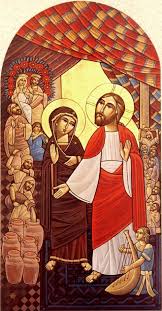
They have no wine.

This is a declaration of a crisis. For the groom’s family to run out of wine during a multi-day wedding reception was no small matter. Hospitality was a crucial aspect of first-century Palestinian culture, and an oversight of this nature was no mere faux pas to be resolved by a quick run to the liquor store. The groom’s family’s reputation was on the line. The urgent whispers of people aware of the impending crisis were dangerously close to becoming voluble accusations–in short, a disaster loomed.

And the mother of Jesus knew it. They have no wine. 

Woman, what concern is that to you and to me?

This account of the wedding at Cana is one of the most well-known theophanies—or God-showings, as the Bishop described them last week, revealing Jesus’ glory as God’s Beloved, and it appears only in John’s Gospel. We hear this exchange between Mary and Jesus, and immediately our own voices, or those of our children or parents, are projected upon the narrative. It is an introductory dialogue that reaches out and grabs us well before the main event; the actual transformation of over 120 gallons of water into a more-than-passable quality wine. We find ourselves caught in a web of wondering about the nature of the family dynamic: Was Mary too pushy? Why did Jesus rebuke her? What did he mean when he said his hour had not come? What made Mary choose to ignore his wishes? This conversation draws us in because it sounds so much like our own families arguing around the kitchen table.

But there is more to this than a snippy exchange between the Virgin Mary and the Son of God, and to see it we need to extricate ourselves from the web that John seems to have caught us in. Maybe, just maybe, all is not as it seems. Maybe it is MORE than it seems. But to see this we need to look more broadly at the context of this story.

John’s Gospel is unique from those of Mark, Matthew and Luke, which are known as the synoptic Gospels—they have a common content and historical structure. John’s Gospel differs in order, content and overall tone—You can hear it from the first verse. It doesn’t begin with Jesus’ birth; it begins with the Creation, and with Jesus’ place in it as the Word: “In the beginning was the Word, and the Word was God…And the Word became flesh and lived among us.” This is crucial—John wants us to understand not just that Jesus is the Word but that the Word became human. So the entire Gospel is a dance between the elevated imagery of Jesus’ closeness to his Father (“…God the only Son, who is close to the Father’s heart…” 1:18) and his Incarnation as one of us: Woman, what concern is that to you and me?

The structure of the narrative around today’s story is not about chronology—it is all about establishing Jesus’ identity as the Word made flesh. In the first chapter we have moved from “In the beginning was the Word”, through the testimony of John the baptizer who tells the Pharisees that the one whom he proclaims is one whom they do not know, whose sandals he is not worthy to untie, and upon whom the Holy Spirit descended like a dove. John the baptizer not once, but twice declares Jesus to be The Lamb of God.

The narrative of the Wedding comes just after the calling of the disciples, and just before the cleansing of the Temple, which in the other Gospels happens much later in Jesus’ ministry. John wants us to see early on that Jesus’ ministry is going to turn everything upside-down—and that following him will not be ‘business as usual.’

John’s Gospel is all about Jesus’ identity as the beloved of God who shared our humanity.

And it is from this context that this story calls us. It is not just a story of family dynamics and miracles meant simply to astound witnesses. What does it tell us about Jesus’ identity, and our identity as well?

“They have no wine.” A statement of crisis.

“What is that to you or me? My hour has not yet come.” Reluctance? Rebellion? Uncertainty? This has the marks of being a pivotal decisive moment in the life of God’s Beloved.

Theologian Carol Lakey Hess describes this as the Scandal of Divine Hesitation—the idea that God would delay acting in the world until being nudged by humanity to do something—humanity in this case being personified by Jesus’ allegedly pushy mother. Seen in a broader sense this Scandal of Divine Hesitation might help to explain issues of theodicy—why bad things happen in the presence of a loving God. Hess postulates that God is waiting for us. My concern here is that it puts the onus on humanity to be a prime mover in any kind of transformative action in the world. It takes God out of the equation, relegating God to a position of divine flunky awaiting instructions from us. You could say that the Scandal of Divine Hesitation is best exemplified in the words of St. Teresa of Avila who wrote, “Christ has…no hands, no feet on earth but yours…Christ has no body now on earth but yours.” ”** But it is not as simple as that—as simply that our action alone makes the difference. A God who created the world doesn’t need humanity to point out what needs to be done. There is something more here; something richer and deeper to this relationship than simply giving God instructions. Rather it is our identity as the Body of Christ—Created by God, living in Christ, led by the Holy Spirit, which can accomplish transformation in the world.

So if Jesus wasn’t waiting for Mary to spur him to action, what was happening in that breath of a millisecond of God’s Time?

John offers us a portrait of God’s Beloved who was one of us. God was present in him, yet he was completely human. What if Jesus was doing what any of us might do when presented with an opportunity? Listen to the exchange again:

“They have no wine”

“What is that to you? And to me?” Hear, instead of grumbling and rebellion, a genuine question of discernment. A willingness to listen, ponder and evaluate; to be alert for the moving of the Spirit.

“What is that to us?” What is needed? How can we serve? What gifts can we offer?”

When we hear Jesus and his mother’s dialogue this way, the Scandal of Divine Hesitation is transformed into the Blessing of Divine/Human Partnership. It becomes a way for us to look at our own moments of hesitation when confronted by questions that have the potential to plumb the depths of our identity as Beloved Children of God; They have no food. They have no shelter. They have no peace. They have no comfort…no safety…no beauty…no justice.

What are these things to us?

Let us pray.

Transform us, loving God, by your Spirit, that we may hear your call to partner in the healing of the world. Help us to discern where our greatest joy meets the world’s deepest need*, to see that we have been filled to the brim with your gifts and to expend them abundantly and joyfully in your service. In the name of the Beloved One, your Incarnate Son, Jesus Christ, Amen.


__________________________________


**“Christ has no body now but yours. No hands, no feet on earth but yours. Yours are the eyes through which he looks compassion on this world. Yours are the feet with which he walks to do good. Yours are the hands through which he blesses all the world. Yours are the hands, yours are the feet, yours are the eyes, you are his body. Christ has no body now on earth but yours.” St. Teresa of Avila

*paraphrased from Frederick Buechner: Wishful Thinking: A Theological ABC

The Defining Power of Story

This audio track is not a sequential presentation of the written text. Listen to the track first and then read the text.

The metaphor of a cocktail

For many of us the Christmas narrative blurs into a cocktail of images. The many images become mentally remixed into a generalized, yet heady potion of angels, a virginal young woman, a baby, shepherds and animals; a star, wise men, a genocidal monarch; and a huge cosmological vision of the Word – the communicative element of God- coming into the world as the light of all people, shedding light in the darkest of places.

This last reference to light triggers off another set of images flowing out of the great transgenerational vision of the prophets of Israel concerning the coming to a people who walked in darkness of a savior – the Messiah who will usher in a truly global vision of reconciliation and fulfillment.

Giotto_-_Scrovegni_-_-18-_-_Adoration_of_the_MagiAs a cocktail of images we miss the importance of each ingredient in the cocktail. Staying with the cocktail metaphor for a further moment, each ingredient offers a different flavor to the event of the Incarnation. Incarnation is the word used to mark the event of enormous significance for Christians – that of the creator becoming part of the creation. Although all the major world faiths witness to the truth, only Christianity has this truth.

Each Gospel writer has his own particular take on this event – a take that emerges from the Evangelist’s cultural-historical location, which includes the needs of his intended audience. Both Luke and Matthew begin their Gospels with a Jesus birth narrative. Luke gives us the angel, virgin, shepherds and farmyard ingredients. Matthew gives us the star, wise men, and genocidal monarch ingredients. The focus in Luke’s story is the obedience of a young woman, whereas, Matthew’s focus is on Joseph and through him, Jesus’s messianic lineage. Luke’s is a cosmopolitan story designed to appeal to the 1st-century multinational world of the Roman Empire. Matthew’s is a story constructed for predominantly Jewish ears, a story firmly located within the prophecies of the Old Testament.

Matthew adds to the theme of Incarnation that of Epiphany recalling the arrival of the Wise Men. The readings the Episcopal Church chooses for the Second Sunday of Christmas more properly belong to the feast of the Epiphany, which always being the 6th of January, this year occurs on this coming Wednesday. Wednesday being a weekday, everyone accepts that most Episcopalians will not be in church, and hence the readings for the Second Sunday. We don’t want you to miss out on this installment of the Christmas story.

Epiphany – one of those infernal Greek words means showing. What is it that is being revealed? The Epiphany is like a spotlight being trained on the manger scene. In the illumination we see Jesus’ birth taking place against the deep backdrop of the Jewish religious tradition that Matthew speaks to. At the same time, in the arrival of the Wise Men, a contemporary English rendering of the Persian word Magi – magician, Matthew connects the birth of Jesus to both a wider ancient Middle Eastern Wisdom religious tradition, while at the same time, identifying Jesus as the New Moses.

Deep background

The Magi are figures from Zoroastrianism, the ancient religion of Persia. For instance, it’s from Zoroastrianism that angels and the idea of a cosmic battle between good and evil, light and dark enter into Jewish religious thinking. The Magi journey from the East, literally the image for the dawning of each day’s new light, guided by the light of a star, a clear astrological-astronomical reference. In the ancient world astrology was the serious scientific study of the heavens in order to come to better understand the larger patterns within which human experience of the natural world unfolded and as such astrology is more than modern day horoscoping. It is the forerunner of modern astronomy. The implication here is that the birth of Jesus is more than a Jewish event, it’s also a Wisdom event and as such is appropriately recognized by the Gentile representatives of Wisdom inquiry.

Matthew weaves into the Magi narrative strand the signifiers of divine kingship – Gold, Frankincense, and Mir and a connection between the Magi and Herod the Great. Herod the Great was the ruler of Palestine, which at the time of Jesus’ birth is still a semi-autonomous vassal state of Rome; a client state not yet fully incorporated into the Empire. This narrative strand connecting Magi and Herod enables Matthew to set up the events of the Holy family’s flight into Egypt; a flight necessitated by Herod’s genocidal jealousy of another ‘king of the Jews’ born within his territory.

It’s easy to miss Matthew’s intent here. He is setting up the connection between Jesus and Moses. Moses too, was delivered from a king’s infanticidal rage as Pharaoh sought to kill all the young Israelite, male children. Jesus’ escape into Egypt also connects him to Israel’s story of deliverance, and through this to the Moses story.

A community’s story

The community I serve is going through some significant changes. Change is usually disruptive and unsettling though there are some who relish the novelty of something different. Although some may feel the changes taking place to be unnecessary, the result of a relatively new rector doing what new rectors do, I deeply appreciate that as a whole, my community is one that is ready for the next installment in its eventful and fruitful history.

How do I know this? I know my community is ready for change because it has said so. In our recent participation in a program called RenewalWorks we had a 120% participation rate in the online spiritual inventory survey. The results of the inventory revealed a startling fact. While my community is below even the Episcopal Church benchmarks for levels of belief and spiritual practice, we greatly exceeded the survey’s expected response rate, hence the odd 120%. I read this as an indication of the members of this community expressing their hunger to deepen and to grow in their faith journey.

An Episcopal parish attracts people who don’t want simple answers to complex questions. The Episcopal Church is increasingly a community of refugees. 40% of the members of my community are Protestant refugees. Some are escaping fundamentalist church experience, being attracted to theological tolerance. Others, from more mainline Protestant churches, are attracted to the rich and deep catholic liturgical worship of the Anglican Tradition. 30% are Roman Catholic refugees. You don’t have to be clairvoyant to discern the attraction of the Episcopal Church for Roman Catholics increasingly disaffected by the conservative shift and maintenance of attitudes of intolerance in their church that have typified the direction under two Popes preceding Francis. That leaves around 30% of my community as either cradle Episcopalian or spiritual seekers arriving from non-church backgrounds.

In our community, we have two main tasks. Firstly, to facilitate the diverse nature of our membership into an experience of belief and spiritual practice that meets complex needs. The one thing that unites us is the need for a belief structure and pattern of spiritual practice that supports us in meeting the challenges of living 21st-century lives. Connected to this is our second task, which is to become a more magnetic community, a magnet strange attractor for many who find themselves increasingly spiritually seeking. Our resource for both tasks are the accumulated wisdom of the Judeo-Christian tradition, permeated through Anglicanism’s aesthetic richness and theological tolerance.

Folk who are overly educated and formed by a predominant culture of secular inquiry bring complex needs to their search for faith. We bring a deep desire for the numinous, something we are barely able to articulate our need for, but which we are in search of in an attempt to escape from the existential restlessness and disillusionment of materialist culture. Yet, we need our faith to be credible to us. We have poor tolerance for the seeming miraculous enchantment of the Christmas story of angels, virgins, and extra-biological procreation.

For most of the members of my community the importance of the Christmas story lies not in any desire that it meet the needs of literal historicity, i.e. did it happen, and did it happen as described? In teasing-out the Christmas cocktail ingredients and in particular, those that Matthew’s narrative of the Incarnation provides, my aim is to highlight the formative nature of narrative for human awareness and the formation of Christian identity in particular.

Story is all we have

The branch of secular inquiry that I have been most schooled in is that of depth and transpersonal psychologies. There is considerable divergence between the two schools but on one thing they agree. We only ever have the stories we tell ourselves about ourselves, about one another, and about the nature of the world around us. Whatever objective reality we have access to, it is always permeated through the construction of a narrative that interprets experience in order to build meaning. Human beings, it might be said are story telling creatures. Far from being exercises in make-believe, stories give voice to experiential reality and the articulation of our meaningful experience of the world.

Individuals, groups, and societies develop identity through the stories they tell, or put more technically, the narratives they construct. Story or narrative builds a sense of meaning and purpose. Mark, Matthew, Luke and John tell different stories about the Incarnation, and each story arises out of their respective cultural and historical locations. Each story further defines the nature of their community’s experience. We have a great advantage in having their variations on the theme of Incarnation as part of our repertoire to draw from. While they differ they are nevertheless variations on the core story, which is that the creator has come at a point in time and space to become subject to the laws of time and space. Living within the limitations of human experience, Jesus reveals God’s fuller dream for human development. The central truth of the stories of the Incarnation is that to be human is to be most like God. This seems to be God truth, proclaimed in the first chapters of Genesis, now repeated more clearly in the life of Jesus.

Mark, Matthew, Luke and John tell different stories about the Incarnation. Each story arises out of their particular cultural and historical location. Each story continues to shape the nature of their community’s experience. We have a great advantage in having their variations on the theme of Incarnation as part of our repertoire to draw from. While they differ they are nevertheless variations on the core story, which is that the creator has come at a point in time and space to become subject to the laws of time and space. Living within the limitations of human experience, Jesus reveals God’s fuller dream for human development. The central truth of the stories of the Incarnation is that to be human is to be most like God. This seems to be God-truth, proclaimed in the first chapters of Genesis, now repeated more clearly in the life of Jesus.

We now live in the second decade of the 21st-century. Whether overtly religious or avowedly secular, the stories we tell ourselves have to a very great degree been shaped by the religious and cultural narrative of the Western religious tradition. The narratives of Incarnation lie at the heart of our religious tradition and tells us that whatever the world is or isn’t, however our picture of it is coloured or shaped, the world is not an illusion but a day-to-day reality to be engaged with. The spiritual-religious-theological truth we tell ourselves through the Incarnation narrative is that no matter how distorted and contorted our experience of being human might be, to be human is to be a reflection of what is most and essentially true about God.

The great story

I can’t finish without the obligatory reference to T.S. Elliot’s poem The Journey of the Magi. In it he muses on the close relationship between birth and death:

Birth or death? There was a Birth, certainly,

We had evidence and no doubt. I had seen birth and death,

But had thought they were different…

The Epiphany spotlight on the Incarnation reveals the first chapter in a story of a birth that leads to death, one death in particular. Through that death God does something new – death henceforth leads us back to birth, new birth.

Story is all we have. The question is how we tell the story? What do we include and what do we leave out?  All our stories are cocktails created by what is added and what is left out of any particular telling. Through the way we tell our story, connections are forged between the wisdom of the past and future hopes constructing necessary meaning and purpose in the present. Our very lives are a narration, not just in words, but in actions. Through story in action we live out the spiritual insights of Incarnation. This is a story that renews our engagement with the world and leads us towards individual and communal transformation. The Word was made flesh and dwelt among us full, full of grace and truth. This informs us of the truth that the creator is now one with the creation. I invite us all to meditate on this and let it change us and through personal change transform our world.

Seeing isn’t necessarily believing

cropped-cropped-prophecy-the-second-coming-of-the-lord-fania-simon.jpgThe voice of the prophet Isaiah rings across the generations; generation upon generations, now countless in number:

The people that walked in darkness have seen a great light; those who lived in a land of deep darkness– upon them light has shined.

This is a prophecy that speaks across time of the transgenerational message that is God’s vision for humanity. It is a vision that we are not able to fully comprehend. For in our 21st century we are even more reliant upon our senses; that which we can hear, feel, smell, touch or see to form our picture of reality. Our senses provide crucial information about the world around us, allowing us to navigate our way through the world of objects and states without coming to grief.

Our modern reliance, particularly on what we can physically see, or through scientific instruments now detect and thus, verify as an instrumental extension of our eyes has led to an increasing impoverishment of the eye of imagination.

When I say that the transgenerational vision of God rings down through the collective imagination of generation upon generations, I may seem to open myself to the admission that faith is only make-believe, something imagined. For as moderns, what cannot be observed or measured does not exist. We deny a reality to things that cannot be verified through the senses, or their instrumental extension. We consign to the domain of make-belief, to the imagined, anything that we can’t see the evidence for in the day-to-day round of life.

Isaiah and the other great prophets of Israel transmitted and retransmitted the vision of God for humanity. This was a vision they saw no evidence for as they viewed the state of things around them. Throughout the weeks of Advent that have prepared us for this great moment of celebration, I have drawn a sharp distinction a number of times between hope and optimism. What I mean is that the prophetic perception of the transgenerational vision did not derive from a sense of optimism as the prophets looked out with their eyes upon the world they inhabited. On the contrary, the sounding of the transgenerational vision seems to have been strongest during times of crisis and actual, or looming catastrophe.

*

Do we not live in a time when increasingly we feel consumed by a sense of looming catastrophe?  Our whole economic order rests upon the whim of perception, and thus communicates a fragility to us rooted in its very unpredictability. The period of the pax Americana is now giving way to a period of fearful uncertainty as the most powerful nation on the planet falls into the grip of fearfulness and the reactions fueled by paranoia.

What we seem to be most afraid of is the real content of our collective imagination. So let’s not poopoo faith as imaginary when actually the whole of our lives are lived in the grip of imagination, fearful imagination. We don’t recognize this because we are now so estranged from the creative and prophetic power of imagination, which is not at all the same thing as shaking off the delusions of imagination. Our tendency to react to imagined fear as if it is real evidence of the truth of this, of the impoverishment of our modern imagination.

Isaiah’s words proclaimed words of hope, words of faith, words of encouragement to trust to a longer-term unfolding of the transgenerational vision, a vision so contrary to his day-to-day experience. Our day-to-day experience continues to run contrary to God’s vision for humanity and so our response is to doubt the vision, rather than entrust ourselves to it. We see the articulation of God’s vision as an artifact of fanciful religious imagination, a colourful remnant of a prescientific time when imagination coloured reality.

Yet, the power of imagination still colours reality for us, we just don’t admit to it.The prophets coloured their reality with the hues of a hopeful vision while we uncritically colour our experience of the world around us with the dark hues of fearful imagination? The imagination can work in two directions. It can connect us to hope or it can consign us to fear. This is perhaps why we distrust it so. All the more reason to return to trust and faith which banish fear. This is a process to be negotiated within our renewed appreciation of the power of imagination to set direction, to firmly establish rather than to destroy a deeper, wider, higher purpose in our lives.

**

For a child has been born for us, a son given to us; authority rests upon his shoulders; and he is named Wonderful Counsellor, Mighty God, Everlasting Father, Prince of Peace.

In the Gospel for Christmas Eve, Luke imagines the event of the Incarnation in the imagery of the Nativity – the birth of Jesus. The philosopher Charles Taylor refers to this use of imagination and an example of enchantment. Luke’s birth narrative took deep root not only in the enchantered imagination of Medieval Europe but of one man in particular, St Francis of Assisi. The manger or crib scene, now a standard fixture of our church and domestic commemoration of Christmas is the fruit not simply of Luke’s imaginative genius, but Francis’ deep rapport with the universe as shot through with divine enchantment. Taylor identifies the age of enchantment as a world in which the divine was omnipresent in objects, places, and through events, a world that came to an end with the Enlightenment. For Taylor the Enlightenment is the beginning of our current era, one he refers to as the age of disenchantment.

Three centuries into the age of disenchantment, the shape of our collective imagination is changed. No longer the locus through which Western minds connect with an experience of the world shot through with the presence of God, modern imagination has lost its capacity for creativity. Increasingly imagination has become a shrunken place populated no longer with our hopes and dreams, but only with our fears.

The Gospel for Christmas Day replaces Luke with John. In place of a birth narrative with the qualities of a classic fairy tale, John offers us a more cosmic set of images, in some ways more in tune with our modern mindset. John’s vision has sci-fi intimations of the broadest sweep of space-time in which the creator, preexistent, becomes embodied within the conditions of the created, becoming subject to the laws and limitations of the space-time continuum of the three-dimensional universe.

In the beginning was the Word, and the Word was with God, and the Word was God. All things came into being through him, and without him not one thing came into being. What has come into being in him was life, and the life was the light of all peoples.

***

Both Luke’s and John’s visions reconnect us with Isaiah’s prophetic proclamation, a proclamation of the coming both of God in the form of a child and as the light that banishes our darkness. We are a people who find ourselves increasingly dwelling in darkness. We need the vibrancy of the prophetic imagination through which God makes God’s vision for humanity plain.

What might it be that God seeks to make plain?

  • Being born as a human infant reveals the full extent to which God cherishes vulnerability. Our sense of vulnerability only grows in a world in which strength, wealth, privilege and success are once again calling the shots. Vulnerability is the doorway through which God breaks into our otherwise impregnable egos.
  • The coming of God as the Babe of Bethlehem is witnessed not by the strong and the privileged but by the ordinary, the outcast, and the poor of this world. This is not simply a reminder that social values are reversed in the Kingdom of God, but that being vulnerable, feeling outcaset or rejected, fearing our own spiritual and emotional poverty are internal experiences we all must contend with.
  • The coming of the Word, the communicative aspect of the divine community that is God, brings light into our darkness. More specifically the light of hope, faith, and love, irradiating imaginations increasingly dominated by fear and disenchantment.

The Christmas narrative is where nativity is the route incarnation takes to bring about the next stage in the transmission of God’s timeless vision of hope for and fulfilment for humanity. Some may ask: can we afford to jettison our brittle rationality and instead trust that imaginative narrative to provide a richer and more fuliflling framework for puposeful living? I would suggest that the more urgent question is: can we afford not to?

The joy and hope of all humanity be yours this night and in the days to come.

Feeling the Kick

“In those days…”

A Sermon From The Rev Linda Mackie Griggs for the Fourth Sunday in Advent 20 December 2015  Luke was a master storyteller. The simplest phrase can draw the reader into a state of pondering.

“In those days…”

In those days of Roman occupation. In those days of oppression and heavy taxation under a puppet King Herod. In those days of waiting for a messiah to fulfill the prophecies of Isaiah and Micah.

In those days a young woman had just received astounding news from an angel that she would be the mother of the Son of the Most High God. And so, having courageously affirmed Gabriel’s call, she did what I hope any young unexpectedly pregnant woman would do: She sought out someone she could trust. She hastily made her way into the hill country of Judea, carrying a burden of fear, joy, anxiety, gratitude, vulnerability, morning sickness and who knows what other feelings to see her older and formerly barren relative Elizabeth, now stunningly six months pregnant herself.

‘Those days’ were ripe for a change in the entire trajectory of Creation.

And quietly amidst it all there took place a simple meeting that we churchy folk generally call The Visitation.

If you Google “The Visitation–Images” you will be presented with a bounty of pictures. Artists from early Medieval to contemporary periods have rendered their own interpretations of the moment that Mary arrived at Elizabeth’s home. The images almost universally share the same shape and intimacy: One older and one younger woman; their heads close together in quiet communion—almost as though a photographer has caught them in that suspended moment before words are necessary. Their hands reach toward one another—sometimes they hold hands, or one hand gently touches a shoulder while another tentatively reaches toward the other’s burgeoning belly. Their eyes nearly always search each other out. They are completely unaware of our presence–we should not take for granted the privilege of being present at such a moment. And we hold our breath. 

Our moment , here, is at the end of Advent. The Christmas of culture is becoming louder and more strident outside these doors—Buy! Ship! Cook! Wrap! Decorate! (No, scratch that—if you haven’t decorated yet, forget it.) I read in an essay that some churches even pack it in as of today, call this Christmas Sunday, and go ahead and roll out the carols.

But No! There is still waiting to be done—breath to be held—as the Spirit permeates this sacred encounter between these two women. What can they teach us in these last days of waiting for Jesus?

As Mary embraces Elizabeth the baby in the elder woman’s womb “leaps”—imagine a resounding kick in the ribs– from the inside. Luke asks us to imagine that John has begun proclaiming the Messiah even before the cousins are born. Guided by the Spirit Elizabeth recognizes the significance of this visit, and her response is enthusiastic —offering Mary the affirmation she must have been seeking from this journey—her still-awestruck questions following her the whole way, “How can this be? Can this joyous thing be happening to ME?” Mary’s lingering self-doubt is swept away as Elizabeth greets her as “The mother of my Lord.”

With that kick, Elizabeth in this moment recognizes how her small story fits into the Great Story of God’s redemptive love and responds with joy. Mary, in turn recognizes the reality of the gift that is coming into the world through her and responds with a combination of humility and exaltation: “My soul magnifies the Lord, and my spirit rejoices…”

This is the Magnificat. Luke has based his version of this proclamatory song on Hannah’s prayer of thanksgiving for the birth of her greatly longed-for son, Samuel, one of the great prophets and kingmakers of the Hebrew Scriptures. Hannah declared the raw power of God, who “will give strength to his king.” Mary’s song, while similar, proclaims not just the power, but the mercy of God.

“My spirit rejoices”!

While the traditional picture of Mary over the millennia has been stalled as that of the lowly meek obedient servant, the prophetic strength and courage that Luke ascribes to this woman is striking. She proclaims the presence of God’s dream—the arrival of the Kingdom. Note the tense of the verbs in this passage: He Has Shown strength; He Has Brought Down the powerful; He Has lifted up the lowly; He Has filled the hungry. Not, He Will, but He Has. God has already done it—the Kingdom is here. So we can see that in response to Elizabeth’s affirmation, Mary becomes a connection between the prophets of the past and the promise of God’s dream for the future. The “fullness of time” is here; Emmanuel, God with us.

Recognition and response. In this simple intimate narrative of these two women we have an incarnation of Advent waiting and anticipation—a recognition–a dawning of awareness that something Big is imminent—we can almost touch it—we can feel the static energy of its presence among us, and we are holding our breath in anticipation. How do we respond?

These women are on the margins out in the hill country of Judea, yet the Spirit is profoundly present and revelatory for them. These are women to whom the seemingly impossible has happened, and they recognize it in their encounter with one another, in mutual affirmation, and encouragement. And their response is to take their place as witnesses—indeed catalysts—in, in the words of Presiding Bishop Curry, turning the world upside-down.

The church is increasingly on the margins–and this isn’t the first—or the last—time you will hear me say this—on the margins, countercultural. The church can no longer take for granted a central place in the life of the wider community, or even, honestly, in the lives of its members, who are torn between many competing priorities. Yet, notice that the margins are where the Spirit tends to show up; in places that are out of the way, unexpected, and often vulnerable; even fearful. When the angel came to Zechariah to announce Elizabeth’s pregnancy, he said, “Do not be afraid.” The angel said to Mary, “Do not be afraid.” And to shepherds abiding in the fields, on the margins, we will hear the angel again say, “Fear not.” The Spirit shows up. And the world changes.

About two months ago a couple of women decided to respond to a hunger that they had been feeling and perceiving in the parish. They held the first meeting of the Women’s Spirituality Group—over twenty women came and shared their stories. A week later more women came to the beautifully decorated Great Hall to walk a candlelit labyrinth. And about three weeks ago another couple of dozen or so met to talk about the life and work of German contemplative and mystic Hildegard of Bingen. As we began, first one woman spoke about a passage from Hildegard’s work and how it had touched her life. Then another, recognizing that a chord had been struck by the first woman’s words, spoke in response. And then another responded to her, and on and on, weaving a web of recognition and response as members of the group told their stories. The Spirit showed up. We’ve felt the kick of recognition. Something has started.

The response to the Renewal Works survey indicates that we’ve felt the kick. The revitalized Adult Sunday Forum is thriving. The men’s group, Gander, continues to grow. We are hungry. In the encounter between Elizabeth and Mary we might be able to see ourselves; anxious, questioning, pondering what comes next for us. And if we make haste like Mary to seek out relationships that affirm our yearnings and confirm our particular call to be part of God’s dream for the world, the Spirit will show up.

There is one image of the Visitation that is different from all the rest of the many I looked at. In this one Mary stands at the bottom of the steps to a great stone portico. She looks up to the porch where Elizabeth stands. But instead of showing simple awe or quiet love in her expression and posture, Elizabeth is standing up straight with her hands exultantly in the air, radiant joy in her greeting, as though she’s shouting, “Yay!” It made me laugh with pleasure when I first saw it. Because while there is profound truth to be found in the intimacy of all of those other pictures, we are not to forget the prodigious excitement and joy that this story, this Great Story communicates. Here, on the margins, in our searching and in our wondering, is where the Spirit can be found. In these last days of Advent, as we hold our breath, wait for the kick: God’s Dream awaits us; let our spirits rejoice!


They both needed—and received—confirmation and affirmation of their call. Vulnerablity—the spirit shows up here.

More about Elizabeth?


The Answer my friend is blow’n in the wind

Sunday, December 13th is the Third Sunday in the season of Advent, a season of hope-filled preparation. Hope is a tricky thing because it is so often confused with optimism. Optimism is a positive outlook on life that flows from an experience of things going well. It’s opposite is pessimism, a despondent outlook on life flowing from an experience of fear. Both optimism and pessimism result from what we see as we look around us; how what we see makes us feel. Optimism and pessimism have a direct effect upon our capacity for imagination and what we fill our imaginations with.

Many of us grew up in a world where whatever may or may not have been happening in our personal lives that left us either optimistic or pessimistic, our collective outlook on the world was essentially optimistic. We lived in a nation that was the winner and our expectation was that life could only get better and better. We believed that our destiny was to win and we enshrined that belief in a doctrine known as manifest destiny. We firmly believed that the accolade of the winner was the divine gold medal that was the surest recognition that as a nation, we were God’s favorite.

Whatever America had to do in the world, and sometimes that involved getting our hands dirty, we willingly, as part of a deliberate national and foreign policy, performed actions that would otherwise have stained our collective conscience but for the fact that we knew we were right. We unquestioningly assumed that the way to peace was to talk sweetly and carry a big stick, and when necessary, distasteful though it was, to use our big stick in the cause of right. This attitude was embedded in the American national psyche from the very outset of the Republic and probably long before that, carried to these shores by its Puritan and Adventurist settlers.

However, it took on new impetus and meaning following the Second World War, when emerging victorious and intact America donned the Anglo-Saxon mantle inherited from the British as the world’s policeman. Yet, there has always been another voice that could be heard sounding within America’s consciousness as a nation. This was a voice of protest and it found a concise articulation in the words of Bob Dylan in his song Blow’n in the Wind, particularly in the lines:

How many deaths will it take till he knows, that too many people have died?” The answer my friend is blow’n in the wind, the answer is blow’n in the wind. 

https://www.youtube.com/watch?v=vWwgrjjIMXA Whether as a nation acting on the world stage or in our internal domestic spheres, the belief is the same – that right is achieved and safety assured at the end of the barrel of a gun. Our children are reared and always have been reared within this overt as well as subliminal message. From the Cowboy and Indian comics of yesteryear to invasion by aliens often in cyborg form stopped only by the superhero of today’s children’s TV cartoons, this message is continually reinforced. The truth is that the Lone Ranger can only remain the Lone Ranger as long as he has an identifiable enemy in his sight, an enemy evil enough to be dispatched with his silver bullet.

The answer my friend is blow’n in the wind 

new-yorker-gun-control-cover

As well as December 13th being Advent III in the Christian Kalendar, the cover of the New Yorker Magazine reminds us that December 13th is also the Sunday that falls within the National Gun Violence Prevention Sabbath Weekend, The Rev. James Atwood has given voice to his long-time opposition to America’s love affair with the gun in his book America and Its Guns. Atwood notes:

When our leaders are absent or fail us; when our God is invisible and from all appearances absent in our lives; when we don’t know how we can keep going; when we are consumed by our fears and threatened by those who are not like us, those are the moments when new idols are imagined and fashioned and desperate people give them their ultimate concerns, devotion, and focused attention (p. 24). 

Around 2006, the then Senator Obama was pilloried after saying:

You go into these small towns in Pennsylvania and, like a lot of small towns in the Midwest, the jobs have been gone now for 25 years and nothing’s replaced them,” Obama said. “And they fell through the Clinton Administration, and the Bush Administration, and each successive administration has said that somehow these communities are gonna regenerate and they have not. And it’s not surprising then they get bitter, they cling to guns or religion or antipathy to people who aren’t like them or anti-immigrant sentiment or anti-trade sentiment as a way to explain their frustrations.

No community enjoys being identified in this way, but Obama’s words apply to so many communities across the land. The ferocity of many reactions to his comments only bear testimony to their uncomfortable truth. The bitterness and disaffection of so many Americans is the fertile breeding ground for fascism that lies dormant beneath the surface of all societies. As we see in Western Europe with the rise of parties from the extreme right, America’s current experience is not unique. But the unrestricted access to guns including those designed only for combat situations is what makes America unique. Even Justice Scalia, with whose worldview I am generally not in agreement, has declared that the right the bear arms is not an unencumbered right exempt from regulation.

History and politics or how many deaths will it take till he knows that too many people have died?

History and politics are converging in an increasingly frightening scenario as the people who believe that right is achieved and safety protected at the end of a gun are now becoming increasingly afraid. What we embody as individuals we also embody as a culture and hence many no longer find Donald Trump frightening as he dons the mantle of the demagogue who says that which in saner times would remain unthinkable.

The statistics supporting the views of spokesmen like James Atwood and the many, many preachers within the mainstream Churches are so unimaginable that stunned by their magnitude they no longer raise alarm. [1]

Religion and culture or the answer my friend is blow’n in the wind 

America has long indulged in a love affair with the history of Ancient Israel as recorded in the earliest parts of the Old Testament. Mesmerized by an image of itself as Ancient Israel, America, God’s favored nation is largely unconscious of the way it has perverted the symbols of the Judaeo-Christian Tradition into a piety that champions redemptive violence (Walter Wink) evidenced by the deafening silence of large swathes of American Christianity in the face of the alarming statistics.


History, politics, religion and culture converge

Culture has a long history of donning the mantle of religion. When this happens idolatry results. James Atwood speaks https://vimeo.com/61185293 of violence, not Christianity as the real religion of America. As God’s appointed guardian of world peace, we seem ready to use violence to ensure righteousness. Believing our motives are beyond reproach, redemptive violence has become an instrument of peace. He says that when you give a person a gun you leave them struggling with two opposing feelings, one of omnipotence, the other of fear. In steps the NRA philosophy that only a good guy with a gun can stop a bad guy with a gun.

The answer my friend – an authentic Christian response

In a sermon in 2012 titled Repentance means becoming human Michael Marsh  spoke of Luke’s account of John The Baptist’s announcement of the coming of the Messiah:

The crowds have heard  a word in the wilderness of their life. It is a prophetic word, a word of deep insight, by which they recognize that all is not well in their life and their world. It is also a word of hope and rejoicing, a word of God, that says all can be well. It is a word that joins the wilderness and paradise and makes them two sides of the same reality.

The teaching of Christianity is very clear on the issues of guns. There is no ambiguity here. The teaching of Jesus speaks into our fear and desperation as a word in the wilderness of our lives. Simply put, Christianity sees no justification for guns as instruments for the abhorrently perverse doctrine of redemptive violence. Even the sharp and judgmental tongue of John the Baptist, in some ways the very epitome of an evangelical style of religion, which in this country continues to remain deafeningly silent on this issue of gun violence, when asked by the crowds what should we do? told them:

  • Share what you have with others
  • Do not monopolize control over more than you need
  • Espouse nonviolence towards others
  • Refrain from financial extortion, threatening behavior, making false accusations against others
  • Be satisfied with what you have

Could the message be any clearer?

The Prophet Zephaniah is this week’s voice of the transgenerational vision of God’s dream for humanity. Let our waiting in this present time be fruitful through planting the seeds of hope for a future which we may not see, but which we long to bequeath to our children and their children’s children. The enemy of hope is fear. Fear has a direct effect upon our capacity for imagination and what we fill our imaginations with.

Advent reminds us that the season of hope is not same as the season of optimism. Hope is always for that which we as yet we cannot see, but which we know we are in dire need of. As T.S Eliot penned in the lines of his poem East Coker: hope is believing and loving in the waiting (my paraphrase). Advent is the season of hope, and when all the preparations are done what remains is the most difficult thing of all, the waiting!

St Augustine said: Hope has two daughters. Their names are anger and courage; anger at the way things are, and courage to see that they do not remain the way the are.

How many deaths will it take till [we] know that too many people have died? The answer my friend is – one is too many.

 [1] Dr. Linda Gaither courtesy of the Episcopal Peace Fellowship quoting James Atwood, comments there are 300 million guns, almost enough for every man, woman, and child, circulating in America today, with 3 million more sailing off the assembly lines each year. The big brother of this gun “snowball” is our vast military-industrial rolling juggernaut that spends $698 billion dollars a year on military preparedness, equal to the expenditures of the next nineteen countries combined. Those 300 million guns circulating on our streets account for 30,000 deaths a year. More American citizens were killed with guns in the 18 year period between 1979 – 1997 (651,697) than all the servicemen and women killed in battle in all U.S. foreign wars since 1775 (650,858). One-half of all gun deaths are suicides. Every 36 hours a U.S. war veteran takes his or her life. 3,285 children are killed unnecessarily by guns in this country every year, many in the tragic and stupid accidents we read about in the newspaper. Yet no sane gun legislation on behalf of reducing these numbers has passed Congress since the Brady Bill, which celebrated its 20-year anniversary on Feb. 28, 2014. Our lawmakers are paralyzed and prohibited from even engaging in meaningful dialogue on this issue. But they aren’t so paralyzed that legislation in support of the Gun Empire is slowed down: for example, the 2004 removal by Congress of the ban on assault weapons or the 2005 Lawful Commerce Act, which denies victims of gun violence the right to sue manufacturers, distributors or dealers for negligent, reckless or irresponsible conduct. Atwood points out that no other industry in America enjoys such blanket immunity and protection. Thus, when 30,000 Americans die by gunfire, Congress reacts to protect guns, along with their institutions, factories, distribution systems, and private sellers. Atwood contrasts the failures of government to respond to our gun epidemic with its response to outbreaks of disease: when 5 persons were hospitalized in the Southwest with e-Coli found in spinach, the government immediately shut down the entire spinach industry, putting it under surveillance 24/7 and quarantining suspected forms. But with guns … more is better! Guns save lives. An armed society is a polite society. More guns mean less crime. Gun rights are God-given rights. In Kentucky, churches are raffling off guns to increase attendance.
Gun Violence Prevention Sabbath Weekend March 16, 2014, by Dr. Linda Gaither

THE OPERATIONS OF HOPE

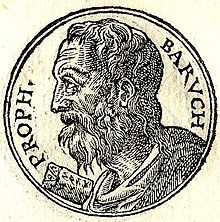
220px-Baruch-ben-NeriahBaruch ben Neriah, a name which means Baruch blessed Son of my Candle is God was the personal secretary to the prophet Jeremiah. Jeremiah prophesied during the period leading up to the destruction of Jerusalem in 587-586 BCE at the hands of Nebuchadnezzar, King of Babylon.

Following the death of the legendary Solomon, the Kingdom of Israel, united for the first time by his father David, split into northern and southern sections. In the year 721 BCE the Northern Kingdom, which had retained the name Israel, and whose capital at Samaria was sacked by Sennacherib, King of Assyria. Over the next century and a half, the Southern Kingdom known as Judah, having escaped Assyrian conquest through paying a heavy tribute in gold and silver, most of which robbed from the Temple, continued to survive through a political swift-footedness and double-dealing. A culture of political duplicity and self-serving inertia misled the nation away from remaining faithful to its covenant with God. Around 590 BCE Judah’s luck began to run low. A foolish alliance with Egypt provoked the Babylonians to sack the towns of Judah and lay siege to Jerusalem.

God ordered Jeremiah to prophesy, i.e. speak truth to power, in this case before Hezekiah, King of Judah. Speaking truth to power was a process that went badly for Jeremiah and his secretary Baruch. Jeremiah ordered Baruch to read his prophecies of warning to the people gathered in the Temple on a day of fasting. The task was both difficult and dangerous, but Baruch performed it without flinching. It was Baruch, who in the middle of the siege of Jerusalem advised Jeremiah to purchase a piece of land at Anathoth, land previously laid waste by the Babylonian encampment, as a symbol of hope for the eventual restoration of Jerusalem.

In 587-586 BCE Jerusalem fell. Nebuchadnezzar carried the treasure of the Temple along with the King, the nobility and the clergy into a 70-year captivity in Babylon. It is thought that Baruch escaped into Egypt, where he soon died after the fall of Jerusalem.

This was indeed a dark and dangerous time to have lived. Yet, like his master Jeremiah, Baruch’s message in the first 9 verses of the 5th chapter of his writing is one of hope and encouragement. Amidst the disaster of conquest, in the wake of a profound disillusionment resulting from the folly of political adventurism, Baruch speaks of Jerusalem taking off her garment of sorrow, and rising to the height to look toward the east in order to see her children gathered from west to east rejoicing that God has remembered them. There was nothing in his day-to-day experience to support such a hopeful worldview.

*

I sense a shift in the atmosphere. I am not talking about the weather, although I am talking about the climate. As our daily lives are so affected by the shifting patterns of the weather, we often miss the more subtle yet ultimately, more momentous changes in the climate. I became aware of a shift in the atmosphere around the issue of climate change during the recent high-level Paris Conference. Unlike previous conferences, this seemed no longer a fringe event. With nearly all countries represented at the highest levels of their leadership, Paris confirms that outside of the current US Congress, the world as a whole is now ready to address the urgency of climate change. At long last climate change and the contributory effects of human agency are now universally recognized as the number one issue facing the future of humanity.

I also noted as a regular listener to NPR that the extent of the coverage of the Paris conference was truly BBC-like. I don’t listen to commercial radio so I don’t know how this sector covered the climate talks though I imagine there was little coverage. One might naturally expect NPR to focus on coverage yet it delighted me to discover that it was the number one topic around which more regular elements of the NPR schedules were arranged. In my memory, this has not been the case before. These two factors taken together evidence something having shifted in the collective consciousness. Climate change is now a priority, or I certainly hope so.

**

Returning to the metaphor of weather and climate, the Holy Scriptures record the unfolding of countless lives lived amidst at a level of weather. Weather is confusing because it is continually changing and serious events can always be dismissed as freak occurances. Yet, threading through the shifting day-to-day weather patterns as event is a more comprehensive story of climate and the imperceptibility of shifts in climate. I use imperceptibility to mean not so much hidden, but that it’s easy for us to be wilfully misled and lulled into a false sense of sercurity.

Jeremiah with his secretary Baruch, alongside Isaiah, Malachi, Amos and the other great prophets of Israel sought to draw attention to the direction of climate change among people who could only see the weather patterns from one day to the next. In the weather we can see the folly of the shifting patterns of human choice. Weather reveals the the cumulative sinfulness of human decision-making. Yet, running over the top of the weather is a climate message; a message of hope and unwavering belief in the providential dream of God and its ultimate fulfillment.

***

Generational change, the succession of one generation by another, then another, and then another – is woven together within a narrative I call the transgenerational vision. In the midst of dark times, events spell danger and devastation, times during which our hopes sink as our fears rise. The transgenerational vision is the manifestation of hope.

Baruch, while he knew such times of darkness, disillusionment and despair, became the voice of hope.  Hope expresses and keeps alive the power of the transgenerational of the recovery and thriving of God’s people down through each generation, regardless of the appearance of things. In the midst of fear and terror of the kind reached only in places like modern day Syria, Baruch articulated God’s message as a message that can only be comprehended when we step back from the immediacy of everyday experience to behold the level of the transgenerational vision – God’s vision.

Baruch and his master the prophet Jeremiah were threatened and abused by the powerful whose self-interests deafened them to God’s call to remain faithful to the covenant. They were mocked and humiliated by the ordinary people blinded to their own best interests by their collusion with a set of social and political values that placed misguided national and cultural interests – the politician’s easy answers to complex questions– before the dream that God had for them.

How little things change. We too live in a time when the dreams of the governed are increasingly betrayed by those they elect to govern. In misguided expectation of recovering the dreams of the past they give credence to demagogues who offer easy comfort through the ancient evil of scapegoating. The truth is that increasingly those who govern, while they maintain their power through the assiduous mining of our fears, no longer represent us. Rather they are now in hock to the moneyed interests that put them in power and to whom they are beholdended. The easy manipulation of our fear coupling with our growing civic ignorance simply ensures our continued collusion in processes that continue to belie our best interests as a people and nation, further distancing us from God’s dream for us.

****

Advent is a time for reflection on the urgency to embrace the message of the transgenerational vision. This is a message that counsels us to stand firm in the face of rising fear that robs us of our courage, our compassion and hope.

Advent is time for reflecting on hope. Hope is a cardinal virtue, but it’s tricky because of our tendency to confuse optimism with hope. Hope based on optimism disappears when optimism inevitably turns to more pessimistic outlooks. Hope has nothing to do with optimism but everything to do with faith. The letter to the Hebrews states that faith is the confidence that what we hope for will actually happen; it gives us assurance about things we cannot see.

Hope is the expression of a high-level confidence in the goodness of God’s dream for humanity. Amidst the signs of impending catastrophe, Jeremiah purchases the parcel of land in Anathoth as a symbol of a future he hoped for, but could not see, and did not live to see.

If our confidence is rooted only in what we can see, and in what we can initiate and control by our own efforts, then hope is doomed to disappointment. By contrast, hope is the assurance that what we hope for is to some extent already present to us. The practice of hope simply makes it more so.

The best practice of hope is to commit to planting the seeds in our own generation for the future we want for our children and their children’s children. For most of us this means that we build a strong civic awareness of the need for sound governance, justice, equality and the rule of law. That we take steps to ensure that we have air we can breathe, land and crops we can successfully farm; that we direct our efforts to the preservation of ecosystems that support the diversity of life in, and of our oceans, lakes, rivers and forests. This is God’s intention for creation, the protection, and the preservation of which has been entrusted to us.

*****

Beginning with this Advent season, might this become the practice of our Advent hope that through the seeds we plant now the future may not simply be a repetition of the past? Things will need to change, particularly the reestablishing of government that serves the needs of the governed and not the entrenched interests of superpacts, extractive fossil industries, the NRA.

The Theologian Paul Tillich put it beautifully when he wrote:

Although waiting is not having, it is also having. The fact that we wait for something shows that in some way we already possess it. Waiting, anticipates that which is not yet real. That is, if we wait in hope and patience, the power of that for which we wait is already effective within us. Those who wait in an ultimate sense are not that far from that for which they waitTheology of Culture as compiled at http://www.religion-online.org/showchapter.asp?title=378&C=83

Tillich’s theme: the power of that for which we wait is already effective within us what are we waiting for this Advent?

Living Faithfully in an Inhospitable World

A Sermon for the First Sunday in Advent Year C  at  St. Martin’s Providence from The Rev. Linda Mackie Griggs.

Be alert at all times, praying that you may have the strength to escape all these things that will take place, and to stand before the Son of Man.

It was an insultingly cold, wet and windy day when I met a friend for coffee downtown late one afternoon about three weeks ago. My shoes were soggy and my feet were freezing, so it was nice to go into the warm sanctuary of the crowded shop.

We ordered our mochas and squeezed into our seats among the many folks seeking refuge from the nasty weather, and we caught up on the latest personal news. Then, our friendship having begun through church work, the topic inevitably turned to preaching, and to the gospel text for this week’s sermon. And so began an energetic conversation about the end of the world.

He told me, in his clear take-no-prisoners Baptist-upbrought voice that he is firmly convinced of the second coming of Christ to this world, and he eagerly looks forward to that time when everything that separates him from God will be stripped away in the “hot soapy water of judgment.”

My friend’s firm conviction took me a little by surprise. When I was growing up, other than in the recitation of the Nicene Creed, there wasn’t a lot of talk in church about Christ’s return and final judgment.

So I had to confess to him that the idea of the Second Coming is something that I have always struggled with. Today’s Gospel account of Jesus’ apocalyptic words strikes me as Luke’s way of trying to visualize a time—an end of time—that can’t easily be put into words, and when I do try to visualize it my vision fails. For some reason I have no trouble visualizing the mystery of the Incarnation, the miracles of Jesus, the Resurrection and the Ascension, but when it comes to the Eschaton, as it is known in Greek, I have a different perspective. What if we thought of Biblical time and Creation as encompassing the entire sweep of cosmological history from the Big Bang—that time when God spoke Creation into being from an infinitesimal singularity, expanding outward and forming the heavens and the earth. The source of God’s Beloved Creation from a singularity means that every speck of matter and energy is in relationship with one another. The Incarnation—the First Coming– of Christ was the culmination of the first part of all Creation’s—not just humanity’s– relationship with God. And now all of creation, not just humanity, is in a mind-blowing arc of ultimate reconciliation with God at the end of time. That’s hard to visualize. Apocalyptic writers through history have sought to encapsulate their vision of God’s final triumph in the best way they knew how. And the images they chose are in turn comforting, disturbing and easily misunderstood. Apocalyptic literature is the product of political and social upheaval of the time in which it is written, and it is ripe for misuse by those who stop at a literal reading and thus believe they know the mind, and the calendar, of God.

So I confessed to my friend that I don’t find these texts to be as comforting as he does.

We went back and forth for a while, talking politics, history, the Bible, Judgment, visions of apocalypse: It was great. Then at some point I looked around. The formerly crowded coffee shop had pretty much emptied out. I guess arguing in public about Jesus will do that to folks.

It’s too bad, though. Because conversations like this can be enlightening. We learned from each other. I found my friend’s honest and eager expectation of Christ’s return to be an embodiment of what the First Sunday in Advent is about. I had never seen Advent Expectation as vividly as in the way my friend expressed it.

In return, he seemed to have learned something from me. He hadn’t considered the awesome grand sweep of cosmology and theology that I tried to articulate from my perspective.

It was a great exchange; two friends talking about God; asking questions, questioning answers, over coffee on a cold inhospitable day.

Inhospitable is a term that can describe the world right now. We live in what has been referred to ironically as ‘interesting times.’ We cringe or weep when we open the newspaper, turn on the television or click on the headlines, yet we dare not turn a deaf ear or a blind eye to the world outside of our sanctuary. We need to be awake –to raise our heads, as Jesus says–to our world. We need to equip ourselves as Christians to negotiate these ‘interesting’ and sometimes fearful times. What does it mean to live faithfully in a time that seems to be chock-full of signs of the End times?

I suppose we can take solace in the fact that such ‘signs’ are woven into all of human history. Luke’s Gospel was written not long after the fall of Jerusalem in 70 AD. When Jesus speaks of the Son of Man coming with the clouds he’s alluding to the apocalyptic visions in the Book of Daniel that we read last Sunday. Daniel was written during a 2nd century BC time of horrendous oppression in Israel, which prompted the writer to depict yet another tumultuous time; the Babylonian Exile of the 7th century BC. All of these events were perceived to be world-ending for those who experienced them. Over and over throughout history the world has been on the verge of Apocalypse, according to signs and portents in the earth, the calendar and in politics. But we need to understand that our measurement of time is not the same as God’s time. Using the Bible as a calendar or calculator has proven repeatedly to be misguided at best. And at worst it results in Scripture being used as a weapon that divides people and turns them against one another: Christians vs. Muslims. Us vs. Them.

How do we live faithfully in a time that often feels inhospitable, especially to people on the margins? How should we encounter Scripture that is inspired but also multi-layered and complex?

As people of faith, especially participating in the Anglican tradition, we are invited, indeed it is our responsibility to use our reason and hearts to engage, wrestle, confront and be confronted by scripture. And we are called to do so in order to engage, wrestle, confront and be confronted by a troubled World. It is our vocation as disciples to be a community that embodies, not fear of the end, but hope for the future.

This hope isn’t a naïve outlook that seeks to stick a bandaid on the critical wounds of this world. Christian hope is best exemplified by looking again at the fig tree in Jesus’ parable. Yes, the sprouting leaves portend summer. But look closer as summer gives way to autumn. When leaves fall they leave behind buds. The new life is already there before the leaves even reach the ground, and it’s present throughout the harsh winter. This is mystical hope—the certain and sure expectation that the wind will blow and the snow and ice accumulate, but life abides within it all and will bloom again in time. In God’s time. This is the hope and expectation of the First Sunday in Advent. It is this hope and expectation that is the ground of our faith.

Beginning today, we are embarking on a new journey together. We are trying a new schedule, which is intended to allow families to worship together and to facilitate learning for all ages with a new Formation Hour. Our community will have the opportunity to learn more about our ecclesiastical and biblical traditions, addressing questions of our identity as Anglicans, as Christians, and as disciples. This is what the word, “formation” means: we are being molded as Christians, not just loaded up with information. We are being formed, not simply educated; and this places us on the verge of a rich and exciting adventure.

This is not to deny the anxiety that naturally arises when encountering major changes. There’s a Jay Sidebotham a cartoon—a group of parishioners saying, “Fr. Smith, we are a parish in search of transformation—we just want to find it without changing anything.” Change is disruptive and sometimes scary. But a wise person once said to me, God doesn’t call you into your comfort zone.

Meanwhile, back at the now-quiet coffee shop: My friend and I continued to talk as the sun went down and the pavement outside glistened in the cold rain. The wind still gusted and grabbed at coats and umbrellas that went by the window. It was still inhospitable out there, and we knew that soon we would face it. But inside, for a time, was sanctuary. Just two friends asking questions, wrestling with the answers; listening and learning about God. Together.


Costs of the Kingdom

I

images-2In 1925 Pius XI proclaimed the feast of Christ the King as an assertion of the Catholic Church’s protest against the rise of fascism and the growing power of communism.

Pius XI asserted the old Constantinian power of the Church as the only center of allegiance for Roman Catholics. At a considerable cost to liberty and freedom of thought within the Church, he marshalled the Catholic legions against those he perceived as the enemy.  This is an old story of one authoritarian system asserting itself against competing, equally authoritarian rivals. 

To me, it seems an odd decision to make when the Anglican Communion including the Episcopal Church adopted the Roman designation for the last Sunday before Advent as Christ the King Sunday. Preachers in Episcopal Churches on this Sunday have to weave alternative narratives around the central uncomfortable image of Christ dressed in various trappings of an earthly ruler.

Anglican Tradition, coming out of a political settlement between church and state that placed the monarch in a place of privilege, might be thought to have little difficulty with the concept of Christ and King. Yet, for us it is particularly problematic because we have no precedent for Kingship rooted in religious authority. Unlike Roman Catholicism for which the Pope affords a model for spiritual autocracy, we have no tradition of centralized spiritual power capable of carrying monarchical images. Our bishops, as was the case in the Early Church and remains in those parts of catholic Christianity outside of the Roman jurisdiction, are figures of authority and unity, but possess little direct power.

imgresFor Americans, the image of Christ as King is not one that naturally carries the medieval trappings of absolute monarchy. After all, the last time we enjoyed the benefit of a King was 1783. Yet, the human psyche is what it is and there is a space within it for cultural symbols that carry the human need to believe that if we are not in control then God most certainly is. If our need for divine omnipotence is no longer filled for most Americans by Constantinian images of Christ as Roman Emperor, the need remains and so what might fill that need?
Having rejected European style monarchical government, the newly formed American Republic fell back on the cosmetics of the early Roman Republic. It’s religion also returned to earlier models that predate the Medieval picture of the universe as a divinely run human kingdom. The Jewish concept of messiahship has strongly conditioned American images of Christ as King.

Robert Capon in Hunting the Divine Fox confronts us with a contemporary interpretation of Jesus as messiah. He writes:

. . . almost nobody resists the temptation to jazz up the humanity of Christ. The true paradigm of the ordinary American view of Jesus is Superman: “Faster than a speeding bullet, more powerful than a locomotive, able to leap tall buildings in a single bound. It’s Superman! Strange visitor from another planet, who came to earth with powers and abilities far beyond those of mortal men, and who, disguised as Clark Kent, mild-mannered reporter for a great metropolitan newspaper, fights a never-ending battle for truth, justice and the American Way.”  If that isn’t popular Christology, I’ll eat my hat. Jesus gentle, meek, and mild, but with secret, souped-up, more-than‑human insides bumbles around for thirty-three years, nearly gets himself done in for good by the Kryptonite Kross, but at the last minute, struggles into the phone booth of the Empty Tomb, changes into his Easter suit and, with a single bound, leaps back up to the planet Heaven. It’s got it all — including, just so you shouldn’t miss the lesson, kiddies: he never once touches Lois Lane. 

Capon notes that the human race has always been deeply unwilling to accept a human messiah. He notes that we don’t want to be saved in our humanity; we want to be fished out of it. We crucified Jesus, because:

… he claimed to be God and then failed to come up to our standards for assessing the claim. It’s not that we weren’t looking for the Messiah; it’s just that he wasn’t what we were looking for. Our kind of Messiah would come down from a cross. He would carry a folding phone booth in his back pocket. He wouldn’t do a stupid thing like rising from the dead. He would do a smart thing like never dying.” [pp. 90-91 of The Romance of the Word: One Man’s Love Affair with Theology] 

II

In John’s Gospel when standing before Pilate, Jesus seems to accede to being described as a King. He asserts that though a king his kingdom is not of this world. Unlike an earthly king, Jesus admits that he has no army to enforce his rule. Jesus is saying that to the extent that he carries authority he could be described as a king, but an unusual one in that he has no power apart from being the herald for the inbreaking of God’s rule. It’s not his kingship which matters. It is the kingdom of God that counts.

This is not only a rebuke to Pilate, more importantly we see in Jesus’ action before Pilate a warning to his disciples and followers that he has no intention of embodying their traditional expectations of him as the Jewish Messiah, i.e a warrior king, first-century Superman, who will deliver them from their experience of vulnerability.

So words like messiah are tricky. What makes matters worse is that Jesus gives such a poor, inarticulate performance before the seat of ultimate earthly power and bears the consequences. We certainly have no intention of emulating Jesus in this particular example.

Jesus’ strength lies in his very vulnerability. This is a nice phrase but what does it mean? It means that God can do nothing with our pretence of strength. Our pretense of strength squeezes God from our frame of reference. Our vulnerability, on the other hand, offers God an invitation to enter into our picture of the world and to partner with us. Jesus’ vulnerability becomes an opportunity for God to act.

Vulnerability is the forbidden word in our present mindset. Attitudes that 10 years ago would have been regarded by the majority as extremist views now hold centre stage among the leaders at the current stage of the Republican presidential nomination race. You don’t need to be a brain surgeon to figure out that this is because as long as we deny our vulnerability, fear makes us easy to exploit.

III

This week I was listening to someone speaking on the World Service of the BBC. I can’t recall his name now, yet I remember what he said when he noted that the American public believes that America can be sealed off from terrorist attack. He contrasted this attitude with the one in France and Britain where everyone realizes that the next attack is inevitable, it’s only a matter of time and the fallibility of even the most vigilant of security services.

This doesn’t stop the respective governments of Britain and France, and now other Western European nations from mimicking the certainty of American political utterance. Yet, the truth is that in an international world predicated on the freedom of movement of goods, services and people, no nation can seal its borders. It comes down to a matter of when and how we recognise this as a fact.

Our politicians do us poor service when they present themselves as having simple answers to complex problems. Neither isolationism nor interventionism offer a solution. Increasingly draconian measures that erode the very cultural values that make us who we are and pose an even greater threat to us than any enemy we face. The recent vote in the House to effectively halt the trickle of refugees from the Middle East into this country is an example in point.

There are something like 1700 Syrian refugees that have arrived in the US after an arduous two-year vetting process. It has been pointed out that why would ISIS agents pose as refugees and take the torturous two-year vetted route of entry when they can enter immediately on a student visa or with a European Union passport through the visa waiver system. Therefore, singling out refugees is simply a smoke screen for the impossibility of action and a classic scapegoating of those most in need of our help.

That the fear of being vulnerable unleashes a virulent strain of paranoia in any culture, is not a new discovery. We see this coming to the fore as the voices of racial, religious and cultural purity gain ascendancy across the world as otherwise helpless politicians and leaders seek to advantage themselves through the exploitation of fear. Everywhere we see the mounting consequences for populations whose fate is to pose the spectre of the utter helplessness we so desperately try to defend ourselves from recognizing. 800px-hrdlicka_portrait_bonhoeffer_wienDietrich Bonhoeffer reminds us:

We have been silent witnesses of evil deeds: we have been drenched by many storms; we have learnt the arts of equivocation and pretence; experience has made us suspicious of others and kept us from being truthful and open; intolerable conflicts have worn us down and even made us cynical. Are we still of any use? What we shall need is not geniuses, or cynics, or misanthropes, or clever tacticians, but plain, honest, straightforward men [and women]. Will our inward power of resistance be strong enough, and our honesty with ourselves remorseless enough, for us to find our way back to simplicity and straightforwardness?

As Pius XI might have foreseen the increasing resort to authoritarian responses to confront authoritarian assaults leads to a distortion that ultimately makes it hard to distinguish between friend and foe.

IV

The deepest insight of the Judaeo-Christian Tradition is that humanity is made in the image of God. Like all profound insights the implications of this are rather far reaching to contemplate. So instead the Church has always had a tendency to reverse this central insight and to see God as refracted through our image of ourselves.

When God becomes remade in our image the result is that violence, oppression, hatred and fear become divinely sanctioned – Christ dons the trappings of our earthly rulers’ pretence of strength. To realize that we are made in the image of God requires us to embrace vulnerability and be changed by this experience. This impels us to focus on solving problems at source. This is what it means to be agents, not of a worldly rule given the fig leaf of divine sanction, but of the continued inbreaking of the  Kingdom of God. As with Jesus, we may discover there is a cost attached.

An anonymous Franciscan blessing goes:

God bless us with discomfort at easy answers, half-truths, and superficial relationships so that we may live deep within our heart. May God bless us with anger at injustice, oppression, and exploitation of people, so that we may work for justice, freedom and peace.  May God bless us with tears to shed for those who suffer from pain, rejection, starvation and war so that we may reach out our hand to comfort them and to turn their pain into joy. May God bless us with enough foolishness to believe that we can make a difference in this world so that we can do what others claim cannot be done. Amen


Blog at WordPress.com.

Up ↑