'relationalrealities' is the recognition human beings are designed to be in relationships. Relationality is the meaning of being made in the image of God who is by divine nature, relational – Lover, Beloved, and Love-sharer..
Prison leaves its scars, not only on the body but also the mind.
In Ephesus, things had gone seriously wrong. In response to a two-pronged attack from both the local Roman notables and prominent Jewish influences in the city, Paul had been imprisoned under a sentence of death. It’s during these very dark days that Paul hears news from Corinth, news that breaks his heart. For the Corinthians have delivered the ultimate betrayal for Paul – they have questioned his authority as an apostle and suggested that if he ever wanted to visit again he would have first to present and defend his credentials.
Paul had visited Corinth twice before and between these visits he had written his first letter to them admonishing them for their internal divisions – divisions based on the discrepancies of wealth and status among members of the church community. Now since his last visit, the Corinthian church has come under the sway of some very smooth and slick conmen, who seemed to have successfully discredited Paul and his message and turned the church against him. It’s not difficult to imagine the wealthy Corinthian church wanting teachers more in line with their worldview, a worldview that prized success and prestige. Somethings never change – for narcissistic cultures tend to seek self-validating reflections of themselves in the narcissistic leaders they place in positions of power and prominence. After all, everyone likes a winner, even if it means winning is the con.
In response to Corinthian susceptibility to boasting leaders, Paul asks: so you want me to boast? Then if I boast I will boast of my weakness! If I need references, then you are my reference!
In 2 Corinthians, we feel Paul’s deep suffering as a result of what today we would recognize as accumulated PTSD. The seriousness of his condition is evidenced not simply in his despair and depression, his anger and pain, but in the style and feel of 2 Corinthians; a choppy letter of false starts, with extra additions inserted. With an agitated mind and aching heart, Paul seems to have found it hard to organize his thoughts into a unified theme.
Paul pens this letter while visiting the churches in Northern Greece somewhere between 56-57 A.D. From the direction of his journey we can see that he is assiduously avoiding going anywhere near Corinth. Corinth was by far the largest, most prosperous and politically influential of Paul’s Romano-Greek church plantings. The wound Corinth had inflicted on him is deep and his sense of betrayal great.
Then, Paul’s mood lifts when Titus arrives with news from Corinth. It seems the Corinthians have had second thoughts, maybe coming to the realization that their new found slick teachers have delivered a good deal less than they promised. Titus brings news of the Corinthians deep sorrow for the pain they had inflicted on Paul. While Paul is clearly overjoyed, painful memories of a breach in relationship are not easily forgotten. How can relationships repair following a deep breach of trust? This is what Paul is now working out in the middle section of his letter.
Paul has learned through his recent sufferings a powerful lesson. In chapter four having accepted his own vulnerability he writes:
We have this treasure in earthenware pots, so that the extraordinary quality of the power may belong to God. Not to us. We are under all kinds of pressure, but we are not crushed completely; we are at a loss, but not at our whit’s end; we are persecuted, but not abandoned; we are cast down, but not destroyed. We carry the deadness of Jesus about in our body, so that the life of Jesus may be revealed in our body.
2 Cor 4 Trans. N.T. Wright
In chapter 5 Paul states that:
From now on, we regard no one from a human point of view; …. So if anyone is in Christ, there is a new creation, everything old has passed away; see, everything has become new!
2 Cor 15:16-21
Words matter. Paul’s statement that the old order has died and everything-everyone has become a new creation in Christ is truly overwhelming to contemplate. It’s easier to let such a statement go in one ear and out the other because it strikes at the very core of our defensive, fear driven way of relating to one another. It also profoundly impacts our global world view – esp. with regard to care for the environment. What would it mean to actually take his words seriously? Given our fallibility and fragility – our earthenware nature, how can we possibly live up to such a statement with all its expectations or repentance, forgiveness, reconciliation?
Our earthenware fragility, our feet of clay make us vulnerable to one another. Victims have a habit when opportunity presents of becoming perpetrators; hurt triggers hurt, violence begets more violence – usually camouflaged as righteous anger. Yet, Paul pictures us as moral ambassadors of reconciliation; reconciliation first with God and then with one another. No wonder we don’t want to take his words seriously!
In English, reconciliation carries the overtone of smoothing over differences. The search for reconciliation produces an endless search for compromise solutions to paper over those differences. Fine though this may be, this is not what Paul means. Paul is drawing our attention not to the need to reconcile difference but to realize that our very differences highlight what we share in common.
Paul had realized a paradox – the pain we feel and act out over the very things that divide us – that pain is none other than the source of what unites us because pain is the universal experience that weaves us together.
Think of the pain of personal betrayal. On the larger stage think of exploitation of the weak by the strong as in what’s mine is mine and what’s yours is potentially mine tomorrow. Think of racism, gender bias, the unlevel playing field that results in unequal access to the necessities for human thriving: food, water, a safe environment in which to live, meaningful work to do, education, healthcare, and equal access to impartial justice. Now think of our willful destruction of our common home -the environment. These are all examples of how we prefer to walk back through the door to the old life – the life before Christ – the life that brings only death. These maladies are all so fixable when we see them as the result of our human propensity to fall short of the mark; the life of a new creation God sets for us.
Alexander Pope, the 18th-century English poet said that to err is human, to forgive is divine. God is endlessly forgiving, knowing that we are bound to miss the mark, the bullseye that is the new life of those entrusted by God to set the world to rights.
Questions abound. Will we notice the ghosts of past failures of reconciliation in a history of slavery and genocide? Will we notice how in the present, past ghosts perpetuate racial discrimination and injustice – only now masquerading as criminal justice, and the multiple indices that measure poverty? When we notice, will we, with hearts transformed and our minds renewed through repentance, refocus aim on our target of living the new life of God’s promise? Or will we compound error and injury with defensive, fear driven self-justification?
From now on, we regard no one from a human point of view; …. So if anyone is in Christ, there is a new creation, everything old has passed away; see, everything has become new!
2 Cor 15: 16-21
To become a new creation is to be reconciled to God. Being reconciled to God we strive for justice by not only responding to immediate needs but also questioning and challenging the systems that perpetuate injustice.
Environmental and social justice are linked by the flow of our new life in creation. God has inaugurated the new creation in Christ and will ultimately bring it to fulfilment in the resurrection of the whole world. Until then, putting the world to rights is the responsibility on our watch.
Whilst in London last week for the funeral of an elderly friend, Al and I visited another long-time friend who is now in a nursing home. We were both shocked by how we found him. Lying at an awkward angle in a railed bed, disheveled, his spectacles held together with tape, and offering only monosyllabic responses to our questions, we were not sure if he even recognized us, though it was difficult to tell. On saying goodbye, we both struggled to make sense of our upset at the decline in our friend by reminding ourselves that, after all, he had always had a strong tendency to accommodate himself to every new aspect of decline. In other words, we had long felt that our friend had always had an unhealthy desire to embrace invalidity. This perception helped us to an extent because it enabled us to see our friend as in part responsible for his decline. If he had planned better for his future, if he had resisted harder the gradual process of aging, he might not have ended up in the very pathetic state in which we now found him.
there but for the grace of God, go I.
We are all haunted by an anxiety that finds its fullest expression
in there but for the grace of God, go I. As
wise sayings go, I guess it’s not a bad one. It protects us from a reality that
we want to hide from. This reality is that all of us, most of the time, feel helpless
in the face of the flow of events that may visit upon us some form of calamity or
other.
The idea that it is only by God’s grace that we are spared from calamity underscores our helplessness in the face of the randomness of chance events. But we also use the idea of God’s grace to imply the very opposite. Used in this way it becomes an individualized protection, implying that the disasters which befall others will not knock on our door, because we have the special protection of God’s grace. Unfortunately, religion when seen in this light offers a very poor insurance policy.
The invidious connection that links great calamity with individual responsibility is as old as human thought is long. You will remember that in the story of the man born blind in John’s Gospel, the disciples ask Jesus: who sinned – this man or his parents that he was born blind? Jesus rebukes them, telling them that neither sinned. Illness is not the result of sin. Thus, Jesus breaks the intuitive connection between sin punishment, between adversity and personal responsibility.
Jesus breaks the intuitive connection between sin punishment, between adversity and personal responsibility.
Nevertheless, as my opening vignette shows, we continue to connect adverse circumstances with personal responsibility – well they’ve only got themselves to blame. In this way we insulate ourselves not simply from the pain and suffering of others, but from the existential anxiety that – there but for the grace of God, because we know their misfortune could easily be ours.
In the gospel passage from Luke 13 Jesus refers to two calamitous events
that had recently taken place. Pilate had executed a group of Galileans, who
had come up to Jerusalem to make sacrifice in the Temple. Why he had killed them,
we don’t know. But to cause maximum offense he not only killed them but mixed
their blood with the blood of their sacrifices; a major desecration for any Jew.
Jesus asks his listeners: do you think they suffered this fate because they
were worse sinners than other supplicants? He answers, no they were not.
Of another recent calamity where many people were crushed when the tower of Siloam collapsed, he asks a similar question. Do you think they were worse offenders than anyone else living in Jerusalem?
For the Galileans slaughtered by Herod in the Temple, substitute worshipers gunned down in two Christchurch mosques.
Such questions still ring in our ears today. For the Galileans slaughtered by Herod in the Temple, substitute worshipers gunned down in two Christchurch mosques. For the victims crushed beneath the tower, substitute the inhabitants of Midwest states devastated by unprecedented flood waters.
As in Jesus’ time, we continue to struggle with the why question, and we like to pretend for peace of mind’s sake that we know the answer, suggesting that in some way victims of untimely and unforeseen calamity have in some sense brought it on themselves. If Muslims didn’t look so different and had only blended in more, or better still just stayed in their own countries, then this would not have happened. Or, the floods are God’s punishment on people who need to give up their denial of the science of climate change. Of course, the Pulse nightclub shootings in Florida were God’s punishment on the club’s LGBT patrons. Of course, the devastating fires in California were the result of poor forest management. We could go on, and on.
In the face of the why question Jesus explains that sin makes no distinction between one person and another, calamity is not personal, it’s random. He asks -were the victims crushed when the tower fell worse sinners than others in Jerusalem? No, he exclaims, they were not, and unless you repent you will all perish as these unfortunate others have done.
Can he really mean that if we repent we will be spared, if we don’t we won’t?
Just when we think things are clear, Jesus muddies the water. What
does he mean by repent? Can he really mean that if we repent we will be spared,
if we don’t we won’t? Is this not a direct contradiction of what he had just
been saying that calamity is random and not personal? Are we back to the idea
that calamity is in some way connected to a lack of repentance? In other words
it’s our fault?
Which brings us to the story about the fig tree; a horticultural
lesson on repentance. This is a story about fruitfulness. Fruitfulness provides
the context in which Jesus invites us to reflect on the need to repent. The
story of the fig tree highlights two important lessons. The first is that fruitfulness
needs nurturing or fertilizing. The second is fruitfulness may take time to
emerge.
The Greek word used by Luke for repent is Metanoia, which implies more than saying sorry. In its fullest meaning metanoia implies becoming transformed into a completely different way of seeing the world. Repentance is not something we do, and action we undertake, it’s an openness to change – a heart and mind 180-degree transformation. Repentance is the equivalent of digging manure around the tree’s roots in the hope of coaxing forth the fruit; the fruit of a changed heart and renewed mind. In short, repentance is a complete makeover. But patient work and waiting is required.
Jesus words about the need for repentance now become understood as – unless you change your whole way of thinking, you will die as they did. The emphasis here is not on whether we are lucky enough to escape a sudden and unprepared death – death being code for a host of calamities that may overtake us. Jesus’ question is – in what moral and spiritual state will we be in when calamity strikes?
Shit happens, as we say. It’s not our place to explain away the chance occurrences of natural disasters, random acts of violence, the rapid and unforeseen onset of illness, and the slow and steady breakdown of the body. To repent, is to face up to the source of our existential anxiety – namely our helplessness in the face of chance events. It’s not whether we can control our fears or not, but how we live in the face of them. Repentance is to pay attention to what we are doing regardless of the risk of calamity’s strike.
To repent is to be changed. To be changed is a process of reordering
our priorities.
We can’t predict which building may fall down and upon whom it may
fall, but we can ensure strict building codes are followed and severe penalties
are imposed when breached.
We may not be able to stop natural disasters occurring, but we can
vote wisely in support of political solutions to reverse policies that deny the
science of climate change and severely punish those who in pursuit of profit
endanger our common environmental home.
We may not be able to make wars cease and stem the flow of mass
migration, but we can support international aid programs that build economic infrastructure
in places where people are forced to leave because there is none. We can welcome
the stranger who of necessity flees for life and liberty to our shore where both
are ensured as a basic human right.
To face the challenges of the present we need to have dealt with the ghosts of the past. We may not be able to predict when the terrorist may strike, but like the government and people of New Zealand have just demonstrated, we can face down hatred and the violence it spawns. We can reaffirm our commitment to be an inclusive and welcoming community. See my fuller comments on this here.
We may not be able to cure our friends and loved ones when
disabling illness strikes, but despite our own fears of there but for the grace
of God go I, we can be there for each another; in other words we may not be
able to work miracles but maybe the power of our loving presence is in some sense,
enough?
To repent means to stop running from our fragility and
vulnerability in the face of the flow of events we can neither understand nor
control.
Towers fall. Tyrants slaughter (Luke 13).
Stopping such events is an important human activity. But until we end pointless death, we have other work to do. The prophet Micah made it clear: Do justice; love kindness and walk humbly with God. Those would be good things to be doing when the tower lands on you.
Jerusalem, Jerusalem, the city that kills the prophets and stones those who are sent to it! How often have I desired to gather your children together as a hen gathers her brood under her wings, and you were not willing!
It doesn’t take much to imagine the longing in these words, does
it? To feel that the world is spinning out of control and there is nothing we
can do about it? To think, If only they—whoever ‘they’ are– would wake up, and
pay attention to what faces them! But you can’t make people do what they will
not do.
Welcome to the world of the prophet. The world of Amos, Isaiah,
Hosea, Micah, Ezekiel, and others who spoke, cursed, cajoled, wept and suffered
as their messages of repentance went unheard.
This passage from Luke weaves beautifully with the beginning of
our Lenten Program this year, because the text we are focusing on for the
course begins with the words of another prophet: Jeremiah. He writes: “How long will the land mourn, and the grass
of every field wither? For the wickedness of those who live in it the animals
and the birds are swept away, and because people said, ‘He is blind to our
ways.’” Jer. 12:4
In this lament Jeremiah, like Jesus would do centuries later,
grieves for his city. In 597 Jerusalem was destroyed and her people sent into
exile in Babylon. Jeremiah is mourning for a city lost because her people would
not listen and return to the God who called them under her wings.
In our Lenten program–which we began on Tuesday evening and which
I will reprise this morning in the Adult Forum–the Bishops’ Teaching on the
Environment invites a little imaginative reflection on the words of Jeremiah.
The bishops ask, how can we read Jeremiah’s words in the context of the
perilous plight of this fragile earth, our island home? Can the earth mourn,
and what does that look like? Think dying bees, disintegrating ice sheets,
waterways choked with plastic, year-round wildfire seasons, receding glaciers,
vanishing rainforests; and that’s just a start. Continue pondering: Is there a
way that humans are in exile from the environment? Consider the islands in the
Pacific that are being swallowed by rising seas; their people desperately
seeing to relocate to higher ground or to leave their home altogether. Think of
how many more people you know of with allergies and cancers than you did a
generation ago—a kind of physiological exile. Consider how long it has been
since you’ve seen huge flocks of birds in autumn migration. Or the summer dusk
aglow with fireflies. Or the Milky Way amid a velvet black carpet filled with
twinkling stars. The next generations will be exiled from the joys of these
simple pleasures.
How long will the land mourn?
Is Earth our Jerusalem?
The House of Bishops’
Teaching on the Environment was produced out of the Bishops’ semiannual
meeting in Quito, Ecuador in 2011. They don’t always produce teachings at their
meetings, and this one was especially significant in that it was the first one
that addressed environmental issues. Even so, you will notice that it was
promulgated eight years ago. That may
not be long in God’s time, but in human time it’s a gracious plenty. Which is
why our Lent course, A Life of Grace for
the Whole World, begins with repentance.
Our Ash Wednesday Litany of Penitence refers to “ Our
self-indulgent appetites and ways” and “…our waste and pollution of [God’s]
creation, and our lack of concern for those who come after us.”
Repent. Even for those who are already personally on board with a
sense of environmental urgency, it is important to articulate our situation as people of faith; to connect the
plight of the planet with our relationship to the God who created everything
and called it Good. We are caregivers of a gift of incalculable value. As I
wrote in my epistle this week, we are called to repent of a worldview of
subduing and dominating Creation. We are called, rather, to live within Creation as fellow creatures
within an interdependent ecosystem of animals, plants, and the systems that
nurture us all.
We are called to repent; not in order to grovel and wallow,
but to turn in a new direction; to
turn and choose to gather beneath the protective wings of a God who yearns for the
reconciliation and healing of all of Creation.
What
we are addressing in this Lenten course is challenging. Even if we know that
Earth is in a perilous situation, the need for, and nature of, action can be a
hard sell. There are costs to be weighed and benefits to be balanced. There is
comfort in the status quo. Well, there is comfort for the comfortable ones,
anyway. But for those whose lives and livelihoods are already feeling the
impacts of climate change—those would be the poorest and most vulnerable of the
world’s population—for them, comfortable is only a memory. Still, for us here,
in this privileged space, it can be a hard sell.
But Jesus didn’t back away from the hard sell. His was the life and destiny of a prophet. He set his face toward the city that he loved; that had nurtured him and his family as he grew up, regularly worshiping in the Temple, “as was their custom.” Yet that same city would soon reject him in the cruelest way by killing him on a garbage heap outside the walls. In spite of what awaited him (or because of it) he remained undaunted, refusing to be distracted by death threats from a petty tetrarch, dismissing Herod as a mere fox, not worth his attention. Instead Jesus pressed on from Galilee toward Jerusalem—a prophet meeting a prophet’s fate, while lamenting in his desire to spare his beloved city, if only her chicks would come to him for shelter.
Is Earth our Jerusalem? Who are the prophets that we have shunned? Where are the opportunities for repentance—turning—that we have disregarded because we were not willing?
Paragraph
5 of the Bishops’ Teaching calls us to “speak and act on behalf of God’s good
creation.” In pondering this invitation the other night the group reflected on
a time in our lives when someone spoke or acted on our behalf. We thought about
how that made us feel valued, validated, even loved. We then identified
characteristics of a person who would come to the defense or protection of
another. Almost immediately the responses came flying: Courage. Empathy.
Listening. Understanding. Persistence.
The
marks of a prophet.
Do
we have the marks of what it takes to
be prophets for our Jerusalem?
It
isn’t easy, but it isn’t hopeless. The people in Tuesday night’s group couldn’t
wait to get beyond the confession and repentance section of the course to the
solutions sections. They were ready to go—jotting down ideas and making note of
resources that will be helpful as we go forward. When we left at the end of the
evening I felt hopeful. As though something is turning in a new direction.
Repentance
is hopeful.
There’s
a reason Jesus chose the image of a hen as the protector of his world, as
opposed to other Old Testament images of a lion or an eagle. The eagle and the
lion are predators. That’s not Jesus.
His entire life and ministry were about the strength of vulnerability, and the
protective power of all-enfolding love.
The
hen stands, her feathers fluffed up to almost twice her size, her wings wide.
She clucks her warning as the wind blows, the rain begins, and the fox lurks nearby.
She has done all she can. Now she can only wait for her chicks to perceive the
danger and to gather in her care before it is too late. If only they are
willing.
This
fragile Earth, our island home. Our Jerusalem.
There’s a tongue-in-cheek joke doing the rounds in our St Martin’s
community at the moment. Tongue-in-cheek jokes are the way something of the
utmost seriousness is made bearable when veiled with humor. So, the joke goes
this way: What’s the new name for Hallworth House – the skilled nursing
facility situated on the Episcopal Cathedral precinct? It’s St Martin’s Annex.
The tongue-in-cheek nature of the joke, makes me only too aware of my own anxiety -an anxiety many of us also share. For cloaked behind the joke is the barely masked pain of our encounter with the human suffering of our friends with whom we share this community.
Of course, Hallworth House is not the only facility in which members of the parish are currently being cared for. Westgate, Bethany Home, and Tochwotten, are also on list of specialist nursing and assisted living facilities within our parish orbit. We are relieved to know that it’s Hallworth House, where a number of our friends currently reside. For we know that those we love are in a place with a trusted reputation for quality in medical, nursing, and rehabilitation care. We are further comforted by knowing that Dr. Denny Scott, henceforth officially designated parish doctor, is the one who is taking care of those we hold dear.
For empathy means the capacity to see ourselves in the situation faced by another.
There are seasons in our ministries of pastoral care and support when he realities of illness, and death cruelly confront us. We are called upon not only to marshal our resources of compassion and empathy, but we are also challenged by the need to discipline our own fears. For empathy means the capacity to see ourselves in the situation faced by another. Visiting our parish friends currently in Hallworth House, each of us comes face to face with the frightening question: at what point in my future will illness strike, and what form will it take, and how will it leave me? I find myself uttering the age-old prayer: O God, take me swiftly; let me not linger long in illness’ wake!
And so, we enter upon the journey of another Lent – a season in which we are called to bring a particular intentionality, a mindful consciousness, to the task of disciplining our addictive appetites, our unruly wills, and distracted minds. We are faced with having to acknowledge the buried sorrows that often find their way to the surface of the mind as anger, and a legion of envious resentments. The acknowledgment of sorrow in a spirit of repentance for the actions and omissions that have hurt others. Or we might required to offer forgiveness to those who have hurt us.
Domesticated biblical texts are of little use, I think. We have trained them only to speak when spoken to. We have taught them to sit quietly until we call for them. We have developed tricks for them to do that we can predict.
Richard Swanson.
Luke writes of the breath of God leading Jesus into the wilderness immediately following the baptismal declaration: this is my Son, in whom I am well pleased. Baptism is where Jesus ministry begins. So why does God show his pleasure in Jesus by sending him into the wilderness?
In Mark’s version he leaves what happens to Jesus during the 40 days in the wilderness up to our imaginations because he tells us only that while there Jesus was both tempted and also ministered to by angels. Yet our imaginations are not blank canvases. They have been already colored by Matthew’s and Luke’s portraits of the three great temptations faced by Jesus at the hands of the Devil. And in this imagery, lies a problem.
Although translated as tempted, the real meaning of peirazo, the word Luke uses, is tested. The figure doing the testing is not our Medieval Devil, but the Hebrew Satan – the prosecutor general of the heavenly court; the same figure we find putting Job through his tortures. The Satan is not a personal name but the title of the one who acts as the prosecutor or accuser general in the heavenly court.
So, it seems that Jesus’ having been filled with the Spirit of God
is by itself not enough. Like an American President, God it seems may nominate
only. The wilderness is Jesus’ confirmation hearing before the heavenly court.
Under the pressure of accusation and innuendo, the Satan, heaven’s prosecutor, perhaps
aware that the proceeding is live on heavenly cable TV, is tasked with testing
to confirm Jesus’ qualifications for the role of messiah.
Does Jesus pass his Messiah confirmation hearing? He does, but not in the sense that we often conclude.
Human beings are vulnerable creatures and so we mask our weakness by projecting invulnerability onto our God. We want a Jesus who resists all temptations, coming through with flying colors because he’s our superman messiah who could fly through the skies and jump off tall buildings in a single bound – if he had wanted to.
But these are not temptations which Jesus easily resists because of his secret divine powers. They are the tests that reveal a Jesus so qualified for messiahship because he shares the same limitations of being human as we do. We have no use for a superman messiah, the kind of messiah we need is one who can empathize with us through his own human vulnerability, having travelled this road ahead of us.
Faced with hunger, Jesus realizes that stuffing his face and filling his stomach will not satiate the real hunger within him. Faced with the prospect of ultimate power over earthly things, Jesus understands that justice does not flow from omnipotent power. Faced with an invitation to use his superman-messiah powers and jump off the panicle of the Temple and fly, Jesus once again reaffirms the his human limitations. For he has only a human body that will be smashed and broken upon the paving stones below. Jesus passes his messiah confirmation hearing by acknowledging his human dependence on God; proclaiming that he will not question his ultimate trust in God.
We have a messiah who has been tested in every way as we are and thus has been proved worthy of our trust. That’s the point here!
In Luke’s story Jesus echoes Job’s refusal to doubt God’s love no matter how much The Satan ratcheted-up his suffering and pain. Jesus qualifies as messiah because echoing Isaiah’s suffering servant – he is a man of sorrows and acquainted with grief. He qualifies as messiah because he’s just as human as we are. Immersed in our human experience of facing our fear and living through our vulnerability, it is only Jesus who is worthy of our trust.
In our search for a messiah on this first Sunday in Lent I am taken back to where I began –the joke about the St Martin’s Annex in Hallworth House. As we visit our friends, some of whom embody our worst specters of the illness that strikes us in the noonday – unexpectedly and forever changing the trajectory of our lives, we encounter the all too human figure of Jesus who because he has tested human fragility to its limits is able to walk with us through whatever suffering comes upon us. I wish there was a less costly answer – one more to our success oriented tastes. Trust in the absence of a more agreeable answer to the plight of human suffering, is our wilderness testing where we are being asked to trust God as we face the possibilities that lie ahead. This is a very hard testing to endure but try to hold onto this. It is only by God entrusting Jesus to a fully human experience that God was able to do the new thing – the new thing we know as Easter.
“Now Peter and his companions were weighed down with sleep; but since they had stayed awake, they saw his glory and the two men who stood with him.”
Which
was it? Were they awake, or were they asleep?
Yes.
Such is
the nature of visions.
Someone
asked me recently if I believed in visions.
If by that did he mean do I believe that God has ways of getting our
attention in ways that defy our intellectual capacity and even our physical
senses? Well yes, I do. The biblical tradition of dream and vision, which spans
both testaments from Genesis to Revelation, and the historical tradition of
religious mystics like Teresa of Avila, Hildegard of Bingen, and Julian of
Norwich to name just three, is a long and—depending on who you’re talking to—an
honored one.
But it
is a spiritual gift that, if not held with the utmost humility and care, can be
easily misunderstood and misused. For example, Constantine’s fourth-century
vision of the Chi Rho—the symbol of Christ—in the sky before the battle that
effectively made him sole emperor of the Roman Empire and resulted in his
conversion to Christianity—this vision entwined Christianity and Empire in a
way that Verna Dozier has called the one of the major “falls” of humankind—a
major detour from the Way of Jesus and the Dream of God. On the other hand,
Teresa of Avila went to great effort to discern the nature of her visions and
used them for the spiritual growth and nurture of the members of her community;
her spiritual guide, The Interior Castle is
one of the classics of Christian spirituality.
The
power–and potential danger–of a vision lies in its aftermath—in what actions
are taken, or not, afterward, and who is served as a result. A true vision from
God illuminates God’s vision for us, not our vision for ourselves.
That
being said, here’s another question:
“Was the
Transfiguration a vision or did it really happen?”
Yes.
Either
Luke was writing in the language of vision, as he often did, in his Gospel and
in the Acts of the Apostles, or he was relating an event of such significant
import that it was included in all three synoptic Gospels and in the 2nd
Epistle of Peter. There was reality and truth here that transcended the
ordinary and captivated the imagination. Four men went up a mountain. And when
they came down—which is really the most
important part of the story—they were not the same.
Look at
the context of the writing: Luke’s late-first-early second-century audience was
coming to terms with the fact that their idea of Jesus’ “imminent” return–and
God’s idea of that return– were not exactly the same. Luke needed to put their
waiting into the context of salvation history so that they could find a way to
chart their path forward as a community. How were they to live—together, and in
the world? What was God calling them to do and be in this transitional moment?
For a
transitional moment it was. Luke’s account of the Transfiguration marks a
bridge point in salvation history. The vision of Jesus in conversation with
Moses—the liberator of the People of Israel, the bringer of the Law from Mount
Sinai—and Elijah, the prophet and harbinger of the Eschaton, or End of
Days—this vision effectively places Jesus at a fulcrum point between Old and
New Covenants. And the Transfiguration itself is the fulcrum of Jesus’ own
life: his ministry on earth is almost done, and now he will journey down the
mountain, to Jerusalem, death, and resurrection.
Placed
powerfully within this vision’s
gleaming white brilliance—sees his identity and his path forward with new
clarity. “This is my Son, my Chosen; Listen to him!”
My
Chosen. Also translated, My Beloved.
In this
moment you can almost feel the tectonic plates shifting.
And for
Peter, James and John; the witnesses—what now? Stay and bask in the glory, or
turn away—leave it behind and head into an unknown future?
Of
course Peter’s first reaction (bless his heart) was to focus on the comfort of the
glorious present. His intentions may have been good, but he was thinking more
of how this vision made him feel, rather that what it was calling him to do. An
understandable temptation. Who wouldn’t stand transfixed? Who wouldn’t want it
to last forever?
But no.
The point isn’t the friends’ vision for themselves. It’s God’s vision for them,
and for the world.
“LISTEN.”
Don’t just look. Listen. And go down the mountain.
This
moment calls to us as well—this is a fulcrum point in the liturgical year. We are
at the end of the season of Epiphany, in which we have observed milestones in
Jesus’ life that illuminated his identity as God’s son. The divine voice of the
Transfiguration echoes Jesus’ baptism in the Jordan at the beginning of the
season: “This is my son, the beloved, in whom I am well pleased.”
Beloved.
Named
Beloved as Jesus began his ministry at Baptism, and now named Beloved again as
he emerges from the Vision and sets his face toward Jerusalem. When the four
friends come down the mountain, “they were silent.” Were they excited?
Resolute? Anxious?
Yes.
And as
they descended from the mountaintop, the vision fading into memory, they were
confronted almost immediately by a different, more gritty and visceral reality—
Crowds.
Demons. And frustration.
The
father of a suffering child says, “I begged your disciples to cast [the demon]
out, but they could not.”… [Jesus responds,]”You faithless and
perverse generation, how much longer must I be with you and bear with you?…Jesus
rebuked the unclean spirit, healed the boy, and gave him back to his father.
And all were astounded at the greatness of God.”
Healing.
Reunion. And awe. Such is the nature of the work of the Vision of God.
As we
enter Lent in the coming week we are called deeper into the work of the
Kingdom; into a new season of looking inward to our hearts and outward to a
world in need. We are challenged and called to a season of renewed spiritual
discipline; as the Ash Wednesday prayer says, “by self-examination and
repentance; by prayer, fasting, and self-denial; and by reading and meditating
on God’s holy Word.”
As we
set our faces toward Lent and Easter, we are called to journey with Jesus; a
journey that must begin by going down the
mountain, strengthened, but not imprisoned, by the vision. We’re called to
hear that we, too, are beloved children of God—beloved with all of our frailty,
brokenness and Peter-like tendencies to shoot from the lip. We are called to be
liberated and nourished by that knowledge; not in order to bask in it and rest
on our laurels but to see and serve that belovedness in the troubled world that
lies down the mountain from this Transfiguration moment. It won’t be easy. It
isn’t meant to be.
Are we
ready for the journey? Are we excited? Resolute? Maybe even a little anxious?
First 150 years from 33 The Birth of the Church on the Day of Pentecost begins a process
of growth with the Gospel. Centered on Jerusalem it begins to be preached
further afield in different parts of the Greek and Roman world by the Apostle
Paul and his companions. By the early part of the 2nd Century we have the recognizable shape and feel of growing
Christianity that we find in the New Testament.
150-800.In the year 312, the young Emperor Constantine, stationed on Hadrian’s
Wall separating Roman Britain from the Pictish Celtic tribes of modern day Scotland,
had a dream in which he saw the banner of Christ in the form of the Greek
letters Chi Rho – an abbreviation for the name Christ leading him into battle.
With the conversion of the Empire to Christianity
the period we know as Christendom begins. Christendom describes the evolution from a disparate number of
independent church communities, each with their own history connecting them to
one of the original Apostles, into becoming an official religion of the Roman State.
Now theology and politics flow in the same channel and the political needs of the Emperor begin to impact the Church.
This is a period of consolidation and
considerable conflict as four emergent centers of Christianity known as
patriarchates: Rome-Western Europe, Constantinople-Asia Minor, Antioch-Syria and the Middle East, and Alexandria-Egypt and North Africa,struggle for power and political influence as theological
differences take-on political ramifications.
The Conciliar Period
In the interests of stability, successive
Emperors summon the bishops to sit in Ecumenical Council. There were seven Ecumenical Councils, each addressing the
long-running disputes. The main areas of controversy concerned: the nature of
God – three persons in one God i.e. the Trinity, the relationship between the
human and divine natures in Jesus, and the development of the Canon of
Scripture which required decisions as to which books were to be included and
which to excluded. To us the passion behind these disputes seems odd, but we
need to remember that theology can no longer be separated from political
struggles.
1054This is the year of the Great Schism, which separated the
Greek-speaking Eastern regions of Christianity from the Latin-speaking Western
region – a slit that neatly represented the existing cultural and political
division of the Roman Empire between the two competing administrative centers at
Rome and Constantinople.
From this point-on, Christianity is no longer
a unified, if fractious whole, but two mutually antagonistic branches. We see a
growing ‘catholic’ identity centered on the Pope, the Patriarch of Rome in the
Latin speaking West, alongside several Greek speaking ‘orthodox’ identities
divided between the patriarchates of Constantinople, Antioch, and Alexandria.
As Anglican Christians we uphold the teaching of the universal
Church – that which was universally believed in both Western and Eastern Churches.
Our doctrine is confined to the existing
doctrinal developments up to this point. Anglicanism rejects Roman Catholic doctrinal
development after the Great Schism e.g. the Assumption of Mary, the perpetual
virginity of Mary, the Immaculate Conception which refers to the birth of
Hannah, the mother of Mary, Papal infallibility, Purgatory, and a host of juridical
classifications of human behavior into mortal and venial sins.
The Development of Anglican Identity
Anglicanism is the
Christian tradition of the English people – evolved of a 1000-year period. The
term Anglican does not emerge until the 16th C. But the seeds of
what comes to be known from the 16th C onwards as Anglicanism are
laid down from the earliest times of Christianity in Britain.
The Rule of St
Benedict and the influence of the development of the Benedictine tradition is
the single major shaper of Anglicanism distinctiveness. It could be said that
we are Benedictine Christians. The two Benedictine characteristics we inherit
are: a privileging of the local, and an emphasis on finding holiness in the
ordinary events of everyday life.
An illustration of
privileging the local: Both the Catholic and Episcopal Cathedrals in San
Francisco have murals around the walls that represent phases and events in
Christian history. In the Catholic Cathedral murals commemorate the conversion of
the West to Christianity from Constantine through to the evangelization of the
Americas. In the Episcopal Cathedral the murals commemorate key events in English
Anglican history and the evangelization of California.
An illustration on holiness
in everyday life: holiness is found in the experience of daily life. It’s
practical and experiential in a world infused with the goodness of God.
Anglicanism is Incarnationally rooted, God made the creation to be good into which
he sent his son to proclaim the goodness of love found in ordinary human and
worldly events. This is contrasted with more cross centered and redemptive
theologies that see the world and an evil place rescued by Jesus, and human
beings as sinful in need of complete redemption. It also contrasts with Roman Catholicism’s
emphasis on juridical distinctions between sacred and profane, and declarations
of being in or not being in a state of grace, which is the necessary state required
to receive the sacraments of the Church. Being in a state of grace is not a description
of personal holiness but a legal classification that follows having been to
confession.
Anglicanism emerges through
the events of the English Reformation, and the struggles with extreme Protestant
reactions – we identify with the Puritans. The English Reformation led to an
affirmation of a synthesis of the Apostolic and Catholic identity of the
Church, the three-fold order of ministry – bishop, priest, and deacon, and the
sacraments with the Reformation theology of both Luther and Calvin.
The Reformation Upheavals
1517Martin Luther in challenging the sale of indulgences sparks the
first phase of the Reformation. The Reformation is a theological reform
movement, but its roots lie in the growth of an urban, economically powerful,
and increasingly educated, middle class in Northern Europe, which bitterly
resented the financial burden of the Church taxes levied by Rome.
1522 First Bible German Bible (Gutenberg Bible) and in 1526 the first Bible in English (Tyndale Bible).
1533 Henry VIII divorces Catherine, his first wife thus triggering
the start of the English Reformation. Unlike the Continental Reformation of
Luther, Calvin, and others, Henry’s Reformation is primarily political, not
theological. Already Defender of the Faith, Henry declares himself Supreme Head
of the Church in place of the Pope. The Church in England now becomes the Church of England, maintaining its essential catholic theology and structure.
Henry abolishes the Monasteries in England from 1536 onwards. This is a move motivated by a desire to get his hands
on their wealth, rather than Church reform. 1549 the FirstBook of Common Prayer published by archbishop Thomas Cranmer is the first evidence of
more serious theological and liturgical reform.
1547-1558 is a period of instability with more Protestant reforms
under Edward VI, followed by a return to Roman Catholicism under Mary I, the synthesis
of catholic structure with protestant theological emphasis becomes settled with the accession of Elizabeth I and is known
as the Elizabethan Settlement.
1558- 1601 is the period of the Elizabethan Settlement establishing the Church of England as we know it and the emergence of Anglican identity. Anglican identity rests on being the middle way between Roman Catholicism and Protestantism. Anglican tradition is both catholic in structure and reformed in theological emphasis.
1611sees thepublication of theKing James or Revised Standard Bible, named after James I. James
continues the Elizabethan Settlement. The KJ Bible becomes the most formative
religious text for the English-speaking world.
1611-1642 is a period of religious flowering under the inspiration
and scholarship of a group of bishops known as the Caroline (Carolus the Latin
for Charles) Divines during the reigns of the Stuart kings, James I, Charles I
and Charles II. They represent the classical period of Anglican spirituality
and traverses the interruption of the English Civil War.
1642–1660 marks the English Civil War and the establishment of the
Commonwealth under Cromwell following the execution of Charles I. During the
Commonwealth the Church of England was abolished and Anglican identity
suppressed. While this conflict has a religious flavor its roots are in the political conflict
between autocratic monarchy and early parliamentary democracy.
1660sees therestoration of the Monarchy and the Church with the return of
Charles II accompanied by many bishops and priests who had fled to France in
1642.
1662a new Book of Common Prayeris published for the purpose of reestablishing a strong Anglican
identity. In the Church of England, the BCP of 1662 is still the authorized
Book of Common Prayer.
1600-1776 covers the period of initial settlement of the 13 American Colonies. While many Puritan and other religious dissidents fled England to settle in the New England colonies, the Church of England became firmly Church in the Mid-Atlantic and Southern colonies. This period ends with the War of Independence.
The Episcopal Church Emerges
1784 Following the Revolution,Samuel Seabury becomes the first bishop consecrated for the newly formed American Episcopal Church. He was consecrated in Aberdeen by the bishops of the Scottish Episcopal Church. Seabury was consecrated in Scotland by the Scottish Episcopal bishops, who had already separated from the Church of England, because he was unable to take the Oath of Allegiance to the King demanded by the Archbishop of Canterbury.
A curious aside: The Scottish and American Episcopal Churches were the first Churches of Anglican Tradition independent of the Church of England. This move laid the groundwork for the development of the Anglican Communion – the world-wide body of autonomous Anglican Provinces, in the 19th C. After the Roman Catholic Church, the Anglican Communion is the second largest single tradition of Christians.
In 1789the first American Book of Common Prayeris published as a political adaptation of the 1662 BCP.One condition of the Scottish bishops in ordaining
Seabury was that the American Church would take the Anglican Church in Scotland
name of Episcopal Church, and that it would incorporate the more catholic
theology of the Scottish book’s prayer of consecration in the Eucharist.
The first decades of the Episcopal Church saw growing tension between the episcopal minded Anglicans and the burgeoning Methodist societies. The Methodist societies had been part of the Church of England in the Colonies and represented a revivalist low church tradition among the rural population, esp. in the South. Seabury’s refusal to ordain Methodist lay preachers without a university education resulted in the Methodist societies leaving the Episcopal Church to form their own church. A great swathe of the rural population thus left the Episcopal Church, leaving it concentrated in the urban centers of the East Coast.
Joke: The Baptists evangelized the West by walking, the Methodists rode horses, the Episcopalians had to wait for the invention of the Pullman Car.
Two Key Anglican Concepts
The Centrality of Worship
This is a crucial period in our history. You may have wondered why the Episcopal Church emphasizes its identity as a community of worship, tolerant of differences in theological emphasis and outlook? It stems from the historical accident of this period when everyone regardless of theology or politics had to belong to the same church. The experience of people who agreed about little, sitting alongside one another in the same pews, meant that identity had to rest on relationships structured around common worship, rather than shared belief. Over time the magic of the Book of Common Prayer molded a community of common worship, which is the unique foundation of Anglican identity.
Today Anglican define their identity as those who agree to worship together using the BCP. Worship defines us not common or shared doctrinal statements or beliefs
The Three Legged Stool
This is the name given to a distinctive
characteristic of Anglican Tradition. The three legs are Scripture,
Tradition, and Reason.Anglicanism maintains these in a mutual tension with no one
aspect being more important than the other two. In Protestantism, Scripture is
the most important aspect, in fact the sole defining aspect – sola scriptura –only scripture. In Roman Catholicism Tradition is the dominant
aspect.
Scripture is the Bible. Tradition is how the Church interpret the Bible and theology, i.e. the
teaching of the Church, Reason relates to a sense that there are ways of perceiving God and affirming
the existence of God that are independent of scriptural revelation. In viewing
the goodness of creation and the natural world, human beings become aware of a
higher set of values such as love, beauty, honestyandhuman integrity-nobility – a kind of natural law.
In Anglicanism, Scripture is held in check by being subjected to the understanding of the community of faith i.e. Tradition. This means that the community of the faith – the Tradition of the Church, decides what importance to give to various parts of Scripture and is able to declare parts of Scripture no longer binding, e.g. the N.T. texts supporting slavery. But Tradition is subject to the independent challenge of Scripture, particularly the Gospel. Custom and practice of belief has to sit under the critical evaluation of the Gospel. Both are subjected to the assessment of Reason. Reason challenges the interpretation of Scripture and Tradition when either fly in the face of the higher values of the natural law.
Scripture, Tradition, Reason and the pendulum swing or looking at history through another lens.
A simple way to view the major shifts in Anglican Church history is to see them as a playing-out of the tensions between the three legs of the stool. Inevitably one leg either grows too long or begins to shrink, either way causing the stool to lose its stability. This results in a correction that returns, for a time at least, some stability to the stool.
Key Swings of the Pendulum
The English Reformation period from 1533-1660 represents a period in which Scripture and Tradition are in
serious tension. The movement begins with an elevation of the importance of
Scripture as a challenge to Tradition. Remember Tradition is not everything the
church does, but represents the major emphases that shape understanding and
practice. The dominance of Tradition, always more important in Roman
Catholicism, makes sense when most people can’t read and have no direct access
to the Bible. In this context, Tradition as represented by the bishops and
clergy dictating the content of faith.
Once people start to read the Bible, esp. in
their own language, it then becomes possible to challenge Tradition, to
challenge the stranglehold of clerical power. This is the underlying dynamic of
the Reformation, which elevates Scripture’s position as a counter to Tradition.
During this period the balance of power shifts back and forth. Tradition is
challenged by people’s direct access to Scripture. This results in a reform of
Tradition and an example of this is the first Book of Common Prayer in 1549.
The BCP had three major revisions (1552, 1559, 1662) during this period in
response to the tensions between Scripture and Tradition.
During this period the extreme scriptural
party, known as the Puritans, are in continual struggle with the more centrist
Anglican and Calvinist theologies represented in the mainstream church. An
important development of this struggle led to the Puritan emigrations to the
Massachusetts Bay Colony in search of a place to practice their form of extreme
Biblical Protestantism, and in turn to persecute others who disagreed with
them. Political (King verses Pope, King verses Parliament) and economic (rise
of educated wealthy merchant class) drivers of social change are all mixed up
with theological reform (Protestant direction) and counter reform (Catholic
direction) in this period.
After 1660 and throughout the 17thand 18thCenturies there is a tension between the growing influence of Reason
spurred-on by the beginnings of the scientific revolution. Remember that Newton
and Bacon and all the great scientific figures of this time are all Anglican
priests because until the early 19th Century to teach in the Universities required ordination.
Throughout this period the importance of
Scripture wanes dramatically and Tradition and Reason are in principle
contention. Tradition fights a series of losing battles and Reason triumphs
with the forces of the Enlightenment. By the latter part of the 18th Century, Reason is supreme, and this is represented by a
movement known as Deism.
Deism replaces the Christian revelation of God
with God as the supreme architect of the Universe. Creation comes to be seen as
a clockwork mechanism over which God reigns from a distance leaving human
agency, guided by reason to keep things in good running order.
Church architecture follows a return to
Classical Greek and Roman styles. American civic architecture, established in
this period displays the strong influences of the Roman Imperial style of
domes, columns, and heroic friezes.
The Founding Fathers were not as often
contended today, good Evangelical Christians, but Deists. The God of Jefferson
and Washington was the God of rationalism, the natural laws of self and social
improvement, and political and scientific enlightenment.
1790’s to 1850are dates marking a broad period when Scripture begins to
challenge the triumph of Reason. John and Charles Wesley represent a growing
desire to return to Scripture and the centrality of a heart-felt relationship
with Christ that is capable of changing lives. This is the period of the rise
of Methodism and the Evangelical Revival.
This very necessary swing back toward the
importance of Scripture and personal piety lays the foundations for great
social reforms, the greatest of which are: the movement for the abolition of
slavery, Quaker led reform of the prisons, and the abolition of child labor.
The evangelical God is a God who is no longer dispassionate, overseeing from a
distance, but a God who cares about and is involved in the plight of
individuals. The British social democracy tradition of the Labour Party is not the
legacy of Marxism – as many American believe, but Christian Socialism – of Evangelical and Quaker
application of the Bible in the service of social reform.
1840’s to Mid 20thCentury.Nothing is more certain that after a period of steady rise in
the assertion of Scripture over Reason a swing in the direction of Tradition
was inevitable. The Oxford Movement was a reassertion of Tradition, which led
to a revaluing of Anglicanism’s catholic heritage.
The emphasis of this movement marks a return
to the centrality of liturgical worship as prescribed by the Book of Common
Prayer. This essentially conservative Tradition-focused swing expressed itself
in a revival of the medieval Gothic style of architecture, and a return to
‘catholic’ ceremonial.
Throughout the period of Reason, the main
Sunday service would have been Morning Prayer with a very long sermon. The
Evangelicals didn’t favor liturgical worship much at all, preferring revivalist
styles of gathering with fervent hymn singing. The Oxford Movement,
reestablishes the Eucharist as the first service on a Sunday with Sung Matins
remaining the main service, now much embellished by the addition of ceremonial
and music etc. Eventually, in many Anglo-catholic Churches Matins was replaced
by a return of the High Mass – a very elaborate celebration of the Eucharist.
Parishes described as ‘Broad Church’, which
had stood out against the Anglo-catholic movement became influenced by the
Parish Communion Movement following the First World War. By the middle of the
20th Century Eucharistic Anglican liturgy, as we now know it, had
fully returned to most parts of the Church. This ‘liturgical’ development was
finally completed in the Episcopal Church with the 1979 revision of the Book of
Common Prayer instituting changes to the structure of the Eucharist as the
fruit of the liturgical reform movement of the Second Vatican Council.
The Mid 20th– 21stCentury is a period of balanced equilibrium between the three legs of
Scripture, Tradition, and Reason.
Scripture was strengthened by contributions from the new academic
disciplines of history, archeology, and textual analysis. It became possible to
understand the complex textual and historical developments that produced the
books of the Bible in a new and deeper way. We will look at this in greater
detail when we come to study the Bible.
Tradition now played a central role, not only in stressing the importance
of Eucharistic-centered liturgical worship, but Tradition as the expression of
the mind of the community of faith built-on developments in understanding and
interpreting Scripture. For instance, Anglican Churches came to understand the
changing relationship between men and women as a shift in Scriptural emphasis.
More recently, the emancipation of LGBT people follows a similar pattern.
Tradition also encouraged a return to spirituality and the importance of a
devotional life.
Reason brought new ways of making sense of the Christian Faith in the
light of scientific progress. This has allowed Anglicans to accept that the
value of science lies in its observational and explanatory approach to the
material world. The value of religion lies not in a competing explanatory power
but as the rich source for truth as history and truth as metaphor.
The Relationship of
Revelation and Experience
Revelation and experience are integral to each
leg of the stool, yet, each leg represents a position on the continuum between
revelation and experience. Scripture is the revelation end of the continuum.
Scripture is the primary source for revelation. Yet, Scripture is dead if that
revelation does not evoke experience of God in the personal and communal spaces
of the here and now. Tradition lies at the experience end of the continuum. For
Tradition is the revelation of Scripture embodied in the lived experience of
the community. Lived experience of the community is a good tag for Tradition.
Through being faithful to our participation in the lived experience of the
community we remain open to being touched in new ways by revelation. Reason, is
the farthest from Scripture on the continuum. Reason contains its own sources
for revelation independent of Scripture. This is revelation that comes to us
through our natural senses of the world around us, and our ability to
consciously reflect on our experience. So reason is revelation at its most
experiential.
The three-legged stool as metaphor is limited
by the mental picture of the stool. The image of the stool is about the need to
communicate the importance of stability that comes only when no one leg is more
important than another. Yet, another image is of the three-stranded cord, and
maybe this offers a more dynamic flexible image. Yet, the relationships between
Scripture, Tradition, and Reason are always dynamic as history shows the ebb
and flow between them. Also within each there is a dynamic flux between
revelation as that which is given to us, and experience, which is how we make
this, our own.
Reflection Questions
How does the balance between
the importance of Scripture, Tradition, and Reason play out in your temperament,
i.e. which do you find more important for you?
Do you need to pay more
attention to your development in one of these areas?
As I pointed out last week, Matthew’s Sermon on the Mount and Luke’s
Sermon on the Plain are different treatments of the same story, each shaped by
the particular concerns and ideologies of the writer. Luke’s presentation has a
directness that brings Jesus’ teaching into the tense and contested
negotiations of everyday life. In particular Jesus addresses the two most
intractable problems that promote competition between one person and another,
between one group in society and another, between the few and the many.
If anyone strikes you on the cheek, offer the other also; and from anyone who takes away your coat do not withhold even your shirt.
Faced with this text even Christians who believe all scripture should be read as the plain meaning of the words on the page will feel the impossibility of taking these words on this page at their face meaning. Love our enemies – at least in principle is a noble aspiration, and we would expect an idealized and perfect Jesus to have said nothing less. Yet, when practiced as Jesus suggests it implies relinquishing all appropriate measures of self-defense and self-assertion.
For most of us we are forced to reject the plain meaning of the
text because it’s impossible to live like this. To do so is to embrace a
spiritualized form of emotional masochism, a recommendation frequently offered
to women in the face of male domestic violence. This text has often been the justification
for accepting one’s helplessness, one’s powerlessness.
Is Jesus asking us to give up all power and material protections in situations where another seeks to impose themselves upon us?
When everything in this section of his teaching is seen as pivoting on the line do to others as you would have them do to you, I think a clearer perspective emerges.
Between
one person and another, between one section in society and another, there lies
a contested ground. Our competitive society promotes self-protection and if not
a spirit of strike first before you are struck, at least if struck, strike back
harder. Everyday life is viewed from the competitive perspective of contested
ground. Each of us must be the first to occupy the contested ground. It does not
require much imagination to see what results from this.
In
his commentary on Luke in the New Interpreters Bible, Alan Culpepper notes that
Jesus teaching is both a repudiation
of privilege based on wealth and the repudiation of retaliation that spawns
violence. He notes that Jesus’ teaching is:
diametrically opposed to the assumptions of the marketplace and the media that shape American culture: The wealthy are privileged, and conflict requires that one show strength through retaliation. Our heroes, therefore, are usually neither poor nor non-violent. As a result, the power of materialism and the question for possessions have increased dramatically during this century and violence in our homes, schools, and streets is rampant.
Is the choice only between strength and weakness, invulnerability and vulnerability? If you read Jesus words in a binary fashion, black or white, true or false, then you are rather stuck in the face of this question. Remember the pivotal line in this section of the Sermon on the Plain is do to others as you would have them do to you. This line counteracts notions of competition by establishing a fundamental commonality between parties in the contested areas of everyday life.
It’s important to remember that Biblical texts have an original context and understanding this often will open up new and unforeseen possibilities of meaning.
Jesus uses the very specific language of striking on the cheek and
there is a context in his world for doing this that makes his meaning here clearer.
Without knowing this we either reject his words as parabolic- exaggerated and
thus impossible to apply, or we think he’s telling us we need to become passive
doormats in the face of others aggression.
In Jesus time the standard practice for masters disciplining
slaves, fathers disciplining children, and husbands disciplining wives was to give
them a good slap on the face. As far as acts of aggression go this is a
relatively non injurious way of showing who is the boss. The real point of
slapping someone in the face is not to injure them, but to humiliate them. If
you’ve ever been slapped in the face you will know that the blood rushes to the
surface of the skin, not simply because of the physical force of impact, but because
of the shame of this experience. If someone punches me in the stomach, I will
pull back and nurse my injury. I will look at them and ask, why? If someone slaps
me in the face, I am more likely to strike back as an automatic response,
spurred by the rage of the humiliation inflicted on me.
Now here is where original context comes in. Masters, fathers, and husbands struck the left cheek of the lower status person with their right hand. When Jesus says turn the other cheek, he is saying present the right side of your face to be struck. But the striker can’t slap your right cheek with his right hand. To do so he would need to use his left hand. In a society where left hands were only used for actions considered unclean, there would have been a prohibition from using the left hand in this situation because to do so would bring intense social shame to the striker.
Presenting the other cheek is not the action of becoming a doormat, a passive acceptance on another’s violence, it is to defy the aggressor with a nonviolent action of resistance.
Likewise, the requirement to give up my coat and even my shirt is a challenge to my reliance on the material protections of wealth and security within which I insulate myself from the more direct challenges of life. We live in a society that encourages the acquisition of material wealth and power as the best forms of self-protection and self-preservation. This is about our aquistive and possessive attitude to material possessions.
When Jesus tell his hearers to give up their coat and even their
shirt, he is affirming God’s intention of creating a world where there is
enough for all to share. A situation of my having more than I need resulting in
another having less than they is a product of the injustices of distribution
and inequalities of access. This is what Jesus is asking us to confront directly
through our nonviolent willingness to share with others from our abundance.
Do to others as you would have them do to you.
Attitudes and actions have a habit of interconnecting, interpenetrating in a field of complexity. Resistance is not acceptance. Where violence provokes violence, Jesus asks us to interrupt and redirect this dynamic by offering nonviolent resistance in the face of aggression. Towards the end of this long teaching Jesus says:
Give, and it will be given to you: a good measure, having been pressed down, shaken overflowing will be given into your lap. With what measure you measure it will be measured to you.
What goes around comes around, as the old saying goes.
In last Sunday’s installment of Christian Essentials, i.e. those core understandings that underpin our identity and experience as Christians living in this present age, we engaged with the second question – Who is Jesus?
Who is Jesus? The answer first finds it’s echo in the book of Isaiah’s longed-for expectation of one arising in whom God’s promises to Israel will be fulfilled. For the early Christians Jesus is the embodiment of this Hebrew longing. In Jesus the first Christians experienced the inauguration of God’s plan of setting not only Israel, but the whole world to rights.
The writers of the New Testament present different portraits of
Jesus, and I write about this in more detail in the Christian Essential
series on the website. It’s enough to say here that the gospel writers are like
portrait painters. Even when the subject of the portrait is the same, the
interpretation of what the painter sees is always particular to the painter. The
subject of the portrait emerges through the filter of the artist’s world view.
Jesus’ sermon known as the beatitudes is one of his most loved,
yet also one of the most misunderstood and argued over of his teachings. That Matthew
and Luke depict this incident in which Jesus teaches through the beatitudes
differently only adds to the confusion.
In 2019, Epiphany 6 gives us Luke’s portrait of this event in Jesus’
teaching ministry.
The difference between the Matthean and Lucan versions of this story reminds me that in the later traditions of Western religious painting, holy scenes are set in the foreground against a deeper background that is full of highly symbolic detail. It’s the background detail that differs greatly from painter to painter. It is so with Matthew and Luke. The difference in the way each situates Jesus’ teaching against a particular topographical background alerts us to a tension that goes to the very heart of our experience as Christians in today’s world.
In your mind’s eye create the following scene: Matt 5:1: When Jesus saw his ministry drawing huge crowds, he climbed a hillside. Those who were apprenticed to him, the committed, climbed with him. Arriving at a quiet place, he sat down and taught his climbing companions. This is what he said: …. .
Now picture this: Luke 6:17: Coming down off the mountain with them, he stood on a plain surrounded by disciples, and was soon joined by a huge congregation from all over Judea and Jerusalem, even from the seaside towns of Tyre and Sidon. They had come both to hear him and to be cured of their ailments. Those disturbed by evil spirits were healed. Everyone was trying to touch him—so much energy surging from him; so many people healed! Then he spoke: …. .
The
scene painted by Matthew is known as the Sermon on the Mount. Here we see Jesus
emerging as the new improved Moses, delivering his new model Torah from the
mountaintop only to those who constitute the new and improved community of
Israel.
Luke’s depiction of this scene is known as the Sermon on the Plain. Jesus emerges clothed in the hues of Isaiah’s universalistic figure ushering in the messianic age: Nations will come to your light, and kings to the brightness of your dawn. This is an age characterized by an expansion of God’s promises beyond Israel to include the whole world.
As well as being an embodiment of Isaiah’s messianic vision, Luke depicts Jesus as a cosmopolitan healer, an image that conveyed wide appeal to Luke’s Gentile audience.
Luke’s Jesus, having broken out of the straitjacket of Jewish expectation comes down from the lofty isolation of the mountain top to mix it up with all in sundry in an intimacy with the desperate and seething throng of humanity; promising healing to all.
Between mountain and plain lies the tension between different approaches to what living the Christian life involves; a tension that continues into our own time. There is a Matthean approach that from a lofty height emphasizes the distinction between who’s included and who is not, who’s committed, and who isn’t, where the question always is: how high do you have to jump to get into the kingdom? Then there’s the Lukan approach that assumes that none of us can be included in the kingdom while any one of us remains outside – that is, intentionally excluded from the invitation of the kingdom God.
Matthew’s portrait of Jesus delivering the Sermon on the Mount emphasizes the importance of holding firmly to spiritual values sustained by the promise of future reward. Here Jesus proclaims: blessed are the poor in spirit, for theirs is the kingdom of heaven – a phrase that suggests some future state.
Luke’s portrait of Jesus delivering the sermon on the Plain emphasizes human experience in real time. Jesus says: Blessed are the poor, for yours is the kingdom of God –a phrase that suggest something right now in real time.
To Matthew’s: Blessed are those who hunger and thirst for righteousness, for they will be filled, Luke says: Blessed are you who are hungry now, for you will be filled.
Matthew addresses his hearers in the third person – they, theirs leaving the hearer with a more impersonal and generalized experience. Luke uses the more direct second person address– you and yours, as in: hey you, yes you, I talking to you!
In truth, a balanced Christian life must acknowledge the Matthean emphasis on an expectation of a future fulfillment of kingdom promises through perseverance and courageous faithfulness in the face of very real present time challenge.
However, it’s the Lukan emphasis on living in the kingdom now, not looking forward to it in the future that is the greater priority for Christians in today’s world.
We need to do more than hold firm in the face of the evils of the world in the hope that all will come right in the end. We are required by Jesus to continue his work of agitating for the arrival of the kingdom of a God who is already present and active in the world, and who requires our assistance through the action we take in real time.
Although I value Matthew’s very Jewish depiction of Jesus’ message as the promise or expectation of future rewards for present fidelity, it’s those who feel comfortable with the status quo of worldly business as usual, ignoring or explaining away the systemic inequalities and injustices that characterize our present social order who will choose Matthew for support. Looking to Matthew’s spiritual emphasis for justification, they avoid the uncomfortable truth of Luke’s Jesus who counters blessing with threat as well as blessing.
But woe to you who are privileged now, for you will be subpoenaed to give account. Woe to you who are now satisfied, for you will know the hunger when self-satisfaction fails to fulfill. Woe to you who are enjoying the good life now, for disaster is always only one breath away.
Luke’s is a political message about confronting economic
injustice, the self-satisfied pride of the rich, by living the kingdom’s
expectation for greater social and racial inclusion as a present imperative for
the Christian life.
This is a call to action, which if heard,are your ears burning yet?
God is relational or communal and not solitary or individual – evidenced by the use of we and our pronouns in Genesis 1. The Genesis creation accounts of God as Creator bringing order to the universe are set in the predawn before human history. But we also find here that the means through which the creator acts is the spirit – that hovers over the abyss. We refer to the Genesis origin accounts as myth or stories that convey timeless truth – set in the predawn before history.
In Exodus God’s identity is further enriched when through relationship with Moses God appears within the historical record of a particular community as the self-declared Liberator.
In Jesus as the Messiah God’s identity is further expanded for humanity as a God who loves acting through his appointed loving Savior. With Exodus we begin the great epic or the story of God’s relationship with Israel which the first Christians came to understand as an epic (story that unfolds within time) fulfilled in the life, death and resurrection and finally the ascension of Jesus the Messiah.
The early Church gropes its way to articulating through the doctrine of the Trinity its experience of a relational God as hinted at in Genesis 1.
Next steps
Within the divine community we can identify creative, expressive, and energetic elements which the Nicene Creed refers to these as persons- sharing the same substance. Three persons but one unified identity.
The expressive- communicative aspect of the divine community is known as Logos (word, reason or plan). In English we translate this rather inadequately as theWord. The Word enters into creation in the human person of the Jesus (refer back to session 2).
The divine person of The Word and the human person of Jesus co-exist alongside each other within a human life. The divine and the human sit in mutual relationship – healing the breach between Creator and creation.
Through the death and resurrection of Jesus – resurrection as understood as life, after life after death – God realizes God’s historic promise of liberation and restoration of the creation through an act of bringing the future into the present. In raising Jesus from the dead, God demonstrated ahead of time as it were, what he intends for the resurrection of a new creation at the end of time.
The Church sits in the time in-between the resurrection of Jesus and the resurrection of the world – the age of The Holy Spirit.
As in Jesus the divineand the human co-existed, so now the divine Spirit (the energetic expression of God which hovered the chaos at creation) and the human institution or organization co-exist alongside each other in the life of the Church which as the Body of Christ continues to embody the ministry of Jesus in the world.
What is the Church? The short answer is the Church is the human community that through its divine empowerment by the energetic Spirit of God continues the work begun by Jesus of setting the world to rights.
The Holy Trinity
The Trinity is the doctrine that speaks of God’s essential nature as three persons in one identity. Before the Trinity was a doctrine it was an experience of the first followers of Jesus the Messiah that gave the particular shape to their experience of God. They already knew of God the Creator. They had come to personally encounter God present in the life, death, and resurrection of Jesus – God the Logos or Word. Finally, they had the experience of God infused within them and all around them as Holy Spirit.
This three-fold experience of God was a lived one. With the passage of time, the immediacy of this experience among the followers of Jesus needed an official articulation. The influence of Greek philosophical thought grew among the successive generations of increasingly Gentile Christians so to became the language for speaking about this unique experience of God.
The Holy Trinity is a philosophical doctrine that gave the growing Christian Church the language to both speak about their experience of God. The function of doctrines is not to explain anything, but to protect the mystery that is God. The primary function of the Trinity as doctrine is not to explain God but to protect the mystery that is God from being reduced to only that which successive generations were able to understand.
In
Greek thought, the termpersoncould be used to speak about
different identities that nevertheless shared one nature or substance – hence
three persons in one God.
It
might have been simpler for the Early Church if it had used instead of
Aristotelian Logic the simple poetry of the Ancient Irish:
Three folds of the cloth, yet only one napkin is there, Three joints of the finger, but still only one finger fair, Three leaves of the shamrock, yet no more than one shamrock to wear, Frost, snow-flakes and ice, all water their origin share, Three Persons in God; to one God alone we make our prayer.
A modern reframing
Our
individual sense of self – who am I, is constructed out of a complex dynamic of
being in relationship with others. Who I think I am is as much a function of
how I perceive others viewing me. I catch a glimpse of myself in the face of
the other, looking back at me. This is a wonderful analogy for the identities
or persons within the divine community of the Trinity.
You
might like to visit http://www.sacredheartpullman.org/Icon
explanation.htm which expresses this concept of beholding and
being beheld in the gaze of the other. Rublev’s divine persons express their individuality
through their look at each other, yet they look with exactly the same face.
Relationship over Function
The
Father (the lover) is the creator source of all things. The Son (the beloved)
is the communicator of all things – the Logos or Word. The Holy Spirit (love
sharer) is God in all things. But the main point is not their functions but their
relationship. They enjoy a relationship which is the fruit of each divine
person discovering themselves in the gaze of the other two.
Traditionally we used the names Father, Son, and Holy Spirit to refer to God. What’s important about these names lies not their gendered nature, but as relational terms. Sometimes we attempt to escape the gendered overtones of these traditional names for God by talking of creator, redeemer, and sanctifier. These are certainly adjectives that describe function, but they cannot express relationality. Therefore, we should avoid referring to God by use of functional adjectives and instead find other terms that denote relationship. I prefer lover, beloved and love sharer. Each term links and refers to the other two, which is the nature of relationship.
Baptism – Belonging Preceding Believing
Baptism is the ceremony of entry into the Church. Contrary to a lot of popular belief, baptism is not about individual salvation. Baptism is entry into belonging. Belonging therefore comes before believing. One Christian is no Christian. Being Christian is to belong within the community that is called Christian.
Baptism involves four key elements:
Spirit. Baptism finds an echo in the actions of God’s Spirit hovering and brooding over the void at creation in Genesis 1. It also finds echo in the Spirit breathing life into the lungs of the human being fashioned out of the elements of the earth in Genesis 2. The Spirit, which is the source of all life, is given to us through the gift of the Holy Spirit. For Christians the Holy Spirit is the sanctifying and sustaining energy of God active in the world.
Water is elemental. It sustains life and there is no life without water. In addition to nourishing, water cleanses and restores. In our baptism we find an echo to the passing of the Israelites through the waters of the Red Sea – a rite of passage. In the waters of baptism, we also die and rise to the new life in Christ and become sealed in this new life of Christ by the power of the Holy Spirit.
Covenant. In the 31st chapter of Jeremiah God speaks of a new relationship with his people in which his law is transformed from a set of commands to something written on the inside of their hearts. In baptism we are signing ourselves into the New Covenant initiated by Jesus through the cross and resurrection. Baptism is our response to God’s invitation to enter into covenant. Like a contract, a covenant is a conditional offer that requires a response of acceptance to transforms it into something potential to something realized.
Community. All of created life is sacred. Physical birth ushers us into the goodness of God’s Creation. Being created involves neither a choice nor a response from us. In this sense to be human is to be most like God. Baptism reminds us that no one drifts into the Kingdom of God by mistake. As Christians we embrace the fundamental goodness of creation by making the choice to enter into a deliberate and particular covenant with God. In this sense being Christian is to know that to be human is to be most like God. Baptism is our entry into the saving and cross bearing community we call the Church.
Additional Elements
Baptism is the same for all whether you are three months-old or 30 years-old.
It is a once in a lifetime event.
No prior knowledge or demonstration of faith is necessary to be baptized. What is required is an intention to journey within the community of the Church. Belonging precedes believing.
The importance for baptism is what happens following it. Its meaning and effect grow within us through a daily renewal of our baptismal promises of the Baptismal Covenant.
There is no special status within the Christian community beyond that of being baptized. Both St Paul in Romans 12 and the writer of 1 Peter:2 speak of the community of the baptized as a royal priesthood.
Even those set aside by ordination hold the same spiritual rank as all other baptized members.
Ordination for ministry is recognition and empowerment by the whole body of the baptized of leaders to guide the community into becoming more fully the Body of Christ in the world
Baptism and The Eucharist
Any baptized person, no matter their age is invited to receive Holy Communion. Why? Because Baptism is the sacrament of entry into community of the Church and Eucharist is the participation in the life of that community. In the early Church each community was headed by a bishop. Bishops baptised and confirmed in the one service. As the numbers of churches grew it was less possible for each to have its own bishop. Priests became the bishop’s delegate and while they were empowered to baptise confirmation was still reserved to the bishop. Thus a time gap arose between baptism and confirmation and in the Medieval English Church the custom arose of linking later confirmation with admission to communion. This was a practical decision not a theological one. Theologically speaking, confirmation adds nothing to the effectiveness of baptism. The 1979 Prayer Book recognised this by admitting infants and children to communion following baptism. Confirmation became seen as the individual’s opportunity to confirm baptismal the vows, made on their behalf at their baptism by the godparents and not as the entry rite to communion.
What does the Church believe?
There
is a funny story told about Fr. Harry Williams who was a well-known member of
the Community of the Resurrection – one of the great missionary communities in
the Church of England (Desmond Tutu along with a generation of South African
leaders were all educated by CR.)
Over the
top of each monk’s stall in the choir was a light operated by pulling a
dangling cord. When the monks all stood for the recitation of the Nicene Creed,
Fr. Harry would sit down and turn off his light when they came to particular
lines in the creed he didn’t believe.
I am
often asked do we have to believe every line of the creed? Well Fr. Harry
Williams clearly didn’t. But this is an amusing anecdote because Fr. Harry should
have known that we say the creed not as a statement of individual belief, but
as a statement of what the Church has always believed.
The Nicene Creed represents the historic faith of the Church. We have a dynamic relationship to shared faith. Some bits we readily affirm while other bits we may have doubts about and this is a continually moving target over a lifetime. This may change from day to day as an expression of how we are feeling – hopeful or despondent.
However, the faith of the Church continues to remain the faith of the historic community. Its truth does not rely on our individual assent, nor is it invalidated by our individual doubts.
The Church has down the ages affirmed its shared belief in God as Trinity, and in Jesus as both divine and human, not in order to explain God but to protect God from being explained away.
For further reflection
One Christian is no
Christian. Discuss.
How might a growing sense of 1.
above influence the way you live and think about your membership in the Church?
Trace in your mind’s eye the
emergent sequence of experiences that led the first Christians to conceive of
God as Trinity.
How do the five vows of the Baptismal
Covenant BCP
pg 304-05 influence your actions and worldview?
Go to the link given for the
Rublev Icon of the Trinity. Gaze at it. Note the sequence of movement from
Creator to Word to Spirit. Reflect on the experience of gazing at identical
figures and ask yourself the question: the figures look identical, but do they
feel the same to you?
The Prophets in the Old Testament look forward to the fulfilment of God’s promise to raise up a Messiah – an anointed one – whose coming will usher in a new age of fulfilment for Israel.
The book of Isaiah offers two significant images for the Messiah: that of a child and the other of a suffering servant. In First Isaiah chapter 7 we read:
Therefore the Lord Himself will give you a sign: Behold, a virgin will be with child and bear a son, and she will call His name Immanuel.
In Chapter 9 we also read:
For a child will be born to us, a son will be given to us; And the government will rest on His shoulders; And His name will be called Wonderful Counselor, Mighty God, Eternal Father, Prince of Peace. There will be no end to the increase of His government or of peace, On the throne of David and over his kingdom, To establish it and to uphold it with justice and righteousness From then on and forevermore. The zeal of the LORD of hosts will accomplish this.
In Chapters 42,49,50, 52-53 we find the four Servant Songs – made so familiar to our modern ears as the texts used by Mr Handel to set to music in his The Messiah. The one promised who will redeem Israel comes with strength and in hope.
How beautiful on the mountains are the feet of the messenger who announces peace, who brings good news, who announces salvation, who says to Zion, “your God reigns”. 52:7
The mood darkens however, as the Servant is also a figure who through suffering will redeem Israel.
For he grew up before him like a young plant, and like a root out of dry ground; he had no form or majesty that we should look at him, nothing in his appearance that we should desire him. He was despised and rejected by others; “a man of suffering and acquainted with grief; as one from whom others hide their faces” he was despised, and we held him of no account. Surely he has borne our infirmities and carried our diseases; … But he was wounded for our transgressions, crushed for our iniquities; upon him was the punishment that made us whole, and by his bruises we are healed. 53:2-5
Whoever, the prophets had in mind when they proclaimed their vision for the final fulfilment of Israel, the first Christians understood Jesus to be the embodied fulfilment of both kinds of Messiah, the babe who will usher in a reign of justice and the servant whose suffering will redeem not simply the community of Israel, but the whole world.
Jesus in the New Testament
In the New Testament we have five accounts identifying Jesus. They all agree that Jesus is the Messiah – the anointed promised one. But they vary widely in the details.
Mark is the first gospel to be written. Writing for a community undergoing persecution he links Jesus identity to that of Isaiah’s Suffering Servant. The Son of Man, the title Mark uses for Jesus, physically takes on the suffering and sin of the world and in doing so enables God to bring about a new beginning. Mark establishes Jesus continuity with the prophetic and the messianic strands of the O.T. Jesus first appears in Mark as an adult man coming for baptism by John. John the Baptist, because Mark roots Jesus in the OT prophecies is the embodiment of Elijah, the forerunner who will announce the arrival of the Messiah.
Matthew, writing for a beleaguered Jewish Christian community recently expelled from the synagogues present Jesus as the new Moses, the bringer of the new law. Matthew offers the first birth narrative in which his opening words are:
An account of the genealogy of Jesus the Messiah, the son of David and son of Abraham.
We need explore no further to understand Matthew’s image for Jesus as the new Moses, the bringer of the new law, in effect condensing Moses’ Ten Commandments into two Great Commandments: Love God and love your neighbor as yourself. Matthew has an exalted sense of Jesus and so prefers the title Son of God, a title which also has deep Jewish roots.
Luke is the internationalist of the New Testament. Luke’s audience is not primarily a Christian community, but the wider Roman and Greek world. He also provides a birth narrative more closely tied to Isaiah 7. Where the focus of Matthew is on Joseph as the conduit for transmitting Jesus’ Davidic heritage, Luke’s attention is on Mary, and his message is of Jesus as the healing reconciler of divisions and the herald of a vision of divine inclusion.
If Matthew’s image of Jesus is a rebuke to newly forming Rabbinic Judaism after the fall of the temple in 70 AD, Luke’s image of Jesus is that of healer and reconciler, champion of the downtrodden. His image is tailored to a wider Roman and Greek readership with the intent of presenting Jesus and Christianity as not threat.
Both Matthew and Luke use the title Son of God in its historical Jewish sense – meaning one chosen by God. We have to wait for John to give its characteristically Christian meaning of God the Son.
John’s Jesus harkens back to the Genesis stories of creation we looked at last week. Jesus is God the Son, the logos, or the Word, the communicative element of the divine community, present with God since before the creation of the world.
In the beginning was the Word, and Word was with God and the Word was God. … The Word was made flesh and lived among us. John’s image of Jesus is as the embodiment of love.
Incarnation, or adoption, or preexistence, and Christ of Faith?
If Matthew, Mark, Luke, and John all agree on who Jesus is, they differ on how Jesus comes to be who he is. For Matthew and Luke, Jesus’ unique relationship with God is through birth. For Mark it’s through adoption and baptism. For John, it’s through preexistence as the second person of the divine community, the embodied bringer of God’s love into the world.
Paul, the most influential of early Christian writers communicates a mystical vision of Jesus the Christ of faith. While on route to Damascus to arrest the Christians there, the Pharisee of Pharisees Saul encounters Jesus in a blinding experience. For Saul-Paul this is- a vision of God appearing with the face and voice of Jesus. Paul does not explore the biography of Jesus of Nazareth. However, steeped in the study of the Torah and the Prophets, Paul’s Jesus the Messiah, the promised one, the Lord, in whom the hopes and dreams of Israel have been fulfilled by God. Where as the main picture the gospel writers draw is that of Jesus of Nazareth, the pre Easter Jesus, although with the exception of Mark the other three end their gospels with the post resurrection Jesus.
For Paul who had no personal connection with the pre-resurrection Jesus of Nazareth, the emphasis is on the early Christians experience of the Christ of Faith who comes alive or continues to live on in the lives of the Christian Community. His emphasis is not on who Jesus was and what he did in his earthly ministry, but who the living Christ is and what he is doing now in the world manifested in the lives of the early Christian communities to whom he writes and visits.
Who Jesus is and how he comes to be who he is hangs on two baffling and confusing questions.
The Conundrum of the Incarnation
So, is Jesus God’s Son in the Ancient Jewish sense of one anointed by God as Messiah? Or, is he God the Son, the divine nature in human form? And if so, is he more divine or more human? Is he really a divinity masquerading as a human being? Or is he a human being who enjoys a special level of conscious awareness of connection with God? Or is he a mixture of both divine and human in a uniquely new way?
The Church struggled with these question for the first five centuries of its life. Much blood was spilled in the process. Although ‘officially’ settled, the tension in these questions still bedevils us today. Eventually, the official or orthodox position emerged which in the words of the Nicene Creed holds that Jesus is both human and divine, that in him both natures sit alongside each other; neither taking precedence over the other. We might say that in Jesus the divine and human sit in a mutual relationship of equals.
This belief is crucial to Christian faith. But it is not an attempt to actually describe the nature of Jesus as it is to protect the two truths we do know:
That Jesus is in a unique sense connected with God,
That in Jesus God proclaims that to be most fully human is to be most like the divine. Discuss
The Conundrum of the Resurrection
How are we to understand Jesus being raised by God three days after his attested physical death? There are two possibilities: Resurrection could mean life after death? Or it could mean life, after life, after death? Resurrection is commonly misconceived of as a two-step process as in life after death. But it’s a three-step process. First comes life, then comes death, then comes life after physical death. Discuss!!
In a personal reflection on this session, the following statements are in tension. Notice the one that speaks more to you and reflect on why this might be. What does this tell you about yourself and who Jesus is for you?
a. I can relate to Jesus
because he was God’s Son and this makes him special, divine, more than human.
b. I can relate Jesus because he was subject to the same limitations and struggles I experience, and this makes him human like me.
c. Resurrection is a spiritual experience that the disciples had of a mystical presence of Jesus still with them after his death.
d. Resurrection is Jesus’ return to physical life after death as the beginning of a process that will finally end with the physical making new the whole creation.
e. My Christian goal in life is to see resurrection as my eventual get out of jail card so that at the end I too my go to heaven to be with Jesus and God.
f.My Christian goal is to live the life of the resurrection in the here and now – working with God in real time in the timeless work of the healing of the world.
h. To believe the right things in the right way is what is important to me.
i. To live in the right way with right relationship with others is more important to me than believing the right things.


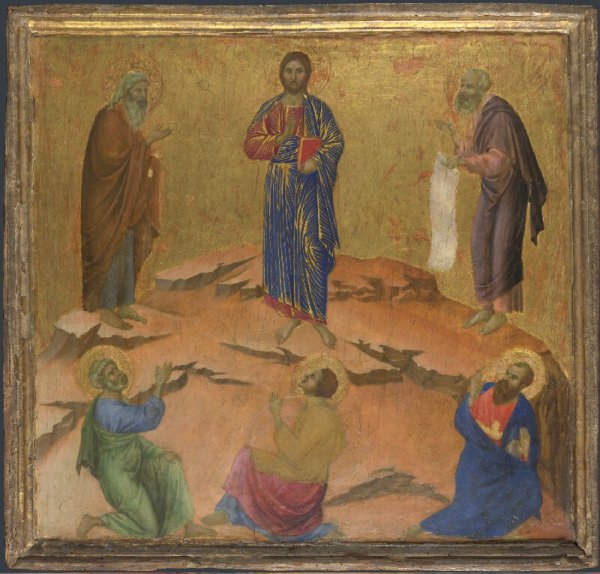
 Relationalrealities