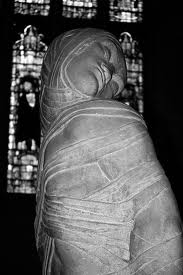
Welcoming the Image of God

The text

In Matthew 10:40-42 we have a continuation of teaching on discipleship. However, the tone shifts dramatically from last week’s gospel verses which focused on the likelihood of having to negotiate serious conflict when we tread the road as disciples of Jesus –read further at Facing up to Matthew https://relationalrealities.com/

Verses 40-42 focus on the action of welcoming and the object – as it were – of welcoming, i.e. prophet, righteous person, and-or little ones. In these three designations we have a full spectrum of persons who might be likely to visit with us. I would suggest that we define these categories of: prophet – a person mature in faith, the righteous – a good person, and little ones –  someone unsure, possibly vulnerable, likely doubting, yet searching for that which they know they are in need of. While we can see in Matthew’s categories an identification of types of person, I would further suggest that we find all three identifications coexisting simultaneously within ourselves.

The context

Matthew weaves together in a particular way what were most probably, a series of remembered sayings of Jesus. In other words, it is unlikely that Matthew is reporting a verbatim of Jesus’ teaching, as in this is what Jesus actually said on one single occasion. He is taking snippets of what his community remembers of the disparate Jesus sayings and weaves them together into a particular message for his community. So we can discern that the dynamics of welcome were as much an issue for the Matthean community as they are for the community of St Martin, on the East Side of Providence.

Yet, Matthew’s context differs from ours in a rather significant aspect. Whereas, we will be thinking of persons who arrive through our doors as individuals,  because we live in a society that constructs identity as something coterminous with each of us as individuals, i.e. I am me, and you are you, and in that lies the difference between us. In Matthew’s community, like that of any community in the Mediterranean world of the 1st century, personal identity is a relational concept denoting a connection with, and representation of a wider group or community. To welcome an individual is to welcome a whole group of persons to which the individual belongs. In this context the welcome of strangers served the interests of fostering wider social ensuring some degree of harmony between different social groups, and disparate communities.

Our context – receiving the text

Translating this text into our own context brings to mind two aphorisms – pithy sayings that carry a generalized truth. The first is the Garrison Keeler comment about the attitude Lutherans towards visitors:

As you leave church don’t bother to introduce yourself. If we want to know who you are we will look in the visitors book.

The second aphorism applies closer to home. Referring to the sign that hangs outside every Episcopal Church,[1]:

The Episcopal Church welcomes you! In our minds this reads: The Episcopal Church welcomes you as long as you are like us!! 

Having enjoyed a good laugh at our own expense, the fact is that it is not helpful to generalize about Churches, and Episcopal Churches, in particular. Because the degree to which any church is, or is not welcoming is a reflection of the internal dynamics within that community.

In my first week in the parish, I met with the Vestry. It is my custom to reverse the normal vestry agenda priorities so that discussion of finance and more routine, recurring matters is placed as the last item on the agenda. I do this because I have learned that to place routine matters that don’t change much from month to month at the top of the agenda priority is the best way to inhibit the vestry’s collective creativity and thoughtfulness.

At the meeting two weeks ago we began with a form of Bible study known as divine reading or lectio divina, through which the Holy Spirit invited us into a more expansive frame of mind. I then invited the Vestry to brainstorm four major priorities to be worked-on over the next 12 months. You will be able to see from posting of the minutes what the Vestry came-up with. However, one priority is especially interesting, and one member coined this priority as inreach.

We came to understand this to mean that the most fruitful way of welcoming others is through reaching into s deep self-examination as a community. We do so in a spirit of appreciative enquiry, and curiosity. As we begin to practice inreach we are going to make important discoveries about who and what we are, and are not. I guess some discoveries will be reassuring, and others disconcerting.

Coming into St Martin’s I continue to reflect long and hard on why the aphorism about the Episcopal Church’s welcome seems to strike a chord of recognition in all of us. My experience of arrival has been characterized by a profuse and generously exuberant welcome.  I arrive, somewhat in the guise of Matthew’s prophet. The expectation attaching to the incoming Rector is that he or she is bringing something of what is needed by the community to continue into the next stage of its journey. Yet, how do we imagine the experience of the visitor or the stranger who comes through our doors?

Episcopal parishes have a general dynamic of reserve. Unlike some other Christian traditions we are not known for falling upon the neck of the visitor [2]. Yet, at St Martin’s I suspect it would be a mistake to interpret such reserve and restraint as a sign of being unwelcoming. St Martin’s, clearly is a missional parish. By this I mean it’s a community that is vitally interested in the state of the world around it. There is a long and strong tradition of outreach and social concern. St Martin’s, well understands that it has responsibilities to the wider Church and society.

Like many Episcopal parishes, St Martin’s is a community where the righteous – in the Matthean sense of good people imbued with a sense of humanitarian concern, readily find a welcome and a home. I also suspect that St Martin’s is a community where prophets – as in the spiritually mature, because they are able to persevere until they pass through the glass wall[3], also find a welcome and a home.

The question in my mind is how do we think the little ones – as in the vulnerable fare? Vulnerability comes in different guises. There are those socially marginalized, whose material needs are their uppermost concern. There are those who are socially ostracized through disturbance in mental and emotional health. There are the lonely and the sorrowful. There are those who experience themselves as the objects of discrimination. There are the skeptical, yet spiritually- seeking.

For the skeptical, yet spiritually-seeking some restraint and reserve may well be appreciated allowing them to find their way, at their own pace, into community relationship. Educational formation is going to be important for these persons. Our polite, middle class, emotionally restrained culture will probably make us an intimidating place for the socially vulnerable, and maybe the lonely. Our theological tolerance and progressive engagement in the service of the expectations of the Kingdom will make us a welcome place for those differently marginalized through discrimination. Our compassion and social concern will help us to embrace those variously disturbed, so long as they are not too disturbing.

Yet, the truth remains that we are a difficult tradition to penetrate. One reason for this is our theological and liturgical complexity. It is a steep learning curve to find your way around the Book of Common Prayer and into the concept of a community defined by its worship and not mutual agreement . Yet for those who can resist the urge for instant gratification, the BCP opens a portal to a world of deep spiritual, liturgical, and emotional tones and resonances that are most longed- for in our modern world. We are not the community for those whose response to the challenges of the modern world is to seek clear, unequivocal, true or false answers. Yet, for those who can tolerate living in the tension of interpreting the rich tradition of our Christian past for the purpose of creatively invigorating our Christian living in a 21st century world, we are exactly the right community.

As your new Rector, I want to invite us all into a process of inreach. Curiosity is one of the primary motivations necessary for the spiritual life. With curiosity and appreciative enquiry, let us explore ourselves as a community, celebrating our strengths, yet not shying away from our weaknesses.

In conclusion

Matthew 10:40-42 leaves me with two abiding insight.

  1. If each one of us can become more aware that in us the spiritual maturity of the prophet, the commitment to right action of the righteous, and the vulnerabilities and uncertainties of the little ones – all require our self-reflection.Recognising that to varying degrees, all three are part of our identity allows us the flexibility to orient ourselves to what is most needed, not only by the visitors that come through our doors, but by our neighbors and co-workers, and the stranger we encounter by chance in the street.  The fruit of our process of inreach will be effective and welcoming outreach. The task is to recognize in others what we know about our own familiar needs, and to let this self-knowledge orient us in relation to them.
  2. Ultimately, we welcome not the individual, but we welcome Christ, through whose image we recognise ourselves made in the image of God. When we recognize ourselves as made in the image of God, then we cannot miss seeing that same God-image in the faces of the visitor and the stranger. I believe it is the cultivation of our own spiritual resources that makes the difference between benign indifference and welcome.

[1] St Martin’s has two at either end of Orchard Avenue

[2] A reference to Acts 20:37 where the brothers and sisters embraced Paul, falling upon his neck and kissed him.

[3] By the glass wall I mean that experience of persevering with a new community until suddenly one day you find you have moved from the outside to the inside.

Facing up to Matthew 10 after a bewildering week

It’s been a somewhat chaotic and bewildering week, this first week in a new parish. I am someone who needs the external environment to be ordered and aesthetically sympathetic. So moving into a new office and trying to order the office space while simultaneously beginning to respond to what seems a myriad of priorities, has taken its toll. However, how can it not be so? I would not have it any other way! For in the midst of the challenges and competing demands, I have also experienced a deep communal empathy and goodwill supporting me.

In a new situation it’s hard to identify what are immediate priorities and what can be left on the back burner for a while. Harder still is to distinguish between the priorities of the external environment and those habitual anxieties that are always a part of who Mark Sutherland is when facing new situations and the yet-to-become-known. Yet, again, I have found a warm and tolerant, if watchful, welcome from others,  both parishioners and particularly my wardens and the small staff team at the nerve centre of the parish’s day-to-day functioning.

***

So, as I now sit to put my mind to the task of the upcoming sermon for this Sunday I am very conscious of the fact that it takes time to learn the frequency of communication with a new community. The old frequency that worked so well in my last post at Trinity Cathedral, Phoenix, does not seem quite right for St Martin’s, Providence.

My intention was to rise early on this Saturday morning and get to grips with another of those astonishingly provocative gospel passages, which Matthew seems to specialize in. I have setup for myself as small working space, literally under the eaves of our early 1800’s house, which a designer friend of mine back in Phoenix described as rustic colonial. It’s a small room in the attic, which a previous owner had furnished in the style of a grandchildrens overspill play-sleeping space.

So, I sit in my dolls house-like space and my first encounter is not with the profundity of my response to Matthew 10:24-39, but a tussle with the cordless keyboard that won’t sync with my laptop. After calming down a bit, I begin to reflect on the process of synchronizing. And my mind returns to the process so uppermost for us at St Martin’s, i.e. making our way through a time of transition into our new future together.

What is transition? The best definition I can come up with at the moment is an analogy between the cordless keyboard – PC synchronization and our situation of transition at St Martin’s. Transition is an anxious process as we engage in the process of waiting and watching to see if our broadcast frequencies will be mutually recognized, registered and synchronized so to enable us to continue to move forward into the new phase of what God is dreaming us into becoming.

***

The Evangelist Matthew offers us the most Moses-like image of Jesus. Matthew’s Jesus is authoritatively commanding and exacting – a Jesus who does not beat about the bush and with true Yankee pragmatism just comes out and tells his disciples not to expect a smoother road than the one on which he is travelling.

This is provocative because we tend to fall into a frame of mind that says that because Jesus did the hard stuff then we can expect a smoother, less painful ride.

Matthew’s Moses-like Jesus is no accident. Matthew and his community were in that painful transition following their expulsion from the synagogues. The image I have is of the Jewish followers of Jesus moving to less salubrious premises and opening the first storefront churches, literally across the road from the synagogues. Of-course they don’t cease to be Jewish, and they bring with them their Jewish theology of Jesus as the new Moses who had come not to abolish, but to complete the Law. Locating Matthew and his community within their religio-political context, helps explain Matthew’s Moses-like image of Jesus and his provocative tone, so reminiscent in places of the exacting tone of the Torah’s[1] teaching.

Matthew writes for a community that is struggling against powerful discrimination, if not persecution. In this context there is little expectation of a cushy ride and the Christians of Matthew’s community had their own unique experience of the cost of discipleship. A cost they paid in the day-to-day experience of contesting the centers of power around them, and clearly from today’s gospel text, between them.

***

Each Sunday, the lections we hear proclaimed comprise the conversation God is seeking to have with us as a community. To better hear this invitation to conversation we have to adjust for context. Matthew’s context is not our context, though the themes governing human societies across the ages are depressingly repetitive.

The purpose of the preacher in the liturgical assembly is to offer a response to God’s invitation to conversation from the community side of the line. This involves a sometimes complex, twofold process. The preacher attempts to translate between the original context in which a piece of scripture arises and the contemporary community setting. Yet, at the same time the preacher, while translating from one historical context to another needs to allow the timelessness of God’s conversation to be heard within his or her own community.

What we are listening for is the original voice of Jesus in the context of his ministry of preaching the expectations of the Kingdom of God around 30AD. Jesus’ voice is communicated to us through the filter of Matthew and his community’s interpretation of that voice around 80AD. Yet, rather than dilute Jesus’ message, Matthew’s witness clarifies it further, making it more accessible to us as we translate it out of his context into ours in 2014AD.

***

I am attempting to fulfill the purpose of being the preacher while still being new to many aspects of my community’s context and experience. Going-back to my earlier analogy with electronic synchronization, I am feeling my way towards the best frequency that will sync my words with my new community’s experience – a process of hit and miss taking time and requiring patience on both our parts.

I don’ t feel I am able to address the St Martin’s community in anything other than the most generally applicable of terms. I engage with Matthew’s context and the way he witnesses to the earlier context of Jesus. Then i try to translate out of Matthew’s context into that of the community of St Martin in Providence RI, l attempt to identify and translate the core timeless elements of God’s communication with us through the teaching of Jesus recorded in Matthew 10:24-39.

In translation this is what I read :

  • There is a right order in relationships, which is often inverted in the world. We are not better than God. It’s enough for us to be like God, but not to allow our own sense of self to supplant God’s place in our world nor allow our lives to trespass apon the lives of others.
  • Conflict is everywhere and we cannot expect to be insulated from it. Yet, the danger never derives not from the negotiation of conflict. It comes from the fear and consequent avoidance of conflict. This is what makes us retreat and hide.
  • It is fear itself that colors our picture of the world. Our need for courageous engagement in the world no matter how difficult and painful this can be, must not give way to an attitude of hiding and keeping our heads down.
  • We have to continually expose the lies and subterfuges that we rely upon to make a convenient accommodation with abuses of power and systems of injustice. Our easy accommodation with violence masking abuses of power, systems of injustice, and scapegoating only unconsciously reinforces our sense that there is much to be afraid of. Giving-in to fear makes us even more fearful. Examples of the way we do this lie in our inability to get a grip on the abuse of guns for violent ends, in the steady and continued rise in drug addiction at home, fueling the grip of violent criminality and the evils of corruption south of the border in Mexico. Other examples lie in the way we as the most privileged nation on earth maintain our economic advantages.
  • Social systems structure our relationships with one another along the lines of class, race, gender, sexual identity, and family. In each of these spheres there is a hierarchy for the exercise power that gives to some more power and to others, less. The rich have more power than the poor, whites have more power than blacks – and here I stress that black and white are concepts that sometimes have little to do with race or skin color. Class is the real determinant of privilege. Men have more power than women, husbands than wives, parents than children. A patriarchal view of heterosexuality is privileged to the specific disadvantage of homosexual and transgendered persons.

Jesus promises to shine the light of truth into our everyday lives exposing the way we collude with one another in the maintenance of social relations that mask the disparities in privilege and the exercise of power. We should not be lulled by Jesus’ identification of violence with possible death. By lulled I mean, that thinking which says because our lives are not in danger this text does not apply to us. Every moment of every day many people’s lives are in danger of death through myriad forms of violence . Unless we protest we cannot escape being implicated in the maintenance of a society that preserves a sorry status quo.

***

With time I trust that my incorporation into the life of the St Martin’s community will afford me more insight into the particularities of the conversation God seeks with us.

Jesus tells us that the path of discipleship is not a path that avoids exposure. Exposure leads to division and conflict, sometimes in the spaces where our most intimate human relationship are lived-out

The most significant part of Jesus’ teaching  lies in his exhortation for us to firstly:

  • To live without fear, or more accurately to refuse to let our fear limit our courage for living.

And secondly:

  • To let ourselves become found through the privileging our relationship with God. His means to give up our perpetual assertions of self-interest and potency. We do this best when we are able to let our concern for our neighbor come before our own self-interest.

For those who find their life will lose it, and those who lose their life for my sake will find it.

[1] The Torah or the first five books of the Hebrew Scriptures comprise the Law and traditionally have been ascribed to the authorship of Moses.

Trinity Sunday and Fathers Day Ponderings

The Problematic Trinity

Jesus said, Whom do men say that I am? And his disciples answered and said, Some say you are John the Baptist returned from the dead; others say Elijah, or other of the old prophets. And Jesus answered and said, But whom do you say that I am? Peter answered and said, “Thou art the Logos, existing in the Father as His rationality and then, by an act of His will, being generated, in consideration of the various functions by which God is related to his creation, but only on the fact that Scripture speaks of a Father, and a Son, and a Holy Spirit, each member of the Trinity being coequal with every other member, and each acting inseparably with and interpenetrating every other member, with only an economic subordination within God, but causing no division which would make the substance no longer simple. “And Jesus answering, said, “What?”

Jesus’ response to Peter is a fair summary of how many people feel about the Trinity. In the Western Church, a term that identifies both Roman Catholic and Protestant traditions of Christianity, our engagement with the deeper meaning of the claim that God is both three, and yet one, has been obscured by the preoccupation with theological definition. For Western Christians, the Trinity is a frightfully abstract, head concept. Despite the profusion of churches, especially in our Anglican-Episcopal Tradition dedicated to the name of the Holy Trinity we tend to ignore the triune nature of God, seeing it as an unnecessary complexity. We abandon the most essential of all Christian understandings of God for some vague unitarianism often summed up by: oh I don’t understand this three in one stuff. For me God is Father, or Jesus is friend, or its’ the power of the Spirit, for me.  This is not the case in the Orthodox traditions of Christianity in Eastern Europe, Asia Minor, and Coptic Africa, where the conception of the Trinity is received and joyfully celebrated with a full and joyful heart that contrasts sharply with our cool response of cerebral assent.

As the joke above captures, many of us regard the Trinity as a thorny theological and philosophical conundrum, best ignored. However, the important and relatively simple thing to remember is that the Trinity emerges out of the ordinary experience of the first Christians beginning to make sense of their tumultuous experience of God.

The experience of Trinity

The first Christians were Jews who knew God as the God of Abraham, Isaac and Jacob, the God of their fathers and the Creator of the world who revealed himself to Moses and to the people through the gift of the Law and the preaching of the Prophets. Yet, they also had to make sense of a direct experience of Jesus as a revelation of God within the intimacy of their human relationship. As if this was not complex enough, they were forced to negotiate the further experience of God as Holy Spirit. This was and experience of God as a force of nature that had completely changed everything about the way they understood themselves and the world around them.

For the Early Christians, the three-fold experience of God was not a theological experience, but a deeply human and relational experience that both empowered and bewildered them by turns.

The Church expresses this threefold experience of God through the chronology of the Calendar placing the celebration of the Trinity as the final act bringing the Easter Drama to its completion.

Rehabilitating the Trinity on Fathers Day

This year the celebration of the Trinity coincides with the secular celebration of fatherhood and fathers. This leads me to ponder the question: so who is God for us? I imagine that this question will usually connect us to an association of God as Father. For some this will be a positive and affirming experience, yet not all have comforting associations to fathers. Yet, we often have found creative and affirming experiences of fatherhood in the most unlikely places and in the most unexpected persons. I will come back to fathers and fatherhood further on. Here, I simply affirm that God as father can be a limiting association for some of us, while the association of God with fatherhood can be more creative. On Fathers Day we celebrate the gift of fatherhood, often expressed through the gifted and broken vessels that are our human fathers.

Another way to answer the question: so who is God for us? – is to go back to the Old Testament lesson taken from the first chapter of Genesis. In this first creation narrative, God finally gets around to creating human beings as the penultimate action in a long day marked by intense creative energy. Paying careful attention to the text we notice something, which at first sight seems rather perplexing. Not only is God displaying the first sign of madness, i.e. having a conversation with Godself, but the conversation indicates God’s sense of having several personalities. In a conversation that sounds alarmingly like that of multiple personality syndrome, God uses the pronouns us and our to refer to actions. God does not say let me create humanity in my own image, but says let us make humanity in our own image, male and female let us make them!

We are relational beings, finding fulfilment in  both nuclear and extended communities. Relationality is what it means to be human because we are made in the image of a God who is within Godself, relational. Our relationality is not something particular to us and our needs. Relationality, it seems from Genesis, is also particular to God and God’s needs. The Trinity is the way we Christians understand and protect the mystery of the relationality within the heart of God.We see in Genesis 1, God revealing relationality and sharing the joy of relationality in the creation of the cosmos.

Father, Son, and Holy Spirit: theology of gender implications

For the first Christians, God as a divine community was powerfully experiential. They identified with the Father-creator – lover, Jesus the Son- communicator – beloved, and Holy Spirit empowering presence, love sharer. For them, the relational God comes to full experience in lives of relationship and community.

I  have italicized nongendered relational terms and associated them with the traditional identities of Father, Son and Holy Spirit. Father equates with lover or source of love. Son equates with beloved or the object of love. Holy Spirit equates with love sharer. My point here is that God is neither male nor female, yet the principles of masculine and feminine are present in God’s nature.

Although Jesus as a human being certainly was male – the Word of God (logos) is not male. The Father – creator, and the Son – communicator, can be viewed through masculine imagery without being defined as male. The Holy Spirit, in Hebrew ruach and Greek pneuma, is correspondingly, feminine. The feminine principle is captured in the notion of the Spirit as generative, fecund energy, bringing life to birth and sharing the divine love everywhere. Traditionally the Holy Spirit was referred to as it, because I guess it was difficult for a patriarchal tradition to refer to an element of God as she. As human beings, made in the image of God, we each contain within us an arrangement of masculine and feminine principles which render us the unique individuals we are.

In our human relationships the divine principles of masculine and feminine are located in gender, though not confined by gender.  To pick up on my earlier associations between the celebration of the Trinity and Father’s Day; Fathers are more often male, but not necessarily so, for the function of fatherhood is masculine, not male. In a similar way the function of motherhood is feminine and not simply confined to being female.

God expressed through doctrine

As time passed the first Christians needed to be able to articulate their experience. As the influence of Greek philosophical thought grew among the gentile Christians, it was natural for them to turn to this tradition of learning in search of a way of speaking about their experience. The doctrine of the Trinity is a philosophical theory that gave the growing Christian Church the language to both speak about God and protect the mystery of God.

In Greek thought, the term person could be used to speak about different identities that nevertheless shared one nature. The doctrine of the Trinity, which for us presents God as a conundrum best ignored, like all doctrines functions not to explain or define God, but to protect the essential mystery that is God from being reduced to the simplicities of only that which human beings in each generation can understand!

God expressed through the psychology of relationship

There is a recognized psychological theory for how our individual identities are also the product of our relationships with others. Our individual identity i.e. who I am is constructed out of a complex dynamic of being in relationship with others. Who I think I am is as much a function of how I perceive others viewing me. I catch a glimpse of myself in the face of the other, looking back at me.andrei--rublev-russian-icons--the-trinity_i-S-61-6179-4K11100Z

Rublev’s famous depiction of the Trinity as three identical persons, lovingly gazing upon one another puts into pictorial form the conversation we hear God having in Genesis. We see not three Gods, but three persons in one God, each reflecting back the image of the other.

In conclusion

Each person has a function. The Father –the lover is the creator source of all things. The Son –the beloved is the communicator of all things – the Logos or Word. The Holy Spirit love sharer is God in all things. But the main point is not their functions but the way each function emerges out of being in relationship, one with another.

Please go online to http://www.sacredheartpullman.org/Icon explanation.htm  Here you will find a further explanation that uses Andrei Rublev’s icon of the Trinity to demonstrate how this can be imagined.

A Farewell Discourse

Opening thoughts and reflections on friendship

Since the announcement of my appointment as the 12th Rector of St Martin’s Providence, these last weeks have been filled with the experience of saying good-bye. This particular experience of saying goodbye is a very bittersweet one. It’s hard for human beings to say goodbye, which is why some of us long for nothing better than to just disappear in the quiet of the night – as it were.

Saying good-bye is hard because as I have experienced these last weeks, among the many, many expressions of love, affection, gratitude, good will, and good luck, there has been sadness in the face of a sense of impending loss. I have had to remind myself on numerous occasions over the last weeks that there is no greater testimony to the quality of human relationship than the experience of sadness at the moment of departure.

In John 14:1-14, the Gospel for Easter 5, we are given a continuation of Jesus’ very extended and prolonged good-byes to his disciples – known appropriately as the Farewell Discourses. John gives Jesus four long chapters for his good-byes, whereas on my last Sunday at Trinity Cathedral the sermon slot allows me an interval counted-out in mere minutes.

The culmination in Jesus’ long farewell comes in chapter 15:12 when Jesus tells his disciples to love one another as he has loved them. Yet, for me, the punch line comes in verse 15 when Jesus declares that his disciples are no longer his servants, but his friends. We are called to be Jesus’ friends and this is made concrete through the way we become friends with one another.

Arresting images

I am arrested by the first image that the writer of 1st Peter offers us in the Epistle for the 5th Sunday in Eastertide:

Like the newborn infants you are, you must crave for pure spiritual milk, so that you may thrive upon it to your soul’s health…[1] 

The writer of 1st Peter here is drawing upon the primary image for the connection of one human being to another – that of infant at the mother’s breast. Through it he offers us a vision of what is involved in being a Christian community of friends.

There is a very particular school of psychoanalysis known as the British School of Object Relations Theory. Object Relations Theory departs from the classical Freudian School in seeing the primary impulse of human nature, not as seeking gratification, but object relating. Object relating is the psychological term for human connection, fulfilled in relationships.

1st Peter can be read in a classical Freudian way where the focus is on the newborn’s desire to be gratified by the spiritual milk. After all we all desire to be fed, to have our hunger satiated, to experience the gratification of being full. Yet an Object Relations reading focuses our attention beyond our need to be fed to our desire for connection. The infant does not treat the mother’s breast only as an on-demand feeding machine. The breast becomes the first object for relationship. Relationship is further mediated through the loving gaze of the mother in whose face the infant learns to recognize its own reflection. The infant discovers itself to exist as it glimpses a reflection of itself in the mother’s, eyes, the mother’s smile, her voice, and her touch.

Object Relations Theory and Christianity, at least on this point, seem to me to share a profound understanding of human nature. The Christian understanding of human fulfillment is friendship with God. As Jesus tells his disciples friendship with God is reflected and experienced through friendship with one another. As 1st Peter suggests, the roots of our capacity for friendship are found in the earliest experience of encountering another.

It is no coincidence that both 1st Peter and the Object Relations School identify the roots of human friendship to lie in the encounter between infant and mother. Through having tasted the spiritual milk, our desire is to come and find rest within the loving gaze of God is nurtured. In the face of Jesus we glimpse ourselves made in the image of God. This is an image of relationality. God has revealed God self as a community of relationships. So to catch a glimpse of our own nature reflected back to us through verbal gaze of Jesus who calls us friends, we are nurtured into relationship with God through the quality of spiritual friendship binding us together as a Christian community.

The writer of 1st Peter now offers us a second arresting image:

So come to him, our living stone, though rejected by mortals yet chosen and precious in God’s sight …[2] 

After I was ordained a deacon in 1985 and then priest the following year, I began a journey of surprising discovery about myself. Very quickly, I discovered that it was as if neon sign above my head flashed: if you struggle with an experience of estrangement, speak to me. I found this rather bewildering because I was the only one it seemed who could not see the sign.

Through the experience of others being drawn into conversation with me about what troubled them most I found myself compelled to seek in psychotherapy the training and skills I felt I had not been equipped with in the seminary. More significantly, I now understand that entering into psychotherapy training was also a way I could give myself permission to enter into begin my own self exploration in therapy.

Here, I learned that the one thing that troubles human beings most is a sense of marginalization, the experience of estrangement or rejection. Through beginning to notice this in others I was led to reflect on my own experience of living life on the periphery with the feeling of never really fitting-in. Marginalization or that sense of estrangement was a very confusing experience for me, because, the source of my feelings of marginalization were not immediately obvious to anyone else.

I learned that all of us have, not one identity, but several intersecting and often, conflicting identities. For instance, I was male, which is no mean signifier in patriarchal society. In addition to being male, I was a white, educated male, and as such equipped to make the most of the opportunity afforded me, and to successfully negotiate the dynamics of an unequal society in pursuit of my own self-interest. Yet, hidden within, or maybe not so hidden as I thought, the source of a profound sense of marginalization lay in knowing a truth of which I was ashamed. I was gay.

If we first discover ourselves through catching our reflection in the face of another, what happens when we are unable to find any externalized reflection of the most feared and painful parts of our self?

Over 18 years of ministry at the sharp end of mental health, I worked through my own sense of being marginal by ministering to others whose experience of marginalization seemed more obvious and more serious than my own. Human sexual identity and human emotional and psychological wellbeing are both fearful regions of our individual and collective experience. We all experience the nature of conflicting sexual desire. We all experience a continual assault upon the stability of our mental and emotional wellbeing. What do we do with these fears? We project our fears into those who evoke in us our deepest dreads – for how often have we felt there but for the grace of God, go I.

A farewell discourse

During these last four and half years, my ministry at Trinity Cathedral has reconfirmed that we often come together as spiritual friends through a shared experience of estrangement. Knowing my own experience as I do enables me to recognize the familiar tones of another’s struggle. My own experience sensitizes me to know what to look for in others. When I see the signs of fear and confusion in another’s eyes, I allow myself to become known to them.

Becoming known is not about sharing everything about me. It is not about inappropriate levels of self-disclosure. Becoming known is about signaling my availability to walk with another the path that leads out of the place of fear. In so doing I am signaling that this is a path I have trod before and can be trusted to be their guide along this way.

For me availability is the key to ministry. It’s the availability of the mother in giving herself over to the needs of her infant. Similarly, it is also the availability of the priest to likewise mirror for the community and its individual members God’s invitation into spiritual friendship.

God’s always communicates with us within the constraints of temperament. For some of us the invitation to spiritual friendship leads to a direct and somewhat mystical experience of God. For most of us God’s invitation to spiritual friendship will be chiefly known through our ability to be available for spiritual friendship with one another.

Through all the varied aspects of ministry, my chief concern is always to mirror the love of God. It would be a mistake for you to assume that I do this always from a place of confident strength. It would be a mistake to assume that I mirror from my abundant experience of the love of God. Most of the time I mirror from a place, not of abundance, but from a place of my own longing. In reflecting the love of God to others, my hope is that I may catch a glimpse of its return to me in the faces of others.

Mirroring is a process of seeing and becoming seen. Being able to see into another’s struggle is no help to them unless you offer a reciprocal experience of becoming seen by them. The mutuality of human connection lies in the ability of two people to make an impact on one another. There is no relationship without mutual recognition.

Over these last weeks, so many of you have taken considerable trouble to tell me how much my ministry has meant for you. Many of you have spoken about the experience of my recognizing and meeting you at a place of need and of my journeying with you through experiences of doubt and fear. My parting charge to you is to go and do likewise with one another.

The writer of 1st Peter reminds us that God calls us all to spiritual friendship not in spite of, but because of our experience of fear and estrangement wherever the sources of those feeling might lie. In the Christian community we are called to like living stones, let ourselves be built into a spiritual house, for we are no less than a royal priesthood claimed by God as his own.

[1] 1st Peter 2:2

[2] 1st Peter 2:4

A Sermon for Low Sunday

Random Thoughts

Some of you have already reported to me that this year, Holy Week and Easter at St Martin’s had special quality. No doubt this has much to do with Fr Bill+, whose reputation for liturgical sensitivity is well earned. I also want to say how appreciative I am Bill+, for your generous invitation to me to be the preacher today.

Today is known as Low Sunday. It seems no one really knows anymore why the Sunday after Easter bears this enigmatic descriptor. At least Low Sunday is marginally better than Quasimodogeniti, which was the name for this Sunday in the old Latin Rite, deriving from the opening words of the introit As newborn babes, desire the rational milk without guile. There is a suggestion that the name derives from an early custom of the newly baptized, having worn their baptismal albs all week, today enjoying a much-needed change of clothes.

This Sunday is also known as Doubting Thomas Sunday. In churches up and down the land preachers will be addressing the imagined polarization of doubt and faith. Thomas, depending on your theology emerges as a personification of the evils or the virtues of doubting. Episcopalians tend towards Thomas as a kind of everyman, a personification of the virtue of doubt. For us the seeds of faith are sown in the fields of doubt.

Psychologically, I have always felt that the name Low reflects a very necessary ebbing of energy following the energetic highs of Holy Week and Easter. The Sunday after Easter has always been for me a time for some well-earned and very needed recuperation. Except that this year, Low Sunday is the occasion for meeting a new congregation – not a time for me to luxuriate in lethargy. 

Conversing with the Text

Part I   When it was evening on that day, the first day of the week, and the doors of the house where the disciples had met were locked for fear of the [Temple authorities and their henchmen]… .[1]

So this is how it begins. The disciples of Jesus – dis-spirited – hiding themselves away – utterly exhausted and confounded by the events of the last week – exhausted beyond imagining – but the worst kind of exhaustion – the kind that also is accompanied by an agitated state of heightened anxiety. So this is how it all begins. Yet, it wasn’t meant to be this way!

Until Thursday night when it became clear to them that events were taking an unexpected turn for the worst – until then they had felt on the crest of something so huge. For months they had had this sense of growing momentum, of expectation that the world as they knew it was about to dramatically change. After all, were they not the Messiah’s inner circle?

For months now, Jesus had been showing them that he meant business. Ever since they had left Galilee it had been one amazing event after another. There was even that strange event with the woman at the well, in Samaria of all places. Then there was the amazing confrontation with the Pharisees over Jesus’ healing of the man blind from birth, which had both frightened them, and yet convinced them that Jesus, was unstoppable. Then only a week ago had Jesus not demonstrated his messiah-ship beyond doubt by raising Lazarus from the dead? Jesus was definitely the one who was about to spear-head a volte face, a turn-about-face, not only in their personal fortunes, but the fortunes of the whole Jewish nation. Jesus the Messiah – the promised-one – about which the prophets had spoken – the one who had finally come to set things right.

How had it come to this? If only Jesus had somehow not overplayed his hand with the Temple Priests. If only he had taken the way out that the governor had been trying to offer him. If only he had not confronted the authorities, a confrontation that had so terrified them and scattered in all directions. Even Peter, whom they all looked up to, their rock, had denied the Lord in the end, just as Jesus had said he would.

But what were they to do? Jesus had pushed it too far! He had miscalculated and this had cost them all dearly. First the death – that shameful death that now stigmatized all of them -the stigma of their leader’s death by crucifixion – as if Jesus was a criminal. Oh the shame of it all – shame as well as- as well as the loss, the grief, and of course their own guilt.

****

The resurrection was a complex experience for the disciples. It’s easy to relate to their experience of bewildering loss and disillusionment. We can even relate to their fear of being persecuted by the forces that put Jesus to death. I think it’s harder though, for us to recognize the effects of shame and guilt in play within them at the end of Easter Day. There is the guilt of having failed Jesus, denying and deserting him at his eleventh hour.

Yet, I imagine it’s the shame that is most crippling. The disciples were ashamed of the way Jesus had died. How could the Messiah have been put to death on a cross? Even more problematic, how could someone who died such a publically, shameful death, be resurrected?

The disciples had seen Jesus die. They had witnessed his burial and now the worrying mystery of the tomb being empty simply adds to their sense of terror and confusion. It’s true that Mary Magdalene had reported her enigmatic experience of the risen Christ earlier in the day. Yet how can the men credit with any authority the witness of a mere woman?

The disciples behave as human beings behave in the face of overwhelming, and conflicting emotion. Secluded behind doors of wood and walls of plaster they seek that feeling of safety amidst a hostile, external world. Yet, the doors of wood and walls of plaster are emblematic of the impenetrable walls and doors within their minds. These, they have erected to shield themselves from the tsunami of conflicting emotion. Within them feelings of grief, fear, disillusionment, guilt, and shame vie for self-accusatory, ascendancy.

Part II    Jesus came and stood among them and said, ‘Peace be with you.’ He showed them his hands and his side. Then the disciples rejoiced when they saw the Lord. 

Locked away within the turmoil of conflicting emotions the disciples are not mentally ready to recognize Jesus. The old adage – the mind recognizes only what it is already looking for – applies here. They don’t expect to encounter Jesus because for them, he is dead. They don’t recognize him when he appears in their midst until he evokes a connection between his present transformed appearance and the wounds of his crucifixion. All the post resurrection appearances in both Luke and John operate on this pattern, either Jesus shows them his wounds or he breaks bread with them, only then do the disciples know him.

What we call memory results when chains of associations become linked together, build-up from the isolated impressions stored away in our minds. These linkages in the chain of associations that build memories become broken as a result of overwhelming emotion such as grief or shame, which can only be processed with time. What we can see in the post-resurrection appearances is Jesus repairing the associational links in the disciple’s memories, broken by the trauma they experienced on Good Friday. Through action – i.e. breaking bread, or showing his wounds, Jesus reconnects the broken links of associational impressions in the disciples minds. The result – they recognize him as he now appears – seemingly miraculously before them – connecting the post resurrection Jesus with the Jesus they remember.

Then they rejoice! Can you feel their sense of, ‘phew! Jesus isn’t rejecting us for our failures as disciples and friends, after-all.’ It is so crucial that we note here that Jesus does not seek out new and better disciples. He returns to those who have failed him. He breathes new life into them and sends them out to forgive sins.

Part III    Jesus said to them again, ‘Peace be with you. As the Father has sent me, so I send you.’ When he had said this he breathed on them and said to them, ‘Receive the Holy Spirit. If you forgive the sins of any, they are forgiven them; if you retain the sins of any, they are retained.’

We are so familiar with Luke’s version of the descent of the Holy Spirit on Day of Pentecost that we tend to skate-over John’s less dramatic version of this event. Here in the locked room, Jesus forgives the disciples for their human limitations. He then, breathes the gift of the Holy Spirit into them empowering them to now go-out into the world to forgive sins.

Christians often, terribly misunderstand this passage. Jesus is not sending the disciples out to judge others. He is not commissioning them, as the Church has so often seen itself, as the arbiters between right and wrong. Jesus is not sending them out to judge the world. He is sending them out to extend their experience of having been forgiven by inviting others into the experience of forgiveness. 

Receiving this Text

Accepting forgiveness can be a complex process. Perhaps Jesus has this in mind when he tells the disciples that some sins will be retained. Human beings and human communities have a tendency to resist forgiveness. We cling to past hurts and grievances, refusing to forgive or be forgiven. Such retention of past sin harms us and harms our communities, impeding the creation of more creative associational links , i.e. more hopeful memories that are able to support new and better choices.

What we hear in this text is God’s invitation to know ourselves to be truly forgiven. When we so come to know ourselves, then how can we not invite others into that same experience, especially because as miserable failures, we human beings are only too aware of the harm that results when sin is retained.

John’s account of Jesus’ appearing to the disciples at the end of the first Easter Day helps us to frame a question about the future. I would like to suggest the over-riding question for us is and will continue to be: what kind of community are we dreaming of becoming? As your rector-elect, I seek only to frame the question. Together, we as the community of St Martin’s will begin to answer that question as we journey into the future.

However, what I feel I can do is to remind us of who we are. We are the heirs to the historic tradition of catholic and apostolic Christianity, physically situated on Orchard Avenue, in Wayland Park, in Providence, RI. More particularly, our historic catholic inheritance comes to us through the distinctive channel of over a thousand years of Anglican Tradition. This is a tradition of Christianity that understands that the function of being the Church is to exist for those who are not yet its members, and for those who may never come to see themselves as members of the Church. Our task is to witness to the presence of God, active in the world around us. We are to be what the Celts knew of as a thin place through which, the expectations of Kingdom of God permeate into the world around.

Like many Christian communities today facing the fearful uncertainties of a future yet to become known to us, we experience the temptation to retreat into a fearful self- preoccupation, like the disciples at the end of the first Easter Day. We are the Church. Our purpose is to attest to God’s work in the world. Each of us must be an extension of our community, reaching-out to others with whom we live and work and enjoy social connections in order to invite them into the community of the forgiven.

The importance of the right word

In his blog Listening Hermit, Peter Woods describing himself as a helpless digger into etymological meanings draws our attention to John’s use of the Greek word kleiso meaning closed, as in the doors were locked. He describes rolling the word around in his mouth as he tries to work out what the word associates-to, in his mind. Finally, it comes to him. Klesio is related to another more familiar Greek word, ecclesia. Where Klesio means closed, ecclesia means not closed.

It is important to note that ecclesia comes to be the word the first Christians adopted to refer to themselves as a community. The first Christians had come to see themselves as an open society, a society with open doors. This development, so soon after the death of Jesus sharply contrasts with John’s description of the disciples on the Day of Resurrection and following weeks. Jesus, at the end of Easter Day finds his disciples not only cowering behind closed doors, but locked away within closed minds.

At St Martin’s we are the Church – the Ecclesia – a community with open doors – a community of the forgiven extending God’s invitation of forgiveness into the world part of which involves the healing of our broken memories. This is the message of the resurrection. Let this Easter message give shape and content to our over-riding question: what kind of community are we dreaming of becoming? In some ways it’s less important to know the answer and more important to keep asking the question. Because its only when we ask such a question that we begin to participate with God in God’s dreaming us into becoming.

[1] It is regrettable that the English translators have not taken more care in giving the impression that John is hostile to all Jews. An anachronism describes the tendency to read back into history phenomena arising in later period. We need to understand that John, himself a Jew, leader in a completely Jewish Christian community is not suggesting that the disciples were afraid of Jews in general, but afraid of a specific group – the Temple religious authorities, who have already bribed the soldiers at the tomb to say that the disciples had stolen the body of Jesus. The fear John locates in the disciples is a fear of a persecutory religious authority structure that oppressed all classes of Jews. A tension with religious authority continues to be a live issue for John and his community. For while he writes after the destruction of the Second Temple in 70 AD and it power structures, new tensions have emerged between the Christians and the synagogue authorities of his day. This is a doctrinal tension. For the Rabbis following the destruction of the Temple, John’s Christian Community is a dangerous heretical movement that threatens their attempts to reestablish Jewish religious cohesion around the synagogue and the practice of the Law. The Christians pose a danger for the Rabbinic Movement because many while, secretly worshipping in the church on first day of the week, continue to attend the synagogue on the Sabbath. It’s these overlapping boundaries of allegiance that pose the doctrinal tension. This doctrinal tension is quite different from the later emergence of the racial tension associated with anti-Semitism. Anti-Semitism is our issue not John’s. We have to deal with our guilt at the criminal complicity of the Church in the crime of anti-Semitism, and not read it back into the Gospels. For John and the other Christian writers the issue is their struggle with Jewish religious authority, it is not a hatred of all Jews

Jesus: Less Hero than Human


reflections on Christ - crucifixionMeditation for Good Friday. 

Some say love it is a river that drowns the tender reed, some say love it is a razer that leaves your soul to bleed, some say love it is a hunger an endless aching need … 

We are required to go deeper, beyond being spectators recalling Jesus’ suffering on his way to the Cross. The human heart has an affinity with suffering, nevertheless if we go deeper we begin to realize that Good Friday is not about Jesus the noble victim sacrificing his life for the sins of the world. If we just stop there, no matter how thankful we might feel, we fail to see that the way of the Cross is God’s invitation to become transformed not by suffering, but by the power of love.

I say love, it is a flower, and you its only seed. ….

The Cross requires of us nothing short of a transformation in our moral, emotional, and spiritual way of being. God invites us to enter into the way of love not by standing back and beckoning us from a distance. In Jesus, God takes the initiative and leads us through example. Our acceptance, our entry into the way of love involves risking as Jesus risked. Risk is the raw material for transformation, for it is 

the soul afraid of dying that never learns to live. ….

Entering into the way of love leads us to challenge the status quo and risking the consequences. As a community, it means uncovering and challenging the cosmic forces of dehumanization woven into the very DNA of our culture. It means risking loving without expecting acknowledgment. Yet, above all else it means accepting an invitation to become transformed into a new way of being, one step at a time. In this transformation we are God’s collaborators and not merely, grateful children.

When the night has been too lonely, and the road has been too long and you think that love is only for the lucky and the strong just remember in the winter far beneath the bitter snows lies the seed that with the sun’s love in the spring becomes the rose. ….

The meaning of Good Friday lies in accepting entry into the way of the Cross of Christ. This is the way of love, which leads through risking into believing, hoping and loving. This is not a hero’s path, Jesus shows us that it is a very human path. On Good Friday, God shows us the way of love, motivated not by an abhorrence of sin, but by the impossibility for God, of not loving.

The italicized text comes from The Rose by Bette Midler

https://www.youtube.com/watch?v=JzisVBFMMdE


Lazarus, Come Hither!

Previously

Since the second Sunday of Lent we have been journeying with Jesus through the eyes of John the Evangelist, the writer of the Fourth Gospel. John does not follow the same gospel structure, first developed by the Evangelist Mark, and followed with some additions and variations of emphasis, by both Matthew, and Luke.  Instead, John paints a purely theological picture of Jesus. John’s theological picture of Jesus, his identity, and his mission, jumps out at us as he builds his Gospel around  seven stories, offered as stories concerning the Signs of the Kingdom.

Each story is followed by Jesus’ own discursive interpretation as a way of teaching of his disciples. The overarching theme in John is Jesus’ commandment: love one another. For Jesus, this commandment expresses a three-fold sequence uniting the cosmos:

As the Father has loved me, and I love the Father; so I, and the Father through me, love you; therefore you must love one another. 

Or

As the Father and I are one, and you and I are one, so the Father and you are one.

For John, love is the principal sign of the presence of the Kingdom among us.

At https://www.facebook.com/azcathedral?ref=hl and here at my blogsite at you can review my treatment of the last three Sundays Gospel readings: the woman at the well, the healing of the one blind since birth, and today, the raising of Lazarus. In each I have employed the metaphor of the play, divided in two several acts or scenes in order to unpack and explore the complexity within each Sign of the Kingdom story. Any metaphor, however fruitful, is vulnerable to over use. So I want to approach today’s gospel from a different tack.

Rethinking the exegesis of the text

Psychosynthesis, is a psychological and philosophical school belonging within the tradition called Transpersonal Psychology. In Transpersonal Psychology the ultimate goal of psychological development is the spiritual integration of the psyche and the soul within a three-fold unity of body, mind, and spirit. Roberto Assagioli, the founder of Psychosynthesis was an early disciple of the great Sigmund Freud. However he parted company with Freud over Freud’s discounting of the spiritual component in human development. In viewing psycho-emotional and spiritual development proceeding in tandem, Assagioli coined the term bi-focal vision.

My psychosynthetic training proves invaluable in my ministry as a priest. In my pastoral relationships I employ Assagioli’s concept of bi-focal vision to keep my eye on both the emotional and spiritual aspects within another person’s reporting of their experience. It occurs to me that the concept of bi-focal vision offers us another way of exploring the complexity in John’s Signs of the Kingdom stories.

Bi-focal vision tracks two distinct elements that are nevertheless interconnected and intertwined. Applied to John’s Gospel, the use of bi-focal vision allows us to identify distinct, yet interwoven transpersonal and personal themes, out of which John weaves his theology of Jesus.

Text Synopsisimages

In the story of the raising of Lazarus the synopsis is: Jesus, with his disciples received a message from the sisters of Lazarus that their brother is ill and dying. Jesus greets the news with what appears to be detached disregard, saying Lazarus is not going to die, rather that what is happening to him is an opportunity to glorify God. He then delays setting off for Lazarus, Martha, and Mary’s home in Bethany by two whole days. In the meantime Lazarus does die and is interred in his tomb. After two days Jesus nonchalantly declares that now Lazarus has died it’s time to visit his friends in Bethany, which is not far form Jerusalem. This fills his disciples with dismay for Judea is now a very dangerous place for Jesus to go. Last time he was there he narrowly escaped being stoned to death. Nevertheless they all set off and as Jesus nears Bethany, first Martha, having heard of his approach rushes out to greet him. Likewise a little later Mary, when she hears of Jesus’ approach also goes out to greet him. Despite his seemingly contradictory delay in coming, Jesus, now in state of some emotional distress, eventually arrives at the tomb and calls Lazarus to awaken and come out, which he does.  

When we apply bi-focal vision to this story, we can begin to more distinctly view both the transpersonal, i.e. the dimension beyond the personal, and the personal, i.e. human relationship dimension. Both dimensions are integral elements in the stories and by which John articulates his theology of Jesus.

Seeing the text through a bi-focal vision

I want to take and contrast the two encounters Jesus has, first with Martha, and then her sister, Mary. Incidentally, we know both these women independently of John’s account. Both Martha and Mary appear in Luke 10:38-42, from which we learn that Martha is the active, doer, always on-the-go, while Mary is the contemplative one. While John does not mention any of that it’s interesting that Martha is the first to go out and meet Jesus, while Mary takes some time to learn of Jesus’ approach.

I find it fascinating to note that both sisters greet Jesus with identical words: Lord, if you had been here my brother Lazarus would not have died. It is interesting to observe how Jesus’ encounter with each sister could not be more different. In his response to Martha we see Jesus in transpersonal focus. His response to Martha’s words of mild rebuke, is to evoke from her a profession of faith in the resurrection. He then identifies the resurrection with himself, leading Martha to proclaim: Yes Lord, I believe that you are the Messiah, the Son of God, the one who is coming into the world. Here is John’s transpersonal theology being proclaimed.

In the transpersonal space, Jesus understands the death of Lazarus as an opportunity not for sorrow, but one through which God will reveal his true identity in order to provoke an individual recognition and consequent leap of faith. In this space there is no need to hurry because the result is already ordained. In his encounter with Martha there is no hint of the human emotions inherent to this very stressful situation. The human dimension, with its intense emotionality of relationship remains invisible to our gaze. Through the bi-focal lens we view the event only at the level of its transpersonal significance.

By contrast, Jesus response to Mary using the same words as her sister, reveals to us his identification at the human level with the love and grief he feels for this family. In response to Mary’s weeping, Jesus is overcome by the disturbances of human emotion. John reports Jesus as being greatly disturbed in spirit and deeply moved. The result is that Jesus too, begins to weep with Mary. He then goes weeping to her brother’s tomb. Through the bi-focal lens our gaze now falls upon the human dimension of empathic feeling flowing from ties of love and affection. Nowhere else, does Jesus appear more vulnerable and human, than in his response to Mary and his experience at the tomb of his dead friend.

At the tomb we see the coming together of the intertwined nature of the transpersonal and personal dimensions in John’s story. While still weeping, Jesus now invokes his special transpersonal connection with God: so that they [the onlookers] may believe that you sent me! 

For John, the raising of Lazarus is the turning point at which there is no return from the path of the cross. We learn if we could read-on in our text that some of the onlookers reject the transpersonal message of salvation and go off to conspire with the Temple authorities, who now vow to put Jesus to death as apolitical expediency for the sake of the whole nation. 

Looking forward from the text

The Fifth Sunday in Lent is traditionally known as Passion Sunday and marks the beginning of Passiontide. From here, the following week leads us to Palm Sunday and the commencement of Holy Week. During Passiontide we get to sing some of the best hymns of the whole Christian Year.

The Anglican Tradition in our Episcopal Church bequeaths to us that great liturgical tradition of ancient, catholic and apostolic Christianity. We are liturgical Christians and at no other time of the Christian year is this fact more important than over the next 14 days. For liturgy is a vehicle and the purpose of a vehicle is to transport us from one place to another.

Liturgy too, has to be viewed through a bi-focal lens. Viewed in this way we see liturgy as a vehicle transporting us from one location in physical time and space to another, i.e. Passion Sunday to Easter Day and beyond. We also perceive that the liturgy transports us from one psychospiritual space to another, i.e. from pre-resurrection to post-resurrection in transpersonal time.

I encourage all to participate by climbing on-board the liturgical vehicle that is about to embark on the final phase of the journey that conveys us to the true joy of resurrection in post-resurrection time. Beginning on Palm Sunday, and continuing over the days of the week that follow, please join us in the multiple opportunities provided by our Holy Week liturgical calendar.

By attending the liturgies of Holy Week, and the Triduum – the Great Three Days of Maundy Thursday, Good Friday, the Easter Saturday, and Easter Day, we have the opportunity to become active participants (not merely passive bystanders) in the unfolding liturgical drama of the cross and resurrection. When viewed bi-focally, these are events of huge transpersonal significance, yet equally events that move us at the deepest levels of our human emotional need.

Liturgy is about the transpersonal transformation of the Christian Community. It is also through liturgy that we connect with the human dimension where we identify with Jesus’ experience as he tramps his weary way to the cross. Through the liturgies of Holy Week and the Great Three Days of Easter, we travel with Jesus the way of the cross so that we too, may arrive with him at the joyful Day of his Resurrection. There is no magical transportation to Easter Day that skips the way of the cross. As the Friday Collect in the Book of Common Prayer phrases it:

Almighty God, whose most dear Son went not up to joy before he suffered pain, and entered not into glory before he was crucified: Mercifully grant that we, walking in the way of the cross, may find it no other than the way of life and peace; through Jesus Christ your Son our Lord. 

A Man Blind from Birth

This Lent the Lectionary takes us to John’s Gospel with four of his Signs of the Kingdom stories. John builds his theology of love and the Kingdom of God around and through these stories. We began on Lent 2 with the story of Nicodemus and his nocturnal and clandestine visit with Jesus and will end on Lent 5 with Jesus’ visit to Mary and Martha and the raising of their brother Lazarus. The hallmark of these signs stories is the focus on Jesus’ true identity and the effect when this  becomes known to the other actors in the drama of each story.

Today we are given the story in which Jesus heals the man blind from birth. We need to remember that each Sunday the lections refocus us on the question: how is God seeking conversation with us today? Today’s conversation opens with Jesus once again challenging the crude and cruel conventions of his religious society.

A useful Metaphor

John unlike the other Evangelists does not construct his Gospel around the chronology of Jesus’ three years on the road. Instead, he constructs a theology of Jesus’ ministry around his seven Signs of the Kingdom stories. Each of these stories functions like a play. I suggest the concept of a play as our metaphor for capturing the complex flow and movement within these stories.

Today’s story is a play in four acts:

  • Act 1 – Jesus and the disciples encounter the man blind from birth. This is not any blind man, for its crucial for John’s later development of the plot that we know from the outset that this man was born blind. The discussion about sin ensues and Jesus challenges his disciples assumption that illness or misfortune results from sin. Instead, Jesus invites them to see the man’s blindness as an opportunity for God to open not only his eyes, as in to restore his sight; the man’s blindness is an opportunity for God to open all their eyes to the bigger picture of things, as in invite them into insight.
  • Act 2 – Jesus and the disciples exit to stage right. Entry from stage left, the blind man’s acquaintances and neighbours. In this act the drama unfolds around their confusion about what has taken place for this man. The only way they can make sense of it is to dispute that this is the same man, whom they have known as blind from birth. He protests that he is the very same and that the man Jesus, healed him. The act closes with the group asking: so where is he? The man formerly blind says he does not know. At this stage he knows only that he can now see, and does not know who has performed this healing.
  • Act 3 – The group take him to the Pharisees – scholars of the Law, because this is all too much for them to handle. The Pharisees can’t work out what has happened either. They end up arguing among themselves with one group saying this could not be a healing because Jesus performed it on the Sabbath, and so Jesus himself is a sinner; ipso facto God can not work through sinners. The other group object that the evidence of their own eyes is that God has acted, Sabbath or no Sabbath. Two interesting developments now take place. Having asked the man who he thinks Jesus is and shocked by his answer they call for his parents in an apparent attempt to continue to question the veracity of the man’s blindness. We should note how the focus now subtly shifts from questioning the healing to questioning Jesus’ identity. The act concludes in considerable disarray. The man’s parents fearful of being cast out by the Pharisees put the whole responsibility on their son for declaring who Jesus is. We see the man, under the relentless pressure of the Pharisees’ interrogation moving from the simple statement: all I know is that I was blind and now I can see, to: the facts seem to be these, this man cured my blindness, an action that clearly cannot be performed by someone who is breaking God’s Law, therefore, all I can say is that he is of God. We now see him in the process of moving from sight to insight. We see the religious authorities approaching the invitation to insight, and pulling back in horror. The act ends with them rejecting the man, who for dramatic purposes, is left alone on the stage.
  • Act 4 – Jesus enters from stage right having heard that the Pharisees had rejected him. He asks the man who has healed him? Remember that the man was blind when he last encountered Jesus so he has no way of recognizing him. Jesus identifies himself and the man proclaims his belief that Jesus is the Messiah. The act close with Jesus teasing the Pharisees with the suggestion that: if you were truly blind you would not be sinners because you can’t be blamed for what you can’t see. But because you claim to be able to see, and clearly have no insight, then for that you are culpable.

The play spirals back to end on the opening theme of sin and culpability.

Text and context

This is a text, which we simultaneously hear echoing in three contexts:

  1. The original context of Jesus, the disciples, the man blind from birth, and the confrontation with religious attitudes that enshrine the hardness of the human heart rather than the love of God.
  2. Some 60 years later John records this original story in his Gospel. John reconstructs the story to connect with the issues, current in his own community. We hear the echo of a mighty struggle between the Johannine Community and the Jewish Synagogue. John is writing after the destruction of the Temple in 70AD. Judaism had regrouped around the Synagogue-centered Rabbinic movement, the descendants of the Pharisees of Jesus day. The Synagogue had expelled the Christian community by John’s day leaving John’s community struggling to hold itself together in the face of persecution from without, and division from within. One of the significant divisions in the Johannine community was between those prepared to proclaim Christ and take the consequences and those who still wanted to secretly follow Christ for fear of being excommunicated by the Synagogue – a theme played out in the story between the Pharisees and the man’s parents.
  3. In 2014 we receive this text within the context of our own time and place.  We hear the echo of Jesus’ conflict with the Pharisees and the Johannine Community’s struggle with the Synagogue some 60 years later. Our task to to receive this text as God’s desire to open a conversation with us about the challenges of being faithful in 21st Century America.

For me the story of the man blind from birth opens us to the challenges of continuing to live our lives as a community being called by God to proclaim the expectations of the Kingdom. We live in a time when under the impetus of unparallelled change older forms of Church are passing away and we still can’t quite see what will take their place. This fills us with anxiety.

In my last sermon blog on the story of Jesus and the woman at the well, I drew some general conclusion about the similarities between the community of John and our Anglican tradition in the Episcopal Church. I did so to remind us of the unique gifts that we as a tradition offer the wider society of our day. https://relationalrealities.com/2014/03/28/the-woman-at-the-well-a-sermon-delivered-to-an-unknown-community/

Receiving the text

As he walks along with his disciples they come across a blind man. The disciples give voice to the age-old desire to explain-away illness and misfortune in terms of sin. They ask: Rabbi, who sinned, this man or his parents; that he was born blind. 

It always pulls me up short when I encounter the tendency of people who consider themselves quite religious to use religion and religious explanations as a mask to validate the hardness of the human heart. 

Wanting to see this man’s blindness as the result of his or his parent’s sin comforts the disciples and give them a false sense of security. This illusion of security holds out the prospect that if they can avoid the commission of sin, then the callous gratuitousness of affliction, will pass them by.

I don’t often recall these days that my undergraduate degree was in law. Growing up in New Zealand it was the English Common Law tradition that I was trained in. This tradition still forms the bedrock of most American State legal systems, though not all. English Common Law works by appealing to precedent. Precedent operates when counsel, or the judge appeals to an earlier decision of a court of equal or superior authority, as binding, i.e. binds the court in the present case to arrive at the same conclusions as in the previous case. The legal device of distinguishing is the way counsel argues that there is a crucial difference between the precedent and the present case, thus arguing that the judge is free to decide the present case on a different basis.

Distinguishing is not only a legal device. As the disciples demonstrate the desire to distinguish is deeply rooted in the human psyche. Though Episcopalians don’t usually appeal to sin as a distinguishing device, we nevertheless distinguish all the time when we attribute another’s misfortune to the results of their own carelessness, or their own fault.

Jesus challenges our desire to protect ourselves from our fears in the same way that he cuts right through the disciples desire to distinguish themselves from the man blind from birth. Like us, the disciples are seeking to distance themselves from this man’s fate because of their fear – fear that the precariousness of life’s bad fortune could strike them at any time. In so doing they act-out religion’s tendency to scapegoat those different from us when their point of view or their misfortune threatens our security or complacency in some way. We love to scapegoat such individuals or groups by casting them into the role of the other, the outsider, the sinner, and appealing to religion to validate our actions in doing so. Throughout his ministry Jesus’ most serious conflicts always center on his confrontation with religion operating as a mask for the hardness of the human heart.

How we distance ourselves from our own fear of life’s unpredictability is one theme in this story that we need to take to heart. There is also another theme that seems to me to be significant. This story offers us a nuanced play on the movement from sight to insight. If we receive this story of the man born blind into our own lives, by which I mean, allow the authority of this story to apply to us, we immediately face some uncomfortable questions:

  1. Where and to what do our fears still blind us?
  2. Do we have the courage to allow our blindness to be healed and begin to see?

These two questions are challenging enough. But there is a third and more difficult one to face.

  1. Having recovered our sight can we risk the journey from sight to insight?

The man born blind seems at first to be content simply to have his physical sight back. Yet, John’s point is to show us how by refusing to be cowered by religious authority, he moves from the possession of physical sight to the acquisition of spiritual sight. To put this another way, we see him moving from sight to insight. It’s only through insight that he discovers who it is that has not only healed him, but more to the point, calls him to a new experience of life.

What is this new experience of life, you ask? If we read-on into chapter 10 we find Jesus offering his own interpretation of this story of the man blind from birth in his metaphor of the shepherd and the sheep. The sheep are not confused by the voice of the imposter because they know the shepherd’s voice, and knowing him for who he is, they trust him. The new experience of life is a life lived with the courage to trust. Trust means that no matter what – we know ourselves to be loved. Is this not the best insurance policy against the fear of the unpredictability and precariousness of life?

The Woman At The Well: a sermon delivered to an unknown community

I. Some general observations about John’s Gospel

Jesus’ encounter with the Samaritan woman at Jacob’s Well is one of those very rich stories that functions for John as one of seven Signs of the Kingdom. We love these stories from John, especially– the wedding at Cana, Nicodemus’s night-time visit –which formed last week’s Gospel reading, and of course the raising of Lazarus and the story of Mary and Martha. Today’s story of the woman at the well, like the others Sign stories, appears only in John’s Gospel. Why is this?

John’s Gospel is the last of the Canonical Gospels to be written. John writes within the context of the Christian Community in Jerusalem. It’s fair to assume that already possessing the Gospels of Mark, Matthew, and Luke, John’s community didn’t need yet another synopsis of the events of Jesus’ Ministry. After all, by now everyone knew the story back to front.

Although Matthew and Luke follow Mark’s blueprint, they each add additional stories while also bringing their own theological and community context to bear on Mark’s blueprint. Therefore, John’s adding of new story material is in itself, not remarkable. What is remarkable is that John’s purpose in writing seems so very different from the other synoptic writers. John is not telling the story of Jesus’ ministry through the chronology of times, places, and events. John is building a theology of Jesus’ ministry around his series of seven stories, each intended to be sign that in Jesus, God’s Kingdom breaks into the human dimension of the here and now.

II. Approaching the text

On the face of it the story of Jesus and the woman at the well is rather complex with a number of different moving parts. It could be thought about as a play in three acts.

The first act of the story opens with a conversation between Jesus and a woman he encounters at Jacob’s well.  This is a place of significant religious and historical controversy. Both Samaritans and Jews claim Jacob as their ancestor. Jesus surprises the woman by asking her to give him a drink of water. From his request there then ensues a conversation about living water.

You might ask, what is so surprising for the woman that Jesus should ask for water from her? In order to answer this question, we need to know something of the social and political context for this encounter.

By asking her to give him a drink, Jesus is challenging social convention. He surprises the woman with his request because as a man Jesus shouldn’t have spoken to her in public. She was neither his wife of a female relative. In fact, he addresses her, ‘woman’ , implying a relationship of equality, not hierarchy existing between them. This Samaritan woman is doubly taken aback because she can see that Jesus is a Jew, and Jews don’t speak to Samaritans. In asking the woman for a drink Jesus is not only challenging social custom he is also challenging political and religious exclusivity. In order to more fully understand this we need to take a detour into historical context.

After Solomon’s death the United Kingdom of Israel, united by his father David breaks apart into the Northern Kingdom of Israel with its capital at Samaria and its Temple on Mt Gerizim, and the Southern Kingdom of Judah centered on Jerusalem and The Temple. Here is where the similarity to Crimea comes in. In 722 BC the Assyrians destroy the northern Kingdom of Israel and deport around 30,000 Israelites in order to relocate five other ethnic groups to replace them. Over time the remaining Israelites intermarry with the foreigners. In 587 BC the southern Kingdom of Judah falls to the Babylonians and the people in Jerusalem are taken off into captivity in Babylon. However, unlike the fate of the northern exiles who never return, in 538 the Jerusalem exiles are allowed to return and begin to rebuild the Temple in Jerusalem. The Samaritans object to this and petition the Persian King to withdraw Persian support for this initiative. thus cementing the hatred between Samaritans and Judeans.

The core of the enmity centers on notions of pollution. The Judeans despised the Samaritans because of their intermarriage with non-Jewish populations, rendering them racially impure. The Samaritans, on the other hand despised the Judeans whom they saw as having polluted the Law of Moses through the Levite reforms instituted during the period of exile in Babylon between 587 and 538. For the Samaritans had despite intermarrying remained faithful to an older operating system – to borrow from the language of computer software, i.e.the Law as it was understood in 722.

There is a dramatic shift of focus as we move into the second act of the story. Here Jesus requests that the woman go fetch her husband. Her response opens the way for her to recognize Jesus’ true identity. Taken by itself, this section alone has led to the familiar misogynistic (women hating) patriarchal treatment of the woman as a prostitute, or even worse and adulterous. Yet, Jesus, nowhere implies that the woman is of anything but impeccable character. Quite the contrary, he sees her as an evangelist, who not only recognizes him as a prophet but also brings the rest of her community to faith.

Jesus’ reference to her five husbands is a historical metaphor for the five foreign peoples with whom the Samaritans had intermarried. The man she is currently with, and who is not her husband, extends the metaphor to include a sixth group of foreigners introduced by Herod the Great in 37 BC. Unlike the first five this man is not her husband and this alludes to Roman occupation, which had forbidden intermarriage between this last group and the Samaritans population.

In the third act we see the return of the disciples who had been shopping for supplies. They arrive back and totally misconstrue the situation they come upon. They are scandalized that Jesus should risk both social and religious criticism by talking to a woman and a Samaritan woman to boot. This final act of the play concerns Jesus’ discussion with the disciples about mission. Mission, is an important theme for John who introduces the metaphor of gathering in the harvest – a harvest that someone else has planted. Here Jesus is telling his disciples to embrace the Samaritan converts, that through her testimony the woman is bringing to Jesus. This woman, whom they condemn has recognized his true identity as the Messiah. As a result, she now brings her neighbors and friends to also believe in him. This is a harvest, the seeds of which the disciples have not sown, but yet now must bring into the community of Jesus’ followers. 

The nature of Christian Community

This is an important story for John and his community. The core of John’s teaching centers on the primacy of love – a kind of love conquers all, approach to faith. In John’s Gospel, Jesus’ central commandment is to love: as the Father has loved me, so I love you, therefore you must love one another. 

John’s community comprised a number of different groups with different theological understandings. In the absence of common agreement between them, this teaching on love holds them together in some semblance of community. Like our own Anglican tradition, John’s community is defined not by agreement on shared belief.  It is held together by an emphasis on right relationship. For Episcopalians, right relationship rests on our behaving with love towards anyone who is willing to join us in worship. Our unity lies in our being able to recite the words of the Book of Common Prayer, despite holding different understandings as to what these words might mean. For John, the woman at the well is a Sign of the Kingdom because it powerfully depicts Jesus reaching across the social divisions of gender relations, as well as the political and doctrinal divisions rooted in a history of conflict and mutual antipathy.

Text and context

Understanding biblical texts is usually a more complex business than we are often led to believe. We see in this story of the woman at the well the interlacing of three layers of context:

  1. We have the historical context within which an event takes place, i.e. a meeting between Jesus and a woman at Jacob’s Well sometime between 30 and 33 AD.
  2. We have the reporting of the original story by John writing about the event many years later, probably around 90-100 AD.
  3. We have our reception of John’s text in the first decade of the 21st century. This is always how the ministry of Jesus comes to us – transmitted across two thousand years of time.

Of the three layers, it is the third layer, our reception of this text and the meaning we give it, that is our chief focus. Therefore, I ask the question: what might this text mean for those of us sitting here this morning?

Receiving the text in the here and now

There is a trap that a visiting preacher can fall into if he or she is not careful. The trap is to speak with certainty or authority, assuming a knowledge of his or her hearers and their community that he or she does not possess. I have only the most general awareness of how my reflections on this story might be received. All I can say is that this story introduces a conversation that God is intending to have with this community. Lacking specific knowledge of this community, I would like to make some general points from my experience of how God might intend to have this conversation with any Christian community.

This story from John’s Gospel depicts Jesus demonstrating what a relationship of love, looks like.  This is not erotic or sentimental love I see here. I see a love of mutual respect emerging between Jesus and this woman. I note a growing tenderness, which differences of gender, ethnicity, and religion cannot frustrate. In contrast to the worldview of his disciples, Jesus values diversity! This is often a real issue for Christian communities. You know the old joke: the Episcopal Church welcomes you – but only if you are like us. As a Church, we may be very theologically inclusive, yet the fact that our parish communities are shrinking indicates another old adage: that we behave as if everyone who might become Episcopalian – already has.

In our communities, we must examine and uncover attitudes of mind and heart that result in our clinging to safety rather than risking to reach out to those who are different from us. Our Anglican tradition has so much to offer the modern world and it continues to amaze me how it remains America’s best-kept secret. Through the sheer accident of history, Anglican Christians have developed an idea of Christian Community that is not a community defined by shared believe, but one defined by the generosity of God experienced in common worship.

We are the community where traditional worship and a radical commitment to face the challenges of our contemporary context, meet and engage one another. Our parish communities are rooted in the local, rather than the universal. We are Catholic Christians of place and locality and this must embolden us to embrace new populations whose arrival can be seen as a challenge to our sense of privilege  -which to be honest, is a boat that sailed a long time ago.

Let us not only love one another but love the stranger. Let love empower us to catch up with the world around us, embracing it as it really is, and not retreating into fantasies of how we still long for it to be. Let us offer the deep richness of our Anglican Tradition’s valuing of toleration and welcoming of diversity. These are two qualities so badly needed in a world of increasingly polarized divisions.  We offer an appreciation of dignified worship through which the echo of the ancient Church can still be heard. Accompanying this is an appreciation of beauty.  Our Anglican Tradition commits us to sitting in the tension between being faithful to the Tradition with a capital T and being open to the challenges of being Christian in a world of rapid and bewildering change where many are alienated, cast adrift without the anchor of traditions of any kind.

However, what we have most to offer the world around us that simple truth lying at the heart of Jesus’ encounter with the Samaritan woman. This simple truth is that the only thing that matters is the quality of our relationships. Individually and communally we are only as good as our ability to build effective and loving relationships with others. Through relationships that we build connections. Through relationship, that weave webs of mutual support based on the simple notion that my prospering is dependant on my concern for your wellbeing.

The world is sorely in need of receiving the Signs of the Kingdom. These signs become our expectations for the continued realization of the Kingdom of God, something that is already here as well as still in the process of unfolding. As Episcopalian Christians, we are called individually to lives lived in, and through community defined by right relationships, not shared belief. We live out the Signs of the Kingdom through the promises of our Baptismal Covenant http://www.episcopalchurch.org/page/baptismal-covenant  .

Like the woman at the well, may our neighbors say to us: It is no longer because of what you said that we believe, for we have heard for ourselves, and we know that this is truly the Saviour of the world.

Christian Essentials-101 History

History 

Summary of Milestones in Christian History

First 150 years from 33 The Birth of the Church on the Day of Pentecost begins a process of growth with the Gospel. Centered on Jerusalem it begins to be preached further afield in different parts of the Greek and Roman world by the Apostle Paul and his companions. By the early part of the 2nd Century we have the recognizable shape and feel of growing Christianity that we find in the New Testament.

150-800. With the conversion of the Empire to Christianity under the Emperor Constantine in 312 Christianity gradually evolves from a disparate number of independent church communities, each with their own history connecting them to one of the original Apostles, into becoming an official religion of the Roman Empire. Now theology and politics flow in the same channel and the political needs of the Emperor begin to impact the Church.  This is a period of consolidation and considerable conflict as four emergent centers of Christianity known as patriarchates: Rome-Western Europe, Constantinople-Asia Minor, Antioch-Syria and the Middle East, and Alexandria-Egypt and North Africa, struggle for power and political influence as theological differences take-on political ramifications. In the interests of stability, successive Emperors summon the bishops to sit in Ecumenical Council.  There were seven Ecumenical Councils, each addressing the long-running disputes. The main areas of controversy concerned: the nature of God – three persons in one God i.e. the Trinity, the relationship between the human and divine natures in Jesus, and the development of the Canon of Scripture which required decisions as to which books were to be included and which to excluded. To us the passion behind these disputes seems odd, but we need to remember that theology can no longer be separated from political struggles.

1053 This is the year of the Great Schism, which separated the Greek-speaking Eastern regions of Christianity from the Latin-speaking Western region. This cultural division reflected the growing dissonance between the Roman Empire’s Western and Eastern administrative and linguistics sections. From this point-on, Christianity is no longer a unified, if fractious whole, but two mutually antagonistic branches. We see a growing ‘catholic’ identity centered on the Pope, the Patriarch of Rome in the Latin speaking West, alongside several Greek speaking ‘orthodox’ identities divided between the patriarchates of Constantinople, Antioch, and Alexandria.

Anglicanism traces and confines its core beliefs to the period leading up to, and ending with the Great Schism (division of the Church between Catholic West and Orthodox East).           

The Reformation Upheavals

1517 Martin Luther in challenging the sale of indulgences sparks the first phase of the Reformation. The Reformation is a theological reform movement, but its roots lie in the growth of an urban, economically powerful, and increasingly educated, middle class in Northern Europe, which bitterly resented the financial burden of the Church taxes levied by Rome.

1522 First Bible German Bible (Gutenberg Bible) and in 1526 the first Bible in English (Tyndale Bible). 

1533  Henry VIII divorces Catherine, his first wife thus triggering the start of the English Reformation. Unlike the Continental Reformation of Luther, Calvin, and others, Henry’s Reformation is primarily political, not theological. Already Defender of the Faith, Henry declares himself Supreme Head of the Church in place of the Pope. The Church in England now becomes the Church of England, maintaining its essential catholic theology and structure. Henry abolishes the Monasteries in England from 1536 onwards. This is a move motivated by a desire to get his hands on their wealth, rather than Church reform. 1549 the First Book of Common Prayer published by archbishop Thomas Cranmer is the first evidence of more serious theological and liturgical reform.

1547-1558  is a period of instability with more Protestant reforms under Edward VI, followed by a return to Roman Catholicism under Mary I. The protestant direction of the Church becomes settled with the accession of Elizabeth I.

1558- 1601 is the period of the Elizabethan Settlement establishing the Church of England as we know it and the emergence of Anglican identity. Anglican identity rests on being the middle way between Roman Catholicism and Protestantism. Anglican tradition is both catholic in structure and reformed in theological emphasis. This is a crucial period in our history. You may have wondered why the Episcopal Church emphasises its identity as a community of worship, tolerant of differences in theological emphasis and outlook? It stems from the historical accident of this period when everyone regardless of theology or politics had to belong to the same church. The experience of people who agreed about little, sitting alongside one another in the same pews, meant that identity had to rest on relationships structured around common worship, rather than shared belief. Over time the magic of the Book of Common Prayer molded a community of common worship, which is the unique foundation of Anglican identity.

1611 sees the publication of the King James Bible, named after James I. James continues the Elizabethan Settlement. The KJ Bible becomes the most formative religious text for the English-speaking world.

1611-1642 is a period of religious flowering under the inspiration and scholarship of a group of bishops known as the Caroline (Carolus the Latin for Charles) Divines. They represent the classical period of Anglican spirituality. This flowering takes place against the growing political crisis between Charles I and his many Parliaments.

1642–1660 marks the English Civil War and the establishment of the Commonwealth under Cromwell following the execution of Charles I. During the Commonwealth the Church of England was abolished and Anglican identity suppressed.

1660 sees the restoration of the Monarchy and the Church with the return of Charles II accompanied by many bishops and priests who had fled to France in 1642.

1662 a new Book of Common Prayer is published for the purpose of reestablishing a strong Anglican identity. In the Church of England 1662 is still the authorised Book of Common Prayer.

1600-1776  covers the period of initial settlement of the 13 American Colonies. While many Puritan and other religious dissidents fled England to settle in the New England colonies, the Church of England became firmly Church in the Mid-Atlantic and Southern colonies. This period ends with the War of Independence.

1784 Following the Revolution, Samuel Seabury becomes the first bishop consecrated for the newly formed American Episcopal Church. He was consecrated in Aberdeen by the bishops of the Scottish Episcopal Church. Seabury was consecrated in Scotland by the Scottish Episcopal bishops, who had already separated from the Church of England, because he was unable to take the Oath of Allegiance to the King demanded by the Archbishop of Canterbury. In 1789 the first American Book of Common Prayer is publishedThe New American Book of Common Prayer takes follows more closely the Scottish prayer book as a result. The first decades of the Episcopal Church saw growing tension between the episcopally minded Anglicans and the Methodist societies. The Methodist societies had been part of the Church of England in the Colonies and represented a revivalist low church tradition among the rural population, esp. in the South. Seabury’s refusal to ordain Methodist lay preachers without a university education, resulted in the Methodist societies leaving the Episcopal Church to form their own church. A great swathe of the rural population thus left the Episcopal Church, leaving it concentrated in the urban centers of the East Coast.

Joke: The Baptists evangelized the West by walking, the Methodists rode horses, the Episcopalians had to wait for the invention of the Pullman Car. 

 The Three Legged Stool 

This is the name given to a distinctive characteristic of Anglican Tradition. The three legs are Scripture, Tradition, and Reason. Anglicanism maintains these in a mutual tension with no one aspect being more important than the other two. In Protestantism, Scripture is the most important aspect, in fact the sole defining aspect – sola scriptura –only scripture. In Roman Catholicism Tradition is the dominant aspect.

Scripture is the Bible. Tradition is how the Church interpret the Bible and theology, i.e. the teaching of the Church,  Reason relates to a sense that there are ways of perceiving God and affirming the existence of God that are independent of scriptural revelation. In viewing the goodness of creation and the natural world, human beings become aware of a higher set of values such as love, beauty, honesty and human integrity-nobility – a kind of natural law.

In Anglicanism, Scripture is held in check by being subjected to the understanding of the community of faith i.e. Tradition. This means that the community of the faith – the Tradition of the Church, decides what importance to give to various parts of Scripture and is able to declare parts of Scripture no longer binding, e.g. the N.T. texts supporting slavery. But Tradition is subject to the independent challenge of Scripture, particularly the Gospel. Custom and practice of belief has to sit under the critical evaluation of the Gospel. Both are subjected to the assessment of Reason. Reason challenges the interpretation of Scripture and Tradition when either fly in the face of the higher values of the natural law.

Scripture, Tradition, Reason and the pendulum swing of history 

A simple way to view the major shifts in Anglican Church history is to see them as a playing-out of the tensions between the three legs of the stool. Inevitably one leg either grows too long or begins to shrink, either way causing the stool to lose its stability. This results in a correction that returns, for a time at least, some stability to the stool.

The English Reformation period from 1533-1660 represents a period in which Scripture and Tradition are in serious tension. The movement begins with an elevation of the importance of Scripture as a challenge to Tradition. Remember Tradition is not everything the church does, but represents the major emphases that shape understanding and practice. The dominance of Tradition, always more important in Roman Catholicism, makes sense when most people can’t read and have no direct access to the Bible. In this context, Tradition as represented by the clergy dictates the content of faith. Once people start to read the Bible, esp. in their own language, it then becomes possible to challenge Tradition, to challenge the stranglehold of clerical power. This is the underlying dynamic of the Reformation, which elevates Scripture’s position as a counter to Tradition. During this period the balance of power shifts back and forth. Tradition is challenged by people’s direct access to Scripture. This results in a reform of Tradition and an example of this is the first Book of Common Prayer in 1549. The BCP has three major revisions (1552, 1559, 1662) during this period in response to the tensions between Scripture and Tradition. During this period the extreme scriptural party, known as the Puritans, are in continual struggle with the more centrist Anglican and Calvinist theologies represented in the mainstream church. An important development of this struggle led to the Puritan emigrations to the Massachusetts Bay Colony in search of a place to practice their form of extreme Biblical Protestantism, and in turn to persecute others who disagreed with them. Political (King verses Pope, King verses Parliament) and economic (rise of educated wealthy merchant class) drivers of social change are all mixed up with theological reform (Protestant direction) and counter reform (Catholic direction) in this period.

After 1660 and throughout the 17th and 18th Centuries there is a tension between the growing influence of Reason spurred-on by the beginnings of the scientific revolution. Remember that Newton and Bacon and all the great scientific figures of this time are all Anglican priests because until the early 19th Century to teach in the Universities required ordination. Throughout this period the importance of Scripture wanes dramatically and Tradition and Reason are in principle contention. Tradition fights a series of losing battles and Reason triumphs with the forces of the Enlightenment. By the latter part of the 18th Century, Reason is supreme and this is represented by a movement known as Deism. Deism replaces the Christian revelation of God with God as the supreme architect of the Universe. Creation comes to be seen as a clockwork mechanism over which God reigns from a distance leaving human agency, guided by reason to keep things in good running order. Church architecture follows a return to Classical Greek and Roman styles. American civic architecture, established in this period, displays the strong influences of the Roman Imperial style of domes, columns, and heroic friezes.  The Founding Fathers were not as often contended today, good Evangelicals, but Deists. The God of Jefferson and Washington was the God of rationalism, the natural laws of self and social improvement, and political and scientific enlightenment.

1790’s to 1850 are dates marking a broad period when Scripture begins to challenge the triumph of Reason. John and Charles Wesley represent a growing desire to return to Scripture and the centrality of a heart-felt relationship with Christ that is capable of changing lives. This is the period of the rise of Methodism and the Evangelical Revival. This very necessary swing back toward the importance of Scripture and personal piety lays the foundations for great social reforms, the greatest of which are: the abolition of slavery movement, Quaker led reform of the prisons, and the abolition of child labor. The evangelical God is a God who is no longer dispassionate, overseeing from a distance, but a God who cares about and is involved in the plight of individuals.

1840’s to Mid 20th Century. Nothing is more certain that after a period of steady rise in the assertion of Scripture over Reason a swing in the direction of Tradition was inevitable. The Oxford Movement was a reassertion of Tradition, which led to a revaluing of Anglicanism’s catholic heritage. The emphasis of this movement marks a return to the centrality of liturgical worship as prescribed by the Book of Common Prayer. This essentially conservative Tradition-focused swing expressed itself in a revival of the medieval Gothic style of architecture, and a return to ‘catholic’ ceremonial. Throughout the period of Reason, the main Sunday service would have been Morning Prayer with a very long sermon. The Evangelicals didn’t favor liturgical worship much at all, preferring revivalist styles of gathering with fervent hymn singing. The Oxford Movement, reestablishes the Eucharist as the first service on a Sunday with Sung Matins remaining the main service, now much embellished by the addition of ceremonial and music etc. Eventually, in many Anglo-catholic Churches Matins was replaced by a return of the High Mass – a very elaborate celebration of the Eucharist. Parishes described as ‘Broad Church’, which had stood out against the Anglo-catholic movement became influenced by the Parish Communion Movement following the First World War. By the middle of the 20th Century Eucharistic Anglican liturgy, as we now know it, had fully returned to most parts of the Church. This ‘liturgical’ development was finally completed in the Episcopal Church with the 1979 revision of the Book of Common Prayer instituting changes to the structure of the Eucharist as the fruit of the liturgical reform movement of the Second Vatican Council.

The Mid 20th – 21st Century is a period of balanced equilibrium between the three legs of Scripture, Tradition, and Reason. Scripture was strengthened by contributions from the new academic disciplines of history, archeology, and textual analysis. It became possible to understand the complex textual and historical developments that produced the books of the Bible in a new and deeper way. We will look at this in greater detail when we come to study the Bible. Tradition now played a central role, not only in stressing the importance of Eucharistic-centered liturgical worship, but Tradition as the expression of the mind of the community of faith built-on developments in understanding and interpreting Scripture. For instance, Anglican Churches came to understand the changing relationship between men and women as a shift in Scriptural emphasis. More recently, the emancipation of LGBT people follows a similar pattern. Tradition also encouraged a return to spirituality and the importance of a devotional life. Reason brought new ways of making sense of the Christian Faith in the light of scientific progress. This has allowed Anglicans to accept that the value of science lies in its observational and explanatory approach to the material world. The value of religion lies not in a competing explanatory power but as the rich source for truth as history and truth as metaphor.

Spiritual Practice

Over the coming week try, to spend some time each day reflecting on the following questions. The way to do this is to find somewhere to sit quietly at home or elsewhere and bring your attention to the rising and falling of your breath. Imagine the breath as deep within your belly rather than in your chest and simply observe yourself breathing. Through observing our breath we come easily into the presence of God who is the breath that brings life. We also become aware of something we do all the yet, usually are not ware of doing it. Breathing offers an image of the presence of God, here all the time usually not noticed by us. 

After a few minutes of settling begin to contemplate the questions. You don’t have to do all of them at one time. Let the question percolate in your thoughts and notice images or connections that seem to arise naturally for you. At the end of your time, end with an expression of gratitude for your life, your loves, and for your desire to come to know God more deeply. 

  1. How does the balance between the importance of Scripture, Tradition, and Reason play out I your temperament?
  2. Do you need to pay more attention to your development in one of these areas?


Blog at WordPress.com.

Up ↑