The Defiance of Hope

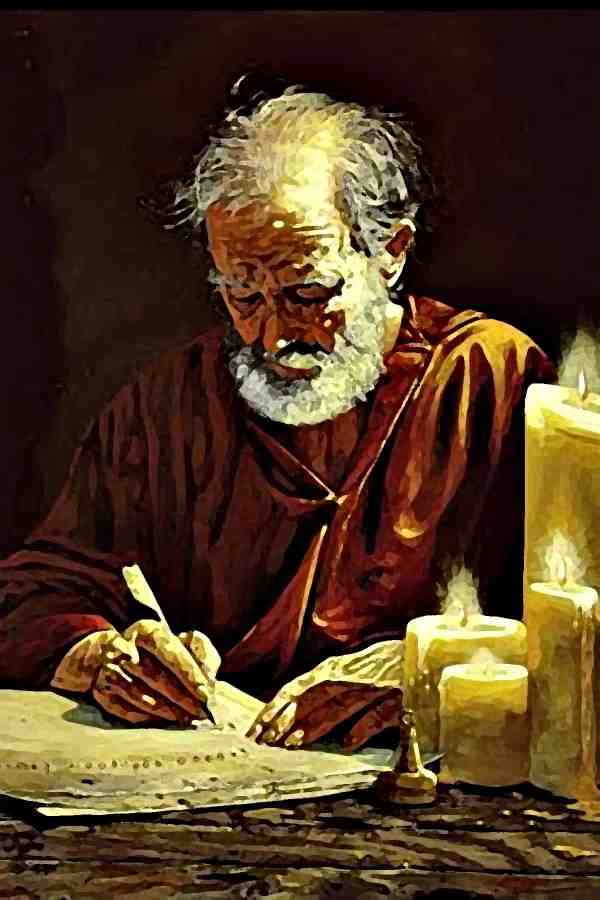
Image from Photos of Biblical Explanations Pt. 2

I wonder if you might close your eyes for a moment – and conjure an image of those last moments before and following the act of creation. In the book of Genesis, we find a description of the darkness covering the face of the deep – the only sound –the divine wind as it sweeps across the face of the void.

Our sci-fi shaped imaginations offer us images to complement the Genesis description of the darkness of the deep. Maybe an image comes to you from the opening scene from the bridge of the Starship Enterprise looking ahead into a vast and empty panorama of receding space; perhaps it’s an image from the Hubble Telescope relaying from its earth orbit images of far-flung star formations – arresting in their resplendent shapes and colors; maybe it’s the gamma ray images from the newer Webb Telescope – which from solar orbit at the second Lagrange point – a million miles away from the Earth – captures images from the first luminous glows after the Big Bang in the evolution of our own Solar System. Whatever images your imagination conjures – sit with them for a moment with eyes still closed.

Now return to the Genesis image of the darkness of the deep – the only sound being that of the divine wind sweeping across the face of the void. Suddenly, the eyes of your imagination catch a pinpoint of light flickering on at the heart of the void. Watch as this pinpoint of light expands at lightspeed to pierce the darkness of the deep – bringing forth the light of life.

You can open your eyes now.

This Christmas Eve, I deliberately chose to use the gospel reading from John’s Prologue in preference to Luke’s birth narrative. How fortunate we are to be given such a rich variety in the NT accounts of the Incarnation – the event of the Creator’s entry into the creation.

In the opening verses of his Gospel, John the Evangelist is constructing a second Genesis event. The opening verses of his first chapter are collectively known as the Prologue – because a prologue comes before the actual story begins.  Like the authors of Genesis, John uses the opening words – in the beginning – to set his scene. As in the first Genesis creation account, John tells us that in the beginning there was only the Creator from whom all life came into being – as John phrases it. But John tells us much more than this.

Now close your eyes and once more picture within the darkness the pinprick of light expanding at light’s speed to illumine the void’s deep darkness. Writing in Greek, John identifies this light as the Logos.

Open your eyes again.

Logos has a range of possible meanings, among them – to put in order, to arrange, to gather, to choose, to count, reckon, and discern, and finally, to say, to speak. In the Genesis event God does not create something from nothing. The creator creates by ordering, arranging, choosing, counting, reckoning, discerning, and finally speaking into the elements concealed within the darkness of the deep.

In English we translate John’s logos as the Word. The Word is the communicative aspect of the Creator. The Word is the Creator’s speaking into the void to arrange and structure the elements swirling in the chaos of the deep. In the moment of creation, the Logos – the Word -speaks-out the divine life into the void. Because as John further tells us, the Word is the light of the divine life at the heart of everything. And here John arrives at what is for me – his crucial point. He tells us that this light – the light of the divine life – illumines the darkness in such a way that the darkness can never – ever – overcome it! Let’s listen to John again.

In the beginning was the Word, and the Word was with God, and the Word was God. All things came into being through him, and without him not one thing came into being. What has come into being in him was life, and the life was the light of the world. The light shines in the darkness, and the darkness did not overcome it!

John identifies Jesus as the Word. This seems at first sight a rather huge leap to contemplate. So how does he get there? Well for John it’s simple. The Word is Jesus because at a pivotal moment in human history – the Word that in the first moments of creation spoke-forth the light of the divine life into creation -in the second moment of the Incarnation, speaks-forth the divine self into a human life. For John, in Jesus, the divine Word has come to dwell. So let’s just pause here for a moment to let the impression of these words form in us.

Follow me as I want to take a short detour. In 1849, the Reverend Edmund Spears, then the Unitarian Minister in Wayland Massachusetts, wrote the words of his poem It Came Upon a Midnight Clear. The striking feature of Sears’ poem is the way he sets the birth of the Christ-Child’s in Bethlehem not in its historical setting but in the context of his own day’s issues of war and peace – for him most probably it’s the Mexican American War of 1849 he has in mind.

Sears sets the Savior’s incarnation in the harshness of the New England bleak midwinter when the world in solemn stillness lay to hear the angels’ song of peace and good will. But he notes that the angels’ song can barely be heard above the clamor of the world’s Babel sounds. And in his third stanza he packs his punch:

Yet with the woes of sin and strife
The world has suffered long;
Beneath the angel-strain have rolled
Two thousand years of wrong;
And man, at war with man, hears not
The love-song which they bring;
O hush the noise, ye men of strife,
And hear the angels sing.

Sears tempers his current despair at the warlike state of the nation with his Christian hope – eventually steering his poem towards the expectation of the Second Coming when the whole world will finally echo (give back) the song which presently, only the angels’ sing.

We celebrate this Christmas amidst unparalleled rancor and vitriol at home and against the background of the heart-rending images of devastation and loss of life in Ukraine and the Holy Land – to name only the two conflicts most clamoring for our Western attention. This year, Christmas celebrations in the Holy Land will be muted. Bethlehem, a town now under the siege of occupation will be dark to protest events in Gaza and the escalation of military repression and settler vigilante violence in the West Bank. This year throughout the Holy Land the liturgical observance of Christmas will be shorn of festive expression.

The irony between the 1st century setting for Jesus’ birth and today is captured in the French expression: Plus ça change, plus c’est la même chose -things change only to remain the same. O hush the noise, ye men of strife, and hear the angels sing.

Many of us can be excused if we are drawn to despair by the current course of events. At the heart of John’s Prologue lies the message we most need to hear. The most startling thing about the Incarnation is this. In the human life of Jesus – the Word the light of the divine life – enfleshed – to live among us full of grace and truth. John reminds us that it is our choice whether we recognize this as a reality – capable of shaping our lives – or not. To behold the glory of the light of the divine life shining through the radiance of a human life is a powerful life shaping, earth changing narrative of hope – we just need the courage to believe and to act in accordance with our belief. And courage is what it takes to believe in the face of everything that conspires to entrap us in the darkness of despair.

In the midst of the darkness of this world we can feel like we’ve fallen into the fathomlessness of the primordial deep where we confront all that saps us of Christian conviction and hope-filled purpose. In despair, how easily we forget that the darkness is simply the fuel that the light consumes to shine ever brighter.

In this then, lies the defiance of hope – that no matter how dark things may appear, darkness not only has no power to extinguish the light – but actually, provides the fuel for the light to burn even brighter. Take heart! The light shines in the darkness, and the darkness will never, ever overcome it. Renewed by this hope we have work to do, and that work is to align ourselves with God in the restoration of the creation – so that the world may be ready to receive Christ’s coming again in glory.

How might we achieve this? By cherishing the light burning deep within each one of us – and by sharing that light with one another – collectively pooling the light – so that it may grow ever brighter and to give a good account of the hope that propels us forward.

Given the state of the world around us at this Christmas in 2023 – perhaps merry is not the word we want to use but hope-filled might be. Amen!

It’s all in the waiting

In East Coker, the second in T.S Eliot’s Four Quartets the following lines attract and repel me in equal measure.

I said to my soul, be still, and wait without hope,
For hope would be hope for the wrong thing; wait without love,
For love would be love of the wrong thing; there is yet faith,
But the faith and the love and the hope are all in the waiting.

Try as I might, the conundrum of these words registers deep in my gut – where I intuit them sounding a warning. I dislike waiting. The unpalatable truth seems to be that some things are only made possible when we have the patience to wait for them.

The experience of waiting is for many of us today a kind of agony because we are now shaped by a culture in which waiting has been abolished. From download speeds to the endless deluge of things arriving same day- or at most, next day from Amazon our new Godfather in the sky – instantaneous getting gratifies us as our capacity for enjoyment vanishes along with our ability to give attention to anything for more than a few seconds – minutes at most. We become more impatient as our tolerance for waiting erodes. What use have we for the enigma posed by Eliot’s words in a culture where fewer and fewer things are considered worth the inconvenience of having to wait for them?

Yet, Advent is the season of waiting. We curtail its waiting as much as possible. Advent no sooner begins when Christmas overwhelms us. Every year, with Advent Sunday barely in the rear-view mirror, I’m asked by the staff – is it all right to put the Christmas trees up now? Because I’m thinking about the pressure to get things done in time for Christmas I say yes, but don’t switch on the lights until Advent 4. Of-course I realize my desire to preserve the prominence of the visuals of Advent is out of step with the culture – I mean I’ve had the Christmas tree up at home for weeks now.

Eliot used to famously – and to my mind somewhat disingenuously – deny any particular meaning to his words over and beyond the immediacy of their impact on the reader in the moment of reading. Who knows what Eliot intended with these words from East Coker – which incidentally is the name of a picturesque Somerset village? If he is to be believed, then he didn’t intend any particular meaning to be read into these lines – beyond what one critic referred to as his narcissistic gloom.

In a way Eliot has achieved his intention. Left to puzzle over the meaning – his words are still immediately impactful. I receive them deep in my gut as some kind of profound warning about the choices and the inevitable disappointments which usually accompany improbable hope; the folly of misplaced affection for things, causes, and people I love; faith misdirected as a defense against my need for unending denial.

At this point in the 21st century, what is the state of our capacity for hope? We have become increasingly fearful of the future as we see the world unraveling around us. A consequence of the erosion of our capacity for waiting is we no longer think ahead. You see the point of waiting is preparation. Increasingly addicted to short-term thinking – as a society we satisfy the needs of today with short-term patches – seemingly without concern for tomorrow. We become increasingly uneasy at any prospect of a future – preferring to live in a state of self-sustaining denial of a future that becomes more and more a source of fear.

Our capacity to imagine and to dream now seems to be limited to the preservation of the status quo – as with fingers crossed our whistling in the dark becomes deafening. As evidenced by the recent message from COP23 and our general malaise concerning the realities of climate change – our hope is reduced to staving off the eventual reckoning for at least a little bit longer. The majority in the House crows loudly about border security but shows little interest in long term immigration reform. It dilly-dallies over funding for Ukraine oblivious to the future cost of facing down a Russian juggernaut should the defense of Ukraine fail. Politics is now the game of empty posture – of impeachment enquiries without the evidence of high crimes and misdemeanors. That old line about Nero fiddling while Rome burned comes to mind.

Our aversion to waiting focuses our attention exclusively on today so that in crucial areas of our public life we are failing to invest in the future. The future is tomorrow’s problem and we thank God we won’t live to see it. Our generation of decision makers – of world shapers – has become so self-preoccupied that they – and we because we put them there – no longer care about the world our children and their children are likely to inherit.

Proverbs 29:18 is a reminder that Where the vision fails, the people perish.

For us, hope remains a word out of place. It’s a word that conjures risk in a risk averse culture. Whatever hope might be – we console ourselves it’s certainly not practical. In our society hope is a word out of place because it beckons us to dream dreams and see visions of a better tomorrow. It summons us to the audacity of shattering the projections of impoverished imagination limited by utilitarian practicality.

I said to my soul, be still, and wait without hope,
For hope would be hope for the wrong thing; wait without love,
For love would be love of the wrong thing; there is yet faith,
But the faith and the love and the hope are all in the waiting.

Whatever Eliot intended or didn’t – his words are impactful – and therefore we are justified in finding our own meaning in them. I hear them as a warning that without the patience to wait – without a tolerance for surviving a delay between wanting and getting – without a capacity to await the objects of our hopes, to with patience nurture our loves, our faith will always be misplaced. When we no longer know how to wait, we deprive ourselves of time to reflect and to prepare. We seem to have forgotten the old adage that all good things come only to those who wait for them.

In the vision of Isaiah chapter 61 we hear God inviting us to dream moving beyond the poverty of only what can be imagined within imaginations limited by a lack of courage to have faith. God is inviting us to bind-up one another’s wounds and cease from wounding one another further. God is longing for us to liberate ourselves from being captive to the short-termism of our current addiction to self-interest and self-protection. God is calling us to rebuild the ruins of our civilization, to inhabit the spaces long forsaken; reminding us that no good end can be achieved through evil action; that no peace can be ensured without its foundation in justice.

Isaiah 61 comes from the prophet – the third of that name – who is addressing the returning exiles now freed by the emancipation edict of Cyrus the Great in 539 BC. The hope embodied in Trito-Isaiah’s words is of a new society in which healing, freedom, compassion, joyful celebration, repentance, and justice will mark the end of exile.

Of course, there is always a discrepancy between hope and reality. The difficulty of the task, the scarcity of resources, the animosity of the surrounding peoples towards the returning exiles engendered a society where the rich diverted the scarce resources away from the reconstruction of the Temple and the repair of the city wall in order to build fine houses for themselves. A culture of oppression of the poor and powerless by the rich and powerful quickly reestablished itself. We read of this painful situation described by the prophet Zechariah, Nehemiah, the governor entrusted with the rebuilding project, and Ezra, the scribe responsible for implementing the religious reforms that were the fruit of the pain of exile.

The hope to which Trito-Isaiah speaks is the hope of a future of expanded inclusion for all of humanity within the promises God had hitherto only made to Israel. The purpose of this vision of future hope was not that it be realized immediately, but that it would reset the compass settings in the direction of its ultimate fulfillment in the birth, death, and resurrection of Jesus.  It was a vision of hope that would come only through the process of waiting.

Hope is not only a dream for a future better than the past. It is that of course. But through the experience of waiting – we prepare – allowing for a future directed hope to resets our direction of travel in the present. Waiting is not a passive state of just hanging around. Waiting is a state in which we are actively engaged in a process of preparing for the future by action in the present. Our present-time action is guided and directed by the vision of that for which we hope.

Future hope comes through waiting – which is a state of actively preparing the conditions for hope’s fulfilment. But the important point here is to note that future hope guides by changing the compass settings - altering the direction of travel in the here and now. Therefore, the quality of the vision of that for which we hope matters. Misdirected hope – Eliot’s hope for the wrong thing – only sets us in a wrong direction of travel through decisions made or not made; opportunities grasped or missed in real time.

Between the realization of future hope and the present time lies the experience of waiting. Waiting is a process of preparing, reflecting and acting in the present – guided by future hope. In waiting we are already being changed by the hope we are still waiting for.

To paraphrase Eliot – true hope, real love, and effective faith come together only in the experience of waiting.

I said to my soul, be still, and wait without hope,
For hope would be hope for the wrong thing; wait without love,
For love would be love of the wrong thing; there is yet faith,
But the faith and the love and the hope are all in the waiting.

Wounded Expectations

Apologies there is no recording today due to my knocking the recorder off the pulpit in an impassioned action. I trust the text will suffice or you can view the sermon section on our livestream channel at https://www.youtube.com/watch?v=L0bpvn6sJak

In her sermon last Sunday, Linda+ quoted Anne Lamott: Expectations are resentments waiting to happen – which is quite a statement to make in Advent – the season of expectations. She went on to describe the context into which Trito-Isaiah – or to use the language from Game of Thrones – Isaiah, the third of this name -prophesied to the Jews returning from exile in Babylon in 539 BC.

The book of Isaiah comprises 66 chapters spanning over three centuries – a timespan greatly exceeding the lifetime of the man we know as Proto-Isaiah – whose prophecies populate only the first 39 chapters dated to between 742 and 701 BC. This is a period of considerable political turmoil for Judah – esp. heightened after the catastrophe of the fall of the Northern Kingdom of Israel to the Assyrians in 721. Proto-Isaiah sounds the voice of God’s warning in the face of Hezekiah’s increasingly reckless political calculations as Judah jockeys for position on the faultline between the competing Egyptian and Assyrian empires.

Are expectations simply resentments waiting to happen? Maybe. The story of Israel is a story in which the experience of hope and expectation flowing from deliverance are never enough to avert the next hubristic miscalculation!!

In 587 BC, the armies of Babylon – the successor to the Assyrian Empire – besieged and sacked Jerusalem, destroying the temple, plundering its gold and silver ornaments, creaming off the royal court and intelligentsia into captivity in Babylon – leaving the peasantry to scratch out livelihoods amidst the ruins. This is the period covered by the prophecies of Deutero-Isaiah – the second of this name in chapters 40-55. It’s his voice we hear on the second Sunday in Advent.

Deutero-Isaiah addressing the exiles proclaims: “Comfort, O comfort my people”, says your God. “Speak tenderly to Jerusalem, and cry to her that she has served her term, that her penalty is paid, that she has received from the Lord’s hand double for all her sins”.

It is this Isaiah – the second of this name – who gives us the heart-wrenching poetry of the four servant songs telling of God’s hope-filled expectation in sending his chosen servant to the nations, only to be horribly abused – a man of sorrows acquainted with grief. The early Christians read the servant songs as prophecies referring to Christ – and these poems are intimately familiar to us as the mainstay texts of the libretto for Handel’s Messiah.

Linda+, last week noted that it’s estimated that fewer than 50,000 of the exiles returned after Cyrus’ emancipation edict in 538 BC. Many remained in Babylon, only trickling back over the next century or so. Even so, not everyone went home – to which the modern-day Jewish communities of Iraq and Iran bear testimony.  

You’ve heard me say time and again that human beings are storied creatures. As individuals, communities, and nations, we construct stories to explain ourselves to ourselves and the world around us. But the intriguing question is what comes first? Do our stories merely articulate an already formed identity, or is our identity constructed by the stories, and in particular, the way we tell these stories about ourselves? Even if you think that identity precedes the story that articulates it, our identity continually evolves as we explore different ways to tell our story.

A key feature of identity stories concerns their vision of home. The Babylonian Exile lasted for 60+ years and as Linda+ noted last week – that’s two generations. …a lot can happen in two generations, including a transformation in the perception of what someone calls home. 

In these days our anxiety grows concerning the potential for the wars in Ukraine and the Holy Land to escalate into regional conflagrations from which we will not escape unscathed. February 22nd, 2022, and October 7th, this year, have changed the trajectory of the international order. We are already feeling these changes esp. as the US becomes further implicated in aiding and abetting Israeli genocide in Gaza. Aiding and abetting is a legal definition encompassed by the international human rights law on genocide. Our government seems to be willing to squander the moral high ground it achieved by our unstinting support for Ukraine, for war crime complicity in Gaza.

The wars in Ukraine and the Holy Land are conflicts that center on cherished stories of identity rooted in a contested homeland. Each side to the conflict has a story of ethnic origins and national identity that justifies their claim to a contested homeland. What really matters however is – is there a capacity by each for the telling of an old story in new ways to accommodate the challenges of a changing context?

Palestinians and Israelis recite their national stories to justify their historical claim to a contested homeland. It seems that no degree of Palestinian resistance punctuated by sporadic terrorist outbursts – no amount of Israeli military backed force of occupation attempting to deny the very existence of Palestinians can move the needle of history separating two peoples with a shared claim to a contested homeland. There can be no future that is not a painful repetition of the past until the futility of the status quo is recognized by both sides – opening the way to a retelling of each national story not as a maximalist demand but as a minimalist statement – laying out the minimum fundamentals that each community requires to move forward together.

History does show that expectations are resentments waiting to happen. National stories of identity and homeland promise dreams of liberation while imposing dilemmas of ensnarement. The potential for becoming ensnared by our identity stories is great when we refuse to recognize the facts on the ground. The facts on the ground are that our foundational stories are never fixed, static, immutable, but always shifting, developing, going astray, and capable of redemption (Bernard Lonergan[1]). Our stories of identity and homeland are always in a dance with changing contexts. Our foundational stories need to be capable of evolving in response to the challenge posed by changing contexts – that is – the changing facts on the ground.  

It’s not important to know that there are three Isaiah’s of that name. It is important to notice how the book records an evolution in Jewish understanding of identity and the location of home. The essence of Israel’s foundation story as a people formed and shaped by a revelation and ongoing encounter with the living God does not change.  What we can see in the book of Isaiah is an evolution in the struggle to rewrite Israel’s identity story in response to the challenges of a changing context – even when the changed context results in a loss of a key component of identity – a homeland. The message of the book of Isaiah is that things change and the story of national identity needs to change to accommodate new facts on the ground. 721, nor 587, nor 539 BC; neither AD 70 is the last word fixing Israel’s story at a certain stage of history. Neither can 1948, nor 1967, be allowed to offer the last word – ensnaring the the identity stories for Palestinians and Israelis in an endless cycle of mortal conflict.

Open the book of Isaiah anywhere in the first 39 chapters and you will find a story of national hubris and political miscalculation. Open it between chapters 40 and 55 and you will find a profound articulation of repentance as the fruit of national suffering and humiliation resulting from loss of homeland. In chapters 55 -66 the element of repentance that had entered to national story during the exile – flowers in an increasingly inclusive and universalist message of salvation, a salvation now no longer exclusive to Israel but with implications for all of humanity.

It’s dangerous as well as painful when nations become ensnared in stories of identity that no longer serve them – that are no longer capable of responding to changing context – that is, the facts on the ground. Ensnarement ensures a future of intercommunal violence as the only sure trajectory. It is with considerable humility that we dare speak about other nations ensnarement in identity stories that no longer serve them at a time when America is struggling with a similar dilemma.

I read a byline on the BBC’s webpage of an organization called Road to Recovery. It is an organization of Israelis who transport mostly children from the occupied West Bank through the many checkpoints separating the two peoples so that the children can receive medical treatment in Israeli hospitals. Yael Noy, one of the founders of this organization and a woman originating from the area of Southern Israel attacked by Hamas on October 7th moved me when she said: I’m fighting to stay moral when both sides are in such terrible pain. I’m fighting to be the same person as I was before. On October 7th I could hardly breath, my heart was broken, and I said I’ll never help people in Gaza again. But after a few days I realized I couldn’t let the atrocities change me.

The power in our stories of identity and homeland lie in our capacity to imagine them taking us into a future different from our past – and like Yael Noy to retell our stories accordingly. Expectations will always involve the possibility of disappointment. But the pain of disappointment won’t kill us whereas the anger of resentment just might.


[1] Quoted by Lagita Ryliskyte in Why the Cross, page17

Contending Images of Kingship

The first chapter of Genesis God states – Let us make humanity, male and female in our own image.  All well and good. But if we are made in the image of an unseen God, then we can only come to learn something about God through taking a good hard look at ourselves. The tricky question then is, which image of humanity is God reflected in? Maybe all of them?

Like a double-edged sword, the mirroring of divine and human images cuts both ways. We can deduce that God is loving, relational, and collaborative because we also possess these qualities. Yet, we can equally imagine God as jealous, angry with a propensity for violence in pursuit of the ends of power and control because these are also very typical human characteristics. The Bible’s presentation of shifting and changing images of God -may in the end simply be the projections of our own conflicting images of ourselves.

The final Sunday before the start of a liturgical year on Advent Sunday is dedicated to Christ as King – begging the question – what kind of king, what kind of kingship is being imaged here?

Pantocrator is one popular image of Christ as King – omnipotent ruler of all of creation – often pictured on the concave half dome typical of many Orthodox churches. We see Christ as Pantocrator in St Martin’s great West window which is by no mistake a war memorial window. As Pantocrator, Christ is robed in the trappings of political power, the paramount operative in the zero-sum-equation of dominion through domination.

Christus Rex is another traditional image of Christ – an image depicted in the St Martin Chapel reredos. Here Christ is robed not as king but as high priest whose resurrection life springs forward from the cross – which is now firmly behind him in the background.  Both Pantocrator and Christus Rex images sit in uneasy tension with the other enduring image of Christ reigning not from a throne or a gilded cross but dying, nailed to a tree.

The final Sunday of the year is a celebration of the end time as depicted in 1 Corinthians 15 – when the Father will place all things in subjection under his Son who as dutiful Son will complete the Father’s restoration of the divine dream for all of creation.

Our images of power vie with the our images of vulnerability. We project humanity’s competing characteristics into the blank space that is the unseen God. If we are fashioned in the image of an unseen creator, then we can only come to learn something about God through taking a good hard look at ourselves. Thus the tricky question remains, which of our many conflicting self-images do we want Christ as king to reflect?

Interesting is an interesting word! What an interesting historical moment we are living through. Our culture rocks and reels as the tectonic plates shift unpredictably. Newton’s Third Law of Motion states that counteracting forces always come in pairs – as the pendulum of history swings between the order and chaos – between continuity and disruption – each vying for dominance. The theological thrust for designating the final Sunday in the liturgical year to the kingship of Christ crystalizes the waring tensions within us – counteracting forces finding expression in competing images of God.

In 1925 Pope Pius XI proclaimed the feast of Christ the King as an assertion of the Catholic Church’s protest to the rise of fascist and communist authoritarianism. He chose the images of strength in asserting the equally authoritarian power of the Church as the only center of allegiance for Roman Catholics. At a considerable cost to liberty and freedom of thought within the Church, he marshaled the Catholic legions for battle against forces in direct competition with the power of the Church.

The historical context for the origins of the commemoration of Christ the King today sounds a tone that is both timely yet also problematic as once again we are being called to face down a new resurgence of authoritarian forces. Pius XI drew on an old story of one authoritarian system asserting itself against competing, equally authoritarian rivals – strength against strength. For those of us who do not subscribe to the notion of an authoritarian church or even an authoritarian state, Christ the King is a very necessary reminder of the dangers in mistaking power for strength and vulnerability for weakness.

Human beings have rich imaginations – but left to our own devices – as it were- our imaginations tend to recycle familiar image patterns. Consequently, we only tend to recognise what we are already preconditioned to look for.  In the pursuit of the deeper search for the spiritual or soul-filled connection we so long for – the challenge is to allow the boundaries of our imaginations to become more permeable – less strictly policed by our conventional selves – allowing something new to break-in.

An example of the in-breaking of new insight might be that instead of the all too familiar counteracting pairing of strength with vulnerability, continuity with disruption as polar alternatives- we imagine new possibilities in a collaborative pairing of strength through vulnerability – with the forces of disruption seen not as destructive of continuity but as the timely reshaping and revitalizing of continuity over the long term.

We are storied beings – meaning we are only ever the stories we tell about ourselves. Stories are one of the most effective ways through which the unfamiliar breaks-in to disrupt the familiar patterns of recycled imagination. New spiritual insight breaks-in through the medium of stories that change through shock or surprise. Parables are disruptive stories – which like the needle on an old vinyl record jumps tracks as it hits a scratch in the record’s surface – disrupting the familiar melody and jolting us suddenly into a new one.

Matthew’s Jesus parable of the Sheep and the Goats allows new spiritual insight to break-in – disrupting our usual imaginings of Jesus’ kingship. In this parable Jesus presents kingship as service, strength through the embrace of vulnerability – the in-breaking of compassion disrupting the more familiar continuity of hardness of heart.

Matthew presents a picture of the end time when the Son of Man will come in his glory to sit upon his throne. But this is not Jesus clothed in worldly power. What breaks-into our imaginations through this story are the responsibilities of kingship being those of service, empathy, and a concern for the least important, the least powerful, the least able among us. Justice is the hallmark of this image of kingship in which Jesus echoes the prophet Ezekiel in our first lesson who speaks of God as shepherd of the flock seeking out the lost, bringing back the strayed, binding up the injured, strengthening the weak, and feeding them with justice.

We embrace the image of Christ the King because at the heart of the gospels stands the iconic image of Jesus’ royalty, not as one lifted high above us decked in robes of kingly power, but as one who stoops to reach down to join us in the one nailed to a tree. Christ’s kingship – breaks open the strength, or vulnerability, continuity, or disruption polarities with a new and revolutionary image of strength displayed in vulnerability, of disruption as necessary for long term continuity.

At its base the cross was wedged into place by three huge stones hammered into the ground. These are the stones of strength through service, strength in vulnerability, and strength as the fruit of justice. 

Christ’s kingship extends over us to discomfort our search for easy answers, half-truths, and superficial relationships – so that we may live more deeply from less fearful hearts. Christ’s kingship extends over us to bless us with anger at injustice, oppression, and exploitation of the helpless – so that we may work tirelessly in the cause for freedom and peace with justice. Christ’s kingship extends over us to bless us with tears shed for those who suffer from pain, rejection, starvation, and war – so that we may reach out our hand to comfort them by standing together in their pain. Christ’s kingship extends over us to bless us with enough foolishness to believe that we can make a difference in this world – so that we can do what others claim cannot be done. Amen (My paraphrasing of an anonymous Franciscan blessing)

The Kingdom of Heaven will be as if —

Taken at face value the Parable of the Talents raises several interesting lines of inquiry. Interpretations of the parable’s meaning over time have varied. On the face of it the message seems to commend and reward trustworthiness and punish laziness, with the subtheme of productiveness or lack of running underneath. Jesus makes a somewhat surprising statement at the end of the parable.

Like many of his statements the meaning is enigmatic – it could be this or it might be that. Is Jesus commending the dynamics of the market economy where investment fuels new development with a healthy profit return for the investor? Yet, his final statement for to those who have, more will be given, and they will have an abundance; but from those who have noting, even what they have will be taken away could simply be read as a statement of fact that this seems to be the way things are – leaving us to draw our own moral value conclusions.

Whatever conclusion we draw from this parable it presents us with a baffling question concerning Jesus’ apparent endorsement of lending with interest. I’ll return to this in due course.

For a community of people whose financial security is closely linked to the performance of the stock market – in a parish which in addition to the normal finance committee has a very specialized investment committee whose only task is to manage our stock portfolio – how do we hear this parable and who among the stewards do we identify with? Where do our sympathies lie?

Most of us struggle to hold a fiscal conservatism – at least when it comes to the management of our own money – in an uneasy tension within a more broadly socially liberal worldview. The fiscal conservative in us hears Jesus commending wise investment in the capital markets. For us this is not only a social good in that it sponsors innovation and development but also returns a healthy dividend on our investment. In this respect we fall very much in the camp of the master’s first two stewards. But what do we make of the third steward’s resistance to participating in this system? This parable captures our dilemma – it reassures our fiscal conservative values while challenging us to examine our blind subservience to an economic status quo that promotes inequality – as in- those who have, are given even more.

Taking a deeper dive into this story we find the Parable of the Talents is much more than a story about two stewards who in the successful management of their master’s affairs are amply rewarded for the virtues of trustworthiness and the skills of their financial acumen. The third steward in this story introduces a critical element in his view of his master as a harsh and unjust man. This disturbs the otherwise congratulatory tone pointing up the injustice of one who reaps where he has not sown and gathers where he has not scattered seed. Why, thinks this steward should I collude with this system that bears abundant fruit to a very few at the expense of the many.

We might be tempted to dismiss the third steward as a man with a grievance until we find the master himself, concurring with his steward’s assessment. The master says to this steward, if you knew that I am a man who reaps where I did not sow and gathers where I did not scatter, then you should have been even more diligent with my property for fear of the consequences of my wrath.

The master then takes the talent from the third steward and gives it to the steward who’s shown the greatest financial acumen. Of course, this being a Matthew kingdom story – a feature of which is punishment for those who don’t match up – we aren’t surprised to find the third steward punished by being thrown into outer darkness, where there is much weeping and gnashing of teeth. Let’s think of the first two stewards as fiscally conservative and the third steward a social liberal – challenging the system of inequality. But here’s the kicker. Jesus’ final judgment says for to those who have, more will be given, and they will have an abundance; but from those who have noting, even what they have will be taken away. Is this Jesus justifying the master’s actions? Or is he implying something else here?

The central paradox in this parable centers around Jesus appearing to put aside the prohibition against usury by commending interest bearing investments.

Charging interest on a loan was strictly condemned in Jewish law. The Torah allowed the practice only when the loan was made to non-Jews. The Prophets prohibited the practice outright no matter the circumstance. Therefore, it seems unlikely that Jesus, himself standing in the strict line of the Prophets would have so openly endorsed the practice.

The Church continued the prohibition against usury, prohibiting it outright. Yet, that the Torah allowed Jews to lend to foreigners at interest provided the Church with a very convenient workaround. Neither Christians nor Jews could lend at interest within their communities, but Jews could lend to Christians to meet the growing need for Christian princes and merchants to access additional sources of finance above and beyond what could be raised by taxation. Thus, everyone arrived at a workaround of the usury prohibition – everyone a winner. Deprived of the legal rights of land ownership lending at interest was for the Jews their primary means of wealth generation. A situation that paved the way for the Jews to become the lenders of choice in Medieval Europe – a development with unintended consequences.

The prohibition against usury is an ancient example of social liberalism. Social liberalism believes in the necessity for regulation of economic activity in the interest of preserving social stability. As we know from our own time when for the last 50 years a deregulation of economic activity has resulted in profound loss of trust in traditional civic institutions and the democratic system. The paradox is that those most propelled by grievances against a system that has eroded prosperity and entrenched inequality prefer politicians who fan the heat of their grievances while doing nothing to tackle the underlying root causes of grievance.

For to all who have, more will be given, and they will have abundance; but from those who have nothing, even what they have will be taken seems to be Jesus’ recognition of the facts on the ground in the 1st-century. He would have witnessed the growing number of small landowners and tenant farmers forced off the land by agricultural reforms. Exposed to ballooning debt, left them in the end with less than they began with leading to indentured service -effectively slavery- as their only course of action.

Indentured service is today a practice widespread in countries with poor or no social regulation of market capitalism. As in Jesus day, from those who have nothing, even what they have will be taken away is the regrettable reality for many.  In the poorer districts of our own cities those living on the economic margins – driven by necessity and hampered by poor creditworthiness to take out payday loans at astonishingly high rates of compound interest lead many into ballooning debt. From those who have nothing, even what they have is taken away – becomes a reality of everyday life for so many in our society.

The circumventions of the prohibition against usury whereby the Jews became the lenders of choice to Christian princes and merchants had unforeseen consequences that only fed the flames of antisemitism – the misdirected expression of populist resentment in search of a scapegoat. Lying just beneath the surface of collective consciousness lies the primal fear of the other in our midst. Contemporary economic resentment and social grievance once again finds expression in breathing new life into old antisemitic tropes – reviving an old scapegoat to magic away our problems. The situation in Israel-Palestine is only throwing gasoline onto homegrown antisemitic embers already smoldering into flame.

At such a time it is our Christian responsibility to express our solidarity with our Jewish friends and neighbors – and we’ll have an opportunity to do so this coming Tuesday at the annual interfaith Thanksgiving Service at Temple-Beth-EL.

Who do we identify with in the parable of the talents? Do we easily see ourselves in the responses of the first two stewards whose actions of prudent risk-taking strike us as familiar, playing the equivalent of the ancient world’s stock market? Can we also see ourselves in relation to the third steward who challenges the socio-economic assumptions that result in one person – to use the agrarian images of the text itself – reaping where they have not sown and gathering where they have not scattered with impunity – afforded by their power of economic privilege but enabled by our systemic collusion? I suspect few of us have the courage to follow the example of the third steward, as much as we might applaud his stand.

If we believe this is a sacred text capable of speaking directly to us as a community, what do we hear in it that either commends or disturbs us? For the kingdom of heaven will be a paradoxical place where seeing things as they really are means not accepting that this is the way things have to be.

Being Prepared- Question Mark?

Picture: William Blake, The Parable of the Wise and Foolish Virgins 1800

Of the three synoptic gospels – so called because they follow a broad outline or synopsis of Jesus life – Matthew’s is the most Old Testament in feel with its frequent dichotomies of inclusion and exclusion, praise and judgement. Matthew’s depiction of Jesus lacks the urgent and accessible humanity of Mark’s presentation and comes nowhere near to the pastoral and social sensitivity of Luke’s portrayal. Matthew’s Jesus is modelled on the image of a new Moses. Jesus is more elevated and detached – more guru like – a figure above the fray at whose feet the disciples gather to be inaugurated into the Kingdom of God.

Today we are presented by the Lectionary with the parable of the wise and foolish virgins. Already the English translation of the female wedding attendants as virgins sets a particular patriarchal tone – as in virgins are better than non-virgins because they are virginal – meaning unsullied. A better rendering might be bridesmaids – which immediately carries a more neutral – less morally colored inference. The other thing to note is that this parable is unique to Matthew and is one of his Parables of the Kingdom.

Matthew is fond of using the wedding as the metaphor for the kingdom of God. At first sight we can see what he’s getting at. Like a wedding – the kingdom is a place of celebration and merriment. But Matthew’s wedding metaphor carries a starker inclusion -exclusion message. Weddings are celebrations only for those who are invited – or those who accept the invitation. Matthew’s parables of the kingdom all end with a warning – usually of severe punishment for those who are excluded or exclude themselves from the kingdom. Images of outer darkness with much wailing and gnashing of teeth abound. Thus themes of inclusion and exclusion lie close to the heart of Matthew’s kingdom parables.  Reading back into the historical context in which he’s writing, themes of inclusion and exclusion attest to a central struggle between two new movements in Jewish religious life. From the destruction of the Second Temple in 70 AD – Rabbinic Judaism and the Early Church – both fresh and vital shoots – struggled to emerge from under the ashes of temple-centered Jewish religious life.

Matthew’s tones of harsh punishment for those excluded – echo the struggle to define tribal identity. In tribal societies – like that of ancient Israel – and Matthew’s contested context in the final decades of the 1st-century AD – everyone inside the tribe are friends and those outside it are foe. We should not be surprised to find today similar themes afflicting much of contemporary white, rightwing, evangelical messaging – which has regressed to a tribal identity. For this reason alone, Matthew’s message of judgement often jars upon those of us with a more contemporary, progressive, Christian ear.

At the end of the parable of the wise and foolish bridesmaids Matthew sternly warns: Keep awake, for you know neither the day nor the hour”.

Of course, no one knows what the future will hold. We develop a tendency to anticipate events based on what we already know about life. Sometimes experience is an accurate guide, yet more often it’s misleading. Facing the uncertainties of the future armed only with a partial – often misremembered recollection of the past – only makes us even more anxious.

We alleviate our anxiety with the illusion of being prepared, and consequently we live a good portion of our lives caught up in a process of attempting to anticipate all eventualities – inducing in us a perpetual and neurotic wakefulness.  No wonder many of us no longer sleep well. The problem with anticipation of an assumed dangerous future is that it encourages risk aversion in life. Life lived circumscribed by past experience may ofer the illusion of a predictable future but it’s a very, very unsatisfying experience!

In our society we reserve our harshest judgments for those who fail the Boy Scout test to be prepared!  How easily the phrases: well, it’s his own fault, or, she has no one to blame but herself, or, its time they really took responsibility for themselves trip lightly off our tongues. To such persons regardless of gender do we not think: oh, what a foolish virgin you’ve been! You see being found unprepared is an American sin.

Matthew’s parable of the wise and foolish bridesmaids has three themes worth closer inspection.

The first is the stereotypical treatment of women. There would have been quite a number of invited wedding guests – men as well as women – so why does Matthew focus his treatment on a group of women? He seems to be playing upon the stereotyping of women into two groups – to put into modern parlance the sensible housewife or foolish, if not downright dangerous, women driver.

Motifs of virtue and shame are woven throughout this parable. We are not strangers to this denigration of women – today a prevalent theme underpinning conservative (mostly male) hostility to women owning control of their own bodies as compared with so called virtuous women who accept male expectations for both the control as well as the exploitation of their bodies.

Secondly, Matthew presents a group of people who have no sense of solidarity or a commitment to support and aid one another. Instead, the wise bridesmaids, gloat over their sisters’ foolish lack of preparedness. Likewise motivated by our fears of scarcity we exclaim – of course I want to share my surplus with you, but I can’t because – who knows what the future may bring – I might need all of it.

The lamp oil is a symbol for scarcity –reinforcing our prevalent scarcity worldview in which there is only so much to go around.  In a culture of scarcity, you keep what you have by not sharing it with others. Within a worldview that sees resources as limited, the pie is only so big – people of necessity are divided into the haves and the have-nots. At St. Martin’s like the wise bridesmaids there is no mistaking that we are among the haves when the world is viewed from the perspective of scarcity.

This past year we’ve put the resources of our successful capital campaign to good use – by which I mean uses over and beyond the perpetual drain on resources that maintaining this historic church requires of us. This past year we’ve been especially mindful of our responsibility to share what we have with others who can benefit from our support. I happen to believe that through being generous we become the net beneficiaries of our own generosity. Generous action reminds us of our ultimate dependency upon divine providence. Unlike the wise bridesmaids we discover again and again that only when our giving flows generously from our commitment to one another do we encounter the depths of our gratitude for God’s gracious providential love towards us.

In a season of stewardship renewal, we are well reminded that money is like water. Water sustains life only when it is allowed to flow freely. When dammed up it becomes stagnant – poisoning the ground around it.

Weddings are one metaphor of the kingdom. Baptism is another. In a moment we will welcome a new member through baptism into the fellowship of the kingdom of God as embodied in our St. Martin’s community. Baptism reminds us that preparedness and self-sufficiency do not qualify us for entry to the kingdom. Willingness to respond to the invitation of grace is all that is required. Will not Christ welcome us his church and bride – regardless of our state of un-preparedness? For whom can be prepared for such a life changing encounter.

Matthew’s injunction to stay awake is an odd conclusion. This isn’t a parable about staying awake – after all, all the bridesmaids fell asleep. Matthew’s gripe is that half of them were found unprepared for the grooms return. In this there is an aspersion of something shameful. What is their shame? It’s the shame of failing to be self-sufficient. We all know that failure to be self-sufficient is the real American sin. A sin to us – but not to Jesus.

Martin: Man for Our Time

Imagine we’ve come to the movies to watch the latest new Marvel epic suitably named AD 406. The curtain rises on the year 406 when in an unusually severe winter in which the Rhine has frozen solid, we watch in that peculiar ecstasy of pure horror the battle-hardened barbarian hordes stream across the frozen river into the civilized world of Roman Gaul.

The Rhine River forming a natural barrier dividing Latin and Germanic cultures has a long history that stretches down well into the 20th-century. The Rhine, winding in many places through its steep-sided valley formed a natural barrier – a boundary between civilization and the wilderness of the barbarian lands. Barbarian – a name the Graeco-Romans gave to all who lived beyond the geographic and cultural reach of their civilization. The barbarians represented the epitome of the psychological other. We need no further evidence today of how the psychological other functions to embody the terror of difference within individual and collective consciousness.

Vandal is a word that has made its way into the English language as the very symbol of destructive otherness. In his book on Martin of Tours, Christopher Donaldson describes how the Vandals, Alans, and Suevi, swarmed into Roman Gaul in complete disregard for their own loss of life. It was estimated that at least 20,000 Vandals alone lost their lives in the river crossing. Yet they still pressed on – forced by the relentless pressure of mouths to be fed and need for land. The great horde swept on into Roman Europe and North Africa leaving behind them a trail of devastation and confusion. In what had been the civilized and fertile countryside of Roman Gaul the only vestiges that remained were the giant buildings, aqueducts, and monuments of Roman civilization – things that a wattle and daub society had neither use nor imagination for.

On the South Bank of the River Loire, at a place called Marmoutier about 3 miles downstream from the city of Tours, there was a large grassy plain lying between the river and a line of forbidding grey cliffs rising for 100 feet or so. With trees clinging precariously to their face, the cliffs were honeycombed with caves, for all the world giving much the same appearance as the holes of sand-martin nests in the side of a disused quarry. And in the year AD 393 all the caves were inhabited and the grassy plain below was covered with the rough wooden shacks of a great camp of spiritual refugees, numbering in all some 2,000 men – a smaller group of women having formed their own community within the walls of the neighboring city of Tours. Working from  contemporary eye witness sources, Donaldson tells us that the whole concourse was wrapped in a deep silence from morning until evening, punctuated only by the occasional singing of psalms or hymns, and the low voices of those who were reading the scriptures aloud.

The reason for this great gathering of men, many of them the sons of the Roman Gaul nobility, lay not only in the general urge to withdraw from the responsibilities of public service in a time of civic institutional breakdown, but also in the attraction of the unconventional personality of Martin, the holy man and Bishop of Tours. His appearance at the age of 77 belied the extraordinary depth and range of his character. For underneath the deliberately unkempt hair, the pallid emaciated features, and the rough surge slave’s robe in which he was dressed, lay a personality that at one moment recalls for us the image of a Mahatma Gandhi, quickly morphing into that of a visionary William Blake, before yet again emerging into a man forged by his years of discipline in the Roman Army – a military man of commanding presence.

Martin was born in AD 316 into a high-ranking, but non aristocratic Roman military family in what is now modern-day Hungary. His father was a military tribune in the Imperial Guard – then stationed on that other great river frontier separating the civilized and barbarian worlds – the river Danube. His parents were staunch pagans opposed to the growing influence of Christianity – and so they named their son Martin after Mars the god of farm and battle, in the hope he would grow up to become a champion for the restoration of the old order.

In AD 312, with the proclamation of Constantine as the new emperor, the last great period of intense persecution of Christians under the emperor Diocletian ended. Following Constantine’s conversion to Christ – a mere four years before Martin’s birth in 316 – the Church had begun its rapid expansion. Although already an extensive and growing influence, the most significant result of Constantine’s conversion was the incorporation of the bishops into the Roman Civil Service with the rank and more importantly for many, the stipend of a magistrate.

Yet, despite the new imperial patronage, a deeper and simpler reason lay behind Christianity’s rapid growth. Christianity offered to ordinary men and women fed up with the status quo an explanation and philosophy for living that was satisfying. Unlike enforced imperial obligation the Church offered a supportive and voluntary style of community life with an educational system based on the scriptures that met people’s intellectual and emotional needs. Despite strong parental hostility, Martin could not avoid being attracted from around the age of ten to this magnetic vision of a new way of being human with its practice of a more satisfying way of life.

To cut a long story short, by the time Martin reached the age of 15, his father – increasingly fearful for his son’s development into Roman manhood, arranged for him to be press-ganged (kidnapped) into the army. Martin was to spend the next 25 years of his life in conscripted military service. Army service did succeed in making a man of Martin – but not in the way his father may have envisioned.

Martin was far from being just another plebeian conscript. He enjoyed the privileges of being a Tribunes’ son. Interestingly, Martin found his way into the Army medical corp. As a medical officer, he would have been responsible not only for the surgical treatment of soldiers in the field but for their social and emotional welfare within garrison life. Thus, Martin found a strong synchronicity between this care for his men and his developing sense of what it meant to live as a Christian. For he showed an unusual compassion for the poor whom he would have encountered hanging around the edges of his garrison town of Amiens. This sensitivity – in another military officer decried as weakness – would have found acceptance or at least toleration among his peers as an attitude characteristic of a healer.

Martin’s concern for the poor is captured in the famous incident of his encounter with a beggar at the city gates – poetically depicted in our great St Martin window. In the window we see Martin cutting his cloak in half and placing one half around the beggar’s shoulders. Incidentally a soldier’s cloak was a garment of joint ownership. The half he gave to the beggar would have been the half he owned. The half he retained was army property – and not his to give away. That night he had a vision of Christ, clothed in half his cloak saying for as you have done unto the least – you have done unto me.

Martin died in AD 397 – a mere 9 years before the catastrophic collapse of the Roman Legions along the Rhine wall in 406. While he didn’t live to see this catastrophe, he nevertheless lived in the preceding decades during which anyone with any foresight might have foreseen this eventuality. For during the preceding decades leading to the curtain rise on the 5th-century, sensitive and intelligent people had known that the end of the centuries of stable government and cultural achievement was fast approaching. The signs were all around them.

Inflation had been steadily mounting for a century or more and had become so out of control that many were beginning to return once more to the simpler system of barter. Ordinary people knew that the wealthy were seeking every possible way of avoiding taxes and turning their backs on the virtues and responsibilities of public service which had become an increasingly unsavory and dangerous occupation. From time to time the army would attempt to raise up a new emperor – someone whose value had been proved in the field – to take control of the empire and make Rome great again. But things had gone too far for such simple solutions. In the Western half of the Empire the problems lay deeper than a return to the efficient management of the economy and the revival of a spirit of public service. Rather it was a complex exhaustion of morale in the inner minds and spirits of men and women throughout the West – where many increasingly feared that the civilization of Rome had run its course.

Donaldson notes that if there was any hope for the future of Western Civilization, it was hard to see it lying in the hands of the governing classes. Rather the future had come to rest in a group of men and women who had completely withdrawn from the civilized world – men and women who were quite careless of whether it sank or swam.

Martin is a transitional figure spanning the inflection point at the turn of the 4th & 5th-centuries. He remained hugely influential across the whole of Western Europe as far north as Scotland. When Augustine arrived at Canterbury 200 years late he found the ruins of a Roman Christian church dedicated to St Martin. St Martin’s Canterbury still stand today dwarfed alongside the great Cathedral. A mystic revered by the Druids for his love of nature in preference for the highly urban life of most Christian bishops. A pastor and a healer of souls who attracted the brightest and the best of a generation disillusioned by the degeneration of civic society. A reluctant and yet more than able administrator bishop – under whose leadership a disciplined structure of administration developed relatively free of the growing corruption afflicting the more worldly among his fellow bishops – increasingly corrupted by their magistrate’s privileges and state stipend.

Martin as a transitional figure is an avatar for us today. For we also are living at a similar inflection point to that of the late 4th and early 5th centuries – a time when the post-Enlightenment spirit of progress, order and the global peace – the product of Pax Americana -seems increasingly spent. Like the men and women of the age into which Martin was born, disillusionment and loss of hope mark the pervading zeitgeist of our age.

Yet there’s a key distinction between the inflection point of the 4th-5th centuries from that of the 20th-21st. As the 5th-century unfolded – despite the devastations brought about by the first wave of barbarian incursions and the collapse of the Pax Romana – invasion also brought an infusion of energy and vitality – forging a new spirit in Western Civilization – a spirit now channeled and guided by the growing institutions of a vital and energetic Christian Church. For Martin and his church stood at the beginning of something new – whereas we and our Church today feel increasingly as if we stand at the end of something old.

I believe that the jury’s still out on the accuracy of such a premonition, real though the experience maybe. As we navigate our way forward in a time of civic challenge at home and challenges to peace and democracy abroad, we might pay closer attention to the movement of the Spirit of the God of unchangeable and yet also everchanging power. God who empowers the work of restoring the world through the raising up of things which have been cast down and inviting us to collaborate in the renewal of things that have grown old.

Embroiled in this process as we are – of finding the confidence as Christians to entrust ourselves to the hope that is within us as we navigate our way forward in challenging times – we could ask for no better guide than Martin, our patron – whose spirit is infusing those who bear his name to become increasingly molded into his likeness.

What is that likeness we might ask? It’s the likeness of a man of courageous hope, deep humility before the divine mystery, a man of resolute faith infused with the gentleness of gratitude. We can only pray and work hard to ensure that gratitude is our well spring – gushing forth through lives marked by Martin’s spirit of compassionate generosity.

What’s on the Coin?

What’s on the coin? We’ve all played the game of spinning a coin in the air and calling out heads or tails before it lands. The coin eventually lands with one side or the other facing up and depending on who called correctly – heads or tails – they get first choice. This is a tried-and-true method of deciding between two possibilities by entrusting the decision to fate’s choice.

Ancient coins were – as modern British ones still are – stamped with image of the reigning monarch along with an inscription – just in case there’s any identity confusion.  Jesus was presented with such a coin by his opponents – increasingly disturbed by the challenge of his message and its appeal to the ordinary folk who flocked to the Temple to listen to him. Keep at the back of your mind the question what’s on the coin.

As we watch the playing out of the internecine struggle within the House Republican caucus – confirming the current fractious and fragmented state of America’s body politic – picture the state of Roman Palestine in the time of Jesus. Like the Palestinians of today, occupation led 1st-century Jews to sometimes unite in common cause but more typically – fracture around different responses to occupation and how to bring about its end.

In 1st-century Palestine, five major Jewish factions faced the central choice presented to all occupied people – collaborate or resist. Those on the resistance side of the tension further divided over the use of violence as a tool of resistance.

The Sadducees, the religiously conservative priesthood – jealous for their hereditary privileges along with the Herodians, the aristocratic oligarchs of the Hasmonean Dynasty of Herod the Great – the last ruler of an independent Israel before the Roman occupation – chose to collaborate with the Roman occupation. In fact the Herodians went one step further as the Greek-speaking, culturally cosmopolitan globalists – the designer clothes wearing, fast living, pleasure-seeking 1st-century .1%. The Sadducees clinging to unchanging tradition. The Herodians for whom God was simply a primitive artifact from a superstitious past.

The parties of resistance were the Pharisees, the Zealots, and the Essenes. The Pharisees, religiously progressive – the party of moderation resisting the occupation through keeping themselves apart from any involvement in Roman administration – while firmly rejecting violence as a tool of resistance. While the Zealots – also known as the Sicario were a 1st-century Hamas or Hezbollah – engaged in violent resistance through assassination of Roman officials and Jewish collaborators alongside widespread intimidation of the Jewish population. The Essenes, on the other hand, are known to us principally through the excavation of one of their settlements at Qumran where archeologists unearthed the treasure trove known as the Dead Sea Scrolls – were separatist-survivalists who refused to have anything to do with both the Romans as well as their fellow Jews. Hold-up in communities in isolated parts of the Negev – they waited for the coming of the Messiah whom they pictured as God’s warrior king who would free them from the occupation. John the Baptist presented a very Essene image and preached an Essene message.

Matthew 22:15-22 therefore paints the startling picture of Pharisees, Herodians, and Sadducees consorting together to entrap Jesus. Adversity makes for strange bedfellows. It’s a testament to the power of Jesus’ message that factions who normally would have had nothing to do with one another were forced to come together to try to take him down by tricking him into convicting himself of blasphemy and or treason.

So, what’s on the coin? For the Pharisees, Roman coinage was a source of spiritual contamination because the inscription on the head proclaimed Caesar not simply as emperor but as Kyrios or Lord – a title only Yahweh could claim. The gist of this encounter between Jesus and his interlocutors centers around the legitimacy of taxation. In this context, the question concerned the dispute among Jews as to whether it was breaking the Covenant with God to pay taxes to a false god – that is Caesar – or simply a civic duty forced upon them.

In a somewhat surprising alliance of convenience, the Pharisees and Herodians pose the taxation question to Jesus. If he answers that it is lawful to pay taxes to Caesar – he will be acknowledging the emperor as a god, and thus convict himself of blasphemy. To advise not paying taxes, he commits treason against the Romans. So, the strategy was to flatter him with the title of teacher and watch which way he jumped.

We know how clever a debater Jesus was and so we are not surprised when Jesus avoids the trap by stating the obvious. Asking for a coin – most likely from one of the Herodians as no Pharisee would ever carry such a thing – Jesus is suggesting there is no conflict between a civil duty to pay taxes and a religious duty to honor God as an ultimate responsibility. The beauty of his answer is that he offends both groups while depriving them of the satisfaction of hearing the jaws of their trap snap closed. 

Render to Caesar the things belonging to Caesar and to God the things belonging to God seems a simple solution. But as we know all too well, it’s one that requires an examination of and balancing between competing allegiances. What and how much is owed to Caesar? What and how much is owed to God?

The reading of Matthew 22:15-22 in parishes up and down the land, marks the launch of the fall pledge drive. Eschewing gimmicky stewardship campaigns much loved by Episcopal Church Central, this year’s annual stewardship letter will soon be dropping into your letter boxes. The focus of this year’s letter is to thank everyone for their support last year by highlighting the vibrancy and extent of our outreach ministries in 2023 – the wonderful fruit of your support. In the mailing you will also find a supporting budget narrative with a pie chart of expenditure along with the all important estimate of giving card for 2024. After prayerful contemplation please complete the estimate of giving card and return it to us asap – please.

However, having noted the connection between Matt 22:15-22 and stewardship themes I want to take Matthew’s text in a different direction by returning to the question what’s on the coin? More explicitly– what coin design can tell us about ourselves.

US coin design is traditional and for the most part unchanging. It tells us that original designs never need to change. By contrast with the accession of Charles to the British throne, the Royal Mint has issued a whole new set of coin designs. Each coin’s head features Charles in profile -facing left as his mother faced right. His image bears no crown– a nod to less deferential times. On the tail the coins depict examples of endangered species of British flora or fauna – reflecting the King’s conservation and ecological concerns.

The coin images – head and tail – of his mother’s reign projected images of national greatness and political unity. As did the humble coin in Matthew’s story – a symbol not only of economic value but also a representation of worldly power and political values.

As representations of economic value and national pride the design of our coins and banknotes has tended to project pride in national achievement. Such pride – the celebration of power also lies at the root of our plunder of the earth’s resources as a celebration of human achievement. Too much deference to Caesar and not enough honor to God.

Therefore, it’s curious to see on a nation’s money images expressing a godly concern for the protection of the environment against the human instinct to plunder and despoil the natural world. Alongside being tokens of economic value, the new British coin designs project the spiritual values of our growing desire for economic power to be better harnessed to the project of environmental restoration – heralding a more equal balance between the interests of Caesar and those of God.

A rereading of Jesus’ statement Render to Caesar that which belongs to Caesar and to God the things which belong to God – might lead us to see that he’s not making a sharp distinction between civic and spiritual obligations so much as offering a picture of balance between the expression of earthly power and our spiritual aspirations. Facing up to the serious challenges ahead still requires of us some hard choices as we bring our material and spiritual aspirations into closer alignment. What better way to do this than in the redesign of the humble coin – reminding us of a need for greater alignment between political and spiritual values as hinted at in the new British coin designs. Render to Caesar what belongs to Caesar and to God what belongs to God – of earthly power harnessed to the fulfilment of God’s work of restoring the face of creation. What better project to meet the challenges ahead.

In Defense of a Moral Principle

We stand appalled and helpless before the enormity of the rapid escalation of unspeakable violence in the Holy Land. We’ve been shocked to witness the biblical barbarism of the Hamas slaughter of Israeli civilians in the settlements of southern Israel. Hamas’ actions display a deliberate barbarism born of a religious fanaticism that despises life – any life – in this world in preference to the promise of paradise in the next. Of course there is a political calculation in Hamas’ actions – to scupper any path forward for peace between Israel and its Arab neighbors in the region.

In slow motion we now watch the 21st century revenge of a traumatized Israel – reeling after the revival of Jewish collective memories of helplessness in the face of genocidal attack. That such a thing could happen within the borders of Israel is particularly painful. Israel, the one country where Jews hoped to be safe.

The victims of Hamas’ fighters were not the ultra-militant residents of the illegal settlements on the West Bank that everyday devour more and more Palestinian land and vital water resources. Thomas Friedman in his NY Times opinion piece Israel Has Never needed to be smarter than in this moment –quotes the Israeli writer Ari Shavit: “These were the homes of the people of pre-1967 Israel, democratic Israel, liberal Israel — living in peaceful kibbutzim or going to a life-loving disco party,” For Hamas, “Israel’s mere existence is a provocation”.

Amidst the deluge of commentary and opinion on the current crisis I found  Yossi Klein Halevi’s The Reckoning in The Atlantic to be most insightful. He notes that Israel must grapple first with its enemies, and then with the failures of its own government. He writes:  Israel faces two very different reckonings. The first is with our enemies. Until now, Netanyahu and his right-wing allies viewed Hamas as a kind of strategic asset: so long as it was in power in Gaza, a two-state solution to the Israeli-Palestinian conflict was impossible. For that reason, in addition to effectively bribing Hamas to refrain from attacking Israel, Netanyahu allowed massive infusions of cash from Qatar to prop up the Hamas government.

Thomas Friedman articulates the challenge facing Israel now – which is to act in its own best long-term interests and not fall into the trap of doing what Hamas and Iran dearly want it to do. As Americans now recognize in the decades after 9/11, revenge is a path that leads only to a cycle of ever diminishing return.

In grappling with its enemies, we now must bear witness to the execution of Israel’s rage upon Hamas resulting in the collateral deaths of thousands in Gaza. History attests that in Israel after the current war emergency is over there will be a terrible reckoning for the politicians who have exploited intercommunal (Israeli-Palestinian) and intracultural (Israeli culture war) tensions that gravely endangered the cohesion and security of the nation. For the citizens of Gaza, no such future reckoning awaits. At best the leaders of Hamas will either be killed or escape into exile – never having to answer for their crimes against their own people. The Gaza Palestinians – 60% children – continue to die under a hail of Israeli bombs, while the Hamas terrorist organization hides within a shadow underground city of tunnels and caverns more extensive than London’s Underground Tube system.

So, what are we to do? This is not an inconsequential question as many today look to the latest tweet or social media post for their moral compass settings – no longer able to hold mutually contesting thoughts at the same time. Reducing a spectrum of nuanced grays into blacks and whites offers a kind of solution – and feed the dangerous yearning to take a stand for one side or the other.

Our culture of false moral equivalency has obscured for many a clear-sighted understanding of the fundamental moral question which Ben Wittes Co-Director of the Harvard Law School–Brookings Project on Law and Security has recently articulated so clearly. Wittes tweeted: There are no problems the solutions to which are the intentional murder of civilians. The response of many to his tweet was a yes, but – a continuation of the what about-ism response. No matter the context of oppression – the genuine grievances of the oppressed and the genuine fears of the oppressors – the solution never justifies the political murder of civilians. That as a culture we can no longer agree on this basic moral premise – is cause for great concern.

What can we do? Ultimately, what we can do is to categorically affirm – that is – without qualification or exception – the fundamental moral principle that There are no problems the solutions to which are the intentional murder of civilians. Agreement on this principle provides us with a road map for action.

In this week’s E-News I encouraged us to support the American Friends of the Episcopal Diocese of Jerusalem AFEDJ appeal for the a-Ahli Arab Hospital in Gaza. A-Ahli is a health care institution within the wider Episcopal-Anglican Diocese of Jerusalem’s healthcare ministry to the Palestinians. Like all under resourced medical providers in Gaza, a-Ahli is now completely overwhelmed. The numbers of injured increase exponentially as essential medical supplies, along with the availability of food, water, diesel and electricity alarmingly decrease. Alongside the AFEDJ appeal I also mentioned the American Friends of Magen David Adom AFMDA Israel’s Red Cross organization. As part of the International Red Cross network MDA is prevented from receiving government funding of emergency services. It relies on donor support for the provision of ambulance and emergency response services across Israel.

Alongside finding practical ways to support humanitarian relief we must not overlook the crucial importance of giving spiritual support. Spiritually, our task is to bear witness to the facts of violence and atrocity – facing humanity’s seemingly bottomless capacity for inhumanity without flinching or seeking to explain it away. Our spiritual task is to bear witness to the suffering of the innocent – refusing to justify the causes of their suffering. As Christians, we bear testament to a mystery that might is never right – a mystery concealed in plain sight – from those whose vision is wholly conformed by the power driven zero sum narratives of this world. Facing unflinchingly into the face of violence and refusing to turn our faces away from the suffering of the innocent – is I believe – our most important Christian witness.

Philippi had been a Greek city founded by Alexander’s father, Philip of Macedon. Under the Romans, Philippi had mushroomed into a regional commercial hub through the Roman army’s policy of resettling veterans far away from the incendiary politics of the capital.

Paul had found in Philippi a rich field for sowing his Jesus message. We should not miss in today’s reading reference to the importance and influence that Paul acknowledges of the women working alongside him in his mission work.

Philippians is a Paul love letter. Writing to his friends in Philippi we find him during a period of some personal anxiety, having journeyed to Rome after appealing the case the Judean authorities had tried to bring against him to the imperial courts. In Rome he waits under house arrest – not knowing if his appeal will lead to his release or a sentence of death. Having already encouraged the Philippians to adopt humility as the model for Christ-centered living, in today’s portion he exhorts his friends with: Finally, beloved, whatever is true, whatever is honorable, whatever is just, whatever is pure, whatever is pleasing, whatever is commendable; if there is excellence and if there is anything worthy of praise, think about these things – then God’s peace – peace that passes all understanding – will be with you.

What can we do? We can practice the cultivation of truth in the face of lies and misinformation – holding in tension conflicting viewpoints. We can choose honorable action when tempted to take the road of expediency. We can value excellence in a culture where the mediocre will suffice. And in our encounter with anything worthy of praise we can fix our minds there – cultivating a deep attitude of gratitude flowing into generous action. We can cherish love and commend justice – and in so doing open ourselves to the counsel of our better angels. We can fervently pray for peace to come and work for justice to be done.

How easily our prayers for peace and justice trip off our tongues. We pray earnestly for peace as a cessation of conflict while ignoring the denial of justice. As we are forced to currently bear witness to – peace without justice is merely the temporary suspension of hostilities.

Peace is the fruit of hard love and justice is the hard doing of love. Peace and justice are indivisible and their causes inseparable. As 70 years of turbulence in the Holy Land bear witness – justice denied frustrates the desire for peace! The world continues to burn and the need for us is to base our attitudes, decisions, and action upon a fundamental moral principle – only grows more urgent.

The Virtues of Umbleness

"I suppose you are quite a great lawyer?" I said, after looking at him for some time.
"Me, Master Copperfield?" said Uriah. "Oh, no! I'm a very umble person."
. . .
"I am well aware that I am the umblest person going," said Uriah Heep modestly, "let the other be where he may. My mother is likewise a very umble person. We live in an umble abode, Master Copperfield, but have much to be thankful for. My father's former calling was umble; he was a sexton."
"I suppose you are quite a great lawyer?" I said, after looking at him for some time.
"Me, Master Copperfield?" said Uriah. "Oh, no! I'm a very umble person."
. . .
"I am well aware that I am the umblest person going," said Uriah Heep modestly, "let the other be where he may. My mother is likewise a very umble person. We live in an umble abode, Master Copperfield, but have much to be thankful for. My father's former calling was umble; he was a sexton."

I’m indebted to Doug Bratt, who in his reflection on today’s epistle reading from Paul’s letter to the Philippians notes an interview between Adam Bryant of The Times and Laszo Bock, senior vice president of Operations at Google, reported by Thomas Friedman in the NYTs on February 22, 2014. Bryant and Bock’s subject concerned the nature of emergent leadership – and this is what caught my attention. In contrast with more traditional hierarchical models of leadership, Emergent leadership is not a fixed status command and control role, its more a flexible function [my words]. It’s situational – arising and receding according to the demands of the situation. Bock explains that emergent leaders face problems as members of a team. At the appropriate time they may step forward to lead – but just as critically step back and let another team member take the lead:

Because what’s critical to be an effective leader in this environment is you have to be willing to relinquish power (Bock).

Humility seemed to be a key component in Bock’s description of emergent leadership. Explaining how humility and leadership go hand in hand:

It’s feeling the sense of responsibility, the sense of ownership, to step in to try to solve any problem — and the humility to step back and embrace the better ideas of others. Your end goal is what can we do together to problem-solve. I’ve contributed my piece, and then I step back.

It is why research shows that many graduates from hotshot business schools’ plateau. Successful bright people rarely experience failure, and so they don’t learn how to learn from that failure [Bock].

Bock stresses that without humility no learning can take place. Every institution of higher education should have his words emblazoned over their gate posts.

Emergent leaders don’t take the personal credit for success, neither do they blame others or conditions for failure. Emergent leaders argue fiercely for their point of view but have the ability to accept how the introduction by someone else of new facts changes the situation. Bock notes: You need a big ego and small ego in the same person at the same time.

It is interesting to note how much Google’s concept of emergent leadership is so contrary to the thrust of American academic, business – and might I add -political culture – where talent and leadership is about being the brightest, the highest paid, or when it comes to politics, the most shameless star in the firmament – all the while like Uriah Heep protesting umbleness. The problem with encouraging a prima donna culture – particularly in business and politics – is that it’s the antithesis of collaboration. An individualistic culture will celebrate narcissistic models of leadership – and we wonder why things don’t work out as intended.

The Philippians had sent Paul a gift delivered by the hand of Epaphroditus who subsequently had fallen ill. Paul is writing from imprisonment – most probably house arrest in Rome to reassure the Philippians that Epaphroditus had made a full recovery and that Paul is returning him to them in good health. This letter allows Paul to express his deep gratitude. Thanking the Philippians for their love and concern he addresses the current tensions in Philippi – news of which has reached him from Epaphroditus’ mouth to his ear.

Philippians is just one of his Paul’s more personal letters written during this period of house arrest. It’s during this period that he pens his opus magnum – his letter to the Romans – in which for the first time he seeks to collate a systematic theology – responding to some very thorny issues around inclusion and exclusion, righteousness and judgement, human intransigence and the faithfulness of God.

This is an anxious time for Paul. Will the result of his impending trial lead to an acquittal or his death? Facing into the uncertainties of the future, Paul is at pains to encourage the Philippians to take the humility of Christ as the blueprint for holding together in the face threats to their faithfulness to Christ.

Paul draws on the language of a familiar hymn extolling as the model for Christian community relations Jesus’ humility in his relationship with God. Paul asks that the Philippians practice having the same mind as Christ Jesus, who though he was in the form of God, did not regard equality with God as something to be exploited. Instead, he emptied himself, taking the form of a slave. Being born in human likeness – he humbled himself and became obedient to the point of death – and not just any kind of death – but the most shameful of deaths – death on a cross. In this manner Paul encourages the Philippians to work out their salvation with fear and trembling – recognizing that it is God who is at work in them.

By fear and trembling Paul is not advocating some kind of fearful submissive Uriah Heep like groveling. Paul is showing the Philippians that only humility enables the Holy Spirit to work in and through them to achieve God’s good purpose. Our context and cultural issues may differ from those of the Philippians, but the underlying truth of the message remains the same because human nature does not change much over time.

The Classical World of the 1st Century in which Paul is living and working was a world in which success and power were celebrated and in the ultimate case of the Emperor, worshipped. For the Roman man – to have power and social prestige was literally to have unquestioned power over – the right to dominate others with few societal or personal moral restraints. Might was right and humility was the ultimate sign of weakness!

Although we live in a society that in many ways apes Roman norms – where might is right continues unchallenged in many instances, yet unlike the Romans, a lack of humility is for those of us with normal levels of narcissism a guilty secret we try to hide. For we know that might is not necessarily right in the moral sense. What changes with the death and resurrection of Christ is that powerlessness and humility become the ultimate expressions of power. After Christ – as we see in Paul’s teaching – the exercise of crude power is – regarded from a moral and ethical perspective – subject to judgment by a higher set of values embodied by Jesus on the cross and vindicated by God in his resurrection.

Because Judao-Christian legacy has fundamentally shaped the secularism of the democratic West – humility stills echoes in our society even though for many it’s no longer tied to the practice of Christianity as a religion. Nevertheless, humility is still admired – we can say nothing better of a person than to ascribe to them the virtue of humility. We value humility as a cardinal virtue – despite or maybe even because for many of us – our struggle with humility is a guilty secret we try to hide from others.

Our greatest contribution when any of us might find ourselves in leadership roles is to know when and why to relinquish power. In leadership as well as in ordinary life – in Google speak – each of us needs both a big and small ego in order to be able to live collaboratively and work effectively or as Paul puts it to work out our salvation with fear and trembling – to come together to find collaborative solutions to shared problems.

The only adequate response in the face of the overwhelming mystery of God is one of humility – allowing power to flow in and through us – in pursuit of God’s good purpose.

I wonder if Google recognizes in their model of emergent leadership a contemporary reworking of Paul’s encouragement to the Philippians?

Blog at WordPress.com.

Up ↑