Confrontation

Sermon on Luke 20:27–38 — “The God of the Living”

This story from Luke’s Gospel gives us one of Jesus’ clearest windows into what resurrection really means.

He isn’t just talking about life after death.
He’s talking about a whole new kind of life.

Resurrection doesn’t just keep the story going —
it transforms existence.
It isn’t the old life resumed,
it’s a new creation breaking in.

The Setting

To feel the power of what Jesus says, we have to picture the scene.

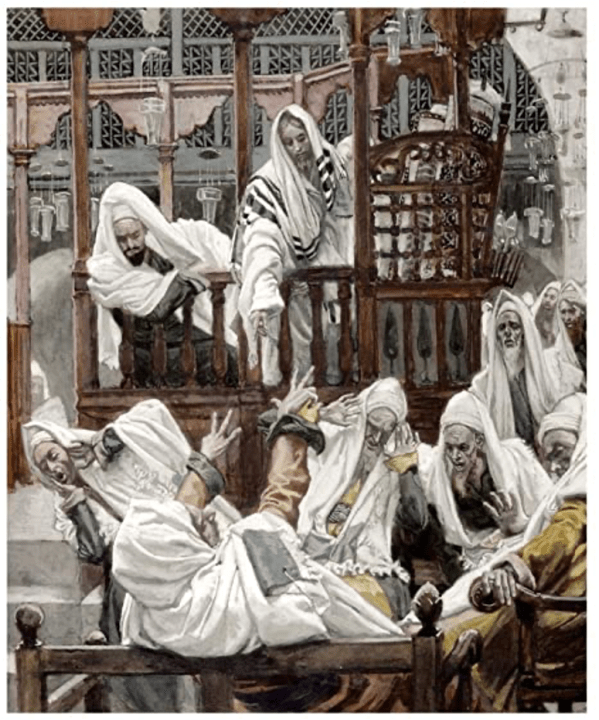
He’s standing in the Temple courtyard —
surrounded by religious authorities,
priests in their robes,
men who run the system.

The Sadducees.

They were the religious aristocrats —
a small priestly class who controlled the Temple in Jerusalem.
Wealthy, well-connected, aligned with Rome.
Religion and politics —
for them, it was all one system.
And it worked pretty well for them.

They only accepted the written Torah —
the first five books of Moses —
and since those books don’t mention resurrection or angels,
they didn’t believe in either.

For them, what you see is what you get.
God’s justice is whatever happens — if it happens — in this life.
So when Jesus preaches resurrection,
they hear danger.


Political danger.
Theological danger.
Because resurrection means
God still has surprises they can’t control.

So they come with their clever little riddle —
about a woman who marries seven brothers.
“In the resurrection,” they ask,
“whose wife will she be?”

It’s meant to make hope sound ridiculous.

But Jesus doesn’t take the bait.
He says, “as usual you’re asking the wrong kind of question.”

The resurrection, he says,
isn’t about rearranging the old furniture.
It’s not a continuation of this world’s arrangements —
it’s a transformation of life itself.

And then he quotes their own Torah —
the story of Moses at the burning bush.
God says, ‘I am the God of Abraham’ — not ‘I was.’

If God is their God,
then they are alive to God.
Because to belong to God
is to share God’s life.
And God’s life never ends.

A Theological Debate with Real Consequences

Jesus isn’t just winning an argument here.
He’s taking a stand in one of the great theological battles of his time.

The Pharisees — unlike the Sadducees —
believed that God’s justice must extend beyond the grave, – that wrongs in this life will be eventually put to rights –
that God’s faithfulness doesn’t stop at the cemetery gate.

And here, for once, there is no daylight between Jesus and the Pharisees.
He shares their conviction
that the covenant promise of God cannot be broken by death.

As Bishop Tom Wright says,
resurrection is not simply “life after death,”
but life after life after death
the full flowering of creation made new.

So this moment in the Temple
is not just a debate about heaven.
It’s a declaration that God’s future is already reaching into the present.
Resurrection is not something we wait for —
it’s something we can live into right now.

Then and Now

It’s easy to leave the Sadducees in the first century,
but their voice still echoes.

You can hear it today whenever people say:

  • “Be realistic — nothing ever really changes.”
  • “Power is power — take what you can.”
  • “Hope is naïve — better to be transactional.”

That voice fills our politics.
It shapes our economy.
It even creeps into our churches.

It whispers:
“The only world that matters is the one you can control.”
“The future belongs to the powerful.”
“Resurrection is just wishful thinking.”

But the God Jesus reveals
won’t fit inside that logic.
The God of Jesus
is the living God —
the One who keeps breaking in,
bringing life where death thought it had the last word.

The God of the Living

When Jesus calls God
“the God of Abraham, Isaac, and Jacob,”
he’s saying something profound about who God is.

If God is their God,
then they are alive to God.
Because God’s faithfulness can’t be interrupted by death.

Resurrection isn’t just about what happens after we die.
It’s what happens whenever God’s life breaks into our dead places:

— when forgiveness replaces bitterness,
— when courage rises to face down fear,
— when love crosses a boundary we thought was final.

That’s resurrection.
That’s the God of the living at work.

Resurrection as Resistance

To believe in resurrection
is to resist despair.
It’s to say that cruelty, injustice, and death
do not get the last word.

It’s to live as if God’s future
is already pressing in on this moment.

And yes —
it’s a dangerous belief.
Because resurrection threatens every order built on fear and violence used as a means of control.
That’s why the Sadducees — then and now —
want to silence it.

Fast Forward to 2025

You don’t have to look far to hear the same old logic being used today:

“People are bad and must be controlled.”
“The poor have only themselves to blame.”
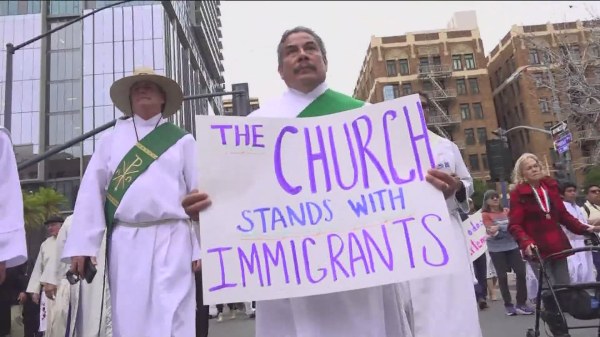
“Immigrants are a threat and so must be expelled.”
“We’re not responsible for climate change, so drill, baby drill.”
“The Church is dying — why bother trying, it’s yesterday’s news?”

And into that weary chorus of constant outrage as distraction, Jesus still speaks:

“God is not God of the dead, but of the living.”

He calls us to live as citizens of that kingdom —
not someday, but today.

To practice resurrection
by daring to hope,
by forgiving, by standing with those the world forgets.

Conclusion — The God of the Living

So what does it mean to say
that God is not the God of the dead, but of the living?

It means that every time we meet despair with courage,
every time bitterness gives way to forgiveness,
every time indifference is replaced with compassion —
resurrection is already happening.

It means faith is not about survival.
Church is not about maintenance.
Resurrection is not escape — resurrection is transformation.
And that transformation begins with us.

That old Sadducean spirit still lingers —
in every system that defends the status quo,
in every voice that says nothing really changes,
in every theology that locks God in the past.

But the living God —
the God of Abraham, Isaac, and Jacob —
the God who raised Jesus from the dead —
will not be managed by fear or cynicism.

To proclaim resurrection
is not to deny death —
it’s to deny its finality.

It’s to trust that love is stronger.
That mercy endures.
That creation still pulses with divine possibility.

It’s to stand in the middle of an anxious, fractured world
and say with quiet defiance:

“The future belongs not to those who manipulate our fear of death,
but to the God who brings life out of death.”

So when you look around at our world —
its exhaustion, its cruelty, its despair —
do not lose heart.

Live as witnesses to the living God.
Practice resurrection
in the small, stubborn acts of love
that make God’s future visible in the present.

For the God of Abraham, Isaac, and Jacob,
the God and Father of our Lord Jesus Christ,
is still the God of the living.

And my friends —this means that however we may be feeling,
God is not done with us yet.

Lectionary Threads

Setting the Scene
I was surprised but also heartened by the feedback I received about my weekly E-Epistle on Paul’s letter to Philemon, which appeared two weeks ago in the E-Newsletter. It reminded me how deeply we hunger for the bold wisdom hiding in Scripture, and how the appointed readings can open up unexpected conversations.

Each Sunday, we are given four scriptural readings, traditionally referred to as lessons because of their instructive potential. Often—at least on the surface—it’s hard to comprehend why the compilers of the lectionary place particular texts side by side. Yet, as a general rule, we can find thematic threads between the Old Testament lesson and the Gospel. The psalm may or may not extend that theme—it often stands in its own right as a hymn of praise or lament. But the New Testament epistle is the outlier. Rather than tying directly into the other lessons, its themes usually unfold sequentially over several weeks, offering us a parallel commentary on what it means to live as Christians in the world.

I know many preachers will default to the gospel lesson, and rightly so. But I find myself often drawn to the Old Testament—because the backstories are so rich, the narratives so captivating. Yet I do not turn to them for history alone. As the writer of Ecclesiastes reminds us, “there is nothing new under the sun.” Human society repeats its patterns. Shakespeare was keenly aware of this. In order to keep his head on his shoulders, his history plays project Elizabethan social and political tensions back into historical settings. This is a tried and true device allowing any writer to speak about contemporary issues through the lens of history.

What goes around then comes around again. Jeremiah holds up ancient politics and divine lament as a mirror for our times when once again we find ourselves struggling to respond to the chilling effects of an unholy alliance between corporate greed and the political suppression of First Amendment freedom of expression.

Jeremiah’s Lament
The passage from Jeremiah, chapter 8, into chapter 9, is one of the most anguished laments in Scripture. Sometimes called the weeping prophet, Jeremiah gives voice to both his own grief and God’s grief as the armies of Babylon camp at Jerusalem’s gates. The line between prophet and God blurs: is this Jeremiah speaking, or is it God? Either way, his poetry is saturated with pain. My joy is gone, grief is upon me, my heart is sick. The harvest is past, the summer is ended, and we are not saved.

These are words of missed opportunity, of doors closing, of a people who refused to turn back to God until it was too late. Jeremiah then utters the piercing question: Is there no balm in Gilead? Is there no physician there?

Everyone in his audience knew what he meant. Gilead, in what is today northwest Jordan, was famous for its resin used in medicine. Healing was available. The balm existed. But the people would not take the cure.

This is the paradox of prophetic ministry: to speak God’s truth is also to carry God’s heartbreak. Jeremiah embodies both divine compassion and human solidarity. God’s anger is real, but underneath it lies a brokenhearted love for a wayward people.

Little wonder then that the image of a balm in Gilead became a lasting metaphor for Christ’s power to heal and restore. And little wonder, too, that this image found its way into the heart-rending songs of the enslaved African communities in America who sang out amidst back-breaking toil and unimaginable cruelty: There is a balm in Gilead to make the wounded whole; there is a balm in Gilead to heal the sin-sick soul. When every other cure had failed, when every earthly power failed them, the enslaved sang of Gilead’s balm, and in so doing, their song became the balm that could not be taken away from them.

Jeremiah is not only the prophet of tears. He is also a prophet of hope. Even after Jerusalem fell, even in exile, he urged the people to build houses, marry, raise families, and seek the peace of the city where they found themselves. Life must go on. Even in Babylon, there was still a future in the unfolding of God’s dream for them.

Jesus’ Parable
In Luke’s gospel we hear Jesus’ perplexing parable of the dishonest manager, who is suspected of fraud, and now fears dismissal. Too weak to dig, too proud to beg, he concocts a plan. He calls in his master’s debtors and reduces their bills. He knows that when he is out of work, they will not forget his generosity towards them when it mattered most.

We recognize this as not only a morally dubious move, but a fraud of mega proportions. We are astonished when the master, aka Jesus, commends him for his shrewdness and holds him up as an example to emulate. Can we be clear here about what Jesus is commending? It’s not the steward’s fraud, but his shrewd sense of urgency. The man knew his time was short. He acted decisively, creatively—even boldly.

The children of this age, Jesus says, are more shrewd in dealing with their own generation than are the children of light. If the crooked can act so cleverly to avert disaster, why do the faithful so often drift through life oblivious to the eternal implications of their complacency?

And then comes the sting in the tail, for Jesus boldly states that you cannot serve God and Mammon. Note, not should not, but cannot! Only one master can win our allegiance.

Drawing the Threads Together
So what happens when we place Jeremiah’s lament and Jesus’ parable side by side?

  • Both press us to live with urgency. Jeremiah shows us the grief of a people’s missed opportunity. Jesus alerts us to the necessity of seizing the moment.
  • Both warn us against misplaced trust. Jeremiah laments a people who refused the available cure. Jesus unmasks the rival god: Mammon – power, wealth, possessions – offering the illusion of security.
  • Both reveal God’s brokenhearted love. Jeremiah weeps God’s tears. Jesus names God’s rival and calls us back to the path of discipleship.

Together, they ask us the question: Where do you place your trust? Which master’s tune do we dance to? As we approach this year’s stewardship renewal season, a variation of the question arises: Do we celebrate our wealth and security because they are ours to possess alone, or are they the means for living a generous life in the service of the common good? The key to Christian living is to not resist for too long an invitation to be generous!

Application
We live in a world where false balms abound. Healing is sought in consumption, political power, financial security, and through transactional relationships of transient self-interest. We convince ourselves: if only I had a little more, then I would feel safe, my cup would be filled, and my life would be complete. But the harvest passes, the summer ends, and the wound of insatiable longing remains unhealed.

As God’s people, we live in a world where Mammon whispers constantly in our ear. It tells us: money and possessions are the only true masters, power the only true balm. And so, Jesus’ words strike hard: You cannot serve God and Mammon.

But as Jeremiah would eventually counsel the Babylonian exiles, here’s the good news: we are not abandoned or left without hope. The balm is real. The healer is present. The master who loves us is faithful. The question is: will we miss our moment, like Jeremiah’s people? Or like the steward will we act with urgency, with a shrewd sense of timeliness – no longer in the interests of selfish gain, but with a desire to invest in the values and expectations of God’s kingdom; to pour ourselves into generous living that fosters our work for peace with justice tinged with mercy to come to our world?

The Call
Jeremiah wept for the wounds of his people. Jesus called his followers to choose their master. And here we are, standing between lament and parable, asking the same question:

Will we trust false cures or the true balm? Will we serve Mammon, or the living God? The harvest is still here. The balm is still offered. The choice of masters is still before us. Let us act with urgency.

There is a balm in Gilead to make the wounded whole; there is a balm in Gilead, to heal the sin-sick soul.

Unfortunately, we must choose.

Parable of the Diligent Woman Luke 15:1-10

I want to begin with a historical footnote that you will recognize is not without contemporary significance. We note that the parables of Jesus recorded by Luke in chapters 13 -15 are all set in the context of disputes between Jesus and the Pharisees. Christians have always read too much into this. Argument has always been a characteristic of Jewish biblical interpretation. As the Talmud’s tells us – two Jews, three opinions – at least.

That Jesus and the Pharisees argued over Torah interpretation was normal. But by the time the Evangelists were constructing their gospel narratives from the oral traditions that had grown up around Jesus and his stories of the Kingdom, the memory of his intra-communal (within the same community) disputes with the Pharisees had become highly colored by the growth of a bitter animosity between emergent Rabbinic Judaism and early Christianity – both competing for the upper hand amidst the ruins of the Second Temple.

Thus, in the highly intercommunal (between communities) tensions between the developing Rabbinic and Christian traditions of the mid- to late 1st century, Pharisees became easy scapegoats for the other– convenient historical reference points for one another in a hyperpolarized Jewish world.

Jesus, himself, may well have been a product of the Pharisee movement, which in the context of Second Temple Jewish religion was a progressive movement that brought a deeper spirituality to Torah interpretation. The Pharisee movement placed a greater emphasis on the teaching of the prophets than the rigidly conservative Temple-based Sadducees. A progressive movement, whose power base lay in the countryside, not the Jerusalem temple.  Through the system of synagogues, the Pharisees ran a network of local schools, and it’s probably in one such that Jesus received his education. We should view Jesus, if not as a Pharisee himself, but as someone who was certainly part of the progressive movement. Yet, within the progressive movement, there were tensions. And to use a contemporary lens, we might see the Pharisees as the establishment Democratic-Liberal establishment with Jesus as the more politically radical Democratic-Socialist fringe. I know this comparison is somewhat controversial – but I use it to highlight the nature of the tensions between Jesus and his Pharisee interlocutors. For Jesus, the issue is always political – esp. in Luke, who presents Jesus continuing in the highly political tradition of the Hebrew prophets.

Between Luke’s time and ours, has anything really changed much? The names change, but the dynamic of polarized worldviews stays the same. That Luke depicts Pharisee criticism of Jesus with such intensity is really code for the ongoing conflict between those who have and those who have not; those who are in and those who are excluded. Jesus is invariably presented as being an advocate for the have-nots, the excluded, the overlooked. If we look at the situations in which Jesus and the Pharisees get into it, they all concern the refusal of a male-dominated religion to recognize the needs of the weak, the sick, and the vulnerable.

Whereas Matthew views Jesus as the embodiment of the Torah’s fulfilment, the new and improved Moses, Mark views Jesus from the perspective of God’s identification with those at the rough end of empire power – Isaiah’s  Suffering Servant. Luke adds a new socio-political dimension by presenting Jesus’ concern for the outcast and the discriminated against – women and children, widows and orphans, and the sick, in particular. Which is why Luke’s presentation of Jesus has a very contemporary feel. It’s within this larger political context that Luke presents Jesus’ championing of women as social inferiors. This is the background against which the parable of the lost coin needs to be read.

In chapter 15, Luke offers a wealth of images in three parables original to him. We might best think of Jesus’ parables as stories of the kingdom. In these three parables – the lost sheep, the lost coin, and the prodigal son- Luke presents Jesus’ concern with the theme of lost and found.

Today’s gospel stops short, giving us, mercifully, only the parables of the lost sheep and the lost coin. As we have other opportunities in the liturgical year to explore the parable of the lost sheep and that of the prodigal son, it’s the story of the lost coin that piques our uncontested curiosity today.

Set between the two male-dominated kingdom stories exploring the theme of lost and found, the parable of the lost coin has a woman as the central protagonist. Because of this, it can often be overlooked. Although generally referred to as the parable of the lost coin, it might better be referred to as the parable of the diligent woman. For it’s not the coin or its value but the woman’s concern and diligence in searching that lies at the heart of this story of the kingdom.

The diligence of the woman who turns her house upside down in what amounts to the spring-clean of spring-cleans in search of her lost coin speaks to us of dedication or diligence. To be diligent means to exert constant and earnest effort to accomplish what is undertaken. Diligence requires a persistent exertion of body or mind. In my experience, diligence is a key quality displayed by women and particularly suited to the arena of everyday life.

Diligence is not heroic, nor particularly dramatic. Because diligence is an unobtrusive quality, it’s often overlooked or taken for granted. Diligence involves an attention to the details, taking care in ordinary everyday circumstances. It’s a woman who is this parable’s protagonist because diligence is a characteristic of the feminine principle in the spiritual life. It’s a gentle competence in ordinary things. Being a feminine spiritual principle, it’s an unsung characteristic of discipleship.

In my experience of the politics of gender, diligence is a quality more often displayed by women than by men. Even in the modern world, where the gender divides of traditional societies have been greatly eroded, the parable of the diligent woman symbolizes women’s care for the details in lives of service, nurture, and relationship building. Whether this is in the traditional areas of service to others in the family or today by extension in caring professions that serve us in communities, women blaze the way and are largely unsung in doing so.

Gentle, yet determined competence strongly shapes women’s experience in ways that are less evident than the lives of men. Men are less focused on nurturing relationships beyond those of mutual advantage. Competitiveness, drive, and ambition are more culturally acceptable in men, and it comes as little surprise that in contemporary America, where diligence is undervalued, it’s men who are increasingly lonely and isolated, deprived of the intimacy of peer relationships to support their well-being.

The average attention span in today’s media-driven age is approximately 8.25 seconds, which is shorter than that of a goldfish. This decline is largely attributed to the rapid consumption of content on social media and digital platforms. None of us needs reminding that diligence is less than sexy in the clashing and discordant cacophony of multiple distractions. As a society, we’ve lost our appreciation for diligence in public service as well as private life, preferring instead the peacock display of self-serving egotism.

I have already noted that diligence is a quality of the spiritual life, and my specific observation from this parable can be applied to the challenges facing us as a spiritual community. As we once more embark on a new program year, we acknowledge Ministry Sunday today.

I believe the quality exemplified in the parable of the diligent woman expresses the persistent exertion of body and mind to recover what’s been lost. Diligence, the perseverance to do what needs to be done with the resolution of heart, mind, and body, is the quality we most need to mirror for one another.

In the politics of Jesus, as Luke presents him, God does not welcome us into the kingdom; God invites us into the kingdom. We are not to wait within our walls and smile sweetly to those who venture through the doors, although in many parish communities, to do this is to take a much-needed step in the right direction. God sends us out into our lives to display the quality of diligence in our lives among friends, neighbors, and colleagues; to become living signs that things which were cast down can be raised up, things which had grown old can be renewed, and most of all, in the diligent search that what has been lost and might once again be found.

Ordinary people who faithfully, diligently, and consistently do simple things that are right before God will bring forth extraordinary results. Elder David A. Bednar . Happy Ministry Sunday!

The Cost of Resistance

You hypocrites! You know how to interpret the appearance of earth and sky, but why do you not know how to interpret the present time?

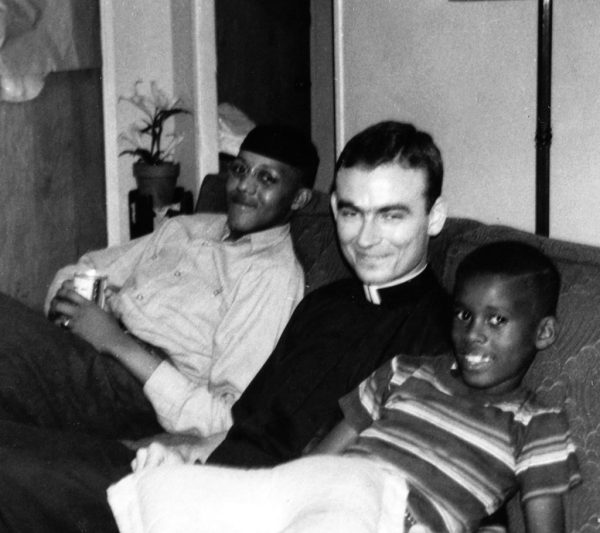
Thursday of this past week, August 14th, was the commemoration of Jonathan Myrick Daniels, an Episcopal seminarian at Harvard’s Episcopal Theological School who in 1965 became the Episcopal Church’s most prominent civil rights martyr.

Robert Tobin (son of parishioners Bob and Maureen Tobin) in Privilege and Prophecy provides a narrative of the Episcopal Church’s evolving identity and social activism during the period 1945-1979. Drawing extensively on archival materials and periodicals from multiple sources, he provides an intimate picture of how Episcopal leaders understood their role and responsibilities during a time of upheaval in American religious and social life.

Tobin places Jonathan Daniels, a New Englander born in Keene, New Hampshire, against a background of Northern white Christian hypocrisy in the civil rights era. He calls out the white liberal romantic identification with Southern black suffering as an avoidance of the violence of racial discrimination on their own doorsteps.

So much Northern white Christian advocacy for racial equality was conducted from the safety and protection of positions of white privilege. John Butler, a prominent Episcopal churchman of the time, noted that demonstrating publicly in the South had required less personal courage than confronting the genteel racism of his Princeton parishioners.

Tobin comments on the iconic Rhode Island theologian, William Stringfellow, who perceptively noted that while Northern white liberals didn’t despise or hate Negroes, they also didn’t know that paternalism and condescension were forms of alienation as much as enmity.

Jonathan Daniels – struggling with the paradoxes and ironies of his horror of racial oppression from his position of white privilege, like many other idealists of his ilk, joined the Selma Freedom Riders. But unlike many, he took to heart Stringfellow’s rebuke.  He not only marched but also felt compelled to remain afterward to register black voters, tutor children, and help integrate the local Episcopal church.

Driven by a powerful spiritual awakening experienced during the reading of the Magnificat at Evensong , he explained:

I could not stand by in benevolent dispassion any longer without compromising everything I know and love and value …. as the price that a Yankee Christian had better be prepared to pay if he goes to Alabama.

In mid-August 1965, Daniels was shot dead as he shielded a young black activist, Ruby Sales, from the deadly aim of Tom Coleman, an unpaid special deputy, subsequently acquitted on the grounds of self-defense by an all-white jury.

John Coburn then Dean of ETS later confessed:

It took a long time to realize that Jon was a martyr. He was just a typical, questioning, struggling student, trying to make sense out of the issues, conflicts, and injustices of our society.

Yet with time, Daniels has come to be revered as a martyr in the Episcopal Church. As a man who embraced nonviolent protest in the face of the evil of racism – and who accepted the ultimacy of nonresistance because he had come to the realization that his possible death was the price that a Yankee Christian had better be prepared to pay if he goes to Alabama.

Jesus’ powerful accusation

You hypocrites! You know how to interpret the appearance of earth and sky, but why do you not know how to interpret the present time?

comes at the end of a difficult passage – seemingly flying in the face of our preferred image of Jesus as the peacemaker.

Although within the overall context of his ministry, Jesus preaches a message of peace, he recognizes that peace never comes without cost. Peace is never peace at any price – it must always be peace as the harbinger of justice. It’s not peace but justice that lies at the heart of Jesus’ concern. Luke 12 dispels any doubt we might still harbor concerning the real impact of Jesus’ recognition that conflict, which may even spur some to violence, is an unavoidable birth pang of the kingdom’s coming.

Jesus lived in a context riven by political and religious-sectarian violence. The question he addresses is whether violence can achieve justice.

We, too, live in a world increasingly riven by politicized violence. Domestically, what is the appropriate Christian response when incendiary rhetoric incites politicized violence among those who wish to wave a Bible in one hand and a gun in the other?  Internationally, what is our humanitarian response in defense of nations and peoples subjected to colonialist violence – esp. when the disregard of a peoples’ right to exist trips over into genocide? While different options for action are open to us, all must proceed from an unwavering commitment to remaining clear-sighted in the face of the temptation to look away.

Whatever Jesus thought about violence, he was never one to look away. In his life and teaching, we detect a complex interleaving of two related strands of clear-sighted resistance – nonresistance and nonviolence as related and yet different forms of protest in response to systemic evil.

Nonresistance not only rejects acts of violence but also rejects confrontation when it has the potential to lead to violence. It’s essential that we grasp the point that nonresistance does not equate to nonaction. Nonresistance is the action of seeking solidarity with the victims by joining with them, even and especially when we ourselves become subjected to violence at the hands of the powerful. Practitioners on the path of nonresistance seek to change the world around them through sacrificial example.

By contrast, nonviolence seeks change through direct confrontation with the systems that maintain injustice and oppression through violence. The confrontation can be fierce, yet it stops short of resorting to violence to win the argument. When faced with the inevitability of violence, the path of nonviolence merges into the path of nonresistance.

In the larger frame, nonresistance and nonviolence are the two essential elements in Christian resistance. Jesus’ journey from life through death to new life is a demonstration of God taking the ultimate path of nonresistance. In his ministry, Jesus more often follows the path of nonviolence – calling out the systemic evils of injustice and oppression. But the new thing God does through Jesus is to bring about profound change through self-sacrifice on the path of nonresistance.

Returning to John Butler’s comment that confronting segregation in the deep South required less courage than confronting the smugly hidden racism of his Princeton parishioners alerts us to the dangers of hypocrisy when our Christian pretense to peace and love is but a fig leaf excusing us from facing up to the hidden and subtle forms of the violence that we claim to reject.

Do you think that I have come to bring peace to the earth? No, I tell you, but rather division!

We are living through another period when the level of division and conflict Jesus speaks about in Luke 12 permeates every level of our society. Although many of us are uncertain of how to respond to attacks upon the ethical values and principles that lie at the heart of our conception of democratic social and political order, the most important thing is to resist the temptation to look away – to avert our gaze from the appearances of the present time.

I could not stand by in benevolent dispassion any longer without compromising everything I know and love and value …. as the price that a Yankee Christian had better be prepared to pay if he goes to Alabama.

You hypocrites! You know how to interpret the appearance of earth and sky, but why do you not know how to interpret the present time?

Maybe it’s less costly to gaze upwards to interpret the patterns in the heavens than to look around and, with clear sight, confront the patterns of the present time?

“Money can’t buy me love”

On Thursday, The Public’s Radio – our local NPR station announced a one-day emergency pledge drive to make up for its loss of $1 million in funding because of President Trump’s actions to stifle public service journalism. This one-day appeal led me to double my monthly contribution, an instance of sheer defiance and an act of resistance against yet another act of petty tyranny.

Increasing my support for NPR is an acceptance of my responsibility to be a good steward of my resources in support of the common good. Today’s gospel alerts us to the centrality of good stewardship in the life of Christian discipleship! In our parish’s yearly cycle, it’s not quite time to talk about making an NPR-style pledge drive commitment– after all it’s only August and the dreaded month of the October stewardship campaign may seem some time away. But in my defense I quote one of Susan Allen’s oft-repeated phrases when she feels the compulsion to tell me something I don’t want to hear – I’m just saying.

The story of the wealthy farmer in Luke 12 is not a condemnation of wealth or those who possess it, although, like many of us feel today, Jesus keenly felt the injustice of the vast wealth disparities of his day.   More than almost any other topic, Jesus speaks about the relationship of wealth and money to the priorities of the human heart.

While there’s no precise number that everyone agrees on, biblical scholars generally estimate that Jesus talks about money in approximately 11 of his 39 parables (some say up to 16 depending on interpretation). About one in every seven verses in the Gospel of Luke references money or possessions. Overall, Jesus makes over 25 direct statements regarding wealth, money, material possessions, or roughly 20% of all his recorded teachings.

Jesus’ teaching on wealth and excess abundance was not a targeted criticism of the wealthy as such, but a critique of the corruption of values that often goes hand in hand with the possession of excess wealth and power. In Luke 18, just a few chapters on from the story we hear today, Jesus says that it’s easier for a camel to pass through the eye of a needle than for a rich man to enter the kingdom of heaven. Again, we shouldn’t misread his critique – aimed not at those wealthy but at the corruption of values and the hardening of the heart that distort the connections between wealth and responsibility.

Likewise, Luke 12 is a snapshot of Jesus’ teaching on the core responsibility of Christian discipleship. The subtext of the story of the wealthy farmer is a warning to be on guard against attitudes that lead us to view our abundance as ours alone and not as a resource to be shared in the strengthening and advancement of the common good. 

A now regrettably dwindling few Episcopalians may still remember one of the most evocative offertory sentences in the 1928 Book of Common Prayer, which quotes from Matthew 6:19-20.

Lay not up for yourselves treasure upon earth, where moth and rust doth corrupt, and where thieves break in and steal: but lay up for yourselves treasure in heaven, where neither moth nor rust doth corrupt, and where thieves do not break in and steal.

The sentence concludes with a direction to look at the things you treasure as the best guide to discovering the state of your heart. For where your treasure is there your heart will be also.

In contemporary America, our addiction to the accumulation of material possessions is a good indication of where to find our hearts. Our national addiction to excess abundance offers some staggering stats. SpareFoot’s 2024 industry almanac reports approximately 2.1 billion sq ft – equivalent to 75.3 sq miles of commercial self-storage facilities in operation nationwide. It’s expected that a further 56 million sq ft will be added in this year alone. One in three Americans use commercial self-storage at an average cost of $128 per 10×10 sq foot of space.  RI has 3.38 million sq ft of commercial self-storage space, which is equivalent to 3.2 sq ft per person. This falls far beneath the US average of 5.4 sq ft of commercial storage space per person.

Why is this the case? A simple answer lies in the corruption of the human heart, whereby we have come to identify ourselves with what we own. There’s also the reasoning that goes, well, I don’t have an immediate use for all of this stuff, but you never know what the future holds. Possessions easily become symbols of security, providing an illusion of protection against adversity.

The farmer comforts himself with the prospect of building even bigger barns in which to store even greater wealth, further consoling himself with the prospect of even more ample abundance to last many years. He tells himself he can afford to kick off his sandals, put his feet up, eat, drink, and be merry. The farmer is presented as a fool, not because he’s rich and getting richer. His foolishness lies in his assigning finite things infinite value. He believes that his prosperity will insulate him from fate and fortune, and thus, his need to increase the volume of his possessions. The farmer represents a common human dilemma in the face of the answer to the question, when is enough, enough – is – just a little bit more.

The literary form of the parable is characterized by being a story drawn from everyday experience with an unexpected sting in its conclusion. If Jesus were to reconstruct this parable for today’s context, who do you imagine he would cast as the principal protagonist – the main character in the story? I’ll leave you to fill in the blank.

The parable of the wealthy farmer plays on the paradox between earthly wealth and spiritual bankruptcy.  Despite this man’s confidence that he will be protected by his wealth, in the end, which, like all endings, will come suddenly and unexpectedly, his attitude exposes his spiritual bankruptcy. To paraphrase Jesus, the coinage for life in the kingdom of God cannot be paid for in cash, stocks, or property. Only the coinage of gratitude and generosity of heart, measured by the good we have done and the love we have shown is accepted here.

As his disciples, we are called to continue the prophetic work bequeathed to us by Jesus. We struggle to overcome the seduction of possessions, our addiction to accumulating stuff in the interest of amassing personal power and prestige, or to ward off our existential insecurity. We are easily tricked by the illusion that we become what we own.

In the face of corrupting messages of autonomous individuality, as Christians, we assert the solidarity of community and our responsibility to contribute to the strengthening of our everyday life – lived together.  

This takes us to the central conundrum posed by Jesus in this parable – the sting in the story’s tail, so to speak. Is our trust in material abundance sufficient to carry the weight of our longing for meaning and joy in life?

Lay not up for yourselves treasure on earth —- I think you know the rest of the line. Or in the words of Lennon and McCartney money can’t buy me love.

Conflictual Motivations

Today’s Gospel reading tells the story of Jesus’ visit to the house of Martha and Mary, as recounted by Luke. I have to say my first reaction to seeing this as the gospel for the day drew a weary yawn from me – oh no, not this old chestnut again. For me, the old chestnut is the well-worn trope -better to be a passive hearer of the word than an active doer. I didn’t have to dig too deeply to realize that my response was a self-justification. When I go a little deeper, I experience this story of Luke’s as a judgment of one of my prominent personality characteristics.

I’m a potterer. My new best friend, Chat GPT, defines potterer as: a person who occupies themselves by doing small tasks in a leisurely, casual, or aimless manner. They spend their time doing small activities around the home or garden without any urgency or particular purpose. Ouch!

When Al and I came to Providence, we bought a 200-year-old colonial house with many small rooms. Having spent the greater part of our lives together in flats or condos designed around integrated kitchen-living-dining spaces, living in a house with many small rooms did not really suit us. But the one gift of such a house for me was that there was always something that needed doing, fixing, changing. As many of you may know, 200-year-old houses provide a marvelous excuse to potter.

We’ve since returned to condo living. However, one drawback to the integrated kitchen-living-dining space is that my need to potter around becomes a major source of irritation to my spouse.

At 6 pm most evenings, Al and I stop and sit down together to watch the PBS NewsHour. 6 pm coincides with cocktail hour, which for me at the moment means a refreshing glass of chilled Fino Sherry. As I approach my advancing years, I find myself returning to the satisfaction of this most quintessentially English aperitif.

But if you think I’m painting a picture of two aging clerics quietly sitting down to watch the evening news, you would be wrong. I start out sitting, but because the TV is always visible in our integrated space, I soon start wandering back and forth between pottering in the kitchen and sitting still, driving Al to eventually say – For heaven’s sake, sit down – before in exasperation, asking – Is there any need for you to be in the kitchen? No need, I reply, just trying to be helpful.

The major problem with pottering is captured in T.S. Eliot’s words from the first part of his Choruses from the Rock

The endless cycle of idea and action, endless invention, endless experiment, brings knowledge of motion, but not of stillness; knowledge of speech, but not of silence; …Where is the Life we have lost in living?

I enjoy being busy with small activities that lack urgency and a particular purpose. In other words, I am continually in a state of distraction. Distraction from free-floating existential anxieties causes me to miss so much of what life has to offer – life lost in the living.

In the story of Jesus’ visit to the home of his friends Martha and Mary, we are being offered three key insights. Firstly, the story offers us a glimpse of the importance to Jesus of friendship. He was more than an itinerant holy man wandering to and fro, accompanied only by a band of followers obsessed by a mission. Jesus seems to have had room in his life for familial friendships. We can imagine that he returned to Martha and Mary’s home in Bethany whenever he was passing through the area, as further evidenced by John’s story of another visit made to Martha, Mary, and their brother Lazarus, in the tumultuous days before his final week in Jerusalem. How many times do we miss the moment offered to us in friendships because we are too distracted, preoccupied with other things?

Secondly, Luke introduces us to the difference between Martha and Mary’s welcome. While Martha is preoccupied with the duties of playing the host, Mary sits quietly at Jesus’ feet, receptive to his words.

Luke describes Martha as a woman distracted by many things. He very deliberately uses the word perispaō which carries a rich meaning of being pulled away, to be dragged around, to be overburdened or drawn in different directions. Martha is overburdened by her distraction, which diverts her attention away from what really matters in this moment. The issue isn’t Martha’s host responsibilities—it’s her attitude of busyness. Martha wants Jesus to feel welcomed as the family’s honored guest and longtime friend. But pay attention to what her approach to this is doing to her. Her joy at Jesus’s arrival is tainted with resentment about all she has to do – Lord do you not care that my sister has left me to do all the work?

The third insight in this story lies in remembering that Luke is the most woman-friendly of the New Testament writers. He uses his story of Jesus’ visit to Martha and Mary to make a countercultural point. In taking on the role of a disciple and sitting at the Lord’s feet, attentive to his words, Mary’s action would have shocked a first-century Jewish audience, where such a privilege was reserved only for men. By contrast, Martha seems resentfully resigned to fulfill the more conventional expectations of a good 1st-century Jewish hostess.

Luke’s story of Jesus’ visit to old friends is a theological story about the nature of discipleship. All disciples are good people, but not all good people are disciples is the theological message Luke wants to get across. He contrasts Christian discipleship with what I would call being a good person, doing what a good person does. Now we all agree that doing good is preferable to doing harm, but where does the source of our motivation to make a difference in the world come from? In other words, are we motivated by our need to project self-image? I’m kind, I’m generous, I’m concerned about others because this is who I am. Or are we motivated to do good because we are motivated by a sense of being part of something so much greater than ourselves –namely a participant in the mission Jesus began but now entrusts us to continue.

You may ask – am I not just splitting hairs? Why does the source of our motivation to do good matter, so long as our actions achieve a good result? Luke would answer, simply pay attention to the personal effect of the difference in Martha’s and Mary’s responses to Jesus. Discipleship begins not with doing for, but with attending to, Jesus. Jesus doesn’t say Martha’s work is wrong. He says she’s missing the one thing necessary.

Are we not all Martha? Distracted. Pressured. Measuring our value by what we can accomplish—even in ministry. But Jesus invites us to slow down and metaphorically sit at his feet. We are a community where the primary impulse is often to serve as a projection of our need to be effective. How quickly this compulsion can turn to, if not resentment, then to burnout when things don’t go the way we expect.

When the source of motivation is a desire for a successful outcome, the danger of disappointment lurks in the shadows. However, when the actions we take flow from a faith-filled vision of discipleship, we cannot feel daunted because we understand ourselves to be conduits through which the greater expectations of the kingdom are being realized, regardless of how things may appear to us. Not my will but thine, O Lord.

We must guard against our need to be do-gooders – if being of use, making a difference, is to be a fruit of discipleship and not just a projection of our own sense of self as a good person. Christian-inspired action flows out of our desire not to act but to listen and receive Jesus through stillness. Anglican Tradition – with its emphasis on the centrality of common worship offers frequent opportunities to encounter Jesus in the collective stillness of hearing his Word and being fed by his body and blood. This is the essential prerequisite, only after which can we go out with confidence to love and serve the Lord.

Luke uses this brief narrative to emphasize that listening to Jesus—receiving his teaching—is the heart of true discipleship. This story is less about contrasting personalities (active vs. contemplative) and more about what matters most in the life of a follower of Christ.

Questions to ask ourselves:

  • Do I value Jesus’ voice above my own productivity?
  • Have I confused good works with spiritual depth?
  • When was the last time I sat still and really listened?

Martha’s service isn’t wrong, but in that moment, it’s conflictual. She is trying to serve Jesus without first receiving from him. Her motivation is shaped by her conventional understanding of what’s required of her. Her impulse comes from both self and societal expectations, rather than from faith. Consequently, her good intentions leave her feeling burdened and resentful.

Mary wasn’t lazy—she was focused. She wasn’t passive—she was present, allowing herself to be shaped by her encounter with Jesus’ Word before embarking on the life of faith in action. How very countercultural.

Neighbor Problems

Image: Jorge Cocco

In his recent WAVES Festival address in San Diego – WAVES being an acronym for Well-being, Art, Vision, Entrepreneurship, and Science- David Brooks offered a commentary on current America, referring to the country having taken two recent hits. He described the Zelensky meeting in the Oval Office as a searing memory. What I saw that day was a group of people who occupied the Oval Office seeking power – just pure power – the power to bully. The Oval Office event reminded Brooks of George Orwell’s 1984, in which one of Orwell’s characters describes his lust for power being fulfilled not as a demand for obedience, but in the capacity to make other people suffer. It seems clear that Brooks’ number one hit on the nation concerns the Administration’s driving impulse – to achieve absolute power confirmed by its capacity to inflict suffering and embrace cruelty as a primary instrument of routine government.

In his address, Brooks suggests that American society moves through repetitive historical cycles – his point being that no matter how bad things currently seem, we’ve been here at least once before in the amazingly short 250-year history of the American experience. While identifying several socio-political elements in the repeating historical cycle, as his second hit on the nation he identifies the dramatic shift in the politics of immigration.

He notes that the idea of America is that we welcome all sorts of people here, and we celebrate diversity and pluralism. America is a crossroads nation where people come and bring their talents, and they have the opportunity to grow and contribute to the creation of a national sense of confidence. He noted that the current political climate is the result of a cataclysmic loss of [national] confidence and some sort of spiritual assault.

In Luke 10, the lawyer initiates a conversation with Jesus about the inheritance of eternal life. We detect a quality of self-serving in his approach. Fixing him with a shrewd and assessing gaze, Jesus flushes out the man’s real concerns. It’s not his capacity to love God that’s on the lawyer’s mind, but the thorny requirement to love his neighbor as himself. He blurts out – Who is my neighbor? As is his custom, Jesus does not try to explain. Instead, he tells him a story.

As I often remind us, the construction and telling of stories provides the only lens through which we can view and make some sense of our experience and place in the world. In his address to the WAVE Festival, Brooks is reminding us that we have always had competing stories through which to discover and articulate our experience as a nation. In any period, the rise and fall of particular stories color our view of ourselves as a nation. This is so clearly demonstrated in the cyclic pattern of our attitudes to the concept of neighbor. Is a neighbor someone like us or not like us, someone to be welcomed, if only out of a sense of self-interest, or feared? Each answer will determine national immigration policy.

Brooks identifies national confidence as a key ingredient of whether we embrace an inclusive or exclusive story of neighbor. He quotes John Bowlby the great British psychoanalyst and originator of attachment theory who wrote that all of life is a series of daring explorations from a secure base – all of life is a series of daring explorations from a secure base. Brooks argues that recent history has robbed Americans individually and collectively of a sense of living life from a secure base. Fear and insecurity have come to characterize the current state of national confidence. Since the financial collapse in 2008, ordinary Americans have experienced one blow after another to our confidence. Our insecurity, now both everyday as well as existential feeds a pathological suspicion of our neighbor. Like the lawyer confronting Jesus, we are currently experiencing a deep anxiety concerning personal and collective obligations towards our neighbor, the biblical stranger in our midst.

We find ourselves in periods when our national confidence allows us to welcome immigrants as an untapped resource contributing to our shared prosperity through high-value knowledge and skills or filling the multitude of jobs we no longer wish to or lack sufficient people to perform. There are other periods, such as the one we are currently slogging our weary way through, when, sapped by loss of personal and national confidence, we fall prey to the story casting immigrants as threats to our very way of life. From history, even our short 250-year national history, we can chart which of those competing stories has the power to liberate and which to imprison – to take us forward or cast us back. I suppose the light at the end of the tunnel is the knowledge that we have been here before, and we eventually come through periods of fear and insecurity to embrace a brighter story of ourselves.

Because we are somewhat biblically educated Episcopalians, we are aware of some of the historical cultural tensions and clashes of identity in Jesus’ parable of the Good Samaritan. For a start, we remember that Jews and Samaritans hated each other – a hatred rooted in the tragedy and pain of a shared history. Between Jew and Samaritan existed a hatred and fear of a ferocity equaled by the current Israeli Palestinian mutual fear and loathing.  Good Samaritan for Jesus’ hearers was a shocking and provocative oxymoron – a rhetorical figure of speech in which deeply incongruous and contradictory terms are combined. Such is Jesus’ way. 

At the heart of the lawyer’s conversation with Jesus lies his need to have Jesus limit his obligation to love his neighbor as himself. His need was rooted in his fear of too much being asked of him – in other words, he lacked the self-confidence to receive the commandment. Jesus recognizes this, and so at the end of his provocative story, he asks who in the story was the neighbor to the robbed and beaten man? Without thinking, the lawyer blurts out, the one who showed him mercy.

The obligation to show mercy suddenly jumps out of the parable and hits the lawyer fair and square in the face. Mercy emerges as the heart of what it means to love our neighbor as ourselves.

The concept of love is always ambiguous. We can quibble over the extent or limit of what it means to show love for our neighbor. But the command to show mercy allows for no such ambiguity. Perhaps this is why, in the current political climate, mercy has become the most provocative and incendiary of all the expectations of the kingdom.

Pentecostal Reflections

Image, Veda Rosenbury’s Great East Window at Trinity Cathedral, Phoenix

I remember the amused joy of watching our granddaughter Claire learn to read. As a 3-year-old, she would mimic her parents reading in bed. Lying on their bed, she wanted to show us that she, too, could read a book. She would gabble away to herself in her 3-year-old language, clearly delighting in some gripping yarn, all the while completely oblivious to the fact that she was reading the book upside-down.

When Claire first started reading whole books, I would ask her what she was reading. I’m reading a chapter book, she would reply. I was struck by her response, which described the type of book she was reading rather than its content. By referring to her book as a chapter book, she got me thinking about the nature of a story. Chapters organize the development and progression of more complex stories. That was the point she had grasped; she was no longer reading books with a single, simple story but was now reading books where the story progressed in stages or chapters.

As I continually assert, narratives are the building blocks of meaning. We make sense of the world around us, including making sense of ourselves to ourselves as well as to others through the construction and endless telling of stories.

Constructing a story to make sense of her 3-year-old world was what Claire was doing when she lay on her parents’ bed mimicking their reading. It was irrelevant to her construction of a story that she was holding her book upside down. At 3-years of age, the problem for the rest of us was that only she could understand the story she was making.

The Bible is, in a sense, like one of Claire’s chapter books. It builds the story of God chapter by chapter. Many authors writing from different historical and cultural contexts over an extended timeline make the Bible a rich, complex, and often confusing read. Yet the overarching narrative it tells is the story of our experience of God’s presence within the flow of history.

For Christians, the story of Jesus forms the penultimate section of this long biblical story. The story of Jesus unfolds through the chapters chronicling his birth, life, and ministry, his death and resurrection, culminating in his ascension and the descent of the Holy Spirit, and the birth of the Church as the continuation of Jesus’ ministry in the world.

Continuing with my analogy of the Bible as a chapter book, Pentecost is the final chapter in the Jesus story. In the previous chapter of the story called the Ascension, Jesus, in the fullness of his humanity now perfected through suffering, death, and resurrection, passes through the membrane separating the parallel worlds of Our-Space and God-Space. As parallel dimensions, Our-Space and God-Space occupy the same location in time, although separated by a permeable membrane that allows energy to flow from one to the other. Last week, I used a different analogy: an interdimensional two-way conduit or superhighway to express the same idea of movement between dimensions.

At the Ascension, Jesus passes through the membrane from the dimension of Our-Space to that of God-Space. In doing so, he does not jettison his humanity like a worn-out suit of clothes to don a new divine suit on the other side. In the Ascension, it’s his very humanity now perfected through suffering, death, and resurrection that is embraced and incorporated into the nature of the divine self.

In the present chapter, called Pentecost, energy passes in the opposite direction, i.e., from God-Space to Our-Space. Having received Jesus’ full humanity into the divine nature, the divine spirit is now released back through the membrane, where in Our-Space it empowers us to continue the work begun by Jesus.

There are at least three different ways to talk about the Pentecost event. The first is Pentecost as a highly mystical pyrotechnic event – the 50th day after Easter -focusing on the pyrotechnics of the day: wind, fire, and an experience of instantaneous translation between the speakers of myriad languages as a proclamation of God’s vision of inclusion. The second is as I’ve been doing in this sermon up to now – a story of energy flows between related dimensions, both occupying the exact location in timespace –  a Sci-Fi influenced use of imagination alongside the medieval images of the triple-decker universe. The third is a focus on the human fruits of the day itself.

Tom Wright describes Pentecost as:

The moment when the personal presence of Jesus with the disciples is translated into the personal power of Jesus in the disciples.

In Acts, chapter 2, Luke tells the story of the fruits of Pentecost.

Awe came upon everyone, ….All who belonged were together and had all things in common; they would sell their possessions and goods and distribute the proceeds to all, as any had need. Day by day, as they spent much time together in the temple, they broke bread at home and ate their food with glad and generous hearts praising God and having the goodwill of all the people.

His description of the early Christian community is a description of what Our-Space infused with the energies of God-Space might look like – if we allowed it to. Equality and magnetic inclusion become the hallmarks of such a community where the phrase: from all according to ability -to all according to need – is lived out in real time. This produced among the first Christians the most magnetic community, which drew increasing numbers of people into a new way of being human within a new kind of community: one that invested itself in those who had yet to become members.

This image of Christian community frightens us – and so it should! For it stands as a perpetual indictment upon the values and practices that we live by in our own society and which in our present moment are being frighteningly exposed in the corruption of money, privilege, and power now openly celebrated in plain sight.

Luke’s story in Acts 2 raises a serious question for us. Could this vision of transformation and risky living, shaping the first Christian communities, ever become a story we can tell ourselves about our society?

As Episcopalians, we pride ourselves on espousing a tolerant, inclusive Christian vision for a society with greater inclusion and distribution of wealth, but not enough to truly disrupt our societal expectations. While heavy on tolerance and inclusion, we run light on accountability. We like faith as a comfort as long as we can remain undisturbed by its imperatives.

Some of us understand faith as personally life-changing. Some, though perhaps fewer in number, understand that there is a connection between personal transformation and the process of societal change. Nevertheless, most of us expect our faith to let us off lightly by making few demands on us. We do not wish to be made accountable to the imperatives of our faith.

The presence of God’s Spirit in the world of Our-Space demands of us transformation along the lines experienced by the first Christians. They experienced personal change as the catalyst for societal change. To reference Tom Wright again: Pentecost was the moment when the personal presence of Jesus with the disciples is translated into the personal power of Jesus in the disciples.

This Pentecost, the presence in us of the power of the Spirit of Jesus – AKA Holy Spirit – defines our mission. Should we choose to accept it:

  • We cannot engage in acts of charity towards the less fortunate individuals while failing to confront the systems that deprive them and whole communities of access to the fruits we expect as of right to enjoy.
  • We cannot reject calls for personal accountability in our communities. Leaving when we feel challenged or uncomfortable might be an option for members of a non-profit, but not for disciples of Christ.
  • The story we live by tells us we need to feel troubled if the fruits of our own material success blind us to the inequalities in wider society.
  • We need to stop expecting our faith to insulate us and allow it, instead, to disturb us.

Conclusion

In his poem God’s Grandeur, Gerard Manley Hopkins captures the message of Pentecost – a timeless message which is for us, oh so very timely.

The World is charged with the grandeur of God. 

It will flame out, like shining from shook foil; 

It gathers to a greatness, like the ooze of oil – crushed.

Why do men then now not reck his rod? 

Generations have trod, have trod, have trod; 

And all is seared with trade; bleared, smeared with toil and wears man’s smudge and shares man’s smell:

The soil is bare now, nor can foot feel, being shod.

And for all this, nature is never spent;

There lives the dearest freshness deep down things;

And though the last lights off the black West went -

Oh, morning, at the brown brink eastward, springs –

Because the Holy Ghost over the bent

World broods with warm breast and with ah! bright wings.

What Next?

Image from the Chapel of the Ascension at Walsingham, England.

Next door to the Shrine Church the Chapel of the Ascension, built in the dispiriting modern style of the 1960’s, the style that festooned the US with hideous A-Frame churches, nevertheless has one most astonishing feature. On entering the chapel one’s attention is immediately drawn to the ceiling where two feet dangle at the center of a rosette of gilded clouds punctuated by lightening forks representing the only remaining part of Jesus’ body still visible after one imagines him squeezing through the gilded rosette into heaven on the other side of the ceiling. Those of you participating via the livestream will be privileged to this truly baroque sight – all the more astonishing because of the chapel’s otherwise plain sheetrock walls and ceiling.

The Ascension, which today is treated as a rather non-event. Always occurring on the 40th Thursday after the Resurrection – to accommodate the reality that most Episcopalians rarely venture to church except on Sundays – the current custom is to celebrate the Ascension of the Lord on the Sunday following. It’s Luke who gives us the most vivid narration of the Ascension scene.

If constructing stories and weaving narratives are the ways we make sense of our experiences in the world, what is the nature of the relationship between story and material experience? In other words, do narratives – our human need for stories simply interpret and explain our material experience, or do narratives construct our material experience through the power of language to bring to awareness the objects and meanings of which it speaks.

This tension surrounding the function and power of language is especially pertinent when it comes to religious-spiritual stories. Narrative Theology asserts that spiritual meaning lies not in the literal veracity of the events depicted – did they happen or not – but in the function of story to construct and convey purposeful meaning and truth- and here it’s helpful to paraphrase the late biblical scholar, Marcus Borg who used to say that the Bible contained many true stories – and some of them actually, happened.

Does a story construct meaning and purpose that we can trust as a source of understanding of the divine which enriches and empowers us to live our best lives?

Spiritual stories recycle elements from human imaginative memory. Clearly, Luke’s graphic account of Jesus’ ascension borrows extensively from Elijah’s ascension in a chariot of fire buoyed upwards by heavenly steeds amidst billowing clouds that obscure heaven from earthly sight. In like manner – as the mantle of Elijah fell upon the shoulders of Elisha – giving him a double portion of his master’s spirit, the double portion of Jesus’ spirit falls upon his disciples -clothing them in preparation to take up the work Jesus had begun.

The resonance between the two ascension stories is unmistakable.  Now skeptics will say – ah-hah, so you admit that Luke copied an earlier story that is a feat of imagination to start with. Well yes, I’m happy to admit this, because both stories function not as eyewitness accounts of actual events but as ways of making sense of a meaning and truth capable of changing lives and altering the trajectory of history. By the way – even eyewitness accounts of actual events are never photographic but interpretations – colored by the contents of individual memory. The problem in crime solving is that no two people will recall the same event in the same way.

In Luke’s chronology of events from Calvary to Pentecost, his story of the Ascension of Jesus forms a transition point bringing the earthly ministry of Jesus to a close to prepare his followers for what was to come next. The question underlying the Ascension event is not how, when, or if it happened, but what light does it shed on the question of what next?

Can we trust the meaning inherent in the story of the Ascension of Jesus, even though most of us accept it to be, as all stories are, a construction of imagination? By focusing the stories meaning on the question what next – this becomes a story sharply focusing the choices to be made, the actions to be taken, and the directions to be followed that transform our perceptions of the world and our role in living our best lives by furthering the work Jesus began.

By substituting the traditional heaven and earth spatial metaphor of up and down for one more suited to contemporary imagination – that of heaven and earth as side by side – the Ascension becomes a story of a conduit event linking our space and divine space.

The two essential points in the Ascension story now come into focus.

In his return to the divine space, Jesus does not jettison his humanity like a suit of worn-out clothes – but carries the fullness of his humanity – perfected through suffering, death, and resurrection – to be received by God – incorporating the essence of humanity into the divine nature. The first collect for the Ascension captures this: that as we believe your only begotten Son our Lord Jesus Christ to have ascended into heaven, so we may also in heart and mind there ascend, and with him continually dwell. The we here is not us individually, but the essence of our humanity which now constitutes an element within the divine nature.

In receiving the gift of Jesus humanity perfected through suffering, death, and resurrection the gift of the divine spirit of Jesus is released to make the return journey back into our space – or as the second collect for the Ascension captures it:  our Savior Jesus Christ ascended far above all heavens that he might fill all things and to abide in his church until the end of time.

As Jesus ascends, we become  Christ’s mystical body on earth  – now prepared and empowered as the Church for the continuance of the work Jesus began.

The Ascended Christ bearing our perfected humanity is received into the heart of God so that henceforth, in the imagery of the book of Revelation, the home of God is to be found not above in the clouds but here on the earth among mortals. Now we come to the most extraordinary assertion of Christian faith – that from henceforth to be most fully human is to be most like God.

As the disciples gawk stupefied after the Lord’s disappearing feet, they are told to stop looking upwards. In other words, there is nothing to be found up there. Instead, we need to look around us for signs of God’s continued presence in our world through the power of the Holy Spirit.

On The Damascus Road

In the early weeks of the Easter Season, the Lectionary focuses on a series of appearances in which the post-resurrection Christ – still recognizable as the pre-resurrection Jesus – drops in on the ongoing lives of his disciples. The gospels contain 13 post-resurrection appearance stories. The gospel for the third Sunday after Easter from John 21 offers us a classic example of Jesus appearing to the fisherman disciples – wearily returning to the shore after a fruitless night’s fishing.

Jesus’ post-resurrection appearances often spark an arid debate about whether he physically appeared to his followers or whether they simply imagined him doing so. We have a ridiculous modern preoccupation with dividing human experience between what might be called external, verifiable, objective experience, and internal psychological-imaginative, subjective experience. Put simply, the argument is over whether they happened or were the product of imagination.

This debate rests on some big materialist assumptions about what is real and what is not. This is an arid dispute, argument, debate, or however you want to describe it, because it misses the essential point of the reports of Jesus’ post-resurrection appearances. Jesus’ post-resurrection appearances are real if real is defined as having an impact to change lives.

Alongside John 21, on the third Sunday after Easter, we have an epistle reading from Luke-Acts chapter 9, describing Jesus’ post-resurrection appearance to one Saul on the road to Damascus. There is no debate to be had here. This is a psychological-spiritual event that registers in Saul’s imagination. Only he sees the blinding light and hears Jesus’ voice. Nevertheless, this is a real event if real is defined by discernible and verifiable impact, i.e., the power to change the direction of Saul’s life.

We know Paul through his letters to his fledgling house church communities. We also know Paul through Luke’s account of his missionary journeys. Luke begins his missionary biography of Paul with the famous incident on the Damascus Road – a devastating spiritual confrontation that was to change everything for Paul. Thanks to Luke, we come to know Paul, less as the writer of letters but as a protagonist in a grand historical drama chronicling the spread in antiquity of what will come to be known as Christianity. Yet, Luke is not only interested in recording the grand epic of the Church’ rise but also has an ear for the personal. In Luke-Acts we meet Paul as a man struggling with an internal identity conflict. For Paul was once Saul and it’s with Saul that Luke begins his biography of Paul.

Saul was a product of the amazingly cosmopolitan world of antiquity. Born into a family of the Jewish diaspora living in the Greek-speaking city of Tarsus in the Roman province of Cilicia, and thus a Roman citizen, Saul was educated in Jerusalem – a student of the famous teacher Gamaliel. Educated in the strictest observance of the Pharisee tradition, Saul became zealous for the God of Israel.

While traveling on a commission from the Sanhedrin to root out the followers of Jesus in Damascus, Saul is blinded by a blazing light – a moment of complete sensory overload. Blinded, he falls from his horse and hears a voice saying, Saul, Saul, why do you persecute me? Left in a state of physical blindness and bodily paralysis, the voice tells him, I am Jesus, whom you are persecuting. Picked up from the ground by his startled companions, Saul – now blind – is led into the city.

Saul is sequestered for three days. Luke does not want us to miss the symbolism of Jesus’ three days in the tomb. Saul, neither eating, drinking, nor sleeping, remains in this state of extreme sensory deprivation as he undergoes a death of self involving a dramatic spiritual and psychological reconstruction. With the return of his sight, a new worldview greets him. Symbolic of this dramatic change, the zealous Saul has been reborn as Paul, transformed by his encounter with the post-resurrection Christ.

The expression a Damascus Road experience has become an idiom for a 180-degree change in a person’s view of self and the world. After his encounter on the road to Damascus, Saul has a kind of death, resurrection, and Pentecost experience rolled into one – after which he too can claim to have seen the risen Lord. Like Peter and the other disciples – who by their encounters with the risen Christ are transformed from disciples – followers, into apostles – messengers, Paul is similarly transformed – but for him the transformation is from persecutor to apostle. Paul leaves behind his national-ethnic God of rage and fear, a God of them and us, a God whose followers must find an endless supply of scapegoats to carry away their unacknowledged projections of guilt and fear – and encounters a God of love, mercy, and inclusion.

Paul, Apostle to the Gentiles, through his letters to the various churches that sprang up in the wake of his missionary journeying, continued to articulate his experience of living in the painful tension between divine judgment and acceptance. Thus, at numerous points his letters make difficult and confusing reading as he flip-flops between being a truly ground-breaking visionary and remaining a man of his own time and place.

Our experience of the world is articulated through the stories we tell, both to ourselves and to one another. We are shaped and our world is given meaning by their telling. This is a good and a bad thing because if the story is poor, which I mean does not offer enough room for growth, we become constrained in our sense of identity and worldview. On the other hand, if the story is expansive, allowing us space to grow, then our sense of self and view of the world expands to include more and more of what is needed.

The resurrection is an expansive story that changes lives. It’s not a story to be believed or explained but to be lived. In living it, the resurrection story shapes the way we understand the nature of the world around us. The question I ask myself is one I also put to you – how do we live the resurrection story?

For some of us like Saul, being changed by an encounter with the risen Christ is a dramatic and devastating indictment on our former lives. Yet, for most of us, we encounter the risen Christ in the subtle opportunities for change amidst the routines of everyday life. We encounter the power of the resurrection story:

  • when we chose to be more courageous and less risk adverse
  • when we become more accepting and less judgmental of difference
  • when we face down our fears and cease being driven by them to seek others to blame
  • when we come to experience mercy as the first attribute of God
  • when the God of Mercy becomes also the God of Justice, that is love in action.

Today as we look at our world, among those who claim to speak for God it’s not hard to distinguish Saul’s voice from Paul’s. So many politicians and church people speak with the voice of Saul. This is the paranoid voice that demands the protection of religious liberty as the fig leaf for the denial of difference. It’s the voice that celebrates the limitations of culture as a rejection of God’s open-ended invitation to enter the new.

For Saul, persecution, imprisonment, and murder were all necessary tools to protect an angry God not able to withstand the imagined trauma of human questioning. For Paul, all that was needed was the law of love manifesting in vulnerability. After his experience on the Damascus Road, Paul knew that because of his vulnerability and weakness, God chose him to be the greatest apostle of inclusion, which is simply a way of describing the divine call to love in action.

Blog at WordPress.com.

Up ↑