On The Damascus Road

In the early weeks of the Easter Season, the Lectionary focuses on a series of appearances in which the post-resurrection Christ – still recognizable as the pre-resurrection Jesus – drops in on the ongoing lives of his disciples. The gospels contain 13 post-resurrection appearance stories. The gospel for the third Sunday after Easter from John 21 offers us a classic example of Jesus appearing to the fisherman disciples – wearily returning to the shore after a fruitless night’s fishing.

Jesus’ post-resurrection appearances often spark an arid debate about whether he physically appeared to his followers or whether they simply imagined him doing so. We have a ridiculous modern preoccupation with dividing human experience between what might be called external, verifiable, objective experience, and internal psychological-imaginative, subjective experience. Put simply, the argument is over whether they happened or were the product of imagination.

This debate rests on some big materialist assumptions about what is real and what is not. This is an arid dispute, argument, debate, or however you want to describe it, because it misses the essential point of the reports of Jesus’ post-resurrection appearances. Jesus’ post-resurrection appearances are real if real is defined as having an impact to change lives.

Alongside John 21, on the third Sunday after Easter, we have an epistle reading from Luke-Acts chapter 9, describing Jesus’ post-resurrection appearance to one Saul on the road to Damascus. There is no debate to be had here. This is a psychological-spiritual event that registers in Saul’s imagination. Only he sees the blinding light and hears Jesus’ voice. Nevertheless, this is a real event if real is defined by discernible and verifiable impact, i.e., the power to change the direction of Saul’s life.

We know Paul through his letters to his fledgling house church communities. We also know Paul through Luke’s account of his missionary journeys. Luke begins his missionary biography of Paul with the famous incident on the Damascus Road – a devastating spiritual confrontation that was to change everything for Paul. Thanks to Luke, we come to know Paul, less as the writer of letters but as a protagonist in a grand historical drama chronicling the spread in antiquity of what will come to be known as Christianity. Yet, Luke is not only interested in recording the grand epic of the Church’ rise but also has an ear for the personal. In Luke-Acts we meet Paul as a man struggling with an internal identity conflict. For Paul was once Saul and it’s with Saul that Luke begins his biography of Paul.

Saul was a product of the amazingly cosmopolitan world of antiquity. Born into a family of the Jewish diaspora living in the Greek-speaking city of Tarsus in the Roman province of Cilicia, and thus a Roman citizen, Saul was educated in Jerusalem – a student of the famous teacher Gamaliel. Educated in the strictest observance of the Pharisee tradition, Saul became zealous for the God of Israel.

While traveling on a commission from the Sanhedrin to root out the followers of Jesus in Damascus, Saul is blinded by a blazing light – a moment of complete sensory overload. Blinded, he falls from his horse and hears a voice saying, Saul, Saul, why do you persecute me? Left in a state of physical blindness and bodily paralysis, the voice tells him, I am Jesus, whom you are persecuting. Picked up from the ground by his startled companions, Saul – now blind – is led into the city.

Saul is sequestered for three days. Luke does not want us to miss the symbolism of Jesus’ three days in the tomb. Saul, neither eating, drinking, nor sleeping, remains in this state of extreme sensory deprivation as he undergoes a death of self involving a dramatic spiritual and psychological reconstruction. With the return of his sight, a new worldview greets him. Symbolic of this dramatic change, the zealous Saul has been reborn as Paul, transformed by his encounter with the post-resurrection Christ.

The expression a Damascus Road experience has become an idiom for a 180-degree change in a person’s view of self and the world. After his encounter on the road to Damascus, Saul has a kind of death, resurrection, and Pentecost experience rolled into one – after which he too can claim to have seen the risen Lord. Like Peter and the other disciples – who by their encounters with the risen Christ are transformed from disciples – followers, into apostles – messengers, Paul is similarly transformed – but for him the transformation is from persecutor to apostle. Paul leaves behind his national-ethnic God of rage and fear, a God of them and us, a God whose followers must find an endless supply of scapegoats to carry away their unacknowledged projections of guilt and fear – and encounters a God of love, mercy, and inclusion.

Paul, Apostle to the Gentiles, through his letters to the various churches that sprang up in the wake of his missionary journeying, continued to articulate his experience of living in the painful tension between divine judgment and acceptance. Thus, at numerous points his letters make difficult and confusing reading as he flip-flops between being a truly ground-breaking visionary and remaining a man of his own time and place.

Our experience of the world is articulated through the stories we tell, both to ourselves and to one another. We are shaped and our world is given meaning by their telling. This is a good and a bad thing because if the story is poor, which I mean does not offer enough room for growth, we become constrained in our sense of identity and worldview. On the other hand, if the story is expansive, allowing us space to grow, then our sense of self and view of the world expands to include more and more of what is needed.

The resurrection is an expansive story that changes lives. It’s not a story to be believed or explained but to be lived. In living it, the resurrection story shapes the way we understand the nature of the world around us. The question I ask myself is one I also put to you – how do we live the resurrection story?

For some of us like Saul, being changed by an encounter with the risen Christ is a dramatic and devastating indictment on our former lives. Yet, for most of us, we encounter the risen Christ in the subtle opportunities for change amidst the routines of everyday life. We encounter the power of the resurrection story:

  • when we chose to be more courageous and less risk adverse
  • when we become more accepting and less judgmental of difference
  • when we face down our fears and cease being driven by them to seek others to blame
  • when we come to experience mercy as the first attribute of God
  • when the God of Mercy becomes also the God of Justice, that is love in action.

Today as we look at our world, among those who claim to speak for God it’s not hard to distinguish Saul’s voice from Paul’s. So many politicians and church people speak with the voice of Saul. This is the paranoid voice that demands the protection of religious liberty as the fig leaf for the denial of difference. It’s the voice that celebrates the limitations of culture as a rejection of God’s open-ended invitation to enter the new.

For Saul, persecution, imprisonment, and murder were all necessary tools to protect an angry God not able to withstand the imagined trauma of human questioning. For Paul, all that was needed was the law of love manifesting in vulnerability. After his experience on the Damascus Road, Paul knew that because of his vulnerability and weakness, God chose him to be the greatest apostle of inclusion, which is simply a way of describing the divine call to love in action.
Nihilistic Times

Sam Wells, the Vicar of one of London’s most well-known churches, our namesake St Martin in the Fields, is acknowledged as a foremost exemplar of a strong Anglican-Episcopal preaching tradition. He views the sermon as less like listening to a lesson and more like taking a shower. You stand in the shower and rather mindlessly let the water flow over you. We are conscious of the water falling on us – inducing at best a state of what I think of as even hovering attention. As the words from on high cascade across the congregation – the task is not to concentrate too sharply but to listen for the one or two points that you are in need of hearing. The task of listening is certainly not to take it all in at once because at least at St Martins, sermons are always available in print, audio, and video formats for subsequent revisiting and in my case, the text can be previewed from 9pm the night before. So, in church or online simply listen for the points you need to hear – and believe me you will hear them.

Hope has been at the forefront of my thoughts in this dark time when the descent into strife and conflict seems to be both inevitable and non-resistible. The message of hope sounded loud and clear on Christmas Eve as we reflected on John’s Prologue which tells us that the light shines in the darkness and the darkness has not overcome it. In the Christmas Eve sermon I suggested that not only does the darkness not overcome the light, but the darkness provides the fuel for the light to consume to burn ever brighter. As Christians our responsibility is to summon our courage as people of faith – inspirited with the Holy Spirit – ever moving towards a hope-filled future that sets the direction of travel – illuminating the path of action in the present.

As I reflected on the texts for the Second Sunday after Epiphany, I found my attention reluctantly returning to St Paul’s words in the epistle reading from 1st Corinthians 6:12-20. I say reluctantly because unadulterated Paul is often a tough sell for 21st-century preachers, and listeners, alike. Of course, the problem lies less in what Paul says – although it sometimes does – but more with the cultural filters through which we’ve come to hear him. So having decided I’d tackle Paul’s opening lines about things lawful and things beneficial, I found myself reminded of a recent review of a book chiefly addressing the primary obstacle for hope – believing in a hope in a future better than our present.

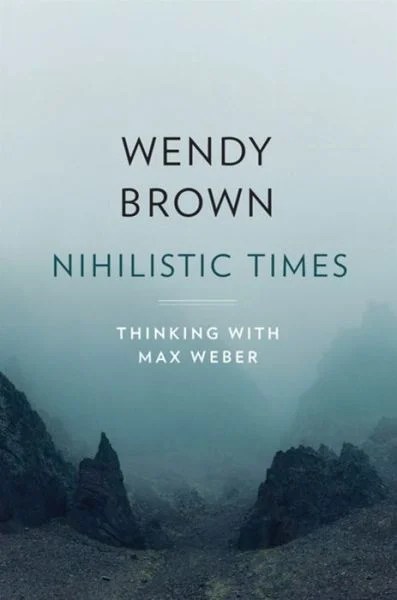
Maeve Cooke, professor of philosophy at University College Dublin, and a member of the Royal Irish Academy has written a review of Wendy Brown’s new book Nihilistic Times appearing in the recent edition of Commonweal Magazine. Wendy Brown is one of America’s foremost political theorists and the first professor of political science at the UC Berkeley. The Harvard Review of Nihilistic Times notes that Brown asks some very timely questions. How has politics become a playpen for vain demagogues? Why has the university become an ideological war zone? What has happened to Truth? She proposes that the answer to such questions can be found in the current prevailing culture of nihilism.

Nihilism comes from the Latin nihil meaning nothing. Nihilism is the existential philosophy that claims that systems of meaning are illusionary. Look for God behind the elaborate curtain of organized Christianity – and you will discover that there’s no there, there. God is dead proclaimed Friedrich Nietzsche – the high priest of nihilism. If God is dead – then why not do whatever you like? And the Nazis did. And the Kremlin does. And so do other nefarious actors – much closer to home.

Max Weber’s 1918 Vocation Lectures provide the catalyst for Brown’s analysis of the current crisis of truth and values in both the university and political life. Weber identified nihilism arising through the gaps opened-up in a modernity where knowledge, values, and belief have become split off from one another – leading to a depletion in all three areas of societal life.

Cooke notes that – values are not just trivialized and weakened; they become more numerous and diverse, leading to moral chaos. Nihilism’s egocentric and instrumental relation to the world manifests today in widespread, disinhibited assertions of power and desire shorn of concern for truth, justice, or future consequences. 

Our world today is characterized by an erosion of shared values. We live in a world where our notions of truth, values, and the facts we rely upon to inform us about the world are continually contradicted by alternative truths, values, and facts. Sometimes the alternatives to the truth, values, and facts we hold are genuine if competing truth and value narratives worthy of scrutiny. However, more often today alternative becomes a euphemism for whatever some political, social, or religious pundit decides to make up to suit one transactional purpose or another.

Inspired by her reading of Weber, Brown explores the contested terrain of human freedom, human value, and the human need to embrace a higher purpose in life. Freedom is an essential element in living lives of human value, Cooke notes. She defines freedom as a practice, a mode of self-realization that has its wellspring not in the calculating ego but in “the soul.” It involves enacting a life we have chosen and living by the lights of our beliefs.

Freedom as the practice of self-realization is not found in the exercise of ego – which is always asking – what can I get out of this, what do I have to control to give me what I seek? The practice of self-realization is a practice of soul – which asks what do I long to become? Becoming open to the new- now there’s a countercultural proposition if ever there was one. The practice of soul as living according to the guidance of a set of beliefs and transpersonal values – is a hope-filled, future oriented, spiritual antidote to the current pervading climate of disillusionment flowing from the denial, and dislocation of shared systems of value.

Weber, Brown, and St Paul, it seems, understand that freedom is so much more than the mere absence of restraint (Cooke). It may seem a big jump from Weber via Brown and Cooke to St Paul. Yet, Paul too addresses the question of freedom as a lived practice of soul. In proclaiming freedom as so much more than the absence of constraint – he cries-out from the page: All things are lawful for me, but not all things are beneficial. All things are lawful for me, but I will not be dominated by any–thing. Of course, Paul’s overarching theological motif here is the tension between living under the law [of Moses] and living in the light of grace given through Christ.  

In addressing himself to the nature of freedom Paul sees on the one hand, that the law is normally an instrument of restraint on freedom- so that where the law does not prohibit – lies and assumption of unfettered freedom. On the other hand, there’s what’s beneficial – that which offers the greatest freedom from enslavement to things. His point is just because something is lawful does not mean it’s moral or ethical. Just because you are free to do something does not mean you are not enslaved by your actions which lead not to in an experience of liberation – but simply to a different kind of being unfree.

Paul offers the arena of the sexual appetites to illustrate his point – not because he was a sex hating misogynist – although in some quarters the jury’s still out on that one. Paul chooses sex because the prevailing attitudes towards male sexual practice in his 1st-century Roman world were characterized by an extreme nihilism. For a Roman man any form of sexual practice with any sexual object choice was not only without any legal restraint – but was also without moral inhibition or ethical constraint.  

Paul is reminding the Corinthians, that despite the absence of legal prohibition, theirs’ and other bodies are not to be used simply as the impulses of desire and the permissiveness of the culture allow. Their bodies belong to God – paid for at a price by Christ. Translated into our contemporary nihilistic context – Paul’s words remind us that our lives are not our own to live shorn from the values that connect us to one another. We cannot live as if our actions carry no consequence for others.

Freedom is the practice of self-realization – rooted not in the exercise of ego – what can I get out of this, what can I control to give me what I seek – but in the practice of soul – what have I the courage to become? True freedom is not simply as the absence restraint – legal or moral. The practice of soul – is living according to the guidance of a set of beliefs and transpersonal values that results in the experience of true freedom.

The practice of soul is hope-filled. It clings to the light. It does not fear the darkness – knowing that the seeming deepening of darkness is only a process of gathering fuel for the light to burn more brightly. Burn brightly when we might ask? The answer is if not now then eventually! In the meantime, hope emerges from within this struggle as our future oriented, spiritual antidote to the current pervading nihilistic climate – providing us with what Brown refers to as the missing step to take us from discontent to effective resistance.

The movement from discontent to effective resistance – from here to there – breaks our enslavement by the forces of apathy, despair, and violence. To us falls the task of fashioning a hope-filled vision of a future that empowers us in the present to reclaim a values based political empowerment for the task of societal renewal. We are engaged in the raising up of that which has been cast down and the renewal of that which has grown old. We will accomplish this through being true to a practice enacting a faith life and living by the light of our beliefs.

To be hope-filled is to live by the light of our value laden beliefs. The Light shines in the darkness and the darkness has not – nor ever will – overcome it.

Epistles

Who do you think is has had the more lasting influence on the shape and development of Christian faith and practice – Jesus or Paul? It’s kind of an interesting question. Of course, I would want to put Luke up there as well – as it’s his historical structuring of the story of the transmission from Jesus to the Church that gives us the shape of the liturgical year from Christmas through Easter.

Who you think has had the more lasting influence on the content and shape of Christian faith also depends on whether you are a member of an apostolic or evangelical Christian tradition. For instance, you hear very little reading of, and preaching on, the gospels in evangelical churches compared with a heavy preponderance of long expositions on brief and selective soundbites from the epistles.

Conservative, white Evangelical thinking prefers rules-based black and whites – do this but don’t do that – this is good, that is bad kind of thing. While Jesus’ name is loudly and ritualistically proclaimed in evangelical communities there is little teaching on his kingdom message because his teaching does not easily lend itself to a follow-the-rules approach to Christian living . Whereas the epistles of Paul and even more so, the pastoral epistles – those which are clearly dated later than Paul’s own lifetime although often claiming his or one of the other the Apostles authorship – are crammed full of dos and don’ts. They lend themselves to attempts to apply 1st and 2nd century cultural norms concerning the patriarchy’s hot button issues – slavery, women, and sexuality to 21st century life – while ignoring the clear challenges that early Christian communities posed to the existing imperial orders of the time. If you ignore the early Christian challenge to 1st century imperial world order, then you can go on excusing modern-day authoritarianism.

The nub of the matter is that Jesus’ teaching is too counterculture for conservative leaning white evangelicals. Jesus confronted the conventional practice of Jewish religion of his time with a provocative radical religious challenge. He challenged the way religious practice inevitably submits to the pressures of culture. The hallmarks of religious submission to cultural norms can be seen in a reducing of the Christian message to one of individual sexual morality – ignoring Jesus social teaching – and conveniently exonerating the political, economic, and cultural norms of the status quo – the business as usual society.

When Christian faith is reduced to a message about cultural conformity, being different makes you vulnerable. If your view of salvation depends on following a culturally submissive, rules-based approach to faith – then you’ll harden your heart towards those whose vulnerability threatens that order.

The Swiss psychoanalyst Carl Jung once remarked that he was glad to be Jung and not a Jungian – referring to the tensions that had already emerged in his lifetime between his visionary yet idiosyncratic thinking and his followers need for systematic consistency. This struggle to preserve the teaching of the founding visionary by restricting its application in the interests of consistency and cultural conformity is particularly prevalent in the history of religious movements. To ensure survival – the movement restricts the vision of the founder sacrificing the flexibility and creativity of the leader’s vision to preserve and protect for posterity, the leaders teaching.

And so, it was for the writers of the NT epistles. Their job was to preserve and transmit the memory of Jesus into a system that served living communities faced with the challenges of a continually changing and challenging world. If you embrace an early Christian patriarchal worldview but ignore their challenge of these communities to the violence of power, then contemporary, white American evangelicalism is what you end up with.

Given my earlier comments about the epistles being the go-to texts for conservative evangelicals, it’s important that we in the apostolic Christian tradition reclaim them.

With the Easter season now behind us we enter into the period of the calendar known as Ordinary Time which opens with several weeks of readings from Paul’s letter to the Romans. Here, Paul lays out the contours of what it means to live the new life of the resurrection. In Romans, Paul is at pains to distinguish between obedience to the Law of Moses and the life of faith in Jesus Christ.

From our vantage point, Paul is often difficult to read because he loves to get down in the weeds of the meaty issues of the time.  He’s at pains to contrast faith with works, with baptism not circumcision as the mark of belonging. Paul’s letters are written in a cultural and religious context different from ours. I find the trick with Paul is not to be distracted by his words so as to miss the radical quality of his vision for the Christian life –  a vision in which it is baptism not circumcision that matters.

On the 5th Sunday in Ordinary Time we read Romans 4 in the light of Genesis 12 which details the call of Abraham. In Romans 4, Paul is reminding his fellow Jews that it is Abraham not Moses who is the father of the nation. That the first covenant with Israel is the one God makes with Abraham – a covenant not of circumcision or at least not at first, but a covenant of faith. Paul’s direct argument in Romans 4 is that Abraham was reckoned righteousness through his faith in God – and not simply for his own sake but for ours because like Abraham, our relationship to God is a matter of faith i.e., baptism and not circumcision.

In the readings for Pentecost 2 or the 5th Sunday in Ordinary Time we see a continuous connecting thread. We have examples of the way both Paul and Jesus approach the Law of Moses. The difference is telling and demonstrates my earlier comments about why the epistles are the go-to texts for evangelical Christians.

Whereas Paul is the lawyerly lawyer – Jesus is the social renegade. Jesus challenges the aridity of a legalistic following of the Law not with complex legal argument like Paul does but by confronting the way the Law has submitted to cultural and social norms. He breaks these norms. He risks ritual impurity by eating with the unacceptable people. In response to Pharisee criticism, he notes God’s concern is with the sick not with those who define themselves as the healthy. God comes not to call the righteous but those who acknowledge their sinfulness. Jesus does not resort to complex invective but simply reminds the followers of the Law to soften their hearts – reminding them that God requires mercy not sacrifice.

We are living through a time in which the authoritarian politics of hate and exclusion are drawing energy from the submission of evangelical religion to the norms of white patriarchal culture with its values of racial superiority, hatred of women, and persecution of lesbian, gay and transgendered persons.

When religion submits to the values of a political culture of tribal exclusion – the result is the Reich Church of Nazi Germany with its wholehearted endorsement of the anti-Jewish laws, the Russkiy-mir of Putin’s tamed Russian Orthodox worldview promoting the virtues of a medieval conquest mindset, the Southern Baptist bully pulpit culture now feeding into a cycle of Republican sponsored discriminatory legislation amounting to a very unconservative governmental intrusion into the personal lives of Americans.  The result is always the same. When religion submits to the values of tribal political culture – sacrifice replaces mercy and hearts are hardened against those who pose a challenge simply by virtue of becoming vulnerable.

Blog at WordPress.com.

Up ↑