Imprinted by Faith

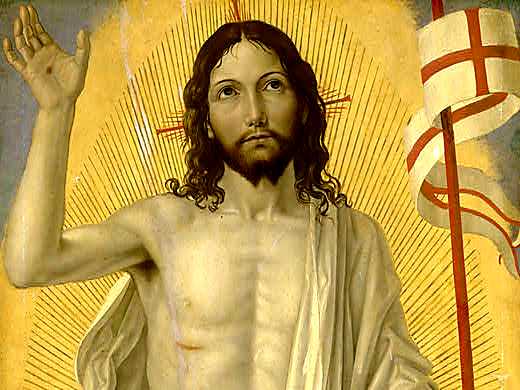
Image: Icon of the Resurrection by the Ukrainian icon writer Ivanka Demchuk. Unlike Western iconography of the resurrection, which portrays it as a Jesus-alone event, Orthodox iconography of the resurrection portrays Jesus raising Adam and Eve, symbolizing the general resurrection of the dead.

In her New York Times essay, The Prophetic, subtitled What American Literature’s Prophetic Voices Tell Us About Ourselves, the renowned writer Ayana Mathis in her first installment, titled Imprinted by Faith, recalls her childhood memories of growing up in a Black revivalist Christian tradition. She writes that:

the God of my revival childhood was all-powerful and relatively benevolent, but had a great many rules about what we should do  (go to church 3x a week, live by the Word of God, literally interpreted) and what we shouldn’t do (listen to secular music, play cards, watch movies, drink). These commitments and privations would be rewarded with God’s love, palpable, like a bird alighting on a shoulder.

She describes leaving this world behind with the memorable image of plunging into the world on the other side of the stained-glass window. Mathis views the beginnings of her adult journey as one of growing beyond her conservative Christian origins to become an artist. Her journey was a learning how to disbelieve while still being imprinted by belief.

How to disbelieve while remaining imprinted by belief struck a deep chord in me. Mathis asserts that American literature –and by extension mainstream American culture – remains imprinted by belief, freighted by ideas about morality, justice, and standards for living. Her assertion is that whatever the condition of our belief at the personal level – as in do we, or don’t we? – the cultural impact of belief remains imprinted on us. That, despite many manifold wrongs and derelictions, the literary and cultural landscape of America remains deeply imprinted by the nation’s historically Christian heritage.     

She notes that this Christian imprint has both good and not-so-beneficial consequences –in her phrase, it strikes a paradox. The Christian imprint on American society has often been used to perpetrate great evil. Christian Nationalism’s distortion of the Christian tradition is today still being used to justify racism’s doctrine of white supremacy, oppression of women and a multiplicity of other phobic responses to people of difference. Yet, at best, the Christian imprint continues to inspire decency and generosity, acting as a hedge against oversimplistic notions of society and the individual. Mathis’ assertion is that our Christian legacy asks us to truck in paradox, requiring us to wrangle with contradictory realities in mind and heart, discovering the sustenance and insight to be gained in the wrangling.

Bracketing her personal references to a revivalist upbringing, Mathis nevertheless speaks for many of us – I suspect- here in this church on this Easter morning. As good-aspiring, middle-class, over-educated, professionally successful, and predominantly white Episcopalians, few of us would pass the orthodox belief and devotional piety smell test. Yet here we are on Easter Day. Some among us may be a little surprised to find ourselves sitting in these pews. Yet, nevertheless, we’re here, despite being unable to give a full account for why we have been drawn here.

Perhaps we’re being drawn by memories of an earlier phase of family life as children or as parents of young children? Maybe it’s the influence of friends drawing us here? Perhaps – and this is the best reason of all – we’re drawn here by cultural tradition – tradition as the imprint of belief upon our personal struggle with disbelief? Deep down, being here reflects a questioning of certainties -once easily taken or rejected at face value, but alas no longer so. Many of us have lost confidence in the belief that Jesus being raised from the dead means all is right in our lives and our world.

We wrangle with disbelief while remaining mysteriously imprinted by belief as we reach for a fingerhold—to say a foothold here would be to overstate our confidence – on what it means to live well with a hope that, at times, aspires to the level of real courage – a tentative purchase on what it means to live well with a love demonstrated through generous concern for others. In short, we long for lives of generous toleration and concern for our neighbor while seeking to grasp after something ineffable.

If faith is an imprint we absorb from the shape of the culture around us, then belief is neither something we can possess nor something we can lose. It’s like ebb tide in the morning, only to return with evening’s flow. Belief is the expression not so much of objective faith in a collection of doctrinal propositions but a heartfelt experience of being deeply imprinted by a story capable of fostering meaning and purpose in our lives. A large and expansive narrative capable of adjusting our orientation to the world in all its evil as well as its glory. Faith is the practice of wrangling contradictory realities in mind and on heart and finding in the wrangling sustenance and insight for living well.

As an example of wrangling paradox, many today reject institutional Christianity for deeply Christian reasons. They reject the institutional Church for failing to live up to the expectations set out in Jesus’ teaching and the Christian culture it has spawned. Often citing the teachings of Jesus, secular humanism rightly judges the Church for its hypocrisy, its love of earthly power, and its manifold human abuses.

Wrangling with paradox is further illustrated in the debate between Tom Holland, a British historian of classical antiquity and author of Dominion: How the Crucifixion Shaped the Values of the Modern World, and AC Grayling, Master of the New College of Humanities in London and a well-known humanist philosopher.

The central contention between them relates to the origin of our contemporary definition of human dignity and personhood. AC Grayling, in his militant rejection of Christianity, contends that the values of modern humanism – ideas about human dignity, social justice and inclusive standards for living – emerge from the Enlightenment’s rejection of religion. There is a wonderful exchange where Holland challenges him, saying that the humanist values we cherish today are not simply remnants of pre-Christian classical antiquity, lying around neglected until rediscovered in the Enlightenment at the end of the 17th century. Our contemporary humanist values – aspiring to do good; valuing ethical action; protection of the individual especially the weak against the strong; the cherishing of vulnerability as a strength and not simply a weakness to be crushed by the powerful; the belief that might is not right – are all the direct product of the Christian revolution in the first centuries of the current era.  Holland – with the historical evidence to support him – asserts our contemporary definition of what it means to be a human being flows directly from the crucifixion and resurrection of Jesus. He contends that modern humanist values are nowhere to be found in classical antiquity – a world where might was always right, where the weak were fair game for the strong, and where the only individuals with any rights were freeborn men – everyone else existing within various degrees of servitude and enslavement – in societies imprinted by not by faith but the crude transactional practice of calculated cruelty.

On Palm Sunday at the beginning of Holy Week while exploring the clash of competing storylines intersecting with dire consequences for Jesus’ during his last week in Jerusalem, I predicted that we would eventually arrive at a new and more expansive storyline – that of God’s dream for the renewal of creation. As Christian believers, we celebrate the resurrection of Jesus as the Christ, the longed-for promised one who came to change everything. But whether we pass the belief smell test or not, at the very least we celebrate a story that revolutionized the ancient world and ushered in a new and vastly more compassionate understanding of what it means to be human.

This morning, I’m not interested in forensically deconstructing the evidence for or against the resurrection to ascertain in an arid attempt to prove it did or did not happen. All human meaning and purpose are narrative in origin—in other words, we only ever have the stories we construct to make sense of our experience in the world. The crucifixion and resurrection of Jesus is a story that fundamentally changed our understanding of what being human looks like.

The crucifixion and resurrection of Jesus introduced a new storyline in the collective consciousness of the West and among all who have come to the Christian faith—a more expansive story that continues to imprint itself upon our cultural experience regardless of whether we believe in its literal truth or not. In this sense, secular humanism is not the antidote to Christianity but its natural heir.

Despite many manifold wrongs and derelictions, the literary and cultural landscape of America remains deeply imprinted by the nation’s historically Christian heritage. This heritage struggles with a view of humanity shaped by Jesus’ crucifixion and resurrection – forcing us, in Mathis’ words, to truck in paradox – requiring us to wrangle with contradictory realities in mind and heart, discovering the sustenance and insight to be gained in the wrangling.

The imprint of Christian faith shapes a cultural landscape where human dignity and Christian love, expressed as justice, are enshrined in the protections of the rule of law. The imprint of Christian faith, whether as cultural legacy or principled belief, empowers us to call out and resist the cyclic embrace of calculated cruelty as a transactional means to political ends – whether as remembered history or experienced within the flow of present-time current events.

But on Easter Day in 2025, you might want to ask, what about Jesus’s bodily resurrection? Well, there you have it—a curious paradox: Jesus died on the cross, but Christ was born in an empty tomb. To disbelieve while being imprinted by belief is the best description I can find for living with the paradox at the heart of our cultural landscape. Wrangling to disbelieve while still imprinted by faith, we should be careful not to rule anything out.

Seeing is Believing – or Is It?

A startling discovery

I found a report on NPR about a study conducted by psychological researchers at Johns Hopkins in multiple infant observations startled me this last week. The researchers seem to have discovered that the laws of Newtonian physics are hardwired into human perception from the earliest stages of human development.

In one experiment, they explored the infant’s relationship with objects, a ball in one case, and a toy car in the other. They rolled the ball along the floor in order to attract the infant’s attention. The baby hardly paid any attention to the ball beyond an initial observation. They tried to interest the infant in the fact that the ball squeaked. When, later they presented the ball the infant showed no indication that it remembered the ball squeaked when pressed.

Then through clever photographic manipulation of images, they engineered it to appear to the infants that the ball rolled straight through a solid wall. Watching the ball roll through a solid wall attracted the avid attention of infants. While sitting in their high chairs, they were presented with the new ball to play with. The infants then repeatedly bashed the ball against the surface of their food tray, seemingly in an attempt to test-out its solidity. It seemed no difficulty for the babies to now remember that this new, much more interesting ball, also squeaked.

In a second experiment, they projected the image of a toy car sailing through the air. As with the ball, the car floating through the air immediately attracted the infant’s attention. When given the toy to play with teach baby repeatedly dropped it on the floor, seemingly to test- out whether it would float or not.

The startling discovery from these experiments is that our human Metal Wall Artperceptions and expectations based upon the Newtonian Laws of the way the physical universe behaves are not only learned but seems to some degree to be innate. It seems that this is probably an evolutionary adaptation that enables human beings from birth to survive in a physical universe that can be predicted to behave in certain ways rather than others. Survival required this adaptation, which now seems to have become hardwired into even the most anatomically unformed of human brains.

A second startling discovery 

The different Gospel accounts of the resurrection, though they differ widely in their details, all seem to be accounts struggling to make sense of what they thought impossible.  Now, remembering that the pre-scientific mind had a much richer range of explanations for the seemingly impossible than we possess today, it seems even allowing for a high degree of what Charles Taylor calls enchantment, the disciples knew without any reference to Newtonian physics that the dead do not, as a rule, come back to lifeThe Gospel records struggle to make sense of experience which is not only improbable, but unaccountable.

The response of Mary Magdalene outside the tomb in supposing Jesus to be the gardener is but the first of a whole series of experiences of the risen Christ where the disciples simply fail to recognize Jesus. Now this could be because he was unrecognizable. Though seemingly, their lack of recognition had more to do with the way their natural expectations blinded them to the reality in front of them, than to any radically changed images-2appearance of the post-resurrection Jesus.

Psychologically, we know that most of us only recognize what our brain is already looking for. That our perception of reality is colored strongly by what we already have experienced. For me this is the most obvious explanation for Mary, who is but the first in a series of encounters where those who knew Jesus intimately fail to recognize him because their brains are not looking for him. In a twist on the words of the angelic visitors in the tomb, the disciples are not looking for the living among the dead.

Like the Johns Hopkins babies, the disciples seem to experience a conflict between expectation and experience. Resurrection is the concept that reconciles their psychological conflict.

Resurrection – what it is not

The conventional view is that Newtonian theory didn’t invent the physics of the material universe. It simply observed and articulated that which human beings instinctively know to be true. Yet, a new realization seems to emerge from the Johns Hopkins infant observations. Newtonianism is not the result of our observation of the way the universe works, it is a creation of our perceptions. The evidence of infant observation is that Newtonian expectations are hardwired knowledge. It seems that even young infants don’t expect balls to roll through solid walls, or toy cars to float through the air. We don’t expect people we have seen die – return to physical life after death. From the inconclusiveness of the Gospel narratives of the resurrection event, neither it seems, did the followers of Jesus. Yet, resurrection is the account they settled on to explain their experience.

It’s been fashionable among progressive and theologically liberal Christians to understand1490Bergognonedetailb the first Christians experience of Jesus’ resurrection as a spiritual (internal) experience. In earlier phases of my ministry, I trumpeted the spiritual interpretation of the resurrection. According to this way of looking at the event, what did or didn’t actually happen to Jesus was and remains, irrelevant. The point being, that the disciples had a spiritual experience of the risen Jesus. I am a firm believer in the transformative power of  psychological and spiritual experiences to transform our experience of reality.

The irrefutable

What is irrefutable is that the experience of the empty tomb, and the disciples subsequent encounter with a risen Jesus, whether considered spiritual, i.e. internal or not, changed  lives and birthed a powerful world transforming religious movement. The big question is not what did or didn’t happen in the tomb? Maybe that will always be just beyond our grasp to explain, i.e. a genuine mystery. The big question is why did the first Christians settle on the concept of resurrection to explain their experience?

The Anglican bishop and biblical scholar N.T. Wright makes the telling point when he asks why would the first Christians adopt the concept of resurrection to explain a spiritual experience of the risen Lord? After all, they had concepts for such a spiritual experience. They had a theology of the souls of the righteous, who because of their virtuous living after death, ascended to dwell with God. So why choose resurrection, because in Jewish theology resurrection referred specifically to the return to physical life after physical death, or as Wright coins it: life, after life after death.

The simple answer

The simple answer to this is that the disciples became convinced by their post resurrection experiences of Jesus that he was, in truth the Messiah. A key characteristic of being the Messiah involves resurrection, or coming back to life after death. The Jews had lots of pretend messiahs, and the key thing that identified them as pretenders was that they died and did not come back to life. The first Christians’ claim that Jesus was the Messiah required the authentication of a resurrection. So did they simply convince themselves that their experience was the result not of a spiritual awareness, but and event in external reality?

A more complex answer

There is a more complex answer to the question and it takes me back to the Johns Hopkins infant observation. The discovery of a Quantum reality where a different set of physical laws operate shows that the Newtonian view of the physical universe is at one level, simply an observation of how we experience the laws of physics to actually operate. Therefore, our actual experience is that when a human being dies, they do not come back to physical life. What excites me about the Johns Hopkins research is the way Newtonian-type expectations are not simply our adult brain’s observation of the way the universe works. They are evolutionary expectations constructed by our brains from the start of life.

The experience of New Life this Easter

The promise of New Life is to be open to experiencing at the very least the improbable. This is not simply magical thinking. Like the infants in the Johns Hopkins observation, I want to become excitedly curious about the effects of God’s interpenetration of Newtonian reality with something much more enlivening.

Each Easter the message seems to reveal something new in God’s invitation to me to experience new life. This Easter, God’s raising Jesus to new life in the Resurrection conveys to me that God’s action is not limited by the boundaries of Newtonian physics and its definition of probability. That God can, and has interpenetrated our Newtonian defined dimension with

images-1something more akin to a quantum-like reality of the spiritual dimension. Here, what is real is continually shifting and changing according to the experience of the observer.

The infants, when presented with an ordinary ball or toy car, behaving ordinarily in time and space, showed little interest in the objects. They were neither curious about them, nor did they remember much about them. Once the object defied their brain’s Newtonian construction of how objects should behave, the infants became excited about them. Their excitement stimulated their curiosity for exploration and testing out. Is there a lesson here for us as we contemplate the promise of New Life through the resurrection of Jesus Christ this Easter?

In my experience that which is supposed to be improbable is one of the key characteristics of God’s presence within the flow of my life and in the divine action I see all around me in the wider world. Like the infants in the observation, to be filled with excited and curious amazement at suddenly imagining a whole new range of possibilities, now wouldn’t that be something?

Blog at WordPress.com.

Up ↑