14 Pentecost (Proper 16 Year C)21 August 2016 on Luke 13: 10-17 from Linda Mackie Griggs
“And just then there appeared a woman…” Nameless and bent almost double, she must have been there all along. Crippled women don’t just appear out of nowhere. But regardless, Luke wants us to know that she was suddenly a person of interest, though we don’t know how she attracted Jesus’ attention. She didn’t speak up and ask for healing. No one spoke up for her. As a matter of fact, this woman’s spine may have been so deformed that she couldn’t even see Jesus. Imagine. Eighteen years of seeing nothing much more than the dust at your feet; maybe twisting to see from side to side, but unable to look ahead or up. Because of the restriction of the spine, the woman’s view of her world was completely truncated, distorted, incomplete. Eighteen years, in effect, bound and with blinders.
Luke tells us that the woman has been bound by Satan. Medical science has since taught us that the primary origins of physical illness are biological, not due to evil spirits. But there is still plenty to ponder here in terms of language and metaphor.
The language of freedom and bondage is significant throughout this passage. This is seen at the very outset, with the nature of the ailment and the healing itself.
Unlike many of Jesus’ healings, this falls into the category of an exorcism—granted, a quiet and relatively undramatic one compared to some of Jesus’ others, which included sending the offending demons into pigs and off of a cliff. This exorcism is accomplished with simply a touch and a word: “Woman, you are set free.” Set free from a spirit that had come between her and wholeness—fullness of life, for eighteen years.
Also at issue here is the nature of the Sabbath. According to Hebrew Scriptures there are two reasons for Sabbath. One is that God sanctified it as the final act of creation. God’s people observe Sabbath because they are grateful to God for having been created–loved into being at the beginning of time. God sanctified a day of rest for God’s self, and invited—no, commanded the same for his beloved people. Sabbath is Creation’s yes to God, in response to God’s yes to Creation.
Second, and the main issue in the context of this story, is that God’s people observe Sabbath because God freed them from bondage in Egypt and led them into the Promised Land. Sabbath is not just about creation; it’s about freedom.
When the leader of the synagogue reprimanded not only Jesus for healing on the Sabbath, but also the people who sought to be cured, he had completely missed the point. He saw the Sabbath as a method of social control, not an invitation into deeper relationship with God and one another. In other words, he had turned Sabbath into another form of bondage. Jesus’ stinging rebuke to him, as usual, showed his command of the finer points of the law, pointing out that there is compassionate exception for watering thirsty animals; if they can be unbound to be refreshed, how much more then should a woman fettered by a crippling spirit be set free to stand upright and praise God?
But the freedom at issue here isn’t just social and political freedom—it’s not just about the shoulds and should-nots of temple behavior. The freedom Jesus returns to the woman in the synagogue is an unbinding of her soul; a soul that had forgotten its beloved identity as a child of God.
As I said, this is one of Jesus’ quieter exorcisms. No demon calls out to him, “What have you to do with me, Jesus son of the most high God???” Nor does the spirit throw the woman to the ground in seizures. The damage done by this spirit is something more insidious. It is a deformation of the spine that has taken place bit-by-bit and piece-by-piece. Luke’s portrayal of this bent and bound woman could in fact be an metaphor for any of us—for anyone who has suffered silently as loss and trauma of some kind or another took hold, and slowly, slowly ossified their outlook on the world until even the possibility of hope and wholeness was barely a shadow on the edge of vision.
The trauma and chaos that are part of life– I call them speed bumps, but that’s just a glib way of articulating what is often better likened to a brick wall or a tidal wave—this is what rocks our world, chaotically and unpredictably. And when that happens, as we desperately seek to recover and respond, we often encounter a fork in the road. One side leads to humility, healing, and wholeness; this is formation. The other leads to de-formation—surrendering to a flood of bitterness and disillusionment. This kind of deformation binds us—binds us into a straitjacket of grief. Yes, grief. It’s not just for physical death. Many of our hard losses– loss of job, loss of relationship, loss of health, loss of faith—these are actually forms of death, in which we can experience the various phases that Elizabeth Kubler-Ross observed; denial, anger, bargaining, depression. These can restrict our vision of hope and healing so that we see only our feet among the ashes of what might have been.
The hard part is that we almost never know that we are standing at that fork in the road unless by the grace of God someone points it out to us. Harder still is the fact that the way of healing is nearly always the rockier, curvier, and scarier path. It may involve trusting the hand of a guide; a spiritual director, therapist, mentor or friend. It probably involves frightening leaps of faith. It almost always involves making your way in the dark for a while. The way of healing and wholeness involves learning to accept our vulnerability and weakness; it involves accepting the fact that we are not, as popular culture would have us think, self-invented or self-sufficient. We wear this veneer of invincibility (or at least we try to), and when (yes, when) it cracks, it is the grace of God that helps us to see that our true strength is built around our scars.
It is counterintuitive to our needy ego to seek that way of humility and vulnerability, but in that direction lies true freedom; a Sabbath perspective of being unbound from the demons of disillusionment and bitterness that constrain our vision of a God that loves us unconditionally and of a kingdom that doesn’t reject, but lovingly embraces the wounded and the grieving, and sets us free.

 Prayer involves the courage to ask in order to receive, to seek in order to find, to knock so that opportunities will open to us. This text is put into perspective in the famous Holman Hunt painting
 about love’s redemption through transformative action by a father driven to repair his relationship with his son who has tragically died some weeks earlier while undertaking the first stage of this pilgrimage.
 This story is one of those stories that Christian’s over the centuries have loved to moralize about. It’s a story that has given rise to two strong archetypes. In common parlance, we invoke the Martha and Mary of this story as epithets for the competing tensions in the spiritual life. The Tradition has popularly read Jesus’ rebuke of the complaining Martha to justify placing contemplation before action. The Church has often taught that the life of contemplative withdrawal is a higher calling than that of active life sullied by the taint of worldly carnality.


 The American experience is of 13 communities that for 200 years identifed as colonies within the British Empire. Increasing political and economic pressures led on the 4th of July in 1776 to the Declaration of Independence, triggering an armed insurrection in defense of historic liberties dating back to the Magna Carter. During the war for independence, the 13 colonies were forced to coalesce around new, mutual identification as a fledgling American Nation. The new nation emerged through victory into a collective of sovereign states volunteering, in as far as their self-interests allowed, to coalesce within a loose confederation based on shared cultural, political and economic history. In 1787 these sovereign states elected to cede sovereignty via a written Constitution to a federal structure with a central government. 1789 is the point at which we can really speak about an American Republic as we now understand it.
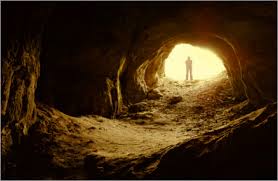 What happens next is a threshold moment; Elijah’s startling leap of imagination to behold God, not in the dramatic events of nature: wind, earthquake and fire, but:
  after, yet, at many levels, Paul continues to be who he is, a Hellenic, Pharisee Jew, now a
  Relationalrealities