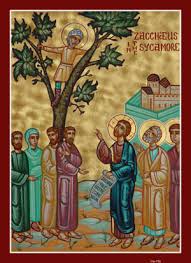
Only One in Ten: Luke 17

Francis of Assisi provided the focus this last week for my E-news epistle that comes out imagesevery Thursday. In it, I asked do we have the courage to allow ourselves to be touched by the generosity of God? Like Francis, to be touched by the generosity of God is to become a conduit for the flow of God’s generosity into our spiritually parched world? Individually, we may not match up to Francis. Yet, as a community, we can become opaque screens upon which God projects the change he longs for us to be. As Pope Francis seeks to do, we too must strive to emulate Francis’ in the face of the calculated hardness of the human heart. Do we have the courage to take such a risk?

Stepping into the text

The middle chapters of Luke’s Gospel describe Jesus on the move as he makes his way from Galilee to Jerusalem. In chapter 17 Luke places Jesus in the no-man’s-land region between Galilee and Samaria. Only Luke reports a number of encounters that Jesus has along the way, either with Samaritans or in the region of Samaria.

Samaria was once the Northern Kingdom of Israel destroyed by the Assyrians in 721. The Samaritans of Jesus day were the descendants of the Israelite peasantry left behind when the nobility was sent into captivity, never to return. The Assyrians resettled Samaria with foreign groups with whom over time the Israelite peasantry intermarried, thus defiling themselves in the eyes of Galilean and Judean Jews.

Luke 17:11-19

The particular story in chapter 17 involves Jesus healing of ten lepers. The gist of Luke’s account is that of the ten who follow Jesus’ instruction to go show themselves to the priests as a confirmation of being healed, only one returns to give thanks. You guessed it. The one who displays gratitude is not a Judean or Galilean, but a Samaritan.

Gratitude is the key

Gratitude touches the most unlikely of people. Gratitude is encountered often in those areas of our experience in life where we might least be looking for it. For gratitude and the experience of outsider-ness and exclusion seem to be universally connected. Surveys reveal that gratitude lies not among those who enjoy abundance but flows among those whose experience is marked by limitations of various kinds. Likewise, within ourselves, we encounter our gratitude not so much in the areas of personal experience where we feel confident and strong, but in the areas where we feel most vulnerable and aware of our poverty.
The healing miracles of Jesus are not the equivalent of medical cures. Their primary function is to signal the boundless extent of God’s generosity. God’s unbounded generosity is an offer requiring an act of acceptance. Without our acceptance, God’s generosity remains only something offered; not yet realized. The realization of God’s generosity comes only through our encounter with gratitude. The stronger our gratitude, the more open we are to receiving generosity, making us more likely to risk living generously.

Forging connections

ten-lepers-iconWhat distinguishes the Samaritan who returns to give thanks is that his whole perspective on life is radically transformed by his experience of gratitude. We don’t know about the other nine lepers who went off to show themselves to the priests. Yet, we detect a hint of something provisional about their healing. Jesus tells the Samaritan who returned to give thanks to God that his healing is the result of his faith, which alone has made him well. This raises the question about the other nine. Is it possible they were cured but not healed? Jesus’ final command to the Samaritan is: Get up and go on your way; you faith has made you well. The man is not only cured of his illness, he is made well. In other words, his return to give thanks for God’s generosity, occasions his healing!

Cure, healing, and human well-being

In our materialist medical worldview to be cured is seen as the miracle. If we long to emulate the magnetism of Francis then we will find ourselves longing for more than cure. For us, the longed-for miracle is to be healed of what ails us. We long for wellness, a quality of wholeness. In our pursuit of becoming whole, we want something beyond an eradication of illness.

Amazing advances in the ability to cure more and more illness marks the achievement of medical science. We thank God for such advances. Or, do we really? For most of us, after an initial sense of relief, in a loose way of speaking we are thankful for a return to the status ante, i.e. life, as we knew it before illness struck us down. I say, thank God I have my life back. Yet in so many instances to be cured of illness is not the same as being healed of what ails us.

Human well-being sometimes referred to as wellness or wholeness, or as Francis demonstrates holiness, requires the alignment of body, mind, and spirit. A physical or somatic cure can be part the process of healing but healing may also take place without being accompanied by a somatic cure. For healing is a holistic process of realignment that affects body, mind, and spirit, – soma, psyche, and pneuma. Wholeness-wellness -holiness – the interconnected elements that when realigned produce a transformation of perspective we call, healing.

It’s this transformation of perspective that is hinted at in Jesus’ words to the Samaritan. He is not only cured of his leprosy, his life is transformed in a new way that is so much more than the absence of illness. This is the experience of healing as practiced by Jesus. To be healed is to be ushered into a new dimension of perception and perspective that unblocks the wellspring of gratitude to overflow in us, and it is this that results in our becoming healed – reclothed in gratitude for God’s generosity.

Healing’s fruit

My reflections this last week on Francis reminded me that if we as a parish community are to meet the challenge facing us it will require more than the good stewardship of bricks, mortar, and institutional life. It will require of us to risk becoming healed. Francis was touched by the generosity of God and this made him a conduit through which the generosity of God flowed into a spiritually parched world. A man who in many ways remained a broken human being became a magnet for others drawn to the experience of God’s generosity.  Do we have the courage to allow ourselves to be similarly touched by the generosity of God? Individually, we may not match up to Francis. Yet, as a community, we can display Francis’ quality of magnetism and so change our world as he changed his? Do we have the courage to take such a risk?

Our materialism hides so much from us concerning what truly ails us. Cure for whatimages-1 afflicts the body brings us no nearer to a healing of that which ails our hearts and souls.The fruit of gratitude is to no longer resist new opportunities to be generous. As we transition from October to November, towards our great act of national Thanksgiving, the interconnections between gratitude as the response to the experience of generosity and generous living as the fruit of gratitude – form a virtuous cycle. A virtuous cycle that we will need to more fully explore.

In the meantime let’s meditate on the question: Will we be the one who returns to thank God?

Where Does It Hurt?

Sermon from The Rev. Linda Mackie Griggs for Pentecost 20, Year C (Proper 22)                                    Lamentations 1:1-6 & Psalm 137


Of all of the comments that I have heard regarding the Bible over the past few months, the one issue that rises to the top of the list in frequency and level of concern is that of violence. Though it has been phrased any number of ways, the question is basically: “How can this sacred book, the inspired word of God, contain scenes of such brutality and cruelty?” The usual response of people who encounter passages like the ones that appear in, to name a few, Joshua, Judges, Esther, Kings, Psalms, and Revelation is to figuratively squeeze their eyes shut and stick their fingers in their ears as if to block out the offending words and images; to declare that such images don’t reflect our faith and therefore we can safely ignore them.

Would that it were that simple. Yes, God is good and we are God’s beloved people; after all, Jesus called us Children of Light. But to ignore the presence of violence in the Bible would be the equivalent of ignoring the fact that light casts a shadow. Our sacred scriptures contain violence because they are about US. They are about God’s love and call to us in all of our sinfulness and frailty. And cruelty to each other. We can’t ignore it. Violence is in the Bible because violence, whether physical, emotional, intellectual, or spiritual, is in us, like it or not.

So rather than set aside the difficult passages, we’re called to the challenge of engaging with them; understanding first that the inspiration of Holy Scripture didn’t stop with the writing. It continues with the reading and the wrestling. And when we engage this way, in this community, we can become better equipped to engage with the violence and suffering that confronts the world outside these walls.

There are two strategies that I find helpful in engaging with Scripture. One is imagination; being able to read between the lines and to place oneself in the narrative. This is actually a part of Ignatian spiritual practice, and it is valuable for gaining new perspective—seeing things from new points of view. The second strategy is interrogation. I’ve always maintained that the most important part of a life of faith isn’t the answers; it’s the questions. So what is the question today? A Good question!

But first, the passage. Our psalm for today—Pslam 137 is notorious in psalm-reading circles as one that could be classified as a Text of Terror because of one verse. One verse that I confess I left out of our reading this morning, because it is that disturbing. You can find it on page 792 of the Prayer Book. The revenge hinted at in verse 8– Happy shall they be who pay you back what you have done to us!– is detailed in verse 9 –a horrid description of killing children, and it makes us wince. It should. And the first reaction is to turn away. But we want to know how God can possibly be speaking to us through these words; between these lines. And to discover that, we go back to the beginning.

In 587 B.C. the kingdom of Babylon under King Nebuchadnezzar destroyed Judah’s capital of Jerusalem, and took the people of Judah into captivity. The Book of Lamentations which we heard from this morning is an expression of the wrenching grief that Judah bore. And psalm 137 is an even more personal and intimate view of Judah’s trauma, from the point of view of those who were forced to walk over 500 miles to a hostile foreign land, without a clue as to what fate awaited them. This psalm draws us into a scene of heartbreak and exhaustion. Imagine enduring such a journey, coming to rest for awhile in a grove of willow trees somewhere between the Tigris and Euphrates rivers. Imagine the sense of desolation and loss—the bitter tears shed at the memory of the traumatic destruction of home and Temple. And then to be bullied and ridiculed by your captors: “Our tormentors asked for mirth, saying, ‘Sing us one of the songs of Zion!” The resentment and anger build from a slow simmer of defiance to a rolling boil of rage as the writer remembers witnessing the destruction: “Tear it down! Tear it down!” Emotionally out of control, the writer vows revenge, not just upon the enemy standing over him, but upon the enemy’s children—revenge upon generations to come. The psalm ends violently, with an image that makes us recoil. And then silence.

We’re called to enter that silence, not to walk away. We’re called to ask a question. Where does it hurt?

Ruby Sales was seventeen in 1965 when a young seminarian named Jonathan Daniels threw himself in front of the shotgun blast that was intended for her. He was killed instantly. Ruby is now a public theologian and one of 50 African Americans spotlighted in the new Smithsonian National Museum of African American History and Culture. In an interview she tells a story of being in the hair salon one day when a young woman, the daughter of her hairdresser, came through the door. She looked terrible, from self-neglect, illness and self-destructive behavior. Ruby speaks of this defining moment in her ministry: “And she had sores on her body, and she was just in a state, drugs. So something said to me, “Ask her, ‘Where does it hurt?’” And I said, “Shelly, where does it hurt?” And just that simple question unleashed territory in her that she had never shared with her mother…[S]he literally shared the source of her pain.”

Ruby entered the silence of one in pain and sat with her. And listened to her story. Listened to grief, fear, disillusionment, anger. Listened to a cry for help.

Might we see this psalm as a cry for help? Might we see it as a call to us to come between the world and its pain; to try to transform that pain into generative and healing relationships?

To enter into that space of silence and hurt, with a simple question, is a risky proposition. We become vulnerable to the heart and pain of another, and the risk is that we can become weighed down with it. The thing to remember is that we are never alone in that silence. God is there. God has been listening through it all; through the lament, the memory of trauma, and the angry lashing-out. God hears the cries of the abandoned and the suffering.

God listens between the lines. We’re invited to do the same.

Psalm 137

1 By the rivers of Babylon—untitled1
    there we sat down and there we wept
    when we remembered Zion.
On the willows[a] there
    we hung up our harps.
For there our captors
    asked us for songs,
and our tormentors asked for mirth, saying,
    “Sing us one of the songs of Zion!”

How could we sing the Lord’s song
    in a foreign land?
If I forget you, O Jerusalem,
    let my right hand wither!
Let my tongue cling to the roof of my mouth,
    if I do not remember you,
if I do not set Jerusalem
    above my highest joy.

Remember, O Lord, against the Edomites
    the day of Jerusalem’s fall,
how they said, “Tear it down! Tear it down!
    Down to its foundations!”
O daughter Babylon, you devastator![b]
    Happy shall they be who pay you back
    what you have done to us!
Happy shall they be who take your little ones
    and dash them against the rock!

Ere Long We Tremble: Commentary on Jeremiah 32.


imagesPersonally, I have great difficulty thinking of time other than in the seeming watertight compartments of past, present, and future; time passing by minutes, hours, days, weeks, months and years etc. Kronos is the Greek word we have adopted to refer to this arrangement, one where time flows in a linear fashion.

Greek has a second word for time. Kairos refers to a notion, not of the linear flow of time, images-1but of the arrival of the appointed time, the opportune moment. We speak of kairos moments to refer to the experience of something happening in a window of timeliness.

You have this great new discovery about yourself or your understanding of the world in some way, or things just fall into place for you, a long and difficult problem is resolved suddenly, the world looks different and you ask why haven’t I seen this or why has this not happened before now? Really crucial things seem only to happen when a correct alignment comes about – the dynamic operation of which appears mysterious to us.

Greek is an incredibly rich language for conveying subtleties of meaning. So it comes as no small surprise that another Greek word teleios communicates a third conception of time. images-2Teleios means far-reaching, fulfillment, mature as in the end of time when the process that reveals itself only by painful step after painful step, is finally complete.
Teleological time plays havoc with chronological time – obfuscating the clear delineations between past, present, and future. That which we look forward to has already arrived. It is present and still yet to come.

Contemporary Western Society is overly dominated by time as Kronos. We measure the flow of time down to the smallest millisecond. Our lives are regulated by the chronology of time passing in intervals of the minute and hour hands of the clock, the day-by-day passage of the calendar. The privileging of chronological time followed upon the invention of the mechanical clock, which paved the way for the technological ascendancy of Western Culture. Yet, Kronos is a hard taskmaster, driving us ever onward before its demands for more and more productive use of the moment. Kronos is like the bossy child who plays poorly with its siblings – kairos and teleios.

***

Theodore Parker was a Unitarian minister and prominent New England Transcendentalist who in 1853 in his sermon: Of Justice and Conscience noted:

I do not pretend to understand the moral universe, its arc is a long one, my eye reaches but little ways. I cannot calculate the curve and complete the figure by experience of sight; I can [but] divine it by conscience. But from what I see I am sure it bends towards justice.

He continued:

Things refuse to be mismanaged long. Jefferson trembled when he thought of slavery and remembered that God is just. Ere long all America will tremble.

These are prescient words in the decade lead up to the devastating War Between the States. We know Theodore Parker’s words even if we don’t remember him. For in 1964, while giving the commencement sermon at Wesleyan University in Middletown, Connecticut, Dr. Martin Luther King Jr. included Parker’s words as he prophesied:

The arc of the moral universe is long, but it bends toward justice.

King draws on Parker’s words to illuminate the workings of the way teleios bends the flow of events in a certain direction. Following in the footsteps of the great prophets of Israel, Parker and King gave voice to the paradox of teleios lying at the heart of our long Biblical Tradition. Justice is a teleological fruit -like a magnet continually bending the direction of human endeavor towards its fulfillment. However, justice also breaks into the here and now in Kairos moments, those mysterious opportune moments of time when events and human hearts come into alignment as the telos of time pulls us towards its ultimate fulfillment.

In a culture dominated by chronological time, the teleological bent of the moral universe is something very hard for us to hold onto. For we easily become disillusioned when justice  does not happen instantly within our own span of time.We want things to be perfect, now and can’t tolerate the idea that we may not see the fruits of that for which we are working so hard for our eyes reach but little ways.

***

images-3Chapter 32 of the book of the prophet Jeremiah ushers us into a scene in the guardhouse of the palace of Zedekiah, the last rag-tag and sorry king of Judah on the eve of the fall of Jerusalem to Nebuchadnezzar, king of Babylon in 587.

Historically, Israel had always had charismatic figures in the tradition of Moses, and Samuel, himself the last of the great Judges in Isreal. Yet the prophetic movement as recorded in the books of the major prophets: Isaiah, Micah, Amos, Hosea, Ezekiel, and Jeremiah arose only as a parallel development alongside the rise of monarchy in ancient Israel. This point is essential for us to grasp, for the major prophetic tradition arises as a religious antidote to the politics of monarchical shenanigans. The centralization of power inevitably placed the rule of the king above the law of God. Monarchy, like all human forms of political governance, inevitably tended towards the privileging of power over justice, idolatry over true worship, and self-interested corruption over the sound governance in the name of the common good.

The period of Jeremiah’s prophecy is contemporaneous with the prolonged political crisis from 626 to the fall of Jerusalem in 587. Jeremiah preached a moral view of reality grounded in the Hebrew Epic through which God, as the only God who had brought the Hebrews out of the land of Egypt, taught Israel the way of true worship and good governance that fostered life.

As Chapter 32 opens, for his pains Jeremiah has been imprisoned in an attempt to silence him. In the king’s guardhouse, we witness a strange transaction taking place – Jeremiah amidst his prophecies of destruction and ruin, at the behest of God, transacts the purchase of a piece of land.

Jeremiah was not being a prudent businessman preparing like a war profiteer for his future. In buying the field in Anathoth, a town outside the walls of Jerusalem, which had been laid waste by the Babylonian army besieging Jerusalem, he was knowingly buying land he knew he would never see, for purposes he would never benefit from.

Jeremiah’s purchase is a symbol for the moral arc of the universe. If Jeremiah had used Theodore Parker’s words, he might have said that in the midst of fear, and on the eve of the total destruction of Temple and the exile of that nation things will refuse to be mismanaged long. That through the experience of destruction and exile the arc of the moral universe nevertheless bends towards liberation and restoration.

***

America is gripped by fear and anxiety. Angry frustration bubbles over everywhere we look. Black communities with long experience of the economics being stacked against them turn in upon themselves and in some cases destroy the only material fabric of community life they have. White working class males, for whom the return of economic injustice is a relatively new experience recommit with angry passion to their long tradition of voting against their own best self-interests. Young millennials, so disillusioned by a lack of inspired political choice, contemplate exacerbating their disillusion by not voting at all, in the mistaken belief that not to vote is to opt out of responsibility for the consequences. All around us, we see the seeds of our impending doom – or we certainly think we do. Yet:

Things refuse to be mismanaged long, the arc of the moral universe bends toward justice.

We cannot see it with our eyes yet we can divine its movement through the practice of a moral conscience informed by a use of the Bible that:

exposes our own prejudices about race, politics, and economics to the testimony of a scriptural tradition that often runs against the grain of prevailing cultural values[1].

One of the most commendable qualities of the American national experience is that America continues to ere long tremble as it struggles with the consequences of the evils of its national past. Some nations continue to defiantly glory in the evils of their past, refusing to hold themselves accountable to the judgment of history. The American experience is to be torn trembling into a difficult and prolonged account taking. If this is an imperfect process, one that seems to be taking an inordinate amount of time, then so be it as long as it continues.

Like the prophet Jeremiah, our task is essentially teleological in nature. Propelled by our Biblical vision that God is just. In the mysterious and sudden alignment of kairos moments producing after long struggle fruits such as the signing of the Civil Rights Act and other major breakthroughs when women, LGBT, and otherly disadvantaged peoples receive justice. The stark realities of the here and now only point us to look for the ultimate arrival of justice through our commitment to action now -thus furthering the end time’s slowly maturing fruits.  Through our tireless agitations in the here and now we encounter kairos moments – evidence that the arc of the moral universe – which is simply another way of speaking of the kingdom of God -bends towards justice.

Like Jeremiah, when the night seems so dark, let us not lose faith nor abandon hope.

[1] Brooks E. Holifield Theology in America: Christian Thought from the Age of The Puritans to the Civil War

God’s Squandering Grace: Luke 16: 1-13


A sermon from the Rev. Linda Mackie-Griggs for Pentecost 18

And his master commended the dishonest manager because he had acted shrewdly.

If the words that describe your feelings about today’s Gospel lesson include, “frustrated”, “shocked”, “stumped”, or “baffled”, you are in good company.

All of these words were used by scholars who wrote commentaries on this passage. It seems to fly in the face of everything we understand of proper moral/ethical behavior. Why would dishonesty in business dealings be commended by Jesus? How is it possible to be faithful with dishonest wealth? Just the disjointed nature of the narrative—a puzzling story followed by a series of aphorisms—this belies Luke’s usual reputation as a fluid master storyteller.

There is no getting around the fact that this is a parable about money. Whereas in last week’s sermon Fr. Mark talked of Jesus being political,today we see Jesus focusing on economics. Look at where this story nestles within Luke’s Gospel: First, in the verse immediately following this passage, Luke writes: “The Pharisees, who were lovers of money, heard all this, and they ridiculed him.” Further along in the chapter, we see a parable about a rich man who suffers in Hades after having ignored a poor man at the gate of his home.

And finally, the parable that comes right before today’s story is the Parable of the Prodigal Son, which is all about God’s economy of mercy and forgiveness; a kingdom vision of generosity and prodigious welcome. So from context alone, we can see that this is an invitation to look at money through the eyes of the Kingdom. Which brings us back to the original question, all in red capital letters, how in the world does the kingdom vision connect to a dishonest manager? It just doesn’t make sense.

Yet. Think for a minute about Jesus’ relationship with money. Think, for example, about his calling of Zacchaeus the tax collector. When Zacchaeus chose to follow his Lord he immediately rejected the economic system from which he had made a dishonest living, saying that he would give half of his wealth to the poor and repay fourfold the amount that he had cheated from people. The Jesus that Zacchaeus follows is the same Jesus who will rail in fury as he overturns the tables of the moneychangers in the Temple. The same Jesus who blesses the poor and urges his followers to store up treasure in heaven where moth and rust will not corrupt nor thieves break in and steal. The Jesus who says that where your treasure is there your heart is also.

Now think about what connects these images to each other, and to what we hear today. It’s all about inversion. Turning things turned upside-down. The ways of the Kingdom are not the ways of the status quo; of the principalities and powers; of the unjust economic priorities. It’s all subverted in the Kingdom.

That’s what the Gospel does. A manager, responsible for his wealthy employer’s property, squanders it; we don’t know how—but we do know that to squander is to scatter all over the place—you can just picture this guy throwing money around—and we know that because of it, he was about to be fired. And his thought process was all about making sure that even if he wasn’t in his boss’s good graces

he would still have a few favors that he could call upon in the lean times: “…so that, when I am dismissed as manager people will welcome me into their homes.” So he has his customers alter their statements of indebtedness to the master: One cuts his debt by half, the other by twenty percent. This seems to be adding insult to injury. The manager has already squandered his master’s property and now doubles down by unapologetically doing it again. And of course, we expect that the master will be furious to see his property being treated so cavalierly.So we are stunned when the master commends the manager for his shrewdness. 

Many discussions of this story hinge on this point, saying that Jesus is exhorting his hearers to pursue the treasures of heaven with the zeal and shrewdness of the manager. This is a fair interpretation; why should we not be shrewd and crafty and creative as we seek the riches of the Kingdom?

But perhaps we can go a little deeper. Maybe it’s not just about what we go after; it’s about what we leave behind.So here’s a question: Under what circumstance is it commendable to treat earthly wealth with abandon; to hold it as lightly as the manager does? Jesus’ paradigm for money is just such a circumstance; a paradigm where earthly wealth and security are weighted differently from the riches of the Kingdom.

Scott Bader-Saye points out a small but significant detail in translation that may be helpful here. He notes that there are two different references to ‘home’ in this passage: The first, that I just mentioned, is where the manager wants to be welcomed into the homes—the houses—of his hoped-for benefactors. The second reference is where Jesus says, “And I tell you, make friends for yourselves by means of dishonest wealth so that when it is gone they may welcome you into the eternal homes.” According to Bader-Saye the word here for ‘homes’ can also be translated as ‘tents.’ This is the kind of home that represents pilgrimage. It represents a transformative journey of learning to let go of things that possess us. When Jesus admonishes us to ‘be faithful with dishonest wealth—or mammon—might he be asking us to hold wealth as lightly, and maybe to even to squander it as the manager does, but not for the purpose of the kind of false security of possessions; but instead to gain the true security of faith in the God who provides for his beloved flock? So this isn’t just about treasures in Heaven; it’s about living in such a way that we help the Kingdom break in right now.

This is not an easy parable. Sometimes it feels to me like the biblical equivalent of looking at an MC Escherlw389-mc-escher-relativity-19531 print of one of those staircases that endlessly seems to be going upstairs and downstairs at the same time. It is puzzling, and sometimes frustrating to wrap our minds around these twisty images.It can also be frustrating and puzzling, in contemporary consumer culture, to wrap our minds around a Kingdom vision that prioritizes a prodigal attitude toward money.

A very timely article appeared in the New York Times a couple of weeks ago. In the regular ‘Your Money’ column, Ron Lieber asked, ‘What if You Weren’t Afraid?’, and Four More Money Questions from Readers.

Each of the responses revealed what people had learned about letting go, not simply of money, though that was part of it, but letting go of external expectations of material success, and focusing on the core values of generosity

and of understanding that living abundantly isn’t about an abundance of things. One woman in particular stood out in Lieber’s story. She had grown up learning from her Depression-Era parents that when it came to finances, she should always, always hedge against scarcity. She decided that she wanted to derive more joy from spending her money and discovered that spending it on herself wasn’t nearly as delightful as spending it on others. Of her newfound perspective of her finances, she observed, she would rather ‘dote on people’ because thrive is the root word of thrift’.

So Jesus hasn’t asked us to jettison our ethics after all. He’s invited all of his children to thrive; to jettison instead the mentality of an economy of scarcity; and to live every day as if on pilgrimage; lightly, creatively and generously, helping to make an earthly reality of a Kingdom vision of God’s prodigious, squandering grace.


Due Diligence: Luke 15:1-10

Text and context

In Table Talk I noted the tension inherent for us in reading the gospel accounts of Jesus relationship with the Pharisees – the product of a later period – back into the time of Jesus ministry. What by the time of the Evangelists had become a deep communal animosity between emerging Rabbinic Judaism and fledgling Christianity, had been in Jesus own lifetime simply a legitimate disputational relationship between advocates of a progressive approach to Torah interpretation. Both Jesus and the Pharisees drew from strands within the prophetic tradition to arrive at different conclusions about the nature of the Kingdom of God – the reign of shalom. Remember the Talmudic saying – two Jews, three opinions – at least.

Luke 15 opens with a continuation of the running dispute between Jesus and the Pharisees over the consequences of different approaches to the ritual proprieties of table fellowship. Jesus’ was willing to eat and drink with a general category of ‘sinners’ – for him, an expression of the open invitational nature of the kingdom. For tax collectors, we must read collaborators with the occupation, and for various other sinners, we must read those ritually unclean because of their choice of lifestyle or because of their inability due to circumstances to follow the strict observances of the Law of Moses. As a result, Luke tells us that many of these people began to flock to Jesus; Let’s hear Luke:

Now all the tax collectors and sinners were coming near to listen to him. 2 And the Pharisees and the scribes were grumbling and saying, “This fellow welcomes sinners and eats with them.” 3 So he told them this parable:…


Parables political statements of the kingdom

In chapter 15 we have three parables concerning the good shepherd, the diligent woman, and perhaps one of the two most famous of parables, that of the prodigal son. What’s distinctive about these three parables is that they only appear in Luke’s gospel and therefore, we can deduce, go to the heart of Luke’s understanding of Jesus’ politics.

I use the word politics deliberately because Luke presents Jesus with a highly political message, one the places him in the direct line of the Hebrew prophets. A definition of politics is activities and attitudes concerning governance or government. Luke understood Jesus to be political because the whole way Luke presents him in his gospel reveals Jesus being deeply concerned with the politics i.e. the activities and attitudes, values and expectations at the heart of his understanding of the kingdom of God.

The lectionary offers the possibility of stopping at 15:10 or continuing on to include the parable of the prodigal son, which should be renamed the parable of the forgiving father. I choose to stop at verse 10 because the prodigal son is such a dramatic parable it tends to suck all the air out of chapter 15 leaving the parables of the good shepherd and the diligent woman  – somewhat deflated.

What interests me is the way the parable of the diligent woman is sandwiched between two parables in which men are the focus. The diligent woman is usually noted en route – in passing as it were, between the images of the good shepherd and those of the father and his two sons.

Luke’s presentation of Jesus’s politics

One of the characteristics of Luke’s view of Jesus’ politics of the kingdom is Jesus’ concern for women and children. More specifically, within the categories of women and children, Jesus is particularly concerned for widows and orphans. Widows and orphans come last in the politics of patriarchal societies, but first, it seems, in the politics of God’s kingdom.

The diligence of the woman who turns her house upside down in what amounts to the spring-clean of spring-cleans in search for her lost coin speaks to me in two ways, one general, the other specific.

Beginning with the general message, this parable presents an image of diligence.imagesTo be diligent means to exert constant and earnest effort to accomplish what is undertaken. Diligence requires a persistent exertion of body or mind. In my experience, diligence is a key quality displayed by women because diligence is a quality that is particular to the arena of everyday life.

Diligence and gender

Diligence is not heroic. Its practice is not dramatic. Because diligence has a quiet quality its practice goes largely unnoticed. Diligence involves an attention to the details of relationship. It is a taking care in ordinary everyday circumstances. Diligence is a characteristic of the feminine principle in the spiritual life. It’s a gentle competence in ordinary things. It’s an unsung characteristic of discipleship.

In the politics of gender, in my experience diligence is a quality more often displayed by women than by men. Even in the modern world where the gender divides of traditional societies have been greatly eroded, the parable of the diligent woman symbolizes the many women’s lives of service to relationship building and nurture. Whether this is in the traditional areas of service to others in the family or now more commonly in areas of service to wider communal, national, and international political life, diligence and service as gentle, yet determined competence strongly shape women’s experience in ways that are less evident the lives of men. Men are less focused on nurturing relationship beyond those of mutual advantage. Competitiveness and the drive of ambition are more culturally acceptable in men. In an age of apparent gender equality, many Americans still seem to have a cultural aversion to women seeking power.

None of us needs reminding that in our media-driven world where news is now entertainment, diligence is not sexy, it is not sound bite-y. It mostly goes unappreciated in the clashing and discordant cacophony of the politics of bread and circuses[1]. As a society can it be true that we have lost our appreciation for diligence in public service as well as private life – preferring instead the peacock display of self-serving egotism?

Diligence and community

I have already noted that diligence is a quality of the spiritual life, and though many of us chafe against this, it is so. My specific observation from this parable can be applied to the challenges facing the parish community in which I live and work. In many aspects of community life, the pace dramatically picks up after Labor Day. We face into a new program year – but for what purpose? Is our purpose only that of maintenance; keeping things nicely ticking over, or is it more than this. As I discern it, the challenge my parish community faces is the need to grow.

In the culture of populist American religion, growth is a sign of success. I am not interested in growth as success. I am concerned with something more fundamental – growth as a sign of becoming more fit for purpose. My community needs to grow because growth is the indication that we are moving from the passivity of being a so-called welcoming community, to the magnetism of being an inviting community. I believe the diligence exemplified in the parable of the diligent woman expresses the persistent exertion of body and mind in pursuit of a recovery of that which has become lost to us. Diligence, the perseverance to do what needs to be done with the resolution of heart, mind, and body, is the quality we most need to mirror for one another.

Politics of the kingdom

In the politics of Jesus, as Luke presents them, God does not welcome us into the kingdom, God invites us into the kingdom. We are not to wait within our walls and smile sweetly to those who venture through the doors, although in many parish communities to do this is to take a much-needed step closer to the kingdom. God sends us out into our lives, the lives we live in the world among friends, neighbors, and colleagues – sends us out in order to invite them in.

Invite them in for what purpose, to simply mimic the signs of success? No! The invitation is to engage in the struggle to realize in our own time and place the expectations of the kingdom of God. We are they who are called to embody the future hope of the kingdom as if it is already a reality. And we invite others – into solidarity with us – as together we fight to realize the expectations of the kingdom; expectations of inclusion, justice, and peace.

[1] A phrase used by a Roman writer to deplore the declining heroism of Romans after the Roman Republic ceased to exist and the Roman Empire began: “Two things only the people anxiously desire — bread and circuses.” The government kept the Roman populace happy by distributing free food and staging huge spectacles.


Modeling An Appeal From The Heart: Paul’s Letter to Philemon

images-1Around 55 AD, from prison, Paul wrote a short letter to his friend and wealthy supporter, Philemon. Philemon seems to have been the lynchpin in the Christian community in Colossae for it is in his house that the church meets – a fact that gives us an indication of Philemon’s social standing within the community. 

Paul’s letter to Philemon reveals him at his most vulnerable, most loving and self-effacing, yet also persuasive – in short, at his most skillfully adroit. The letter to Philemon addresses some very sharp tensions, indeed. Paul is asking Philemon to step well beyond the boundaries of his socially conditioned imagination on a particular matter. His is a worldview conditioned by an unconscious acceptance of the institution of slavery.

Paul is making a difficult ask of Philemon. In doing so, he challenges Philemon, tests his fidelity to the cause while at the same time avoids alienating a man upon whom he relies for vital material support in the Colossian mission. This is every parish priest’s nightmare and we could do well to study Paul’s skilfulness in his letter to Philemon.

The story

Most of us know the broad outline of the story. Onesimus, a name that means useful is a runaway slave belonging to Philemon. Runaway slave! Though we live at a distance of 150 years from the legal institution of slavery in the US, we can still viscerally register the danger explicit in the plight of a runaway slave. A slave, to begin with, has no rights and is totally dependent upon the good will of his master. To run away is to forfeit life, or at the very least limb. Onesimus’ good fortune is to have run away to Paul, for whom he has become a much-loved son through baptism.

Paul’s letter to Philemon was often appealed to by the defenders of slavery on the basis that Paul clearly seems to disapprove of run-away slaves. For why else would he have returned Onesimus to Philemon?

Yet, if we read Paul’s words and listen to his tone, his intention behind returning Onesimus is not about restoring Philemon’s property rights. He desires reconciliation. The former slave and slave owner are for Paul – now brothers in Christ. We note Paul skillfully weaving this message.

Playing on the meaning of Onesimus’ name- useful, Paul bolsters his request pointing out that in becoming useful to himself while imprisoned, Onesimus is once again: useful both to you and to me. Paul reminds Philemon that in sending Onesimus back to him, he is actually sending him his own heart, with the implication that he had better treat Onesimus kindly.

I so admire the way Paul navigates the tensions inherent in his request. On the one hand, he shows his love for Philemon. He honors him as his co-worker and there is such love in his tone as he addresses not only Philemon but others in the house church at Colossae. Mindful of his dependence on Philemon’s support for the work in Colossae -for Paul has no wish to offend an important supporter – he subtly links acceptance of Onesimus with acceptance of himself. Hear the words of this wily apostle:

….though I am bold enough in Christ to command you to do your duty, yet I would rather appeal to you on the basis of love—and I, Paul, do this as an old man, and now also as a prisoner of Christ Jesus. … I preferred to do nothing without your consent, in order that your good deed might be voluntary and not something forced. Perhaps this is the reason he was separated from you for a while, so that you might have him back forever, no longer as a slave but more than a slave, a beloved brother—especially to me but how much more to you, both in the flesh and in the Lord. So if you consider me your partner, welcome him as you would welcome me.  

What is Philemon to do?

This is a heartfelt request of a man Paul honours and loves as a generous co-worker on behalf of a young man Paul has come to love as a son. We see not only the full range of his rhetorical skills employed, we also experience Paul with his heart open. Yet, Paul is still Paul. As supplicant, he offers to make good –charge it to my account– any wrong Philemon feels he has experienced by Onesimus’ absconding. For Paul, supplication can be endured only for so long. He can’t resist reminding Philemon of the order in which things really stand. Just when Philemon might feel he has the whip hand (pun intended), Paul reminds him that when it comes to who is indebted to whom: I say nothing about your owing me even your own self – a less than subtle reminder and then a return once more to smiles as Paul ends with:

Yes, brother, let me have this benefit from you in the Lord! Refresh my heart in Christ. Confident of your obedience, I am writing to you, knowing that you will do even more than I say. 

The Lectionary ends the section at verse 21 which is a pity for we miss the explicit threat in verse 22 where to add for good measure Paul tells Philemon to prepare a guest room for him:…for I trust that through your prayers I shall be granted to return to you all. 

What has the letter to Philemon to say to us?

This letter represents one of the most skillful and eloquent challenges to the status quo, and as such applies as much to the status quo in our time as it does to that in Paul’s. As we look around us at the world of 2016 we see how we have fallen prey to a delusion that other people’s minds are changed through force of argument. The current deafening cacophony of the culture wars, the hue-and-cry in the battle between left and right result from each side’s inability to hear the other. We are reminded of the Englishman’s version of speaking French – just speak louder.

The right believes that it can vanquish the opposition with insult and blame, stoking the forces of fear and division. While the left marshals the forces of moral superiority in the hope of humiliating its opponents, forcing an admission from them that they are stupid as they slink off to the dunce’s corner. We live in a culture of deafness where ideas and debate fall into the silence of a vacuum created when the importance of forging relationships is so despised.

How do you change someone’s mind when they have yet to glimpse the possibility of another way of viewing the world? Paul’s approach is simple. He does not rely on mounting a protest campaign. He does not threaten nor cajole. Neither does he belittle and humiliate while haughtily parading his moral superiority. He gently reminds Philemon of what they hold in common, i.e the mind of Christ. He invites him to take the next step into a new awareness of what that means, namely that among those made new in Christ the old distinction between slave and free no longer pertains. For Paul the Pharisee, Christ is the fulfillment of the ancient Hebrew encounter with a God who delivers all people from bondage.

Paul does not collude with Onesimus’ escape. He recognizes that the consequence of running away has to be faced. Paul does not say: Philemon because there is no such thing as slave or free within the community of those who belong to Christ, your claims on Onesimus are null and void.  He models for Philemon what the new order looks like:  Philemon, I  trust you will enjoy a new relationship with Onesimus like the one I already enjoy with him. Paul’s appeal to his relationship with Philemon is a first step only. One more step is required. Paul knows that persuasion is only effective when it is modeled.

Without the presumption of relationship and the ability to model the behavior you seek from another, whether you issue a command or employ gentle persuasion, neither will achieve the desired goal.

The divisions in our society can only be healed when we reach across the divides recognizing that the old order is ended and we can no longer be content with business as usual. Our baptism requires us to be transformed by a higher set of values than those embraced by the world.

Can we take this to heart? If so, then we know what we have to do as we challenge the prevalence of the spirit of contempt. Contempt for those who disagree with us corrodes the possibly for forging a culture where relationship affords the opportunity for disputation. In last week’s sermon post I wrote about table fellowship providing a context for necessary disputation. Disputation is an important element of a healthy social debate. Creative disputation requires a sense of commonality, a sense of connection afforded by relationship. It’s the current lack of this that results in disputation being simply a chorus of the deaf.

In Paul’s letter to Philemon, we see how difficult issues can be handled within a presumption of relationship. The absence of relationships across social and political divides prevents us from seeing that we are all in this mess, together. Only through the forging of relationships of mutual concern will we be able to face the difficult tensions of the age; an age which requires us to risk exposure to one another in order to craft a new vision of our common future.


Tabletalk in Luke 14: 7-14


imagesI am realizing more and more how lucky I am to have been raised at the time when families still had a regular pattern of eating together at the kitchen table. Growing up we ate together in the evenings and in my earlier childhood my mother still kept to the custom of Sunday lunch together, although this was something that began to fall by the wayside as my sisters and I grew older. Yet, the template of experience of common meals forms a significant experience in my socialization.

Common to families like mine, at least one parent usually mother, was always anxious to ensure that her children had good table manners and knew how to use a knife and fork properly so that we would neither shame her or ourselves in public. To this day I still cast my eye around restaurants to note how oddly some people manipulate their eating utensils. Traveling this summer with our extended family both Al and I continued to fulfill our grandfatherly role of remonstrating with our 11-year-old granddaughter about the poor quality of her table manners. A common exhortation from us was: Claire, remember spoon to the mouth not mouth to the spoon!

 Table fellowship- Pharisees and Jesus

These are the strange associations that come to mind as I hear Luke’s account of Jesus’ behavior at the dinner party of a wealthy and important Pharisee. Jesus seems to have spent a good deal of time attending dinner parties. So much so that it led to the accusation of his being a drunkard. He was much criticized by his Pharisee friends for eating in some unsavory company in the homes of tax collectors, and in the company of prostitutes and other sinners of the like.

Luke is the writer who gives us the clearest picture of the importance of dinner parties, or to use the proper term, table fellowship in Jesus’ ministry. Yet, as well as eating with the socially outcast Jesus also shares table fellowship in the best Pharisee company.

He knew important Pharisees and was welcome in their homes. It seems likely that his own religious formation owed much to the network of Pharisee scribes responsible for much of the education of village boys. It comes as a surprise for us to learn that Jesus and the Pharisees were natural allies. Among the contentious factions of Sadducees, Essenes, Zealots, and Herodians that contended for power under the Roman occupation the Pharisees and Jesus shared the same religious and political outlook.

The reality was that the Pharisees and Jesus, both represented a progressive approach to the interpretation of scripture. Both Jesus and the Pharisees believed that under the inspiration of the God’s spirit, the scriptures could be interpreted to speak to new situations unforeseen in the original time the text was written down. Both believed that the primary duty was owed towards God.  God remained the primary focus of ultimate allegiance. So long as the legal responsibilities imposed by the foreign occupation, keep the peace and pay your taxes did not directly interfere with the primary allegiance to God, then the maxim render to Caesar etc expressed a tolerable level of practical accommodation. It was among the Pharisees that Jesus may well have encountered the concept of in the world but not of it.

Family disagreements are often the fiercest. Those differences between Jesus and the Pharisees lay in a divergence of interpretation. As the Talmud saying goes: two Jews, three opinions. What lay between Jesus and the Pharisee who had invited him to dinner was a legitimate difference of interpretive vision. This difference in vision led each to different conclusions. For the Pharisees, table fellowship maintained ritual- spiritual purity. In a tainted world of secular and political accommodation and compromise, the purity of table fellowship was a necessary expression of the hope for the coming of God’s kingdom. Pharisees took very seriously their preparedness for the coming of the Messiah. Table fellowship was where they disputed with one another about Torah interpretation, and Jesus seems to have entered into this process with gusto.

For Jesus, table fellowship was an expression of the open-ended inclusiveness that lay at the heart of God’s reign. For Jesus, God’s kingdom was not something to prepare for by remaining careful to guard one’s spiritual identity as a member of a pure Israel. It was rather an invitation to participation. God’s kingdom while still to come was also already here. The realization of the kingdom demanded embracing the prophetic dream of God’s inclusion of all in sundry within the scope of the salvation of Israel. Both Pharisee and Jesus’ interpretations flowed from the richness of Israel’s prophetic tradition. From a common root, different shoots leaf.

We who receive the Gospel in the early decades of the 21st-century need to know that the disputations between Jesus and the Pharisees, in this instance argued out around the dinner table, were during Jesus’ lifetime legitimate interpretive differences within the larger shared and religiously progressive approach that sought to apply Scripture to the needs of everyday life. It is crucial that we also recognize that by Luke’s time such disputations had evolved and escalated into bitter arguments between competing Rabbinic and Christian communities. Paul Hanson notes that:

this transformation of learned disputation into bitter invective and finally unspeakable violence represents one of the most horrific tragedies of human history.[1]

Jesus’ message to his fellow diners is that humility rather than certainty of election is the core attribute required in relationship with God. For Jesus, table fellowship was a place where connection is made, brokenness is healed, and all invited to participate in God’s rich blessings, regardless of the state of their table manners. Je we take our seat at the bottom of the table, here we will find ourselves sitting beside persons who are not like us and whose table manners may well not come up to our standards.

The Contemporary Challenge

In my anecdotal experience, for many today, eating together around the common table with family or friends is no longer a common routine experience. In a world of food quickly prepared and instantly consumed – on the run as it were – eating becomes an individual activity performed while attending to the endless distractions of TV and social networking. The state of one’s table manners ceases to have any social relevance when eating is no longer a shared experience.

One of the most important spiritual disciplines for us to recover in the kind of world in which we live is the discipline of table fellowship. … We need a recovery of the spiritual significance of what we eat, where we eat, and with whom we eat.[2] 

The real takeaway for me from our recent family holiday is not the memory of Claire’s sketchy table manners but the experience of our enjoying table fellowship together on a daily basis. After three Sunday’s away it is good for me this morning to be present again within the St Martin’s community of family and friends to participate in our Eucharistic table fellowship together. Eucharist is a continual reminder that table fellowship lies at the heart of our Christian life.

In the story from Luke about Jesus at the dinner party of a notable Pharisee the message for me is this: that although it matters how we eat, the really important emphasis is upon with whom we eat.

An issue for our future centers on whether we become a community where to invite others: friends, neighbors, and colleagues to share Eucharist with us – becomes second nature? For many of us this is a tall ask. Perhaps one way to work towards this is to do what many of us still know how to do best. Before inviting others to Jesus, we should invite them to dinner first. 

[1] The Political History of the Bible in America 505-06 Kindle Reader edition
[2] Barry D. Jones dts.edu The Dinner table as a Place of Connection, Brokenness, and Blessing

Woman, You Are Set Free

14 Pentecost (Proper 16 Year C)​21 August 2016 on Luke 13: 10-17 from Linda Mackie Griggs

 “And just then there appeared a woman…” Nameless and bent almost double, she must have been there all along. Crippled women don’t just appear out of nowhere. But regardless, Luke wants us to know that she was suddenly a person of interest, though we don’t know how she attracted Jesus’ attention. She didn’t speak up and ask for healing. No one spoke up for her. As a matter of fact, this woman’s spine may have been so deformed that she couldn’t even see Jesus. Imagine. Eighteen years of seeing nothing much more than the dust at your feet; maybe twisting to see from side to side, but unable to look ahead or up. Because of the restriction of the spine, the woman’s view of her world was completely truncated, distorted, incomplete. Eighteen years, in effect, bound and with blinders.

 Luke tells us that the woman has been bound by Satan. Medical science has since taught us that the primary origins of physical illness are biological, not due to evil spirits. But there is still plenty to ponder here in terms of language and metaphor.

 The language of freedom and bondage is significant throughout this passage. This is seen at the very outset, with the nature of the ailment and the healing itself.

Unlike many of Jesus’ healings, this falls into the category of an exorcism—granted, a quiet and relatively undramatic one compared to some of Jesus’ others, which included sending the offending demons into pigs and off of a cliff. This exorcism is accomplished with simply a touch and a word: “Woman, you are set free.” Set free from a spirit that had come between her and wholeness—fullness of life, for eighteen years.

 Also at issue here is the nature of the Sabbath. According to Hebrew Scriptures there are two reasons for Sabbath. One is that God sanctified it as the final act of creation. God’s people observe Sabbath because they are grateful to God for having been created–loved into being at the beginning of time. God sanctified a day of rest for God’s self, and invited—no, commanded the same for his beloved people. Sabbath is Creation’s yes to God, in response to God’s yes to Creation.

 Second, and the main issue in the context of this story, is that God’s people observe Sabbath because God freed them from bondage in Egypt and led them into the Promised Land. Sabbath is not just about creation; it’s about freedom.

 When the leader of the synagogue reprimanded not only Jesus for healing on the Sabbath, but also the people who sought to be cured, he had completely missed the point. He saw the Sabbath as a method of social control, not an invitation into deeper relationship with God and one another. In other words, he had turned Sabbath into another form of bondage. Jesus’ stinging rebuke to him, as usual, showed his command of the finer points of the law, pointing out that there is compassionate exception for watering thirsty animals; if they can be unbound to be refreshed, how much more then should a woman fettered by a crippling spirit be set free to stand upright and praise God?

 But the freedom at issue here isn’t just social and political freedom—it’s not just about the shoulds and should-nots of temple behavior. The freedom Jesus returns to the woman in the synagogue is an unbinding of her soul; a soul that had forgotten its beloved identity as a child of God.

 As I said, this is one of Jesus’ quieter exorcisms. No demon calls out to him, “What have you to do with me, Jesus son of the most high God???” Nor does the spirit throw the woman to the ground in seizures. The damage done by this spirit is something more insidious. It is a deformation of the spine that has taken place bit-by-bit and piece-by-piece. Luke’s portrayal of this bent and bound woman could in fact be an metaphor for any of us—for anyone who has suffered silently as loss and trauma of some kind or another took hold, and slowly, slowly ossified their outlook on the world until even the possibility of hope and wholeness was barely a shadow on the edge of vision.

 The trauma and chaos that are part of life– I call them speed bumps, but that’s just a glib way of articulating what is often better likened to a brick wall or a tidal wave—this is what rocks our world, chaotically and unpredictably. And when that happens, as we desperately seek to recover and respond, we often encounter a fork in the road. One side leads to humility, healing, and wholeness; this is formation. The other leads to de-formation—surrendering to a flood of bitterness and disillusionment. This kind of deformation binds us—binds us into a straitjacket of grief. Yes, grief. It’s not just for physical death. Many of our hard losses– loss of job, loss of relationship, loss of health, loss of faith—these are actually forms of death, in which we can experience the various phases that Elizabeth Kubler-Ross observed; denial, anger, bargaining, depression. These can restrict our vision of hope and healing so that we see only our feet among the ashes of what might have been.

 The hard part is that we almost never know that we are standing at that fork in the road unless by the grace of God someone points it out to us. Harder still is the fact that the way of healing is nearly always the rockier, curvier, and scarier path. It may involve trusting the hand of a guide; a spiritual director, therapist, mentor or friend. It probably involves frightening leaps of faith. It almost always involves making your way in the dark for a while. The way of healing and wholeness involves learning to accept our vulnerability and weakness; it involves accepting the fact that we are not, as popular culture would have us think, self-invented or self-sufficient. We wear this veneer of invincibility (or at least we try to), and when (yes, when) it cracks, it is the grace of God that helps us to see that our true strength is built around our scars.

 It is counterintuitive to our needy ego to seek that way of humility and vulnerability, but in that direction lies true freedom; a Sabbath perspective of being unbound from the demons of disillusionment and bitterness that constrain our vision of a God that loves us unconditionally and of a kingdom that doesn’t reject, but lovingly embraces the wounded and the grieving, and sets us free.


Tough Love

Linda Mackie-Grigg’s sermon for 13 Pentecost Year C (Proper 15)   14 August 2016  

Isaiah 5:1-7; Luke 12: 49-56

“Let me sing for my beloved my love-song concerning his vineyard…”

It has been said that when a preacher first approaches a Scripture passage, she should “look for trouble.” Well, today it looks like trouble found the preacher. We have been gifted with an array of images that, even if it weren’t the middle of August, it would have us sweating in our seats. And it should. Sometimes trouble is the best path to growth.

Isaiah wrote his “love song” in the 8th century B.C. from the ashes of the Syro-Ephraimite war, during which the southern kingdom of Judah (where Jerusalem was located) was invaded by the kingdoms of Israel and Syria. Isaiah was Prophet to King Ahaz of Judah, and believed, as prophets tended to do, that the disaster that was befalling the kingdom was God’s punishment for society’s sins. This passage is a very clever amalgam of rhetorical styles—a love-song, woven with a legal complaint, which morphs into a parable, which concludes as a blistering indictment of the Kingdom of Judah. It’s rhetorically brilliant, and it’s painful. As we listen to the transformation from love-song to declaration of guilt we hear the voice of the prophet change, from that of lover (“Let me sing for my beloved”), to grief-stricken disillusioned vineyard-owner (“and now…judge between me and my vineyard), to God’s self (“I will command the clouds that they rain no rain upon it”), to God’s silence; only the lonely voice of the prophet himself articulates God’s anger in the end: “He expected justice, but saw bloodshed; righteousness, but heard a cry!”

Has Isaiah cleverly, surgically, offered us a portrait of a God who has given up on his people? We can’t help but wonder; what happened to God’s steadfast and unfailing love?The only way God can be seen as giving up is if this is the end of the story. And of course it’s not, but for now we are called to rest uncomfortably in this place—in this place of God’s grief and judgment.

“What more was there to do for my vineyard?”, the Grower asks. I planted it, I tended it, I protected it. I loved it. And all I got was a field of sour, seedy, rotten grapes. The Grower’s painstaking care is the freely offered grace of God, and the prophet here declares that God the Grower desires, no, expects a response—expects the sweet harvest of righteousness and justice, not the bitter fruit of cries and bloodshed.

The image of grapes is particularly appropriate here: This isn’t an ornamental crop—it’s a staple, whose purpose is to nourish and refresh. And when the peoples’ response to God’s gracious love was to reject it by showing contempt for the outsider, the poor, the sick, the marginalized—that was rotten fruit indeed. And God’s love song turned into a bitter lament.

God’s judgment, then, is to take down the wall and let the chips fall where they may with his wayward beloved ones. Destruction shall come as a consequence of their own actions—they have made their choice. If that is how they want it, so be it.

This is a hard place of God’s lament and judgment, and it is tempting to take from this a simplistic worldview that bad things happen to bad people and good things happen to good people. Perhaps this is a fair criticism of Isaiah and most of the prophets—a point magnificently argued in the book of Job, in which we wrestle with theodicy–why bad things happen to good people. And it is absolutely worthwhile to wrestle with this issue. But not now. Because if we’re not careful we will let this distract us from Isaiah’s clarion call to repentance and renewal–A call to justice, righteousness, peace, and compassion in a world where all of these were in painfully short supply. And they still are.

Jesus was definitely channeling his inner prophet in his anguished declaration to his followers in our gospel from Luke. As we have said in recent weeks this discourse takes place after Jesus has set his face toward Jerusalem and the cross—which is the ‘baptism’ of which he speaks. He is invoking fire, but not the violent destruction that we heard of with Elijah and the prophets of Baal; rather Jesus is talking about the fire of judgment. Even so, it’s difficult to hear—God’s judgment isn’t the topic most people flock to when pondering their spiritual well-being. However, it helps to see God’s judgment as cleansing, not destructive; to have everything that keeps us from our ultimate union with the Divine burned away as if by a metal refiner—that–the cleansing fire of judgment– is what Jesus yearns to ignite in this passage.

Because you see, Jesus sees something. He sees the cracks. He sees the Kingdom breaking in. He knows that God is still tending and painfully pruning his vineyard and that those who accept the invitation to be part of that work are taking the risk of running afoul of the principalities and powers—challenging the social, political and economic structures that heretofore had undergirded an unjust society.

In the first century world, the fundamental social unit was the family; that was the basic building block—a household governed by firm social rules under an authoritative paterfamilias. So what Jesus alludes to here is a radical institutional redefinition– father against son, mother against daughter. Things are changing, he says. There are cracks in the system, and the kingdom is breaking in—right now. And the work of the vineyard, just as in Isaiah’s time, continues to be justice, righteousness, and compassion.

Jesus’ passionate discourse, like Isaiah’s, is a call to open our eyes and see the signs, and to be willing to take the risk of speaking truth—to ourselves and others–regarding entrenched and oppressive social and economic structures; to hear and respond to the cries of the refugees, the victims of discrimination, the poor, the lost and hurting—all of God’s beloved for whom we pray every week. God’s vineyard is expansive and inclusive, and God has never, never, given up—has never stopped singing a love song and yearning for a bountiful harvest. Jesus plays a demanding and compelling refrain, and it’s to us to write the next verse.


Do Not Be Afraid, Little Flock

A sermon From Linda Mackie-Griggs for 12 Pentecost, Year C (Proper 14)     7 August 2016

Luke 12: 32-40

“Do not be afraid…”

Have you ever noticed that whenever we hear this phrase it actually means, “fasten your seatbelts”? This is no exception.

This lesson is part of a longer discourse in which Jesus is speaking to a huge crowd, described as “…gathered by the thousands, so that they trampled on one another…”—He’s talking to this chaotic mass of people about discipleship; about prayer, possessions, and even about the endtimes—the coming of the Son of Man. In short, he’s talking about the Kingdom mindset; what it is to take on the mantle of a follower of Jesus.

Today we are given three images on two topics; one is treasure—specifically “unfailing treasure”, and the other is attentiveness—but what kind of attentiveness? We move through a world filled with a vast array of priorities competing for our attention. How to divide the finite pie of our energy and awareness among the seemingly infinite number of material, emotional, intellectual, and spiritual needs (and wants) that confront us on a daily basis? Jesus begins by telling us not to be afraid; this means that whatever priorities we currently have, we are about to be invited to re-order them.

Jesus uses two parabolic images for attentiveness; the slaves awaiting the Master’s return home from the wedding banquet, and the owner of a house vigilant for thievery. And each offers a different perspective, two different kinds of energy.

Think about what it is to be alert. Attentive. Ready. Girded. On the watch. It’s exhausting to be hyper-focused on one thing for a long time—and virtually impossible in perpetuity. Look at the Secret Service agents protecting the president and high level officials—can you imagine being on that kind of hyper-alert all the time? What an exhausting and soul-sucking prospect! Is this muscle-clenching vigilance really what is desired from the One who has been telling his disciples not to worry about anything because God the Father will provide all they need? How is it possible to be alert and watchful and not worry, especially in the context of being told at the same time not to be afraid? There’s a disconnect there; a little like what happens when someone says, don’t think about chocolate.

So, how to ponder what it is to be attentive?

Have you ever seen a meteor shower? There is one occuring now—the Perseids, peaking next week. It’s an annual astronomical event; every August, like clockwork, and well worth your time (and a few bug bites.)

The way to get the most out of looking at a meteor shower is not by focusing closely on a single point in the sky. Don’t even think of binoculars or a telescope. If you do that you’ll miss everything and your eyes will get tired; and since the best time to see meteor showers is often late at night, you’ll probably fall asleep. Rather, you want to soften your gaze and let your peripheral vision take over—just aim your eyes at the part of the sky from which most of the meteors are coming, usually out of a certain constellation (Perseus, in this case), and then be aware of what is happening on the edge of your vision. That way you’ll pick up the movements of shooting stars from a broad area and be able to respond and focus as needed. Soften the gaze, widen the space of awareness, and prepare to see the heavens dancing; as though God has decided to serve you your own private banquet of beauty. That is the reward of watching in anticipation.

Watching in fear or worry, though, like the owner of the house, is more like holding tightly to something you are afraid of losing. Holding tightly requires unsustainable amounts of energy, whether we’re physically, or emotionally, holding something. It drains us, and is often counterproductive. Think of holding so tightly to something that it becomes bruised or broken. Think of holding too tightly to an opinion and losing the ability to listen constructively. Think of holding too tightly to a relationship, potentially suffocating it. Hyper-watchfulness is only effective in the short term; in the long term it is unsustainable. This isn’t what Jesus asks of us—to exhaust ourselves in fear of what is coming, or of what we might lose. Hold lightly, and position yourself—your vision– to be surprised.*

And surprising things do happen to those who watch in anticipation. The master comes home from the wedding banquet and, finding his slaves alert and anticipating his arrival, amazingly sits them down to serve them—a reversal of the order of things in a way that only Jesus can express: Do not be afraid, little flock. But fasten your seatbelts; the world is turning upside down. Jesus invites us to envision and participate in a Kingdom—a Dream of God—where all are alert and aware of the periphery. What are the possibilities and opportunities awaiting us at the margin of our vision? Let go of the need to hold tightly and to control the outcome.  Hold lightly: “Sell your possessions, and give alms….For where your treasure is, there your heart will be also.”

The difference between the slaves in the one parable and the master of the house in the other lies in what they were watching for, and that influenced how they watched for it. Which was it to be? Eagerly watching for the wedding guest or worrying about the thief coming to steal ? What does our attentiveness look like? Holding lightly, creatively, or holding tightly, fearfully? Are we waiting for the wedding guest or the thief?

What is “unfailing treasure” in the Kingdom of God? It is tempting to think that Jesus was talking exclusively about heavenly treasure of the afterlife. That’s a cop-out. It’s a cop-out because when Jesus tells us not to be afraid he’s telling us that our Kingdom mindset needs to begin right now, not later. And that means asking ourselves, what kind of transformation are we being invited into? And how does disciplined awareness—holding attentively, yet lightly, to our lives—fit into it?

A couple of years ago writer/preacher/scholar Jamal Andrew Calloway wrote the following reflection. The questions he raises elicit a vision of Kingdom watchfulness; softening our gaze and attending to our peripheral vision:

What would happen if we altered and rearranged our whole entire lives to fit each other, to make room for one another? Is it possible? Is there a different route we could take that would allow us to accomplish our goals, to achieve  our dreams and have each other? …What if we thought of one another as  goals, as dreams, too? What if we thought about what we could have together as a kind of goal in our lives? What if our joy was as important as our resumes and careers? What if our collective happiness, together, became our dreams too? What if the us we could become was a priority? Are we worth the sacrifice and changes that would take?

Do not be afraid, little flock…

Are we ready to be surprised?

*Professor/Preacher Eugene Lowry is credited for the phrase, “…position yourself to be surprised”

Blog at WordPress.com.

Up ↑