From Saul to Paul

I have always had ambivalent feelings about St Paul. As one reads the New Testament, Paul emerges as a contradictory figure if one believes the tradition which imputes him to be the author of 13 of the New Testament’s 27 book. Herein lies the problem. For if this is true, Paul clearly changed his mind a lot.

Ancient conventions dictated that disciples wrote in the name of their master. A number of letters in the New Testament once attributed to Paul’s own hand are clearly of a later date, reflecting later developments in church communities, now large and secure enough to concern themselves with matters of good order and hierarchies of authority. These are not the communities Paul writes for in the middle decades of the 1st-century.

Therefore, scholars now universally agree that Paul did not write First and Second Timothy, nor Titus or Hebrews. Many scholars question his direct authorship of Second Thessalonians, Colossians and Ephesians. This leaves seven undisputed letters: Romans, First and Second Corinthians, Philemon, Galatians, Philippians and First Thessalonians as displaying the characteristics of Paul’s own concerns. I want to cry out -would the real Paul please stand up.

Paul was once Saul. Saul was a man who had blood on his hands. Saul was the young man who was more than complicit in the stoning to death of Stephen, the first Christian martyr. Saul not only approved of Stephen’s death but held the cloaks of theimages-1 men who murdered Stephen; hard men consumed, like Saul with righteous indignation. Saul is the man who breathes fire and murder as he relentlessly pursues the followers of the Way, seeking out both men and women for imprisonment and in some cases death. History contains a sorry record of the results of righteous indignation masquerading as religious faith.

HeQi_039This Saul while traveling to Damascus has an encounter with Jesus that contains all the elements of the theophany that stopped Moses in his tracks before the burning bush. Saul is blinded by a divine light. He hears the voice of the Lord searing every fiber of his consciousness. Following his devastating encounter with the voice of the Lord, his companions pick him up off the ground and lead him, a man now helpless into the city. Here,  Saul spends a symbolic three days neither eating nor drinking and probably not sleeping either. His three days of blindness are symbolic of Jesus’ three days in the tomb. With the arrival of one Ananias, a messenger sent by the Lord, Saul arises and receives back his sight and much more through the anointing of the Holy Spirit.

A Damascus road experience has found its way into the language as an idiom for a 180-degree change in someone’s life or view of the world. After his experience on the road to Damascus, Saul has a kind of death, resurrection, and Penetcost experience rolled into one. Now he too can claim to have experienced the risen Lord. Like Peter and the other disciples he is changed, no longer a persecutor of the Church, but one of its apostles. Saul becomes Paul. 

During the 40 days of Lent, we walked with Jesus on his road to Jerusalem and the cross. Our human experience well acquaints us with grief and suffering, and so we have little difficulty identifying with Jesus on the road from Galilee to Jerusalem. Eastertide is a season that also lasts 40 days, but is for us a road less travelled. Resurrection is beyond the normal repertoire of our emotional experience. How can we emulate the transformation of the disciples into apostles? This is a process we are totally unfamiliar with because the road from the empty tomb is very much a road less travelled. How can what happened for the first followers of Jesus, happen for us?

And so, I breathe a sigh of relief that Lent and Easter are behind us as the temptation to return to business as usual takes hold. I know this feeling intimately, and it disturbs me because if it’s just to return to business as usual what has been the point of the spiritual effort I’ve made during Lent and Easter? I don’t want to return to business as usual. I’ve invested a lot and I long for some kind of change. After all is this not the promised result of the resurrection – new life, lived abundantly?

Luke describes this process of transformation through the narrative he weaves in The Acts of the Apostles. At times, his account smacks a little of Early Christian propaganda. Yet, behind the dramatic inflation lies the reality that lives were changed by the resurrection. New attitudes were embraced, and as in the case of Paul, a 180-degree change in worldview took place. Paul left behind the God of righteous anger and rage, the God who needs us to find an endless supply of scapegoats to carry our own unacknowledged guilt and fear – and encountered the God of acceptance and love.


I am struck by Jesus’s question to Saul. He asks not why do you not believe in me, but why are you persecuting me? Jesus questions not Saul’s faith but his action.  After Damascus, Paul is changed, his view of God and his sense of himself is utterly altered and he begins to live a different life.

Our experience of the world is articulated through the stories we tell, both to ourselves and to one another. We are shaped and our world is given meaning by their telling. This is a good and a bad thing, because if the story is a poor one, by which I mean it does not have enough room in it, we become constrained in our sense of identity and worldview. On the other hand, if the story is an expansive one, allowing us space to grow then our sense of self and view of the world expands to include more and more of what is needed.


The resurrection is an expansive story. It’s not a story to be believed or explained but to be lived. In living it, the resurrection story shapes the way we understand the nature of the world around us. So the question I ask myself is one I also put to you – how do we live the resurrection story?

What might some of the signs be of living into the resurrection story?

  • Do we believe that some objects are more special than others or that all objects are made holy through their use and debased by our misuse of them?
  • Do we believe that actions speak louder than words?
  • Do we accept that belonging precedes believing, or put another way believing flows from belonging?
  • Do we agree with Tertullian that one Christian is no Christian, meaning being Christian necessitates membership of the community that is Christian?
  • Are we committed to being present within the community when it gathers for worship to hear the Gospel message and to break the bread?
  • Can we live as those who genuinely respect the dignity of every other human being?

You can see these as a list of requirements to be fulfilled or as signs of God’s invitation to come into the promise of a new story. This is nothing short of an invitation to become:

  • the eyes that behold Christ in everyone we meet
  • the lips that speak nothing but the Gospel of love
  • the ears that hear the cries of the poor
  • the hands that reach out to others in need
  • and the feet that run to those who love us without stumbling

For some of us like Saul, being changed by an encounter with the risen Christ is a dramatic and devastating indictment on our former lives. Yet, for most of us, we encounter the risen Christ in the subtle opportunities for change amidst the routines of everyday life. We encounter the power of the resurrection story:

  • when we chose to be more courageous and less risk adverse
  • when we become more accepting and less judgmental of difference
  • when we face down our fears and cease being driven by them to seek others to blame

Today as we look at our world, among those who claim to speak for God it’s not hard to distinguish Saul’s voice from Paul’s. So many politicians and church people speak with the voice of Saul. This is the paranoid voice that demands the protection of religious liberty as the fig leaf for continuing to discriminate against LGBT people. This week Pope Francis confronted those among his brothers who would champion purity of doctrine heedless of the need for compassion in the face of human emotional and spiritual pain.

For Saul, persecution, imprisonment and murder were all necessary tools to protect an angry God not able to withstand the imagined trauma of human questioning. For Paul, all that was needed was the law of love made manifest in vulnerability. After his experience on the Damascus road, Paul knew that it was because of his vulnreability and weakness that God chose him to be the greatest apostle of the law of love.

Though I speak with the tongues of men and of angels, but have not love, I have become a sounding brass or a clanging cymbal. And though I have the gift of prophecy, and understand all mysteries and all knowledge, and though I have all faith, so that I could remove mountains, but have not love, I am nothing. And though I bestow all my goods to feed the poor, and though I give my body to be burned, but have not love, it profits me nothing.

Love suffers long and is kind; love does not envy; love does not parade itself, is not puffed up; does not behave rudely, does not seek its own, is not provoked, thinks no evil; does not rejoice in iniquity, but rejoices in the truth; bears all things, believes all things, hopes all things, endures all things.

Love never fails. But whether there are prophecies, they will fail; whether there are tongues, they will cease; whether there is knowledge, it will vanish away.  For we know in part and we prophesy in part. But when that which is perfect has come, then that which is in part will be done away.

Perhaps thinking of his former self, Paul says:

When I was a child, I spoke as a child, I understood as a child, I thought as a child; but when I became a man, I put away childish things. For now we see in a mirror, dimly, but then face to face. Now I know in part, but then I shall know just as I also am known.

 And now abide faith, hope, love, these three; but the greatest of these is love. First Corinthians 13 NKJV

Issues of Trust


Sermon for Low Sunday – Easter II from the Rev. Linda Mackie Griggs

In no way will I believe.

doubting-thomasyou wonder where Thomas was on the first Easter evening, when his friends had locked themselves away in fear? Was he simply the last to arrive by coincidence? Had he gone out to get some food for his grieving friends? Regardless, when he arrived and heard that Jesus had come and gone in his absence, his reaction was not tepid. In fact, the original Greek has been watered down in translation. He doesn’t just say, “…I will not believe,” he says, In no way will I believe. It’s as though he said it in underlined boldface italics.

What is the writer of John’s Gospel trying to tell us here? The conventional wisdom over the millennia is that Thomas doubts the Resurrection until he can see the proof in Jesus’ body. And people have staked out their territory on either side of the argument about whether or not Thomas got a bad rap for being a doubter. And it’s a good topic for pondering and exploration—the value, or risk, of doubt and question in a life of faith.

But perhaps something else is going on here; something hinted at by the emphatic quality of Thomas’s response to his friends’ news of the Resurrection. In no way will I believe.

The Gospel of John was the latest of the four canonical gospels to be written; in the late 1st- and early 2nd centuries. It was probably written and edited over time not just by someone named John, who may have been John the disciple, but by others of his community; which is why we sometimes hear of the “Johannine School”—(that’s your new phrase for the day.)

The Johannine project was all about identity; specifically two forms of identity. The first was the identity of the Christ. This gospel is where we find the first evidence of the theology of Jesus and God as the same and coeternal, that is, Jesus and God existed from the beginning and together, Father and Son. We hear this in Jesus’ farewell discourses at the Last Supper, where he says, “I am in the Father and the Father is in me…” In the same passage Jesus also speaks of sending of the Holy Spirit, just as in today’s story where he breathes on the disciples and says, “Receive the Holy Spirit.” So it is John’s Gospel where we see major stirrings of the identity of Christ as part of the Trinity. This is the theology that we see codified in our creeds. So it was very important that the hearers of this Gospel understand Who Jesus Was: The Word. The Christ. The Son of God, with God and in God; human and divine.

The second priority for John’s Gospel is the identity of the community, and that’s our main focus today. Jesus’ Great Commandment was to love one another. This was a signature point behind the washing of the disciples’ feet and the mandate to wash the feet of others; and in Jesus’ last words to his mother and the Beloved Disciple as he hung on the cross; “Behold your mother—behold your son.” Jesus gave them to each other as family, indicating that family extends beyond blood ties. Our love of Christ bonds us in Beloved Community. Those ties are important—vital to the spread of the Good News and the realization of God’s Dream.

And what does all of this have to do with our friend Thomas?

Consider what has happened within his circle of friends. One of their number turned Jesus in to the authorities for trial and crucifixion. The heartbreak and despair of Jesus’ death was compounded by the knowledge that it was brought on by betrayal. Betrayal of Jesus. Betrayal of trust. Is it any wonder that Thomas, who wasn’t fortunate enough to see the resurrected Jesus, disbelieved the testimony of the others that he was alive? His trust, and that of the disciples, had been broken by Judas, and the wound was raw. Why in the world should he trust his friends with such a crazy story, of a risen Jesus who comes through locked doors and offers his wounds as proof? Seriously?

In no way will I believe! Does he shout it? Pound his fist on the table?

The issue here isn’t Thomas’s faith in Jesus—it’s Thomas’s trust in his friends. When Jesus comes a second time to the locked room and invites Thomas to touch his hands and side, Thomas doesn’t do it. He doesn’t need to. He instantly registers Jesus’ presence and identity with a simple declaration, “My Lord and my God,” no further argument. But. The damage in the community of disciples has been done; first by Judas, who violated trust, and then by Thomas, who, once burned, refused to believe the word of his friends. This is a cycle of broken trust that threatens the Beloved Community. And this is the lesson that John offers us when Jesus says, “Blessed are they who have not seen and yet come to believe.” It is not just an admonition to the post-Resurrection Christians who were not around to see the Risen Jesus; although of course that’s part of it. But it is also a warning to the community that the Great Commandment to Love One Another is woven throughout with the importance of trust; to be trustworthy and to trust one another. A community that lacks this vital ingredient is wounded from the start.

People and institutions violate our trust. This is a tragic fact of human nature. I’ll wager that everyone here can name a time when we have felt betrayed, or have violated someone’s trust in us. It hurts a relationship, and healing is often a tremendous challenge. Sadly it is also in our nature to attribute human qualities to God. Hence, if humans and institutions can fail us, then God can too, right? Well, no… But. Admit it; at least for some of us there does seem to be a disconnect between faith in God, and trust in God. Even though they are defined almost exactly the same, even to the point of using the word trust to define faith and faith to define trust. It may seem to be a distinction without a difference, but to me it does seem possible to have complete faith in God’s overarching power and presence while at the same time not trusting that God is still at work with us and within us. Especially in instances when we feel that our trust has been violated.

This may have to do with the concept of time. Our chronological time demands that things happen how we want and when we want them, while God’s time is broader, more fluid, and the ways in which God does work just don’t conform to our expectations of how and when things should turn out. (I like to say that God doesn’t follow instructions well.)

And so our trust falters. When we are called to be patient–to wait and trust that God is still at work in our lives, we can become disillusioned. Because we’ve been burned before by our fellow humans—by our community–somewhere deep down we feel that God will burn us too.

Thomas’s story is a cautionary tale. His outburst of mistrust was rooted in the tomb, in the darkness of fear and disillusionment. John points us to Thomas, not so we can impugn his faith in God, but so we can let him teach us. Let Thomas’s story teach us that our encounters with darkness and betrayal need not define us or those around us. Let it teach us that our faith and our trust in God can be one, as Jesus and the Father are one. Let it teach us that our calling—our identity– as people of the Resurrection is one rooted firmly in the light of the Risen Christ.

Blessed are those who have not seen, and yet have come to believe.


Love Trumps

Today we celebrate the resurrection of Jesus Christ from the dead. Herein lies an unusually complex problem for our modern scientific-technological mindset. What is the resurrection? What did or didn’t happen? If it did happen how, when, and where, did it happen? The Biblical accounts seem inconclusive from our modern perspective.

John does not tell us how the resurrection happened – only that it happened. In Acts: 10, Luke tells us how the effects of the resurrection changed Peter to tell a new story about the inclusivity of God’s love. The first Christians didn’t so much believe the resurrection as much as they experienced it and became transformed into a community of change agents. In short, the resurrection was a conclusion the first Christians drew from their lived experience.

Can you believe this story? Take a moment to ponder your answer in the privacy of your own thoughts. Our emphasis on the verb believe or it’s opposite, not believe seems to me to go to the heart of why the resurrection of Jesus from the dead is an unusually complex problem for us. A popular view of religion is that it gives answers. The reason many reject religion is because faith poses many more questions than it answers.

In our community, those of you who know Fla Lewis will know that Fla has a mischievous sense of humor. This last week, through the post came a Peanuts cartoon. I knew it was from Fla because who else? Fla knows that I need to lighten up a bit. In the cartoon a conversation between Lucy and Linus is taking place as follows:

Lucy: I have a lot of questions about life, and I’m not getting any answers!

Linus: Looks at her blankly

Lucy: I want some real honest to goodness answers….

Linus and Lucy now gaze into the near distance

Lucy: I don’t want a lot of opinions … I want answers!

Linus: Would true or false be all right?

Stories

I remind the community at St Martin’s that we humans are storied beings. However, when we hear the word story we think of something less than true, something made up. Because we are conditioned to think that hard description is the only language that conveys truth. Stories are what we tell children when they are too young to comprehend rational scientific- technological descriptive language. When I use the word story I am describing truth-plus. Stories convey the multilayered complexity of the meaning of life.

Our stories are our attempts to make sense of the world. Our identities are constructed through the quality of our stories. The bigger the story, the more room it offers for a sense of self within an expanded experience of the world. The smaller the story, the more constrained our experience becomes. 21st century scientific- technological realism is a very small story indeed. Without a necessary component of transcendence, it offers so little room for a big vision of humanity.

If you don’t believe me just look at how the popular imagination today is dominated by stories of the supernatural, superhero sagas infused with magical realism. It seems that when it comes to religion especially of the WASP variety, the supernatural or theologically speaking, the transcendent is no longer tolerated. Here in lies the root of our disaffection. Technological progress always offers more than it delivers, i.e. alone it does not seem to make us happy or contented.

Each time we hear a story new challenges confront, new meanings emerge, new understandings dawn for us because we are never in the same place twice. In story, meaning is never fixed, it is always fluid, constantly morphing. If we really listen to our stories, storylines change because either the story is never told the same way twice, or if it is, as, in the case of the Gospel record it is never heard in the same way twice because we are never in the same place twice.

I thought this year I would look back of my Easter Day sermons of the last few years in the hope that maybe I could retread the tire as it were. What I discovered was that despite the sheer brilliance of my previous Easter Day sermons, that was then, and this is now. Today is 2016, I hear John’s account of the events at dawn, three days after the death of Jesus, not as I heard it in 2000, nor as I heard it in 2014, or 2015. I hear it from where I stand in 2016, a new context, a new location, no longer then, but here, and now. Even when compared to this time last year, today the world looks and feels to be a very different place. It is astonishing, what a difference a year makes.

There is a particular poignancy to John’s account of the resurrection as we listen to it from within the current American context of political and social polarization. Today’s discriminatory political rhetoric, which only a year ago seemed if not exactly unthinkable was certainly publically unsayable, is now loudly and proudly trumpeted openly as certain politicians struggle to trump each another with even more incendiary claims. Like Lucy, many of us are seeking answers –real honest to goodness answers  We seem ready to accept simplistic true or more often, false answers that offer the illusion of solutions to the things we most fear. As we grasp after real honest to goodness answers we fail to notice the violence taking root in our hearts.

This story

We receive the story of Jesus’ death and resurrection in 2016 in a world in which the threat of global terrorism is today more real than before. In the face of an escalating environmental catastrophe, strident voices of denial attempt to mislead us with the age-old sorry tale of humans putting the short-term profit motive before that of our long-term survival.

The resurrection is an epic story. The resurrection is the big story of the Christian people. From within the Christian perspective, we believe that this is the tipping point event in the history in our relationship with God. In raising Jesus from the dead, God has done a new thing after which everything is changed. In 2016, we hear this story on the cusp of a new tipping point in the political and environmental stability not only of our own nation but of the world.

Our attitude towards change is paradoxical. A kind of back to the future mentality often grips us. We fear and resist change, preferring to retread old tires with threadbare answers, while at the same time we long for some kind of change, any kind of change to break the seedy cycle of business as usual[1].

The first Christians, those who came at dawn on the third day after the death of Jesus on the cross didn’t worry about whether they could believe the seeming impossible evidence of their own eyes. In fact, we can see, reading between the lines, that they didn’t believe in the impossible any more than we do. In time, they came to understand God’s raising of Jesus to new life because they experienced a profound transformation in the way they lived their lives.

The first Christians deliberately chose to use the word resurrection to describe this experience in their lives. For 1st century Jews, this word did not mean what we think it might mean, i.e. a supernatural experience – spiritual life after death. For them, it had a clear meaning. It meant the experience of a return to physical life, after life after death[2]. Like our discovery of dark matter, they came to believe it not because they could see or measure it, but because they felt its effect upon them.

The first Christians became transformed people no longer afraid, no longer looking for scapegoats to carry their fear.

Lucy would not have had much time for resurrection because like most important things in life it cannot be understood through the prism of yes/no answers. Resurrection is not primarily a belief that is either true or false. Resurrection is an experience in living. To borrow a term familiar to card players resurrection is an action through which love trumps violence, love trumps hatred, love trumps fear. Love encourages us to resist the easy answers of true or false; answers peddled by the hard men of this world, concealed behind the seductive masks of their firm certainties.

Our story

In 2016, as I listen to this story of events at dawn, three days after the crucifixion of Jesus, the key question comes down to this. Do I have the courage to let this story empower and transform my living? On my own, I’m one person and my doubts are huge and the answer is – I am not so sure. Yet, my doubt evaporates when I consider that I am part of a community that owes its origins to this story, a community of solidarity shaped by this story, a community that because of this story keeps faith with those who otherwise inevitably will become the scapegoats for my fear.

We are the stories we tell ourselves about ourselves. Our reality is constructed from the stories we tell each other about how we see the world. Resurrection is our story of the promise of transformation. If we are brave enough, it transforms us to become together, the change we long to see1490Bergognonedetailb

[1] People are hurting and are desperate to see some change, even if all they can only conceive of is in the form of a reversion to old solutions that have failed us in the past.

[2] A comment the biblical scholar and Anglican bishop N.T. Wright is fond of using.

Good Friday Love

reflections on Christ - crucifixionMeditation for Good Friday. 

Some say love it is a river that drowns the tender reed, some say love it is a razor that leaves your soul to bleed, some say love it is a hunger an endless aching need … 

We are required to go deeper, beyond being spectators recalling Jesus’ suffering on his way to the Cross. The human heart has an affinity with suffering, nevertheless if we go deeper we begin to realize that Good Friday is not about Jesus the noble victim sacrificing his life for the sins of the world. If we just stop there, no matter how thankful we might feel, we fail to see that the way of the Cross is God’s invitation to become transformed not by suffering, but by the power of love.

I say love, it is a flower, and you its only seed. ….

The Cross requires of us nothing short of a transformation in our moral, emotional, and spiritual way of being. God invites us to enter into the way of love not by standing back and beckoning us from a distance. In Jesus, God takes the initiative and leads us through example. Our acceptance, our entry into the way of love involves risking as Jesus risked. Risk is the raw material for transformation, for it is 

the soul afraid of dying that never learns to live. ….

Entering into the way of love leads us to challenge the status quo and risking the consequences. As a community, it means uncovering and challenging the cosmic forces of dehumanization woven into the very DNA of our culture. It means risking loving without expecting acknowledgment. Yet, above all else it means accepting an invitation to become transformed into a new way of being, one step at a time. In this transformation we are God’s collaborators and not merely, grateful children.

When the night has been too lonely, and the road has been too long and you think that love is only for the lucky and the strong just remember in the winter far beneath the bitter snows lies the seed that with the sun’s love in the spring becomes the rose. ….

The meaning of Good Friday lies in accepting entry into the way of the Cross of Christ. This is the way of love, which leads through risking into believing, hoping and loving. This is not a hero’s path, Jesus shows us that it is a very human path. On Good Friday, God shows us the way of love, motivated not by an abhorrence of sin, but by the impossibility for God, of not loving.

The italicized text comes from The Rose by Bette Midler

https://www.youtube.com/watch?v=JzisVBFMMdE

Then and Now

Worldly context

History informs us that what we see going on in the current primaries to elect candidates for the presidential election later this year is a manifestation of our national state of crisis. History teaches us that at such points of crisis shared civic consensus fragments under the influence of reemerging tribal instincts. Tribalism is the stage of human social organization that most closely equates to herd mentality. Leadership in this context either calms or inflames the collective fight-flight instinct, the primary instinct that distinguishes us from them.

Between the states of fight or flight, between hope and fear lies a complex mental state called ambivalence.Ambivalence_artThere are moments when I find everything within me rising in hope and I cry out: save me, save us -hosanna! Then in the next moment the impossibility of my hopeful exultation crashes under the weight of a defensive cynical realism, quietly giving voice to my fears and whispering: crucify him!
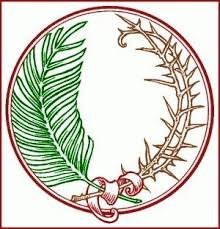
Spiritual context

Palm Sunday disturbs me by the contradiction of one moment blessing palms and singing Ride on, ride on in majesty before minutes later, hearing a crescendo cry of crucify him, crucify him.

In 160BC after seven years of guerilla resistance, Judas Maccabeus led the triumphant Jewish Resistance back into a Jerusalem newly liberated from the yoke of the Seleucid Emperor, Antiochus Epiphanies. The Jewish forces carried blessed palm branches with which to begin the cleansing of the Temple; a Temple that had been defiled by the image that Antiochus Epiphanies had placed of himself in the Holy of Holies. The Maccabean Revolt was the last time the Jews could point to a successful assertion of their independence from foreign domination.

I find drawing a connection between the Maccabean cleansing of the Temple and Jesus being welcomed by the crowds bearing branches cut from the trees gives an insight into the hopes and aspirations of the crowd that welcomed him into the city. They saw in Jesus a liberator, a new son of David, a re-embodiment of Judas Maccabeus – one who would liberate them from the foreign Roman domination, and cleanse the Temple of defilement at the hands of its collaborationist, religious caste. Jesus could have inflamed Jewish tribalsim. Instead he chose a different path.

We know the end of the story. We know that as the events of Holy Week unfold, things didn’t go in the direction of fulfilling public hopes and expectations.  Hopes turn to disappointment that fans an angry disillusionment. Ambivalence is too hard to tolerate. So the crowd turns on Jesus, seeking a sacpegoat to blame.

Correlating contexts

I began with a reference to our current political process in which we see clear signs of politicians playing upon our tribal fears. The profound disillusionment of the crowd at large, and of Jesus’ own inner circle, in particular; a disillusionment that Judas eventually gives voice to, plays well in our current experience of the world. Many people today are struggling with the loss of hope as we feel control over our lives and our futures slipping from our grasp. They have become afraid and thus vulnerable to the resurgence of a collective admiration of brute strength, and a willingness to find scapegoats to provide the illusion of easy answers to complex problems.

We approach Holy Week and the great three days of Easter caught in an ambivalence between our worldly and spiritual contexts. We can approach the spiritual context from a ringside seat, viewing it as a great epic drama of events set in a time, long ago. We can travel through the events of Holy Week and Easter as if they are consecutive performances of a Shakespeare history play or the demanding three days of Wagner’s Ring Cycle. We emerge from the experience moved, disturbed, elated, saying to one another: gee that was powerful!  However, is being a spectator really satisfying?

I keep reminding my community that Episcopalians are liturgical people. Liturgy is commonly misunderstood as a spectacle to watch. This could not be further from the truth. Liturgy requires our participation. The word liturgy means the work of the people of God. Liturgy is not a play we watch. It is a drama in which we join the action as fellow participants with Christ. Liturgy demands that we lend a hand to that work of the people of God. We do so through being present. Through liturgy the I becomes the we

There are two ways to change the world. The first is to engage in concerted action, following a political or social agenda. The second is to become changed from within, to become the change we seek to bring about. Through our participation in the great liturgies of Holy Week and the great three days of Easter, we participate in the cosmic triumph of love over fear. We contine to be transformed as Sunday-by-Sunday we participate in the work of God’s people by being present in the liturgy.

imagesOn Palm Sunday, I see myself in the crowd crying both hosanna and crucify him. I am full of hope and longing for my world to be transformed beyond the maintenance of the status quo, the endless repetition of business as usual. Yet, my very hope and longing also terrify me. So often it’s safer to resist the change I most long for in order to protect myself from my fear. Can it really be true that sacrificial love can change the world? Can it really be true that sacrificial love is enough to confront the misuse of power through the threat or actuality of violence? Alone, I am not so sure. But, what about as a member of a community?

Through liturgy and this is especially true of the great liturgies of Holy Week and Easter the I becomes we. My fear of what an allegiance to self-sacrificial love might cost me, what following Jesus to the other side of the Cross might demand of me becomes manageable when I join with others and together we participate as members of a cross-bearing and love-affirming community. This is the message our current nation and world needs so urgently to hear.


A Scandalous Evening in Bethany

The power of Scripture lies in the way it mediates for us an encounter with God that is literally of the moment. The power of Scripture lies not only in the objective elements of story but in the subjective impact of narrative upon us. Subjectivity means that we are never in the same place, twice.

There is a 1st-century backstory that lends a poignancy to John’s portrayal of a particular evening in 12:1-8 evening. Both Lazarus and Jesus are in danger of assassination by the Temple authorities, who after Jesus’ calling of Lazarus back from death have put out a contract on both their lives. Here, in an atmosphere of events of enormous import looming, an anxiety fuelled by the uncertainty of their outcome, there is a tone of urgency, there’s no time now to lose. It’s now or never. Social convention, fear and anxiety cannot be left to stand in the way of expressing love and affection; not only love and affection, but also anger fuelled by growing disillusionment.

Approaching John’s story of the dinner party that Lazarus, Martha, and Mary throw for Jesus six days before the Passover from within the subjective experience of living in March 2016 attunes me to the way society constructs different meanings for different bodies. This is a story about bodies – Jesus’ body, Mary’s body, and Judas’ visceral, bodily reaction.

Bodies

In our time, white, heterosexual male bodies matter. They matter because they are accorded a privilege that is denied to non-white, non-male, non-heterosexual bodies. The politics of race, gender, sexual and gender identity, poverty and wealth confiscation are currently playing out around us with increasingly ferocious effect. We all feel that events of momentous, but unpredictable import are building all around us.

There appear to be no black, gay or transgendered bodies in this story. That is, at least as far as we can tell. Because black and gay bodies are usually invisible in the patriarchal gaze, it’s important we don’t confuse invisibility with absence. Rather the female body of Mary in this instance seems emblematic of the black and gay body experience in John’s story. I also think black and gay body experience is represented in Jesus’ non-white, non-patriarchal, male body – evidenced in his unusually open and accepting response to Mary.

Mary

Mary literally lets her hair down. This is an action remarkable for its potential to cause a scandal. In patriarchal society, women cover their hair. This remains as true today in much of the Islamic world, as it was in Jewish 1st-century society. Even today in ultra-conservative Jewish and Christian worlds, women still cover their heads because hair expresses a woman’s sexuality and female sexuality is considered a subversive thing to be controlled. This may well be the reason that Mark, Matthew, and Luke identify this Mary as Mary Magdalene, a more fitting candidate because of her reputation as a prostitute. Only John identifies the woman who anoints Jesus feet with the respectable Mary, the sister of Lazarus.

In the secular West, we feel we have become more enlightened and we scoff at male sexual anxieties being aroused by the sight of a woman’s hair in the same way as we laugh at Victorian male anxiety provoked by the sight of female ankles and legs. Consequently, we miss the counter-culturally sensuous flagrancy of Mary’s action.

Smell is our most potent and evocative sense. Mary fills the room with the sensuous aroma of the ointment and then proceeds to anoint Jesus feet with her hair. Note feet not head. Unlike in the other Gospels, in John, Mary does not anoint Jesus’ head, a respectable part of his body, but his feet. Later in this week, Peter will object to being washed by Jesus, because Jesus insists on washing his feet, an action that suggests both subservience and provocative with intimacy.

Mary uses her female body to express her deep love for Jesus. In contemporary America, we may no longer so clearly associate a woman’s hair as an expression of sexuality. Yet, the death throws of patriarchy continue to play out with disastrous effect for women’s bodies in contemporary America. There is a photograph of George W. Bush, taken in 2003 signing into effect laws tightening the availability of abortion. It’s striking to note the line up of men behind him in the photograph. There is not a woman legislator in sight.

My point here is not to come down on either side of our society’s conflicting views on abortion itself, but to highlight the legislative attempts to restrict a woman’s rights over the management of her own body. This is a male impulse as old as patriarchy itself. Abortion is something I am not in favor of unrestricted access to. Yet, as far as I can judge abortion is not the issue here. The issue is the privileging of male heterosexual anxiety’s need to control women’s bodies.

The curious thing about patriarchal anxiety is that in a sense male patriarchal identity transcends gender, for women who support patriarchy also share this anxiety. Yet, this anxiety has its roots in male sexual anxiety and a consequent need to control the female body. It extends well beyond the debate on abortion to increasing attempts to control all aspects of female reproductive health – a contemporary instance of the age-old male denigration of the female body.

Judas

Against Judas’ attack, Jesus welcomes Mary’s actions and defends her extravagant wastefulness and the use of her body to honor him. John sticks to a simplistic portrayal of Judas as a thief, who is provoked by Mary’s wasteful extravagance, not out of regard for the plight of the poor, but because of the diversion of resources out of his control. John may have had his reasons for portraying Judas so, but I don’t buy his depiction.

Judas is angry. We can argue with John over the reason for his anger. I prefer to see him as less venial and more political. Judas is politically disillusioned. He sees the way things are beginning to go and he fears Jesus is betraying all Judas’ messianic hope and expectation for a better world, at least, a better world in terms that he can understand. It’s not his desire to steal the money that could have been realized by the sale of the ointment. His anger is fanned by his perception of valuable resources being diverted away from the central cause of messianic liberation. Thus, he comes up with a clever pretext of wasting resources that could have been spent on the alleviation of poverty.

Jesus responds to Judas with strikingly contemporary anti-welfare reasoning, appearing to be saying: Judas, don’t worry about the poor there is nothing that can be done for them, they will never change and throwing money at the problem is no help to them. This interpretation of Jesus’ words runs contrary to every other statement and action of Jesus’ recorded not only by John but Mark, Matthew and Luke. Jesus is portrayed always as the friend of the poor and he unequivocally proclaims economic justice as central to God’s expectations for the coming of the Kingdom.

Jesus facetiously sees through Judas, as so many today are finally beginning to see through the 30-year dominance of the doctrine of trickle-down economics.

Although I don’t go along with the simplistic characterization of Judas as a common thief, as we listen to this story in the opening decades of the 21st-century issues of theft are alarmingly current. We are witnessing a seismic rejection of the political culture spurred by anger and disillusionment. Whether you vote for Donald or Bernie, the common thread is you are likely to be someone who is feeling angry and disillusioned by what you experience as a betrayal by the economic and political establishments.

Among the Donald followers:

  • Globalization has sent what they once believed to be American companies, working for our common good off in pursuit of cheap labor with the consequent loss of jobs and the prospect of earning a living wage.
  • The unbridled greed compounded by the failure of regulatory oversight has lost many the only investment they had- investment in home and hearth.
  • Changing demographics threaten a loss of white racial and male gender privilege.
  • The adulation of naked brute power as a panacea among those who feel most powerless.

Bernie is a lightening rod for a completely different set of dissatisfactions:

  • The abandonment of higher education to market forces has left our young people with astonishing levels of debt and profound doubts about education being the route to social mobility and the kind of future many of their parents took for granted. For the first time since 1945 things are not going to get better.
  • Non-universal healthcare as a protection for the profits of insurance companies and healthcare providers continues to result in health poverty for the poor, and unsustainable economic burdens for the middle classes.
  • The organized manipulation of wealth by large corporations working against national interest.
  • Dirty industry’s purchase of political protections that allow the steady degradation of the environment in the interests of profits.
  • A financial system that colludes with wealth creation and accumulation of power for the now proverbial 1%.

Whether Judas is a thief or not he experiences a visceral – in his body- alarm and growing disillusionment. It is this that leads him to make the wrong choice.

Jesus

Finally, how do we see Jesus in John’s story about the dinner party at the house of Lazarus and his sisters six days before the Passover? Jesus appears to be fully aware of how events are going to unfold. Jesus seems to know that the way things are going to play out will result in his death. His foreknowledge is not of the omniscient variety, as in God knows all things ahead of time and has planned for Jesus to die. Jesus knows his future because he is keenly aware of the contours of the human heart. He knows the consequences of speaking truth to power. He knows also that there is no other way through the darkness into the light of a new order in creation. In Jesus God confronts the darkness of the human heart.

The days of Lent are ebbing away as we transition into the time of Jesus’ Passion. All around us, millions seem easily seduced by the promises of political saviors who have no power to fulfill their messianic promises. Speaking truth to power is not the road to easy answers. It is instead, the hard road to change. As we receive this story from John about events at a dinner party six days before the Passover, we come to see that things are never what they at first, appear to be.

The power of Scripture lies in the way it mediates for us an encounter with God that is literally of the moment. The power of Scripture lies not only in the objective elements of story but in the subjective impact of the narrative upon us, an impact we register only in the here and now. Subjectivity means that no subsequent reading of the story produces the same affect as the previous reading. We are never in the same place, twice.


True Inheritance

The Lent IV sermon from the Rev. Linda Mackie Griggs on Luke 15:1-3, 11b-32.


“There was a man who had two sons.”

One of them squandered his inheritance, and the other didn’t.

We call this The Parable of the Prodigal Son, and we’ve known this story since childhood. But this is one parable whose title robs us of much of its meaning. For one thing, when I first heard this story as a child I thought the word, ‘prodigal’ meant ‘badly behaved’, rather than ‘wastefully extravagant.’ This may not be an issue for those with greater vocabulary than I had, but this simple misconception deprived me of part of the deeper meaning of the story. But even more important than that, note that the title focuses on just one character. If we look only at the son we see him as just a son, and not also as a brother. If we fixate on his transgressions we lose sight of the nature of the celebration at the end. And if we fixate on the inheritance of money and property we lose sight of what the two sons’ true inheritance really is.

“There was a man who had two sons.”

One of them squandered his inheritance, and the other didn’t.

Which son was which?

In the chapter where we find this passage Luke has placed the parable with two others—all of which are told in response to the Pharisees’ and Scribes’ judgmental statement and implied question of Jesus: Why do you consort with sinners? And in the first two parables, the parable of the lost sheep (in which the shepherd left the 99 sheep and searched diligently for the one that was lost) and the lost coin (in which a woman lit a lamp and scrupulously swept and searched her house

until she found the errant coin,) Jesus’ emphasis is not on the losing but on the finding of the sheep and the coin, and on the celebration of their return. If we turn a similar lens upon today’s parable, what will we see? What will we see if we shift our gaze away from the loss—the Son who Squandered Everything –and see instead the true nature of the celebration of his return, and what it meant to be invited to sit down at the banquet?

The younger son essentially wished his father dead when he asked for his share of the property. It was that bad. And he wasted it spectacularly, thereafter hitting rock bottom and sleeping with the pigs. And for a Jewish audience hearing this parable—it was that bad. It couldn’t get more unclean and outcast than to be so hungry that he was willing to eat the food meant for the pigs. So ‘coming to himself’ was a hugely humbling experience. He vowed to return home, ask forgiveness of his father and take his place in the household as an employee.

So the father sees him from far off and responds in prodigal fashion—outrageously killing the fatted calf, clothing his son in the finest robe and putting a ring on his finger. Remember, this is the child who—essentially– disinherited his own father. Yet he is welcomed back into a sonship that he had cruelly rejected. And his father is ready to offer all of this even before the son opened his mouth to deliver his well-rehearsed speech of penitence. The forgiveness was already there; the robe and ring ready; the banquet table already set. Ready for the celebration.

So the party begins.

And the Prodigal gratefully takes his seat.

Now let’s shift our gaze to the elder son. He hears the noise of the party, finds out what is happening, and rather than being overjoyed that his brother has returned, he is enraged. It is telling that when he confronts his father he refers to his brother as “this son of yours.” The elder brother feels rejected, wounded at the perceived unfairness of his father’s generosity toward this other wayward child. The elder son has not the least understanding that his father has enough love—enough of everything– for both of them.

It is the nature of parables to be loaded with symbolism, and this one is no exception. Jesus’ stories in response to the Pharisees are an illustration of the nature of God and the Kingdom. Of course the little ‘f’ father is a metaphor for the big ‘F’ Father–God. This Father’s prodigal response to both of his children exemplifies God’s economy of abundance that is completely at odds with an all-too-human tendency toward an economy of scarcity. The elder son is already in possession of his inheritance of property—the father reassures him that “All that is mine is yours”. But not only that, he is also told that he has a place at the banquet. He is called to ‘celebrate and rejoice.’

But he will have none of it. He only wants to feed on his fury. He is a man trapped in the mire of his own resentment. He is actually a figure that is at the forefront of much conversation these days. Jennifer Finney Boylan, in the New York Times last month, wrote an op-ed called “The Year of the Angry Voter.” She expressed her despair at the current political climate; at an atmosphere of othering and vitriol that keeps rising to new heights on a daily basis. Yet, she notes, the problem isn’t necessarily anger per se. It’s a certain kind of anger. And here she distinguishes narcissistic anger from transformative anger. Narcissistic anger is rooted in the wounded ego; in the feeling that I have been unfairly deprived of something that is rightfully mine. It is based upon a worldview of scarcity. It sees others as being in competition for limited resources. Narcissistic anger seeks to exclude; whereas transformative anger is the kind of anger—or passion– that seeks to change the world. It looks outward and inclusively toward the other. It is based on a vision of compassion and a desire for healing and wholeness. Boylan quotes the Rev. Amy Butler of Riverside Church in New York City, who notes how the two distinct and opposing kinds of anger respond to challenges: “Either our instinctual response to threat is all about us—who we are, what we want, what we need—or it becomes about something bigger than ourselves.”

The elder son in the parable is not thinking of anything bigger than himself. He is in the grip of narcissistic anger. He has lost sight of his brother; and of his own brother-hood. And yet. And yet there is still a seat at the table with his name on it; a plate full of food and a cup filled to overflowing just waiting for him. As the father has said, “All that is mine is yours.” There is no less for him now that his brother is home. He has only to choose to take his place at the table with the rest of the family and the household.

But to make that choice will require an act of humility. It will require him to let go of his anger and his ego focus. He will have to see himself as one in as much need of his father’s mercy as is his brother. But for now he does not see himself as being in need of anything. He only sees himself as having been deprived of a privilege that should be rightfully his.

A few weeks ago, on Ash Wednesday, we recognized our neediness. As we began our Lenten journey we were marked with the ashes of our mortality; acknowledging our source and ending in God. One of the most powerful things about those ashes is that we are called to remember that WE are dust. We are not able to see the ashes on the heads of others without deeply knowing that those ashes mark us as well. When we accept the mercy of God we accept, by definition, that we are IN NEED of that mercy. We thereby accept, and embrace, our own vulnerability. It’s a fine distinction, but to internalize it is to begin to see the power, and the scandal of what Jesus was telling the Temple authorities with this story.

The Scribes and Pharisees thought they were not in need of mercy because they had set themselves apart from the sinners and tax collectors. But Jesus was telling them that they too were called to sit with the sinners; the celebration is for everyone who chooses to take their seat at the table. All they had to do was acknowledge that they were hungry for the banquet of mercy set for them. But to do that they would have to climb down off of a mighty high horse; one they shared with the elder son in the parable.

“There was a man who had two sons.”

One squandered his inheritance, and the other didn’t.

Which brother was which?

The true inheritance is God’s abundant mercy. A mercy “like the wideness of the sea.”* It’s an inheritance that has nothing to do with what we have, and everything to do with what has us. And what has us is a God whose last word, like the father in the parable, is Life and resurrection. The inheritance of mercy requires nothing of us save courage; the courage to claim our vulnerability– our brother- and sister-hood as fellow sinners and children of God. The courage to take our seat at the banquet table, where the place card reads, “Beloved.”


Storied Beings

For me, the life of faith emerges from participation in narrative. I am attracted to the influences upon our daily lives of the metaphysical dimension – the ultimate inquiry into the hidden nature of reality. For example, someone sent me a quote from the New England Transcendentalist Walden:

Time is but the stream I go a-fishing in. I drink at it; but while I drink I see the sandy bottom and detect how shallow it is. Its thin current slides away, but eternity remains.

I find such a perspective inspirational, a pointer to the ineffable. Yet, for me it’s the power of narrative or story and my participation in the zone where narrative shapes my experience more directly. In my own experience, and through my observation of others, humans are storied beings.

This is why the first two books of the Bible, Genesis, and Exodus comprise a series of grand narrative cycles, each centered on a central figure. These figures are known to the Tradition as the Patriarchs and their unfolding story cycles introduce us to their encounters and subsequent relationships with God.

These are story cycles of epic proportion worthy of the description saga. Abraham’s is the first and those of Jacob, Joseph, and finally, Moses follow. Isaac appears briefly but simply to bridge the Abraham and Jacob saga cycles.

Although we are introduced to Moses at his birth in Exodus 2, it is in Exodus 3: 1-15 that we take a grandstand seat to view the first encounter between Moses and God. This encounter is set against the grand vista of a place evocatively described as a place beyond the wilderness. Here, God self-reveals through the phenomenon of a burning bush. What a story!

Synopsis

moses-and-the-burning-bush-the-bible-27076046-400-300Moses, having taken flight after his killing of an Egyptian overseer is now living as a shepherd. While tending his father-in-law’s flock he wanders beyond the wilderness. This leads him to the foot of Horeb, the mountain of God. This seems a Lord of the Rings kind of place and so we are not surprised that Moses sees in the distance a bush that blazes and yet was not consumed.

Moses’ curiosity is aroused and he takes a detour from the track he is following so that he can get a better view of this amazing sight. God sees Moses detour and calls to him from the heart of the burning bush. Moses responds to the sound of his name, but is immediately stopped in his tracks as God calls to him to come no further for he is about to tread on holy ground. First, he must remove his sandals.

God now self-identifies to Moses. It’s important to note that God’s self-identification is in terms familiar to Moses who understands that he is in the presence of the God of his fathers – Abraham, Isaac, and Jacob. Moses’ first response is one of terror and he hides his face, for he knows well enough that no one directly encounters God and lives to tell the tale.

To cut to the chase, God now gives Moses a job to do. Moses pleads inadequacy – God who am I to do this great thing -but God is having none of this. Moses knows who God is but tests God further asking but what will I say if they ask me who is it that has sent me?

God does something very interesting at this point. He does not repeat God’s familiar name but gives Moses a new name to use. He instructs Moses to tell the Israelites that I am who I am has sent me to you. God is now revealed under a new name, a name not familiar to Moses or the Israelites, yet, a name that is still linked to the familiar. Moses is instructed to say that I am who I am has sent me and to remind the Israelites that I am is none other than the God of their ancestors, the God of Abraham, the God of Isaac, the God of Jacob. The God, henceforth to be known as YHWHYahweh is born into the collective consciousness of the Children of Israel.

Narrative power

I began by saying that despite being drawn to the metaphysical inquiry into the hidden nature of reality, it is the power of story that in my religious experience allows the divine presence to take shape for me. This is a truth not limited to the religious or spiritual domain but applies to all aspects of identity construction and sense making. The power of story lies in the invitation to participate in the story and thus let it shape our experience. Our experience is limited or expanded by the quality and nature of the stories we tell about ourselves, and to ourselves about the nature of God and the world.

This is a story of theophany – the revealing of God. We participate in this story when we allow it to shape or reshape our expectations. It does this when we notice and pay attention to it.

Beyond the wilderness

I’m profoundly struck by the phrase beyond the wilderness. If I don’t pay attention I conflate this place with the wilderness itself. The image of wilderness is so familiar to me, and no doubt to all of us. We picture Moses leading his flock through a barren landscape, a wilderness of Sinai. But the text tells us that Moses is now beyond the wilderness at the foot of Horeb, the mountain of God –  a place of mysterious encounterThis is a metaphor for a place that is no-longer-familiar to us in which experience is no, longer boundaried by familair expectation. As we listen carefully, this story shapes us by a powerful realization. Are we willing or not to enter a new landscape, one beyond the familiar, where like Moses, we encounter / are encountered by God?

Curiosity

Moses is wandering along the familiar track through the wilderness when in his peripheral vision he notices something that arouses his curiosity I must turn aside and look at this great sight, and see why the bush is not burned up. Curiosity is a crucial ingredient of the spiritual life. It’s the ability to notice and become curious about the unexpected flashing to us in our peripheral vision. The path that opens through curiosity is the route from the familiar wilderness to a new place; a place beyond the wilderness.

Necessary ambiguity

God comes to us as we risk making choices and taking decisions that take us beyond the confines of the safe and sure, the tried and tested. Here, we have the possibility of a new experience, one in which God identifies as both new and yet with enough familiarity for recognition. The tension of ambiguity lies at the heart of the name I am who I am, for it also means I will be who I will be. The name’s instability of meaning pivots us towards future possibility. In the place beyond the familiar who might God become for us? More importantly, who might we become if we allow ourselves to be shaped by God’s new name; a name beckoning us into possibility, yet to become known?

The paradox of the new

The significance of the place beyond the wilderness lies in the paradox that the new, the yet to become known, very often hides as possibility at the heart of everyday experience. It’s when we pay close attention, become mindfully aware in everyday experience that we discover the new possibility. We need enough familiarity, but not too much otherwise we will miss the necessary ambiguity that opens us to the new. I have discovered the new emerges from the encounter of Tradition with the reality of the life I am actually living.

Daniel Deffenbaugh puts it rather neatly when he says while

theophany surely issues from heaven, it’s holiness can be found only on the lowly ground where it becomes known, in the dust beneath our feet. 

I interpret this to mean that our longing to find meaning and purpose for our lives can only be satisfied when we accept God’s call for a partnership to journey to a place beyond the wilderness. This is found not on the mountain of God, but at the center of where our daily lives, live themselves out.

Let the walls come a tumbling down

images-2An image

I was, as were many particularly moved by the image of the Pope atop a pyramid-like structure overlooking the border of the Rio Grande, the dividing line between the US and Mexico. The Pope was fully visible to people on both sides of this great dividing line. What struck me forcibly was that the people on either side of the border were exactly the same.

National borders, in so many parts of the world are arbitrary lines drawn in the earth. The peoples on either side are invariably the same. It is this truth that tragically results in our need for more and more fences, borders concretized in the form of  physical walls of concrete, wire, and steel. The border between the US and Mexico is but one more example of a wall, built upon the earth, but the product of fearful imagination.

I am not seeking to address the thorny political and economic issues of immigration. The politics are one thing, but invariably the economics are another and these factors are usually in tension. Politically, the US does not want the mass migration from Central America. Economically, it cannot continue to thrive without large injections of migrant labor. This is a story as old as time- remember the Israelites in Egypt?  We should not be surprised to find that we are no nearer finding an effective solution in the 21st century than ever before in humanity’s long and frequently sorry history of population migrations.

A segway

As a young undergrad at the University of Canterbury in Christchurch, New Zealand I embarked on a course entitled Asian Studies, a comparative study of Indian and Chinese literature and history with Japanese language. In the early decades of the 1970’s N.Z was trying to reposition itself following the recent entry of the UK to the then European Economic Community. Having developed as the farm for the UK, Britain’s entry in the Common Market closed off access to N.Z.’s historical markets for primary produce. I wanted at that point in my life to enter the Foreign Service, and hence knowledge of Asia, especially fluency in Japanese, for Japan was then at the apex of its economic influence, was a prerequisite for building a new economic direction for the country.

While I have since forgotten the bulk of what I learned having decided after my first year to switch to Law, the historical comparison between the empires of China and Rome remains clear in my mind. Both empires experienced multiple waves of inward bound migrations of foreign peoples. In the case of Rome, the invaders eventually destroyed Roman civil order and culture, ushering in for the West a social regression known as the Dark Ages. In China, each new wave of invaders came not to destroy Chinese civilization, but to join it and to become more Chinese than the Chinese. The successive waves of Mongol invasions from Genghis Kahn to the Manchus who formed the Qing Dynasty in the 17th century, the last of the great imperial dynasties ending in 1912, demonstrate the veracity of this thesis.

Despite the American Republic’s love affair with Imperial Rome, notably expressed in its civic architecture, American civilization is closer to that of Chinese than to Roman examples from history. Everyone who comes here wants to become American. The increasing atmosphere of paranoia believing that these people are out to destroy us is at variance with this nation’s historical experience. Borders become physical walls when in our imaginations the solidarity of similarity becomes the fear of difference. The movement from one to the other is but a twist in the imagination with dramatic consequences for the lives and livelihood of real men, women, and children.

The Gospel, the Pope, and the popular mood

In the gospel for this Second Sunday in Lent, Luke portrays Jesus setting out on his journey from Galilee to Jerusalem. One way of conceiving this is that Jesus now sets out in earnest on a journey that would increasingly involve speaking truth to power. As Luke presents it, Jesus already seems to know what the outcome of this will be. It will cost him his life.

Pope Francis seems to believe that it is his sacred duty to speak truth to power on behalf of the poor and oppressed. His record of doing this is well demonstrated. Whether he is speaking to the Vatican culture or to Mexican political society, at every turn of the way he excoriates the moral bankruptcy, corruption, and violence of governance as the abuse of power. I believe he must be fully aware of the personal risks that this involves. For him, it seems American exceptionalism is no protection for US politicians. For Francis the gospel of Jesus is clear. It calls for the building of bridges, not walls.

In a society where a sizeable percentage of the population feels abandoned by the political culture whether it is of the left or the right, building bridges is not a natural thing to do. There are too many to blame for our woe. There is too strong a need to find scapegoats and the proverbial differences of race, religion, gender, sexual identity, and the political stereotypes of right or left, of the alien – the stranger – the foreigner, abound. Everywhere we construct identities to be feared, protection against which walls must be erected. Sometimes the walls are physical – made from concrete and steel. Often they are political as in policies or the lack of policies on immigration. Mostly, the walls we erect are imaginative – created from primitive tribal attitudes fearful of difference and expressed in attitudes and practices of exclusion and contempt.

The sorry fact is that human beings share common aspirations and have common needs. Going back to my earlier comment that everyone who comes here wants to be American; all anyone wants is to participate in what we already enjoy. It’s our choice to extend that hospitality or refuse it, to build bridges or erect walls. The verdict of history is clear that bridges work better in the long run than walls.

In Luke 13 Jesus offers us two archetypal images, one of the fox the other of the mother hen. What I mean by archetypal images is that in the human imagination the fox and the mother hen are associated with certain characteristics that belong to us and which we project into them. This being the case, I don’t need to go into explaining them, but leave them to impact your imaginations.

The point for me is that Jesus associates the hen with himself and with God, a unique association in the history of religious thought – God as hen rather than lion or eagle. The paradox we see being played out all around us at the moment, especially in the presidential primaries is that those most in need of the hen’s protection seem in thrall to the fox. This might be ironic if it wasn’t yet again the endlessly repeating tragedy for human experience.

We are those who kill the prophets and stone those sent to us. How often do we desire to be gathered as children beneath the protective breast of God as a hen gathers her brood under her wings? The question always remains – but at what cost? The cost requires turning resolutely away from the imaginary of fear and with courage embracing the expectations, always profoundly counter-cultural, of the kingdom of God.

Blog at WordPress.com.

Up ↑