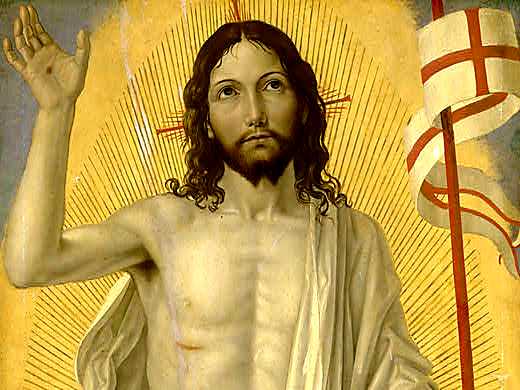
Sung Morning Prayer for the Second Sunday after Easter

The Rector’s Introduction to Morning Prayer

Led by the St Martin’s Chapel Consort, Morning Prayer begins on Pg 79 of the Book of Common Prayer or online here.

This morning’s hymns are 178 which follows the third reading and 205.

The psalm is 16 found and the Psalter section of the BCP.

The readings are Acts: 2:14, 22-32, 1 Peter 1:3-9, John 20:19-3.

The Canticles are 17, The Song of Simeon, and 15, The Song of Mary.

The Anthem is “O Sacrum Convivium” by Roger T. Petrich.

Gabe Alfieri, Choral Director is Cantor and the Organ prelude and postlude are played by Steven Young on the St Martin’s organ.

Christian (Ian) Tulungen, Editor and Producer.

Audio Podcast of Sung Morning Prayer with Sermon
Stand Alone Sermon Audio

Being Human – John 20

Their world had been utterly shattered by Jesus’ death on the cross. None of them had expected the disastrous turn of events of just three days ago – had it really been only three days – it felt to them like a lifetime – the disastrous turn of events on that Thursday evening and Friday morning.

If his death the following day was not enough, early in the morning of this, the third day – they had awoken to the disturbing news of the disappearance of Jesus’ body from the tomb where they thought they had safely buried him. Their world, broken apart, Jesus’ disciples had reason to be in an apprehensive state of mind, retreating to the relative safety of their inner group; meeting in subdued mood in an out of the way place, safe behind a bolted door -avoiding attracting unwanted attention.

We too have awoken over a matter of weeks and days to a world utterly changed; awakening to an utter shattering of our world view; awakening to a world in which all our normal expectations are now questionable – we hear this story of Jesus’ disciples gathering on the evening of the third day following his death – with new ears this year.

Feelings of being alone and isolated in a world that now feels very threatening and dangerous brings us into a profound identification with Jesus’ disciples’ sense of social isolation – so powerfully depicted by John’s account of Jesus’ first post resurrection appearance. Like them, we now know as never before what it feels like to be really afraid.

John records several post resurrection appearances in which Jesus mysteriously appears among his disciples. I am reminded of Bishop Tom Wright’s response to the suggestion that the Gospels are the work of early Christian imagination – at best fanciful fiction and at worst religious propaganda. He poses the question in response: why if you wanted to tell a convincing story of Jesus as the Messiah would you tell it this way? Wright is asserting the old adage that fact is often stranger than fiction. It’s the strangeness of the Gospel stories – esp. these stories of post resurrection appearance in John, that bears testimony to the truth of the strange events behind their depiction.

From our modern perspective it’s easy to recognize elements of magical realism in these depictions. For instance, Jesus seems to come and go through solid objects such as walls and bolted doors; suggesting a no longer physical body but some spiritual apparition. John is not suggesting a spiritual apparition, or an internal psycho-spiritual experience within the minds of the witnesses. His story is of Jesus with a post resurrection body that while in some way changed is still very much like ours. His is still a body that is corporeal (physical) enough to be touched; still a body that can eat and drink; a body that still bears upon it the history of its bodily wounding.

We usually ask the wrong question about such stories. Obsessed with the question of what’s real or not, what’s true or false we miss the point of the way John tells his stories of Jesus’ post resurrection appearances. To go back to Wright’s question that if John had wanted to be utterly convincing why would he have told the stories this way? It appears that John tells his stories to evoke faith in his readers by showing that the post resurrection Jesus is still the Jesus they had known in the flesh. A Jesus with a body now somehow changed but still emblematic of his all-too-human, experience.

Have you ever wondered why Jesus’ post resurrection body still bears the wounds of his cruel and unusual death? Surely if God had raised him to a new super-enhanced state of being the wounds would have disappeared – as in the hands of a skilled plastic surgeon, the scars of his all too human wounding would have been erased.

But John is reminding us of what we know to be most true in our own experience. None of us possess bodies free from wounding at the hands of life. We move on, we may even triumph over events that have wounded us deeply, but the record of our experience remains evident by the scars we still bear. Our scars remain essential reminders of how we have become who we now are.

Whatever the post resurrection state of Jesus’ body, God intends it to still bear the record of his human suffering – so as to continue to be a body like yours and mine – a body we can identify with.

Have you ever wondered about the role Thomas plays in John’s story? It has often been read as a story about doubt. But it is really a story about touch. Thomas doesn’t doubt the account of his friends as to what they had seen. He protests that he needs his faith to be confirmed by his senses – his all too human desire for touch. Thomas demands to touch Jesus; he won’t settle for anything less.

Touch or its absence has become an area of contemporary wounding. Touch, one of the primary ways of connecting with one another is now the one thing forbidden to many of us who may find ourselves isolating alone. The touch and caress of loved ones is denied to the dying who must now die alone with only perhaps – if they are lucky – the touch of the nurse at their bedside.

Even if we are living within a family, touching anyone else, that unconscious gesture of reaching out to another – of establishing mutual connection -something we instinctively did all the time – is now forbidden to us. And being touched by someone outside our zone of safe bodies is something we now shrink back from.

Our faith, our self-confidence, our sense of being connected with others shrivels within us when we can no longer touch. Thomas represents the human protest of our need to touch in order to know what is real.

John’s first depiction of the post resurrection appearance of Jesus is a story in two parts; a story of two encounters seven days apart. At the end of the second encounter with Jesus he puffs the Holy Spirit into his disciples.

The NRSV translates John’s Greek as breath -breathing – he breathed on them and said to them “Receive the Holy Spirit”. There is something rather serene – something rather English about this action. By contrast John’s Greek phrase labete pneuma hagion carries multiple meanings but the first of which is puff. Like the action of a mouth to mouth resuscitation – puff inflate – puff inflate, this is not a serene action. It’s an urgently intimate action. Mouth to mouth – puff inflate – puff inflate!

The post resurrection Jesus now puffs the New Life of God’s Spirit into his disciples as God has puffed it into him. Breath is the autonomic (unconsciously automatic) action that sustains our life. And in the way John depicts this, we hear the echo of the second Genesis account of the first human life – when God puffs life into Adam’s lungs – animating him through the action of inflating him with the Spirit of Life.

The tragic irony is not lost on us as our hospitals currently fill to over flowing with unconscious patients on ventilators – mechanical devices that are breathing for them – one puff at a time.

Told in any other way than the way John tells this first account of the post resurrection appearance of Jesus would be to run the danger of severing Jesus from the reality of our human experience. Then he really would be selling a work of fiction that places the post resurrection Jesus in a league of his own, with a body so unlike ours as to leave us cut off from it – a body so unlike ours that it is completely inaccessible to us.

The resurrection of Jesus is not a superhero fable – it’s a story of continuity -of connection with the spiritual hope housed in our physical vitality – of the faith, hope, and love that animates and validates our experience of being all too human.

As the reading from Acts vividly shows, the disciples did not hide away in fear for very long. We read that: Peter, standing with the eleven, raised his voice and addressed the crowd. Inflated with the power of the Spirit of New Life, the work of the Christian Community in the world began.

Although the prospect that social isolation will not end soon enough, I want to remind us that we have not stopped being part of the Christian Community in the world. Any cursory reading of all the parish initiatives currently in play shows us that our work as a Christian Community in the world continues though we’ve just switched down to a lower gear that is giving us a different kind of traction.

Be strong in your faith, resilient in your hope, and loving in your response.

Alleluia, Christ is risen. He is risen indeed, Alleluia!

Our Easter Service follows the pattern of the Agape Meal. This is a celebration of table fellowship and an expression of the unity of the Christian Community. Although bread and wine are used, they remain unconsecrated and so this is not a Eucharist. For us, Eucharist requires the presence of priest and congregation in the same space.

The Agape Meal was a common practice of the early church and forms a bridge between the Jewish Passover Meal and the Eucharist. The words of blessing come from the remembrance of Paul in 1 Cor. rather than directly from Jesus at the Last Supper.

You might like to have your own bread and wine to hand so as to participate virtually, at the time of breaking and sharing.

Image courtesy of Pinterest

Easter Day Service

The link will be live from 9:30am

The Rector’s Easter Message

Hope Defiant!

There are moments in history when disaster clarifies our vision of the world. Thus I find myself in an historical frame of mind as I reflect on the meaning of Easter, this year. History offers an unnerving coincidence. The last great influenza pandemic that swept the globe happened in 1918-19 when an estimated 500 million people contracted an H1N1 virus commonly named as Spanish Flu; resulting in an estimated 50 million deaths of which 675,000 occurred in the US, alone.  

I mention the 1918-19 pandemic simply because I am struck by a historical symmetry. The chronology of the CORVID-19 Pandemic occurring almost exactly 100 years later is uncanny. I am not suggesting I know the meaning of this symmetry other than to present it as evidence that humanity thrives within a complex internet of nature, which despite a century of astonishing medical and technological progress still has the power to swiftly bring civilization to its knees. Medical and technological progress offers little added protection against the lethal ingenuity of biological and environmental nature; a timely reminder before which the repentance of humility is the only authentic response.

The lethal ingenuity of biological and environmental nature is a timely reminder before which the repentance of humility is the only authentic response.

The Malvern Conference of 1941 offers a second historical symmetry between then and now. In the midst of the darkest days of Britain’s struggle for national survival against Nazi tyranny – there gathered a major conference of notable literary, political, and church leaders. Called and chaired by Archbishop William Temple at a time when the fate of national survival seemed to be in some doubt, these men and women gathered to re-vision a future restructuring of British Society after war’s end. What audacity, indeed!

The pandemic of 1918-19 and the Malvern Conference offer historical windows through which to re-vision a post Coronavirus world. Malvern drew the blueprint for Britain’s postwar social reconstruction, particularly in the reforms to public education and healthcare spearheaded by the incoming Labour Administration in 1945. To translate into American historical terms, Malvern was the beginning of Britain’s New Deal.  

Both these historical events remind me of the curious symmetry concealed in history’s sweep. If the authentic response to our continued vulnerability to the lethal ingenuity of the natural order is Good Friday’s repentance of humility, then the authentic response to a historical reminder of the possibilities for social re-visioning -of the order that emerged out of Britain’s Malvern Conference and America’s New Deal – is Easter’s defiance of hope.

I coin the phrase defiance of hope to capture the two essential elements of hope. The first is that hope is generated not by joy but by sorrow and loss. There can be no Easter hope without Good Friday’s loss. The Malvern Conference and Roosevelts New Deal were both visions of hope born out of periods of terrible suffering and loss. The second element is the defiant nature of hope. Hope takes its stand not in the absence of -but in the face of fear. In defiance of the destructive power of loss and suffering, hope faces evil down and calls it by name.

This Lent, we have journeyed towards Easter against the backdrop of a world of darkening skies and of mounting fear. The economy has unraveled in a matter of weeks- catapulting millions of our fellow citizens into the greatest experience of economic insecurity since the Great Depression. We have had to physically isolate ourselves from one another, as the ICU units fill to overflowing with the gravely ill and the morgues spill out into refrigerated trucks stationed in their empty parking lots.

And yet, and yet! We arrive at Easter’s hope bowed but not cowered. We arrive amazed by learning again that which we appear to have found it easier to turn our eyes from. In fact, the Coronavirus Pandemic has as nothing has before – so quickly and so nakedly exposed the weakness of our social and economic fabric. The hollowness of 30 years of neo-capitalist individualism collapses before our eyes as urgent stimulus measures cast aside the sacred doctrines of tax cuts and corporate profit. The dangers of sectarianism along with all the other isms that tear our society apart are in the twinkling of the eye exposed to the light of day. The ism of race has taken on a new poignancy as we are forced to face up to the long-term consequences of a profit driven health care system that has excluded from effective healthcare large sections of the African American and Latino communities.

This year, the defiant hope of Easter is no longer a comfortable sentiment, but a searing imperative to re-vision our society. The defiance of Easter’s hope propels us as a society, as a people whose lot is interdependence one upon another – to with an urgent determination and passionate courage re-vision a future completely different from our recent past.

The raising of Jesus is not to spiritual life in heaven, but new life on earth.

The resurrection of Jesus is for Christians the opening of a new chapter in the long story of creation.  God raised Jesus to new life as the Christ to demonstrate God’s ultimate intention for the whole of creation. What God had hitherto hinted at in the dreams of Israel’s prophets – God has now inaugurated through raising Jesus – not to spiritual life in heaven, but new life on earth. – a new life on earth that now continues through the Holy Spirit’s empowering of the life of the Christian Community.

Working for the perfection of creation might seem like an impossible dream. However, through the defiance of hope, God’s work is being carried out through the Christian Community in the world. That this is not our work alone, takes nothing away from the reality that it IS nevertheless, our work!

We live in the time between the resurrection of Jesus and final consummation of the renewal of all creation. The Easter defiance of hope is to live as if the promise yet to come is already being fulfilled – that:

things which were cast down are being (present tense) raised up, and things which had grown old are being made new, that all things are being brought to perfection.

Solemn Collects for Good Friday.

There are moments in history when disaster clarifies our vision of the world. This Easter we arrive at such a moment.

There are moments in history when disaster clarifies our vision of the world. This Easter we arrive at such a moment. The Coronavirus, through exposing the glaring deficiencies of our social structures, now starkly reveals to us how over previous decades American society has taken a wrong turn. In 2020, the message of Easter could not be clearer. It is now time as a nation to once again raise up that which has been cast down and work for the renewal of that which has grown old. This is the meaning and the message of the defiance of resurrection hope!

HAPPY EASTER EVERYONE – WHAT A CELEBRATION WE SHALL HAVE WHEN WE CAN BE TOGETHER AGAIN!

Bergognone’s Cristo Risorto

The loss of Easter giving is significant financial burden for all churches. We are deeply appreciative of your generosity and support during this challenging period.

Please

Donate Here

The Good Friday Liturgy

The Solemn Liturgy traditionally forms the final of the Three Hours Devotion that where Good Friday is is public holiday run from 12-3pm. In the US because Good Friday is not a public holiday the Liturgy is normally celebrated in the evening. Due to Coronavirus restrictions on movement and association the music that otherwise would be sung by our choir is replaced with Youtube recordings.

The service opens in silence on pg 276 BCP with only the sound of the nails being hammered into the cross.

Readings: Isaiah 52:13-53:12; Psalm 22:1-11 sung by the St Thomas Choir of Men and Boys, NYC; Hebrews 10:1-25

The Passion according to John (Chapters 18-20), is sung to the setting by Victoria, and peformed by the Keene Vocal Consort.

The Solemn Collects pg 277 BCP follow a pattern of intercession, sung Kyrie, and concluding collect. The Kyrie is sung by Gabe Alfieri.

The Veneration of the Cross

This image of the crucifixion taken from our Stations of The Cross provides a visual focus for your veneration of the cross during which the anthem Popule Meus (Oh my people, what have I done unto you, how have I offended you, answer me) is sung to the setting by Victoria, and performed by Musica Ficta with Raul Mallavibarrena.

Final Collect pg 282 BCP

Final Hymn: It is Finished, tune by J.S. Bach, Gabe Alfieri, baritone, Steven Young, Organ.

It is finished! Christ hath known
All the life of men wayfaring,
Human joys and sorrows sharing,
Making human needs his own.
Lord, in us thy life renewing,
Lead us where thy feet have trod,
Till, the way of truth pursuing,
Human souls find rest in God.

It is finished! Christ is slain,
On the altar of creation,
Offering for a world’s salvation
Sacrifice of love and pain.
Lord, thy love through pain revealing,
Purge our passions, scourge our vice,
Till, upon the tree of healing,
Self is slain in sacrifice.

Gabe Alfieri, Baritone and Steven Young, Organ

The Liturgy ends in silence

The Good Friday Liturgy Podcast
Ian Tulungen, Producer


Audio of Good Friday Meditation from The Rev. linda Mackie Griggs

Crucifixion – Isenheim Altarpiece

Text of the Good Friday Meditation from The Rev. Linda Mackie Griggs

At a Crossing

A little over five hundred years ago Matthias Grunewald, a German artist, completed his masterwork; the painting of a monumental and complex altarpiece. The central panel portrays the Crucifixion. But this is not an ordinary depiction of Jesus on the cross. His emaciated body hangs in agony, his hands, feet, and side pierced and bleeding. But it is his skin that draws the eye—it is sickly pallid, in some light with an almost greenish cast, pock-marked by sores. Always a heart-wrenching image, this Crucifixion is particularly painful to gaze upon.

This is because Grunewald painted this piece as a commission for the chapel at the Monastery of St. Anthony in Isenheim; a hospice for victims of plague and leprosy. Patients were able to gaze on their sick and wounded Lord, knowing that he suffered with them—his sores and his pallor a mirror of their own.

I wonder if they wanted to reach out and touch this image of Jesus? Even if they didn’t dare to actually do it—I wonder if they had the desire to offer to him the comfort they received from the nuns and monks who prayed with them and carefully tended their wounds and sores? Did they want to touch their Savior with the same reverence and care?

It may seem like a strange question. But on this particular Friday that we call Good, as we contemplate the suffering and death of Jesus, it’s especially pertinent because today we are not where we would like to be. This Lent and Holy Week have been out of our control. This day—this entire week—we mourn our rituals. For me, what I miss most about Good Friday is the ability to touch–to venerate the Cross, to place my hand upon it and pray in thanksgiving and repentance. And to watch in awe and love as others do the same—kneeling at the foot of the large wooden cross, reaching a tentative hand, resting it upon the rough splintery wood, letting the impact of Those Mighty Acts of Holy Week wash over them. Watching them literally reach out with the same reverence and care with which they accept the Eucharist. It breaks open the heart to be a part of such mingled sorrow and love.

But this year we can’t do that. We can’t because this time of plague has rendered our churches dark and empty. We have not been able to wave our Palms, to wash one another’s feet, to partake in the Last Supper, to watch with Jesus at the Altar of Repose in the Chapel or to rest our hands upon the Cross set before the Nave Altar. And so we grieve.

We grieve because we have not chosen this Lenten and Holy Week discipline. It has been forced upon us. We grieve what we have lost in this season of physical separation. And in that loss and grief lies the irony.

Our empty churches today, like no other Good Friday, reflect the desolation of Golgotha—the meaning of “forsaken.”

This is where we are, like it or not. This is where, among the irony, anxiety, and desire that it be otherwise, we must make meaning.

As we gaze upon Jesus we find ourselves at an intersection.

We are gazing upon One crushed by disaster, his arms reaching out to enfold the sick and the dying, the exhausted and the overwhelmed, the caregivers and the mourners, the doctors, nurses, EMTs and drivers of portable morgues. Jesus reaches out to the unemployed and the fearful, the ones who don’t have the luxury of staying home, the ones without adequate protection, the ones trying to keep it all afloat in a sea of pain, grief and uncertainty. Jesus enfolds them all in his loving embrace, at one with their sorrow.

We are at an intersection of what we love and what we fear. The cross lays bare for us the tension between our fear of suffering and death and our love of the One who suffers and dies with us.

We are at the intersection of our sin and our salvation. We gaze upon the One crucified by Empire—by principalities and powers. We are confronted with all the ways in which we crucify one another and the earth—the cruelty, complacency, complicity and callousness that we have inflicted upon God’s beloved in the name of our desire for power and control—our fear and denial of our own inadequacies taken out upon others. And the Crucified One simply reaches out in love, compassion, healing and forgiveness, telling us only that we know not what we do.

We are at the intersection of love and loss. This is where we always find Jesus, but nowhere more so than here on the Cross, where we are not only confronted by the reality of suffering and death but enfolded within the knowledge that Jesus shows us how to find the way through these things, not to deny them. The transforming love of the Crucified One holds us, safe and hopeful in this moment and in this place, even as we lament.

This is where we are. And on this Good Friday, this is where we belong.

Maundy Thursday Service

Last Supper Via Zoom

Agape & Table Fellowship is not a Eucharist, which cannot be celebrated without people being present. Instead, this is an ancient service where bread and wine are blessed and shared to emphasize the bonds of love and fellowship that hold us together in community for we who are many are one body because we all share in one bread.
We invite you to a virtual participation in this video service of table fellowship by having a small loaf of bread and a glass of wine ready to share at home.

Due to Coronavirus restrictions on movement and association the music otherwise sung by our choir is from You Tube recordings.

Hymn: 577 God is love, Choir of All Saints, Margaret, St London.

Readings: Exodus 12:1-14; John 13:1-15

Psalm: 116:10-16 Guildford Cathedral Choir, England.

Ubi Caritas: Taize Community Choir, France.

Sanctus: Taize -St. Maria Himmelfahrt, Frankfurt, Germany.

Hymn: 171 Go to Dark Gethsemane, Renee Pflughaupt, Clarinet, Joel Hekmann Viola, Paul Soulel, Organ.

Opening Prelude: 2 Variations on “Wondrous Love”, Steven Young, St Martin’s Organ

Maundy Thursday Agape & Table Fellowship Service
Technical producer Christian Tulungen
Photographer David Brookhart

Expectations Dashed; Reflections on Palm Sunday 2020

This year because of restrictions on travel and association Youtube pre recordings have been chosen by Gabe Alfieri, Choral Director, to present the music the choir would otherwise have sung. Hymn 154 All glory laud and honor comes from the choir of King’s College Cambridge. Psalm 31 is sung by the choir of Ely Cathedral. The Anthem is Weelkes’ Hosanna to the Son of David sung by the choir of King’s College, Cambridge. Hymn 435 At the name of Jesus is sung by the Cardiff Festival Choir.

The Prelude Vexilla Regis by C. A. Fauchard and Postlude Come, Now, Almighty King by M. Whitney are played by our Organist, Steven Young on the St Martin’s organ.

The Service begins on page 270 of the Book of Common Prayer.

Palm Sunday Service Podcast
The Rector’s Sermon for Palm Sunday

He had come to celebrate the Passover. Having traveled from Bethany, Jesus entered Jerusalem through one of its eastern gates to wild acclaim from the crowds that greeted him by stripping the fronds from the palm trees lining the road.

Some 160 years before, at the end of a brutal series of insurrections against a foreign oppressor, the events of which are recorded in graphic detail in the Books of the I and II Maccabees, a triumphant Judas Maccabeus led his victorious partisans into the Temple, bearing palm branches with which they cleansed and rededicated it after the defilement by the Syrian tyrant, Antiochus Epiphanies. The waving of palm branches is the clearest revelation of what was in the minds of those who thronged the route. The waving of palm branches reveals how they saw Jesus as a second Judas Maccabeus, a liberator who would free them from Roman oppression.

The waving of palms was not a spontaneous gesture. It was the eruption of Jewish collective memory. It was a political action that reveals the inner expectations of the crowds lining the route into the city.

Why does Jesus enter the city riding a colt, the foal of a donkey? After all no where else is it recorded that Jesus travels by any other means than by walking on his own two feet. This further unveils the complex political nature of the expectations surrounding Jesus entry to Jerusalem; expectations in which Jesus seems to be – to this extent at least, complicit. By entering riding a donkey, Jesus is explicitly invoking another collective memory, this time one of prophecy announcing the coming of the messiah.

for lo, your king comes to you; triumphant and victorious is he, humble and riding on a donkey, on a colt, the foal of a donkey.

Zechariah 9

Jesus’ entry to Jerusalem contains a volatile brew of conflicting messages. So far so good. Popular expectation of Jesus as liberator conforms with Jesus own identification of himself as the messiah as announced by Zechariah. What has yet to be revealed however is that this is a far as Jesus intends to go in associating himself with the popular expectations of the messiah as earthly king and political liberator.

Hopes are raised that will soon be dashed.

Holy Week commemorates the events beginning on Palm Sunday of Jesus’ last week in Jerusalem before the Passover. Three narratives or storylines intersect and clash with an alarming result as Pilate, the crowds, and Jesus all become caught up in an escalation of events none it seems, could control. The storyline of worldly oppression and political violence intersects with a storyline of populist resistance and nationalist longing for liberation – at whatever cost. Both confront the third storyline – which emerges from Jesus reinterpretation of messiahship as the next installment in the epic narrative of God’s love and vision for the world.

Events take an unexpected turn and rapidly spiral out of control, culminating on the eve of the Passover with Jesus celebrating the Last Supper with his disciples, followed by arrest, mock trial, and crucifixion the following day.

Last year I wrote:

Holy Week is the week during which we accompany Jesus on the way of his passion. For some of us, this can be an intensely personal experience as our own experiences of loss and suffering – our passion surfaces in identification with that of Jesus. For most of us, however, the nature of our Holy Week experience is less personal and more communal. We journey with Jesus as part of a community that journeys to the cross -bearing within us not only our individual maladies and sufferings but the maladies and sufferings of the world around us.

Sermon for Palm Sunday 2019

This year repeating these words takes on an especial poingnancy. Journeying with Jesus along the road of his passion in Holy Week 2020 is an immediate and visceral experience for all of us. No one remains untouched. We are all directly experiencing our own versions of the passion in which fear and the unpredictability of the future play havoc with our sense of normal expectation.

Of course this is exactly how it was for Jesus – something we normally lose sight of because we know the end of the story and we assume he did too. Because the Tradition tends to ascribe a degree of omniscience to Jesus, assuming without evidence that as Son of God, he knew all things ahead of time.

This is a moot point. Because none of us is privy to exact mind of Jesus, my point is that projecting divine qualities into the still very human Jesus is not helpful at all for us. The point about his passion is that the human Jesus suffered. That is he really suffered rather than just appeared to suffer buoyed by the assurance of a happy ending- in the end.

Some of us individually, through knowing real suffering have had a personal experience of a close identification between Jesus’ suffering and ours – because the rawness of personal suffering opens us to the consolation of God’s love. However, this Holy Week we are all – individually and as a community exposed to the rawness of the kind of suffering Jesus underwent to a degree that – personal loss aside – few of us could ever have anticipated or expected.

The crowds – who thronged the way as Jesus rode into Jerusalem were in the coming days to experience their hopes dashed. We now know something about our normal expectations being dashed.

  • In the absence of underlying health factors or chance event we firmly hold a presumption of continued good health. The Coronavirus challenges such presumptions, for we are all equally vulnerable.
  • For some of us, the normal expectations of job security and predictable business stability have been dashed by the breathtaking arrival of the pandemic.
  • Outside of periods of economic recession many of us – esp. in a community like ours, firmly held a presumption that our financial investments were on the upward swing. The Coronavirus has serious upended this presumption.

We have real reasons to be afraid in this time of pandemic. Through fear many of us are experiencing a quality of isolation that is truly awful. Fear, isolation – a sense that some of us may die alone untouched and unaccompanied by those who love us, together with the uncertainty about what lies ahead opens a window on the nature of Jesus own very personal suffering.

I believe that all Jesus knew for certain was the he was somehow he was part of a larger unfolding project. By travelling the road God had set out for him he understood that God was in the process of bringing about a greater purpose. In the meantime his only course of action was – to face down his fear, bear his aloneness, and keep putting one foot in front of the other – inching painfully forward along the path that only revealed itself step by step increments.

What we all know now is that our world is going to be different when the pandemic is over. Can we believe that the only thing certain is that we also play a part within a larger unfolding project of God’s desire for the remaking of the world. We do not believe that God has inflicted Coronavirus upon us as some terrible punishment, yet, in the midst of this pandemic we need to wake up to see how God invites us to consider making crucial changes to how we live in and with the natural order of the world, going forward. Following Jesus’ example we also are called to be instrumental in furthering God’s greater purpose. And like him, we too must have confidence to summon our courage and strengthen our hope so to face into the uncertainty of unfolding events, knowing that our God is with us every step of the way.

The crowds who thronged the road of Jesus’ entry into Jerusalem found their expectations and hopes to be quickly and cruelly dashed causing them to turn away from him. Will we also like them turn away from accompanying the Lord on the road of his passion?

Sung Morning Prayer for The 5th Sunday in Lent

Led by the St Martin’s Chapel Consort, Morning Prayer begins on Pg 78 of the Book of Common Prayer or online here. This morning’s hymns are 142 (opening) and 150 (closing). The readings are Ezekiel 37:1-14 & John 11:1-45. The psalm is 130 found and the Psalter section of the BCP. The canticles are 18, The Song of The Lamb, & 17, The Song of Simeon, both on pg 94 of the BCP. The Anthem is The eyes of the all wait upon thee, O Lord, by Berger.

Sung Morning Prayer
Linda’s+ Sermon titled Bound

“Now a certain man was ill, Lazarus of Bethany, the village of Mary and her sister Martha.”

A man falls ill. It begins with a slight cough. A fever that won’t go away. It gets steadily worse. It gets harder for him to breathe. The family is frantic with worry. They know someone who can help; they send word, “Please, our brother is dying—come quickly.” Days pass though, without a response, and the man dies.

“If only you had been here, my brother would not have died.”

If only. If only they used hand sanitizer, or gloves, or soap…If only he hadn’t taken that cab…If only she hadn’t gone to that party…If only he hadn’t sat in his Nana’s lap…

If only. “Our bones are dried up…we are cut off completely.”

Rarely do lectionary passages sync as well as the story of the Raising of Lazarus and Ezekiel’s vision of the valley of dry bones. And perhaps even more rarely have these two passages more viscerally articulated the moment in which we hear them today.

Our bones are dried up—we can feel the crackling of the skin of our hands from repeated application of soap, sanitizer and vigorous rubbing and drying—trying to protect ourselves from a microscopic enemy. We have been reduced to a skeletal framework of needs and anxieties—groceries, medicine, juggling work and kids in the same space. Many, many of us have been reduced with breathtaking speed to bare subsistence; the next paycheck, the next meal, the next night’s place to sleep. Dry bones.

We are cut off—from one another—working from home, meeting only in cyber space. The simple act of physical human contact is now suspect, and we long for a simple handshake or hug in a way that was inconceivable only a few weeks ago. Isolation—dry bones.

If only. So many if-onlys.

Our most plaintive if-onlys—the ones that we, like Martha and Mary, bring straight to Jesus—these if-onlys come from a place of deep loss and grief, compounding regrets and memories of the past with fear of a future that has a hole in it where something beloved used to be. But where the grief of Mary and Martha was for the loss of their brother, the grief that many of us experience now, at this point, is for something less tangible than the death of a loved one. Less tangible, but no less real. So first of all we need to understand and internalize the fact that the feeling that we have is grief. Then we try to wrap our minds around what– if it’s not an actual physical death—then what is it we are grieving–what it is that we have lost? A job? Autonomy? Health? Peace of mind? A sense of vocation, mission, the future? One of the most heartbreaking pieces I read this week was written by a college junior, entitled, “I Just Don’t Think We Have the Luxury to Have Dreams Anymore.’” To be twenty years old and so lost already. Dry bones.

Grief is a dry time; made all the harder if we feel that we grieve alone. Notice that Martha and Mary were surrounded by their community, as was the custom—all of them in solidarity with the pain and loss of the two sisters. That’s what we do, and why it is so hard now to be in isolation—we usually come together to support each other; to weep and commiserate at first, and then eventually, we hope, to make some kind of meaning out of the loss—to find that the gratitude for what has been loved and lost outweighs the ache. And then we try to find a way forward. In the burial service we say that in death life has been changed but not ended. But turn that around a bit; our life at the far end of the grief process—in spite of what we initially felt—by the grace of God we find that our life, our world, has been changed, but not ended. That’s how, if we will let it, we may discover that grief isn’t just a time of emotional adjustment to loss, it can be a process of transformation. These bones can live again.

How do we transform from the grief of this moment? How do we make meaning from this time without resorting to bromide and platitude?

Gaze upon Jesus. Look upon him in this moment as he stands with his friends and their community outside the tomb, his heart full of love and loss; the resolve in his face crumbling as the tears well up.

“Jesus began to weep.”

His tears have bound him to us. They are a visceral declaration that we are likewise bound to one another. We don’t suffer as individuals. We suffer together. Jesus didn’t—and doesn’t– weep in isolation—he wept in solidarity with the community.

When one is in pain, we all are.

I do not subscribe to the idea that God deliberately tests us by sending trials and tribulations to see how well we measure up. I do believe that the inevitable crises that we face provide opportunities for learning and making meaning. And in this moment, when we are wrapped up by the bindings of anxiety, fear, and isolation we can look upon the weeping face of Jesus and learn anew how deeply we are bound to each other and to realize that nothing, nothing can truly separate us from God or from one another.

The tears of Jesus break our hearts—open—to generosity, creativity, and yes, perhaps even joy as we see opportunities to reach out—safely—to our siblings in Christ in and around our community, as well as to honor and pray for the health and service workers whose caring reach puts themselves at risk for others’ sake. We now know more than ever that, in the words of poet Lynn Ungar, “our lives are in each other’s hands.” And while the moment is difficult, the lesson of that is a blessing.

“…suddenly there was a noise, a rattling, and the bones came together, bone to its bone. I looked, and there were sinews on them, and flesh had come upon them, and skin had covered them…” And the Lord said, “I will put my spirit within you, and you shall live.”

Sung Morning Prayer and Sermon for Lent IV

Led by the St Martin’s Chapel Consort, Morning Prayer begins on Pg 78 of the Book of Common Prayer or online here. This morning’s hymns are 646 (opening) and 141 (closing). The psalm is 23 found on pg 612 and the canticles are numbers 9, The first Song of Isaiah, and 15 (pg 86), The Song of Mary (pg 91). The Anthem is Ubi Caritas by Ola Gjeilo.

Sung Morning Prayer

The sermon from the Rev. Mark Sutherland

John 9:1-41

Alain de Botton reviewing in the N Y Times Albert Camus’ The Plague published in 1947, writes that Camus believed that all plagues or what today we tend to call pandemics, are merely concentrations of a universal condition – that all human beings are vulnerable to being randomly exterminated at any time, by a virus, an accident, or the actions of our fellow man.

Camus muses on how hard it is for the plague stricken people of Oran to accept this world view. Somehow as modern people with 20th-century amenities, they are not going to die like the wretches of 17th -century London or 18th-century Canton.

In terms of the unpredictable fragility of human life, history marks no progress. We are no better able to escape our fragile state than our forebears were. De Botton notes : Being alive always was and will always remain an emergency; it is truly an inescapable “underlying condition“.

In The Plague, Camus speaks into our own times because he understood the changelessness of the human predicament. Because, no amount of technological progress, of sustained economic growth can ultimately conceal that which we spend all our time hiding from – that is, everyone has the plague within them: because no one in the world, no one is immune.

It seems that Jesus also understood the truth Camus grasped. In John’s story of the man born blind – one of John’s sign stories, Jesus challenges us to open our eyes to a new world view – to turn away from judgement and embrace our common solidarity.

We are currently living through a period of huge anxiety. The speed with which the Coronavirus has catapulted us into this global crisis leaves us all bewildered and fearful. Despite the growing evidence, no one it seems saw a world pandemic coming. Certainly no government, perhaps apart from Singapore was prepared. To quote President Trump – who knew?

The Coronavirus pandemic and its global collateral economic damage poses a serious and urgent challenge to our world view. As 21st-century people, Western people, Americans no less – we harbor the illusion that the precariousness of our frailty is an artifact of former more brutish times. We find ourselves reeling – yearning for some solid ground on which to stand as the world shapes and then reshapes around us like the patterns of rapidly shifting sand dunes.

We are those incredulous disciples of Jesus who comfort themselves with false distinctions as they ask: Rabbi, who sinned, this man or his parents; that he was born blind. 

They want to locate the man’s blindness in his history -so as to protect the themselves from contemplating the reality of their own fragile vulnerability to misfortune. The truth is that no one is any more or less protected against the slings and arrows of outrageous fortune – the callous unpredictability of affliction and adversity.

In this story from John, Jesus challenges our tendency to scapegoat others whose experience threatens our security or complacency. As President Trump likes to say – it’s a foreign – a Chinese virus. How exactly is this a comfort?

This is just another example of attempts to distance ourselves through scapegoating others. Throughout his ministry Jesus’ most serious conflicts always center on his confrontation with the way religion draws these kinds of distinctions as a mask for the hardness of the human heart.

At the end of the day we cannot distance ourselves from our common and shared vulnerability to chance. We need to open our blind eyes and begin to see that all we succeed in doing is to distance ourselves from our fear. We then will discover the insight Jesus invites us to take to heart.

The man born blind receives more than his sight. In his dawning realization that the man who cured him is none other than the messiah he moves from sight to insight. Having recovered our sight can we risk the similar journey from sight to insight?

If we can what will we discover?

In his contrast between the responses of Oran’s doctor and the parish priest Camus echoes John’s portrayal of the tension between Jesus and the Pharisees. The priest condemns the suffering he sees explaining it away as God’s punishment for sin. Who has sinned – Jesus disciples ask him? This man has sinned by healing on the sabbath – the Pharisees complain both seek to harden their hearts against God.

Camus’ doctor knows that suffering is a comic tragedy -and if accepted as such leads to a softening of the heart. Camus’ doctor says that the only way to fight the plague is with decency. When asked what decency means, the doctor responds that decency: is doing my job.

For Jesus as well as for Camus’ doctor, decency means to commit to living lives of courage, trust, fueled by hope, not the fairytale hope in faith as some magical protection, some divine insurance policy, a denial of fear, but the hope rooted in a refusal to be defeated by fear of the random unpredictability of suffering.

The movement from denial to sight to insight – leads us to a surprising rediscovery. In the face of fear we just need to be decent enough to do the job God called us here for. We are all in this together, all equally vulnerable facing the reality of the world together.

Virtual Worship in a Time of Health Emergency

Because of our liturgical tradition it is always a difficult decision to cancel Sunday services. Gathering together in the assembly of the baptised on the day of resurrection (Sunday) is the first duty of a Christian. Why? Because it is as a community that God addresses us regardless of the state of our own individual relationship with the divine. It is as a community we hear ourselves being invited by God through the lectionary readings to the conversation God is seeking to have with us -freeing us from the same self-serving conversation we would prefer to have with ourselves. In the Eucharist we come to be fed with real sustenance for our journey together as God’s agents in the world.

Therefore, as Rector, I have not taken the decision to cancel services for the next two weeks, lightly. I thank everyone for their support for this decision.I have become convinced of the wider social need to flatten the curve of the rate of infection by limiting the occasions for larger public gathering. The consequences of the CoronaVirus Pandemic are now very serious not only for human health, but for social cohesion and the economic prosperity upon which all rely.

There is no such thing as a foreign virus. The cumulative consequences of the pandemic are very serious for global cohesion and our ability to collaborate across borders in pursuit of the common goal.

In this posting you will find the service of sung Morning Prayer led by the St Martin’s Chapel Consort, together with Linda’s+ sermon for this week.

You may simply listen to the service or participate from home by following the order in the Book of Common Prayer beginning on page 78. If you don’t have a BCP you can download the service here. I have made other suggestions for how to approach worshiping virtually in Friday’s E-Blast.

Our religious faith forms in us an attitude for the daily practice of hopeful resilience. Hope is our compass setting to use an analogy. Times of crisis, understood from our Christian perspective of hopeful resilience, are times in which we recall our true purpose and reorient ourselves to matters of ultimate significance, i.e.those things which really matter in our lives.

Stay safe, get outside and enjoy spring’s budding, and do not fail to keep an awareness for the needs of others around you. Be ready to lend assistance when and where the need arises.

Mark+

Follow here the podcast for Sung Morning Prayer.

Listen here or read below Linda’s+ sermon

A Love Story

Many Samaritans from that city believed in him because of the woman’s testimony, “He told me everything I have ever done.”

Isaac and Rebekah, Jacob and Rachel, Moses and Zipporah.

Each of these couples–foundational figures of the faith and our identity as people of God—each of them has something in common with the others, besides the fact that they are related, if only (as in the case of Moses) very distantly. Each of their relationships began—at a well.

In some ways, it’s not surprising. The communal well was where people gathered as part of their working day, so it would be natural for a stranger to the area to come to the well for refreshment, gossip, information or, evidently, a spouse. In the lore of the Ancient Near East the well just seems like a natural place to begin a love story.

Does that make today’s Gospel passage a love story? Interesting question.

Jesus and his disciples were on their way from Judea to Galilee, but they had to go through Samaria—not a route that most self-respecting Jews would look forward to traveling. The split between Jews and Samaritans extended back centuries, and centered on a dispute over the proper place of worship—either at the Temple at Jerusalem or at a shrine on Mount Gerazim. The conflict had come to a head about 150 years before when Jewish troops destroyed the shrine. Since that point the hatred between the two parties had been at a slow burn, and they couldn’t bear to be in each other’s company. Sad to say we don’t find it difficult to imagine such a situation today.

So Jesus was effectively in enemy territory. He was tired. He was hot. He was thirsty. And he was at a well. Only unlike his patriarch forbears, he was alone. There was no one else there, because no one would be at a well at noon, in the heat of the day. Unless it suited her to be alone at a well in the heat of the day. With no one to talk to. No one to answer to. No one to pry, or to speculate, or to pity, or to judge.

Tradition has it that the woman who approached the well that day was a particular kind of sinner—a loose woman who married and then cast off husbands as though they were old shoes. But this is simply not backed up in the words of John. All he says is that she had had five husbands, and the man she was with was not her husband. In a patriarchal society she didn’t have the power to pick and choose, to take on and cast off, remarrying at will. It was more likely that she had been married young and then widowed and passed on to her deceased husband’s brothers according to custom because without a husband or children she had no other means of support. Or her husbands had cast her away because of infertility. And the man she was with, for whatever reason, refused to marry her.  Regardless of the reason, and whether the sin was hers or whether she was a victim of a misogynist culture, she was shamed; humiliated. And the last thing she would have wanted would be to be confronted with that pain in the cool of the morning or evening when everyone else was there to poke and prod her wound.

So she practiced radical social distancing to protect herself. She was safe, perhaps, but also lonely and isolated, with only shame to keep her company. As she approached the well she was probably dismayed to see a stranger there, in the heat of the day, with no bucket. A Jewish stranger.

“Give me a drink.”

With those four words the stranger violated three boundaries. One: He was a Jew speaking to a Samaritan, asking for a drink from a Samaritan well, from a Samaritan jar. Two: He was a Jewish man speaking to a Samaritan woman. And three: He was a Jewish man speaking to a Samaritan woman with a humiliating marital history. What was he thinking?

“Give me a drink.”

Here’s the thing about water. It is profoundly obedient to gravity. It seeps and drips and flows and burbles and eddies and gushes and tumbles downward, ever downward toward its lowest point. The spring that quenched the thirst of the community at Sychar was far underground, and the time it took for the woman to let her jar down, and to bring it back up again, heavy and full, was time for a long conversation; the longest conversation between Jesus and anyone in the Gospels.

There was plenty of time for talk, for healing, and for transformation.

This is that kind of a love story.

Jesus talked of living water, and the woman was intrigued. Was he really greater than the Patriarch Jacob, the father of the Twelve Tribes of Israel? Was it even possible to drink and never thirst again? As they talked, the truth of his identity began to seep, drip, flow and burble in her heart.

“Sir, give me this water, so that I may never be thirsty or have to keep coming here to draw water.”

Please, make it so I don’t have to keep going through this humiliation anymore.

And how does Jesus respond? He changes the subject. Or does he?

“Go, call your husband, and come back.”

Lutheran pastor and writer Nadia Bolz-Weber puts it bluntly (she puts everything bluntly) observing,

“…when [Jesus] says to her that he offers her living water that gushes up to eternal life and when she says Give me this water so that I may not thirst he then goes straight for her wound. She says give me this living water and he asks about her husband.

He wasn’t avoiding the subject – he was avoiding the BS.

You want to stop trying to quench your thirst with things that will never satisfy? You want this eternal life then it starts with being seen. It starts with the truth – the naked truth of your original wound and your original beauty and every good and bad thing about you. You have heard it said that water finds it’s [sic] lowest point – well, living water finds your lowest point.”

Pastor Nadia, at her best.

Living Water seeps and drips to our lowest point, our deepest shame, our darkest anxiety. Living water flows and burbles to our lowest point, soothing, healing, and offering peace that passes all understanding in a time when panic and isolation have left high and dry. Living Water gushes and quenches the soul’s thirst, transforming the wounded and rejected and lonely into something new. Something beloved.

This is that kind of a love story.

Jesus revealed that he was the Messiah, and she ran back to the city, overflowing with new courage; her jar no longer needed, proclaiming the Good News to the people. Because that’s what apostles do. They meet Jesus, they are transformed by him, and then bring others to come and see.

“Come and see, a man who told me everything I have ever done!” And you can almost hear her add, “And he loves me anyway!”

Later, in Eastern tradition, this woman would at last be given a name: Photini, “Luminous One.” Her heart lit from within by encounter with the One for whom, she’d waited all her life without realizing it.

That kind of love story.

Isn’t that what any of us want? That kind of love? That kind of healing? That kind of courage to face the days ahead? Especially now?

Jesus, please, give us this Living Water. Amen.

Listen-up

The greatest tragedy for any of us is to fail to live the life we came here for. The greatest sadness is to behold in someone an unlived life. The unlived life is a cramped and circumscribed life – a life of painting by numbers. A life in which there abound opportunities not taken; doors that opened but that were not walked through; invitations declined; chances and risks avoided.

In such a life we become obsessed with second guessing ourselves. We become bogged down with circular questions designed to distract us from our central aim of procrastinating. We assiduously avoid decisions. Show us the blueprint first, we demand, then we’ll know what to do.

Looking back on my life I can see long plateaux – level sailing often propelled by a sense of due caution and risk aversion. Then it’s as if the screen on the oscilloscope measuring the energy of my life lurches into a jagged vertical pattern as the pieces of my life – like a shaken-up snow globe – are thrown up into the air before landing – reconfigured into new patterns of living.

In his poem Morning Offering John O’ Donohue writes:

May my mind come alive today to the invisible geography that invites me to new frontiers, to break the dead shell of yesterdays, to risk being disturbed and changed.

In all of us, there lies at the heart a longing that is so deep yet also so unsettling. If we are not careful, we can spend the whole of our lives denying it.

Nicodemus had such a longing. He spies Jesus from a distance and is drawn to him because Jesus has awoken in him a deep longing. But he is afraid of his longing being discovered. So, he comes to Jesus by night – concealed by the darkness. Nicodemus’ fear is a fear of being discovered to be a follower of this compelling and disturbing young Rabbi in whom he discerns the presence of God.

Coming to Jesus under the cover of darkness is also a metaphor for concealed longing. As a respectable Pharisee, Nicodemus’ anxiety runs deeper than his surface concerns about being outed as a Jesus follower. At a deeper level he is compelled by an internal longing.

Operating as metaphor, the covering of darkness represents Nicodemus’ desire to conceal the true nature of his longing from himself. He knows intuitively, that to consciously face his unconscious desires will result in his life being vigorously shaken up with unpredictable consequences. He longs to break free of the dead shell of yesterdays (O’Donohue), yet he is afraid to risk being disturbed and changed.

Isn’t this the truth for many of us – griped with a longing for something more to life we simultaneously fear and resist with every fiber of our being taking the risks that will lead to our being disturbed and changed.

We move with tentative caution into the season of Lent. Lent brings us face to face with our unacknowledged longing to be more than we are, to experience relationship with God more intensely -with a greater satisfaction than we have experienced to date. Lent confronts us with our largely unacknowledged longings. We barely have the words – the language – to breathe our longing into a second birth.

Our past experience is littered with the disappointments and failures of past Lents. We’ve set out before with great hope and resolve only to fall at the first hurdle. Or we may have with gritted teeth tenaciously slogged through our Lenten discipline only to find the shear effort has robbed us of joy and fulfillment other than being able to tick the box of supposed success in achieving what we set out to do. Those of us who have been around the Lent track many times will approach Lent these days with strictly controlled expectations designed to mitigate disappointment by not setting the bar too high.

Nicodemus is the figure for us all. We long to live with a greater sense of being alive and yet are afraid to take the risks required. We fear risks to our reputation; being associated too intensely with Jesus is the kiss of death in our polite society. We avoid consciously registering our unconscious longing to be set free from the ghosts of our past. And yet, do we not long to process the energy of our unconscious longings into Bread for the hunger no one sees.

Jesus asks Nicodemus to be born again, i.e. to submit to being remade in the form of his original creation – the ‘wind-hovering-over-the-water’ creation, the invisible moving the visible, a baptism into the new life of God’s kingdom here and now.

Nicodemus, despite his longing resists – compelling Jesus to forcefully exclaim,

“You’re not listening. Let me say it again. When you look at a baby, it’s just that: a body you can look at and touch. But the person who takes shape within is formed by something you can’t see and touch—the divine breath—filling them with a living spirit.

From the Message translation

May we have the courage this Lent:

to live the life that we would love, and to postpone our dream no longer, but do at last what we came here for and waste our hearts on fear no more.

John O’Donohue

Sung Morning Prayer for the Fifth Sunday in Lent

Led by the St Martin’s Chapel Consort, Morning Prayer begins on Pg 78 of the Book of Common Prayer or online here. This morning’s hymns are 142 (opening) and 150 (closing). The psalm is 130 found on pg 784 and the canticles are numbers 18, Song of the Lamb, and 17, The Song of Simeon. (pg 93). The Anthem is The Eyes of All Wait Upon Thee, by Berger.

Sung Morning Prayer for The Fifth Sunday In Lent

Here’s the text of Linda’s+ Sermon for Lent V

Bound

“Now a certain man was ill, Lazarus of Bethany, the village of Mary and her sister Martha.”

A man falls ill. It begins with a slight cough. A fever that won’t go away. It gets steadily worse. It gets harder for him to breathe. The family is frantic with worry. They know someone who can help; they send word, “Please, our brother is dying—come quickly.” Days pass though, without a response, and the man dies.

“If only you had been here, my brother would not have died.”

If only. If only they used hand sanitizer, or gloves, or soap…If only he hadn’t taken that cab…If only she hadn’t gone to that party…If only he hadn’t sat in his Nana’s lap…

If only: “Our bones are dried up…we are cut off completely.”

Rarely do lectionary passages sync as well as the story of the Raising of Lazarus and Ezekiel’s vision of the valley of dry bones. And perhaps even more rarely have these two passages more viscerally articulated the moment in which we hear them today.

Our bones are dried up—we can feel the crackling of the skin of our hands from repeated application of soap, sanitizer and vigorous rubbing and drying—trying to protect ourselves from a microscopic enemy. We have been reduced to a skeletal framework of needs and anxieties—groceries, medicine, juggling work and kids in the same space. Many, many of us have been reduced with breathtaking speed to bare subsistence; the next paycheck, the next meal, the next night’s place to sleep. Dry bones.

We are cut off—from one another—working from home, meeting only in cyber space. The simple act of physical human contact is now suspect, and we long for a simple handshake or hug in a way that was inconceivable only a few weeks ago. Isolation—dry bones.

If only. So many if-onlys.

Our most plaintive if-onlys—the ones that we, like Martha and Mary, bring straight to Jesus—these if-onlys come from a place of deep loss and grief, compounding regrets and memories of the past with fear of a future that has a hole in it where something beloved used to be. But where the grief of Mary and Martha was for the loss of their brother, the grief that many of us experience now, at this point, is for something less tangible than the death of a loved one. Less tangible, but no less real. So first of all we need to understand and internalize the fact that the feeling that we have is grief. Then we try to wrap our minds around what– if it’s not an actual physical death—then what is it we are grieving–what it is that we have lost? A job? Autonomy? Health? Peace of mind? A sense of vocation, mission, the future? One of the most heartbreaking pieces I read this week was written by a college junior, entitled, “I Just Don’t Think We Have the Luxury to Have Dreams Anymore.’” To be twenty years old and so lost already. Dry bones.

Grief is a dry time; made all the harder if we feel that we grieve alone. Notice that Martha and Mary were surrounded by their community, as was the custom—all of them in solidarity with the pain and loss of the two sisters. That’s what we do, and why it is so hard now to be in isolation—we usually come together to support each other; to weep and commiserate at first, and then eventually, we hope, to make some kind of meaning out of the loss—to find that the gratitude for what has been loved and lost outweighs the ache. And then we try to find a way forward. In the burial service we say that in death life has been changed but not ended. But turn that around a bit; our life at the far end of the grief process—in spite of what we initially felt—by the grace of God we find that our life, our world, has been changed, but not ended. That’s how, if we will let it, we may discover that grief isn’t just a time of emotional adjustment to loss, it can be a process of transformation. These bones can live again.

How do we transform from the grief of this moment? How do we make meaning from this time without resorting to bromide and platitude?

Gaze upon Jesus. Look upon him in this moment as he stands with his friends and their community outside the tomb, his heart full of love and loss; the resolve in his face crumbling as the tears well up.

“Jesus began to weep.”

His tears have bound him to us. They are a visceral declaration that we are likewise bound to one another. We don’t suffer as individuals. We suffer together. Jesus didn’t—and doesn’t– weep in isolation—he wept in solidarity with the community.

When one is in pain, we all are.

I do not subscribe to the idea that God deliberately tests us by sending trials and tribulations to see how well we measure up. I do believe that the inevitable crises that we face provide opportunities for learning and making meaning. And in this moment, when we are wrapped up by the bindings of anxiety, fear, and isolation we can look upon the weeping face of Jesus and learn anew how deeply we are bound to each other and to realize that nothing, nothing can truly separate us from God or from one another.

The tears of Jesus break our hearts—open—to generosity, creativity, and yes, perhaps even joy as we see opportunities to reach out—safely—to our siblings in Christ in and around our community, as well as to honor and pray for the health and service workers whose caring reach puts themselves at risk for others’ sake. We now know more than ever that, in the words of poet Lynn Ungar, “our lives are in each other’s hands.” And while the moment is difficult, the lesson of that is a blessing.

“…suddenly there was a noise, a rattling, and the bones came together, bone to its bone. I looked, and there were sinews on them, and flesh had come upon them, and skin had covered them…” And the Lord said, “I will put my spirit within you, and you shall live.”

Blog at WordPress.com.

Up ↑