
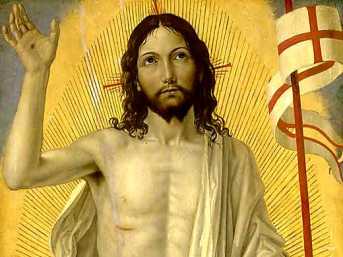
Easter Day remains one of only two days in the year when it’s possible to catch an echo of the way things used to be as far as church-going is concerned. St Martin’s will be fairly full at 8 o’clock and full to capacity at the 10 o’clock.
Among those attending will be core members of the congregation. These are the regular Sunday worshippers, those also known to the treasurer – which is quaint Episcopal speak for regular financial supporters. Among others moved to attend church on Easter Day will be people visiting friends and family for Easter, and the members of greater St Martins’; those with historical connections with the church, along with those living nearby.
In an increasingly nonchurch-going society, and in a region which ranks with the Pacific North West as the least church-going in the country, I for one am delighted to see the Christmas and Easter congregations swell, yet this also poses a dilemma for the preacher. What needs to be said on such occasions that will not simply confirm conventional default expectations?
I assume that among those moved to come to Church this Easter will be those for whom the music of the Anglican Tradition is the draw. For others, it’s one of two times a year when the atmosphere in an Episcopal Church approaches the experience of a crowd buzz. For some, it’s the importance of renewing past echoes of childhood as a time when church – or more probably church school or youth group remains a good memory. What I do not assume however is that many moved to come to Easter services will have come with an expectation of hearing anything remotely useful – in equipping them to face up to the very real challenges of life as we encounter them in the early decades of the 21st-century.
***
In the 19th and 20th-centuries, Christianity placed increasing emphasis on the content of belief. The crucial thing was that you believed the right things and not the wrong things. Thus believing the right things was meant to guarantee that you did the right things and not the wrong things. More often for Episcopalians, this equation went the other way around. Doing the right things and not the wrong things evidenced that you believed the right things and not the wrong things. The thing is, that most of us no longer think in this way.
The language we encounter in church expresses a mindset – representative of a world in which God was an inseparable part of the material universe. God was experienced in very real ways; in places, through objects and people, inhabiting the very spaces between us. God, alive and present within the experience of time and space, was never absent from our sensory and imaginative experience of this world where miracles held meaning. The resurrection of Jesus was regarded as just such an event, i.e. a miracle.
Then the Enlightenment happened and Western civilization became increasingly shaped by rational materialism. Rational materialism, with its increasing dependence on the physical sciences to come up with a theory of everything paradoxically locked God out of the material universe. God became merely an echo of the original watchmaker who long ago departed from the scene leaving humanity center stage, struggling with the responsibility to tend the machinery of the creation. Having become a rather cold and unimaginative space this mechanical universe was no longer a place of mystery and miracles.
Shaped by this worldview, we no longer expect to bump into God as we go about our business in the material world. God, in so far as God remains a meaningful concept for any of us, is now predominantly a personal experience. The mystical-spiritual, the metaphysical-poetic, has now receded from the material world into the non-material domain of the personal imagination. As a consequence, resurrection understood as a miracle – by which our prescientific forebears meant something more than real, a kind of truth plus, has become downgraded into a subjective experience, something the rationalistic mind regards as infinitely less than objectively real.
In our post-Enlightenment experience of the world, people are either alive or dead. They don’t die and then come back to life. The binary alternative of life or death appears to us to be a natural law of the universe. This Newtonian view of the universe takes its name from the great 17th-century English philosopher, Sir Isaac Newton. St Martin’s even has a window dedicated to him.
Newtonian physics still reflect our experience of the way the universe works. Yet, a new and seemingly mysterious view of the universe is revealed to us by Quantum Mechanics. In the Quantam universe objects behave differently and much of the behavior of subatomic bodies remains a mystery to us. For instance in the Quantum universe elements exist in a super-positional state. Energy is both wave and particle simultaneously. That is until the act of observation determines energy as one or the other, wave or particle for the sake of observational measurement.
In the resurrection, might Jesus have existed within the tomb in a super-positional state, with being alive or being dead as the two alternatives that become determined only in the act of observation? The act of observation, i.e. the experience of the disciples on this third day after the crucifixion determined that Jesus was alive. What’s most strange about their conclusion is that they observed him alive even though they had witnessed his death only two days previously.
For those of you who get really excited by the application of Quantum Theory to spiritual experience, I fear I am about to disappoint you. This is not the direction in which I wish to take the discussion about the resurrection – at least not this year – although as someone who invariably has to preach every Easter Day I will keep my options open for the future.
My point is that we have a growing awareness of a multilayered universe – even of the possibility of multiple parallel universes. That which Enlightenment thought regarded as impossible may actually be possible after all. The watchmaker may be more than the ghost in the machine, affecting material reality in ways that strict Enlightenment thought is unable to conceive of.
***
The way I want to approach the mystery that is Jesus’ resurrection is to understand it as a narrative event. I fear that those who attend St Martin’s regularly will be getting sick and tired of me telling them that humans are storied beings. We build meaning by constructing and sharing stories whose function is to articulate our experience of the world around us. Our perception of reality is always conveyed through language and the narrative organization of language. In other words, stories are all we have.
Now there are different kinds of stories. There are big stories that offer us lots of room to grow and realize our fullest potential. Then there are small stories that confine our imaginations and constrain the quality of our experience. What can make life confusing is that without always being aware of the fact, we draw on multiple stories that often conflict with one another, running simultaneously along different narrative tracks to make sense of our lives. The gift of truly big stories lies in their ability to synthesize the many smaller and cconflicting stories that compete for our attention.
The first Christians had an experience at the empty tomb that gave rise to the creation of the big story we call Easter. This is a story about the triumph of life over death, not just literal life over death but all the figurative iterations of the triumph of flourishing over failing to thrive, of victory over defeat, of light over dark.
The big story of Easter is a later chapter in the epic story of the Exodus Passover – a story about the experience of liberation from bondage, not just liberation from the literal slavery in Egypt but from all the iterations of bondage to all false illusions and fake idols.
The Easter story is not a small story of optimism. Optimism and its active application of positive thinking are modern small stories that seek to organize our experience around concepts like personal satisfaction, happiness, fulfillment, self-improvement, achievement measured in terms of material success. Optimism is the longing that things will continue to be on the up-and-up.
When events take a downward turn, optimism crashes and burns to be replaced by pessimism. The Easter story is a story of hope. Hope is not an expectation that things will continue to go well. It is the expectation that something new is happening, something that is beyond our ability to generate or create. This new thing intervenes and comes about through the correct alignment of our hopes and actions, refining expectations and reinterpreting experience in the direction of greater clarity of vision and a deeper realization of purpose.
Was Christ raised from the dead on the third day after his physical death on the cross? For many who cling to materialist stories – small stories that lock out the transformative power of God from our here and now experience, the answer is no. Yet if the answer is yes, the yes is not dependant on being able to explain the mechanics that underpin the event. The yes, articulates our desire to be shaped by a greater story than the one we are able to imagine for ourselves. When we let ourselves become molded by a story that liberates from illusions created by the be-devil-ments in our lives- the small, impoverishing, life denying stories we cling to, we come into relationship with a story capable of reorganizing our perceptions of the universe and how it functions.
The disciples on the first day of the week experienced the power of a new and larger story than they had hitherto known. They could not explain it, but they felt it and they created a large story that reframed their worldview so as to be able to articulate an experience of transformation. They were not transformed as isolated autonomous individuals. They became transformed through their participation in a community that was being transformed.
***
I don’t fully understand why many of you are here today, doing something that is, given the rest of the Sunday’s of your year, uncharacteristic. May I suggest that you may not know either why you are here today. Not knowing matters less than you might think. What matters is that you are. I invite you to take this more seriously than you otherwise might.
We live in a world where the old certainties based on shared stories are collapsing to be replaced by uncertainty and a fearful fragmentation fed by many small and viciously self-serving stories. I believe that the big story of Easter is something that helps us better navigate our way forward in a world where the very notion of true and false seems now contested – up for grabs. Human beings cannot thrive in such a world. Becoming transformed by the big story of Easter empowers us to offer alternatives through holding together into the face of prevailing trends.
At St Martin’s we are working to become a community that is more and more fit for God’s purpose, which we understand as becoming transformed as together we journey deeper into the mystery God’s vision for our jaded world hungry for the promise of new life. We are a community that increasingly believes that our work is to be agents for transformation in the world around us. We know this is possible only if we work together. One of the insights of the Easter story is that God primarily addresses us through our participation in communities where solidarity rather than individualism guides our values settings.
We are a community on a journey and we are strengthened on that journey every time someone new joins with us. To those of you who find yourselves in Church on Easter Day, I strongly suggest that you consider being there as an indication of your search for a story big enough to revolutionize your longing for deeper meaning and purpose in your life. If this is so, I believe you have come to the right place. Come back, taste and see.


 We have here a story of a man who has had a transforming encounter with Jesus; a man whose story of God’s love and compassion is so compelling that he can’t help but share it. A man whose story is the cause of curiosity, wonder, and consternation all at once. A man who was cast out by his community of fellowship. A man who knew Jesus’ presence with him even in a moment of rejection and vulnerability, and worshiped him.
 I am the rector – which is Episcopal speak for senior priest-pastor of a church where many faithful people are perplexed about how and in what to believe. Given our formation and experience in the modern world, we are a highly educated, middle-class congregation, both attributes that seem to only add complexity to our perplexities concerning faith.
 title of that old Hollywood blockbuster. The greatest story ever told is a story that is technically an epic. Epic and myth are both a variety of story. But whereas myth is a story that exists outside temporal time – i.e. it is always the same and forever unchanging, an epic is an unfolding story that develops and changes within time. Epic is a story embedded in history, playing out within time through its impact on the lives of individuals and communities. The greatest story ever told is an epic story. Abraham and Moses are major footnotes in this epic story; a story that for Christians culminates with Jesus.
 Genesis 1-11 reveal that the story between God and humanity has not gone so well. If God learns from past mistakes with the introduction of Abraham we see God developing a new strategy. In singling out Abraham, God shows that for the foreseeable future it’s the personal relationship touch that will make all the difference. God’s choice of Abraham shows us that God seems to choose unusual candidates for this kind of partnership. Abraham and his wife Sarah are already beyond childbearing age; odd candidates for the father and mother of a new nation. In the choice of Abraham, we come to see God’s desire clearly. God and Abraham develop a relationship that is startling in its portrayal of God as intimate and personal.
 Somewhere between 2000 and 1800 BCE, Abram, with his father Terah and their extended clan migrates from the Chaldean city of Ur-Kasdim, finally arriving at Harran, a town located in southeast Turkey. Although we don’t know the reason for this clan migration, this type of moving around is a feature of herding societies, often in response to changing climatic and grazing conditions. Abraham subsequently moves around the region between Harran and the Nile delta in response to drought and famine events. It’s only when Sarah dies that Abraham makes his first purchase of land at Machpelah near modern day Hebron. Here he buries Sarah in the Caves of the Patriarchs where later he himself as well as Isaac and Rebecca, Jacob and Leah, are laid to rest. Rachel, Jacob’s principal wife is missing for she is buried in Ramah, north of Bethlehem. The purchase at Hebron is the first actual indication of the land that God promises Abraham and his posterity.
 interplay of past and present superimpose upon each other. Traced through events in 18th and 19th century Berlin, Belfer chronicles the fate of a previously unknown Bach Cantata from the chaos of 1945 Weimar to present day New York, Her narrative moves seamlessly from the present back into various periods of the past before reemerging again into the present time.
 Taylor’s massive opus
 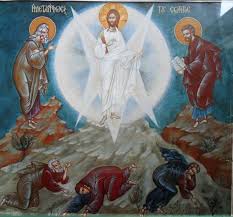 On the mountaintop, God conceals Godself in thick cloud while simultaneously self-revealing in blinding light. On the mountaintop Peter, James, and John experience an epiphany of the divine Christ, after which they must negotiate the even more perilous path down the mountain carrying the experience. They must carry the remembrance of what they have seen and yet, at the same time practice a kind of forgetting.
 are entering to possess. But if your heart turns away and you do not hear… I declare to you today that you shall perish; you shall not live long in the land that you are crossing the Jordan to enter and possess.
 Relationalrealities