To Make a Second Birth


There are several fundamental human needs. One is to have enough food and the other essentials to sustain our bodies. Another is someone to love and be loved by. A third is to have a place to belong and a community in which to be recognized and accepted within. In recognition of the Labor Day celebrations this weekend, another fundamental human need is to have dignified work from which the fruits of meaning and purpose flow. Fundamental needs have significant implications for our physical, emotional, and spiritual lives, for we are integrated body-mind souls.

A sacrament is simply an action through which God’s promise to act and to be present is a watertight commitment or covenant. The two primary sacraments [1], the ones that all Christians agree on, are baptism and eucharist. The two primary sacraments of baptism and eucharist speak to our human needs as body-mind souls.

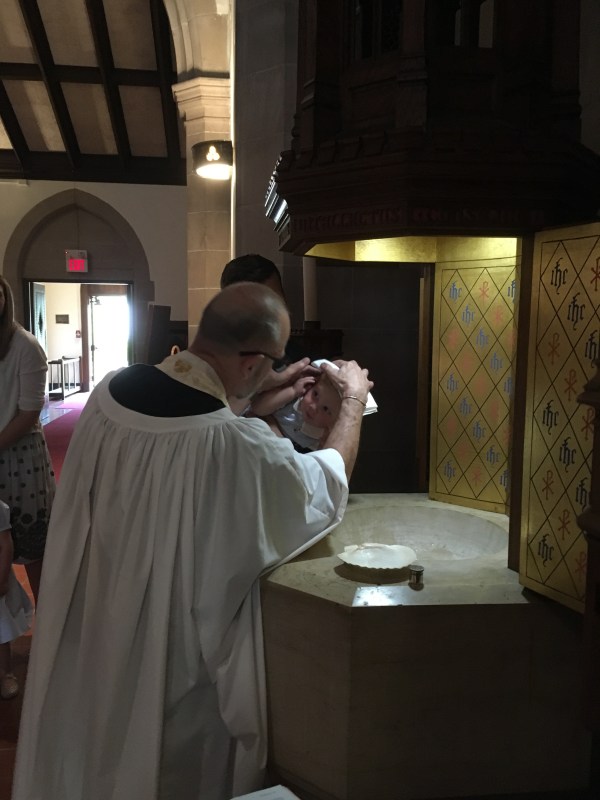
In last week’s A Living Eucharist sermon and blog, I expound on Jesus’ teaching in John 6 from which the sacrament of eucharist developed. This week, at St Martin’s we are privileged to witness the baptism of four delightful young souls. The baptism of siblings and cousins from the one extended family with a long multi-generational association with our community promises us a baptism experience, with a particular N.T. resonance.

The relationship of baptism and eucharist is the relationship of doorway to table. Through baptism, we enter into the household of faith where in eucharist we find sustenance in the physical actions of eating and drinking at the Lord’s table.

***

In the Epistle – the N.T. reading for Pentecost 15, God addresses us through the Letter of James. Authorship of this letter is traditionally ascribed to the Lord’s brother, James, first bishop of Jerusalem, though this is hotly disputed among scholars. I will refer to the writer as the author known as James, who opens his letter to the followers of Jesus in Jerusalem with the words:

Every generous act of giving, with every perfect gift, is from above, coming down from the Father of lights, with whom there is no variation or shadow due to change. In fulfillment of his own purpose he gave us birth by word of truth, so that we would become a kind of firstfruits of his creatures.

This is an interesting passage from which to expound on the meaning of baptism.

Any exploration of baptism immediately encounters two questions:

  1. Why – as in why do it?
  2. What – as in what happens as a result of doing it?

Why do it?

Every generous act of giving, with every perfect gift, is from above, coming down from the Father of lights. 

James’ opening words affirm that the entry of every human being into life constitutes an act of divine generosity. Can there be no more perfect gift than that of a new life; life as the biological sign of God’s sharing of divine love made real in an act of creation.

It’s unfortunate that the tenor of much of the ancient language, mostly medieval in origin, that we still use in the baptism service is easily misunderstood in churches where the goal is to save individuals from going to hell. In this worldview, baptism into Christ is understood as the antidote to the toxin, transmitted across the generations, of Adam and Eve’s original sin of disobedience.

James’ words can be read as categorically refuting this idea that human beings are born into a morally and spiritually defective state, for which baptism is the necessary correction. The old English verb for baptism is to christen, i.e. to make a Christian. Baptism opens a doorway through which an already perfect new life becomes a member of the Christian community. The early Church Father Tertullian was fond of saying: one Christian is no Christian, by which he meant you can only become a Christian by participating in the life of the community called Christian. It is as members of the Christian community, that we are saved by God’s love.

Why do we baptize? We baptize to make a new Christian. Becoming a Christian means participating in the life of the Christian community. Becoming Christian is to recognize that to be human is to made in the image of God; an awareness that compels us to collaborate with God in the task of making a world that has grown old, new.

What is the result of being baptized?

Returning to the second part of James’ opening lines in his letter:

In fulfilment of his own purpose, he gave us birth by word of truth, so that we would become a kind of firstfruits of his creatures. 

Baptism is a second birth, a birth by word of truth. Through baptism, we come to belong. From belonging comes believing.

But baptism is not an act of magical transformation. As a stand-alone event, it functions as an initial entry point only. But what really matters is what happens after baptism, i.e. how the baptismal promises are fulfilled by the baptized person, over time.

James says that the gift from above needs to bear fruit. He tells his readers to:

  • be quick to listen.
  • be slow to anger.
  • behave with dignity, self-respect and above all respect for others.
  • walk the walk not just talk the talk (be doers of the Word, not merely hearers who deceive themselves).
  • control your tongues, an uncontrolled tongue is the enemy of true religion and elsewhere he likens the uncontrolled tongue to a forest fire.
  • care for the orphans and widows in their distress.
  • do not allow yourself to be corrupted by the easy utilitarian values of a world held in bondage to the perpetual inequalities of the status quo.

In our baptismal covenant, James’ words reverberate. Paraphrasing:

  • be faithful in prayer and be present at the celebration of the Lord’s table.
  • persevere against evil and when we fail don’t let our sense of failure become a barrier between us and God.
  • live the Good News of God in Christ, so that others will look at us and say: I want some of what they have!
  • fight against the systems that perpetuate injustices of all kinds and let respect for each human being be your guide to holy living.

To sum up

Baptism emphasizes belonging over believing. This Sunday, four new young lives will be initiated into belonging within the community we call Christian. It takes a village to raise a child; parents, grandparents, sponsors and the whole community will need to support these children so that nurtured by love, they will have the opportunity to grow into the persons God is already dreaming them into becoming.

[1] As Anglicans, Episcopalians accept either six, or seven sacraments, depending on whether you think marriage is a sacrament. The reason for not accepting marriage as a sacrament is because God is not the primary actor – only the witness to the primary action taking place between the couple to the marriage. But back to the point.

A Living Eucharist: John 6

For my flesh is real food and my blood is real drink and whoever eats and drinks them will remain in me and I in them.

In her novel The River Flannery O’Connor intriguingly observes:

In the land of the nearly blind, you need to draw really big caricatures.

Can this be a possible explanation for Jesus’ teaching in chapter 6 of John’s Gospel?

Over previous weeks my focus has been on the Deuteronomic historical chronicle contained in I and II Samuel concerning the tensions of government in ancient Israel and to explore its resonances with our own current political climate. This focus on the O.T. lessons has necessitated ignoring Jesus’s growing controversy with the crowd as reported by John in the sixth chapter of his gospel.

Previously in John

Growing numbers of people have begun to follow Jesus into the countryside to listen to his teaching – culminating in an event where his concern for the hunger and thirst of the crowds exposed in the open countryside as evening approaches leads to an event we know as the feeding of the five thousand. It remains a universal truth that if you want to hold people’s attention then feed them; all the more so when people are generally hungry. Having experienced a free and bountiful supper, the crowds begin to realize that Jesus is the man to stick close to.

Spurred by their questions about food, Jesus begins to point out that they have the wrong end of the stick. He tells them plainly, that what he’s offering is not a free meal, but the food of eternal life. He tells them not to labor for the food that perishes but for the food that endures for everlasting life. They then ask, Rabbi, how can we get this food?

To cut a long story short, having crossed the lake at night walking on the water Jesus makes a surprise appearance in the synagogue at Capernaum. How did you get here, they ask? We didn’t see you in any of the boats.  Jesus ignores the question and proceeds to make a series of what are known in John’s gospel as I am statements.

Chapter 6 contains three I am statements, each statement more controversial than the last:

  1. I am the bread of life, whoever comes to me will never go hungry.
  2. I am the bread of life, come down from heaven.
  3. I am the living bread, and this bread is my flesh, which I will give for the life of the world.

Just when the disciples must have been signaling to Jesus to dial it back a bit, he declares:

For my flesh is real food and my blood is real drink and whoever eats and drinks them will remain in me and I in them.

In the land of the nearly blind, you need to draw really big caricatures.

Teaching that offends

Noticing a growing restiveness, Jesus asks the congregation if what he says offends them? They show that they are more than offended, they are scandalized. They fall over themselves in an attempt to get out of the synagogue and away from this crazy, blasphemous preacher.

His disciples also complain that this teaching is too hard to follow – it is too difficult to accept, they protest. In a vulnerable moment, Jesus asks them if they too will leave him? There now follows one of those magic moments when Peter breaks through the limits of imagination to tell Jesus:

Lord, to whom else shall we go? You have the words of eternal life! 

***

Familiarity with the Eucharist deafens us to the shock value of Jesus teaching in John 6. Being good Episcopalians, well-schooled in the use of metaphor when talking about the spiritual life, we dismiss the cannibalistic overtones in Jesus’ language, understanding them as hyperbole – excessive overstatement for the purposes of argument. 

In the land of the nearly blind, you need to draw really big caricatures.

Anglican-Episcopalians, Roman Catholics, Lutherans, and the Orthodox believe that in the Eucharist, Jesus is really present. Through the action of the Holy Spirit, the significance of Eucharistic elements are changed from mere bread and wine into Christ’s body and blood. Roman Catholic’s have a complicated theory to explain how this happens while Anglicans cherish the words of Elizabeth I who when asked about it simply said:

I know Christ is truly present though I know not how.

Contrastingly, Protestants believe that the Eucharist is only a symbolic reenactment of the Last Supper in which nothing happens to the bread and wine. In this act of remembrance, the connection between the worshiper and Jesus is spiritual, not material.

A middle way

Anglican eucharistic teaching emphasizes the centrality of the real presence. However, it also places emphasis on the process of spiritual connection – the real presence becomes real only when received in faith by the worshiper.

At the invitation to Holy Communion, the celebrant invites us with these words:

Draw near with faith and receive the Body of our Lord Jesus Christ which he gave for you and his Blood which he shed for you …. feed on him in your hearts, with thanksgiving.

As we receive the host and partake from the cup the priest or eucharistic minister says:

the body of Christ – the bread of heaven, the blood of Christ – the cup of salvation.

Note how statements indicating the real presence – the body and blood of Christ are coupled with spiritual metaphors – the bread of heaven, the cup of salvation. Anglican tolerance allows for a range of belief that makes room for both a material and spiritual interpretation, according to the theology of the worshiper. What is a fudge for some is for others, an expression of genius.

The term holy communion points to an action of joining together two separate entities. Literally, com-munion means into a new combined entity which Jesus describes thus:

For my flesh is real food and my blood is real drink and whoever eats and drinks them will remain in me and I in them.

This remaining in one another is a comingling of identities that only happens within the context of a larger communal action of the Eucharist; another Greek word which means thanksgiving?

To hear Jesus’ words only as a hyperbolic metaphor, as in O’Connor’s really big caricatures is, however, to seriously miss his point. When Jesus says: I am the light of the world, we have little difficulty in hearing this as a metaphor of association. When Jesus says: I am the bread of heaven, again we hear the metaphorical association and his original hearers understood metaphor well enough. But he then deliberately labors the statement in ways that take it beyond mere metaphorical association.

The bread of eternal life is my flesh which I give [to be consumed] for the life of the world.

This is what his hearers found a hard teaching because they realized that Jesus was no longer speaking in metaphors.

***

To truly appreciate the significance of coming to the Lord’s Table in the Eucharist I want to draw out two emphases in Jesus’ teaching in John 6. The first is his emphasis on the action of eating and drinking. The second is contained in his words: I am the bread of life that has come down from heaven.

Eating and drinking

In John 6, Jesus alienates many who want to follow him because he speaks not of the comfortable distance of spiritualized metaphor but of the immediacy of physical action. In John’s Greek, the word he uses for eating is better translated as chewing with open mouths. Eating and drinking are both actions that emphasize an intimate and raw physicality of the action. We become present to Christ and he to us, not through our spiritual imaginations but in the physical actions of eating and drinking in real time. The result of eating and drinking is ingestion – taking in. As food is ingested through eating and drinking, Christ is ingested into the very fibers and cells of our bodies.

Come down from heaven

Jesus’ teaching emphasizes a public and communal physicality of being present in preference to a more distanced and individual spiritualized distance. Communion –comingling – happens physically in real time. When we spiritualize it we distance its raw physical immediacy. To follow Jesus is to engage fully with this world, not pine for the next.

There is a popular distortion of Christian teaching, all the more regrettable because it is so widespread; a distortion that places salvation as a future post-death event, the promise of everlasting life with God in heaven; pie in the sky when we die. Jesus does not speak of heaven as the future goal of our lives on earth. Christ-centered faith is thus concerned with this life, not the next, and this is exactly how the N.T understands Jesus’ teaching.

Jesus teaches that the realization of heaven – or of hell – happens in this world.

Thy kingdom come, thy will be done, on earth as it is in heaven 

communicates the urgency of the kingdom’s arrival. The kingdom is not imminent, it is not coming someday soon, or at some distant time, it is coming right now in this very moment!

Give us today our daily bread

emphasizes this. Our daily bread is to be eaten now, not sometime in the future.

***

If we are to be authentic followers of Jesus as John and the other N.T. writers present him, our first and foremost priority is to labor for the making good- the repair – of the material world of creation – in real time! It is not to prepare our souls for an eventual escape into the spiritual ether.

Therefore, Christianity is primarily concerned with the physical not the spiritual dimension of life. Participation in the Eucharist is vital for our Christian flourishing as food and water are essential for our physical wellbeing.  Our ultimate hope is not eternal rest but eternal life; life physically remade as part of a world that is in the process of being put to rights by God. Until this process finds its completion in the resurrection of the dead, it moves apace in real time with our participation and collaboration as God’s agents in real time, compelled to live by the expectations of the kingdom.

In the meantime, our focus must be on the real-time seeding, tending, and reaping of the kingdom’s harvest. As agents of the kingdom, we are engaged in an existential struggle with cosmic dimensions – against the systemic forces of evil as St. Paul warns us – that desecrate and corrupt the goodness of God’s creation. We are strengthened for this task by the physical incorporation of Christ, not into our metaphysical souls, but into the very fibers and cells of our bodies.

The Eucharist is where we feed on the food that lasts. The great 20th-century Anglican theologian and mystic, Evelyn Underhill, in her poem Corpus Christi pens this truth with an eloquence that I am incapable of. The full poem can be found at the link above and so I content myself with a more selective citation:

Come dear heart! The fields are white to harvest: come and see, as in a glass the timeless mystery of love, whereby we feed on God, our bread indeed. …Yea, I have understood how all things are one great oblation made: He on our altars, we on the world’s rood. Even as this corn, earth-born, we are snatched from the sod, reaped, ground to grist, crushed and tormented in the Mills of God, and offered at Life’s hands, a living Eucharist. 

Earthen Vessels of Clay


Since June, I’ve been following the unfolding Deuteronomic history chronicling the evolution of government in ancient Israel. It’s an increasingly sorry tale as it continues into the books of the Kings. The O.T. lesson for Pentecost 13 opens in the second chapter of I Kings with the statement:

David slept with his ancestors and was buried in the city of David. 

David reigned an astonishing 40 years – remember life expectancy was short in those days – 7 years at Hebron and then after he conquered Jerusalem, and further 30. His son Adonijah was the next in the line of succession but David passes the throne to Solomon, his son by Bathsheba.

The weakness in authoritarian regimes lies in the unpredictability of succession. As the once strong leader begins to fail, in the absence of constitutional processes governing the strict line of succession, factionalism thrives. In David’s last years, anxiety increased about who would succeed him as those who had once been the king’s fixers, his right-hand men, vied to influence the succession.

Before his death, David advises Solomon on how to clear the field by killing the opposition ringleaders to not only clear his way to the throne, but also to settle some of his father’s old scores, the hand of retribution from beyond the grave as it were.

The Lectionary notes the death of David in II Kings:2,10-12, but then it then skips over the rest of chapter 2, picking up again at chapter 3. For us, however, it’s important to know what is happening in the omitted verses 13-46 – quite a chunk, in order to have the fuller picture of events.

Adonijah appears to accept being passed over but then gives Solomon an unexpected excuse to move against him when he manipulates Bathsheba into petitioning Solomon to give him Abishag for his wife. Abishag, you will recall, was the young woman chosen to be David’s last wife, a young woman to warm the old king’s feet in his failing years. For Adonijah to claim her seems to indicate a roundabout way of asserting his rights to his father’s inheritance.

In common parlance, Solomon is doubly pissed. He is pissed not only by Adonijah’s effrontery but also at his mother for allowing herself to become Adonijah’s tool to get to him. Solomon orders Adonijah struck down and killed and then moves swiftly against the opposition ringleaders. Joab, once the commander of the army, seeks sanctuary by grasping the horns of the altar. The Law of Moses allowed a fugitive to seek safety if he could get to the Tent of Meeting and grasp the horns (corners) of the altar. Incidentally, this is the basis of the claim of churches as places of sanctuary, which is currently being asserted to give shelter to refugees fleeing the harsh implementation of immigration law.

Solomon nevertheless has Joab struck down in the heart of the Holy of Holies – take note, Mr. AG. He then deposes Abiathar as high priest, exiling him to his home village. Zadok, a passionate supporter of Solomon now becomes high priest and the way is cleared for what happens next.

Solomon is described as one who loved the Lord and walked in the ways of his father. But he immediately goes to Gibeon, one of the cultic high-places where local pagan deities were worshiped and makes a sacrifice of 1000 burnt offerings. In the Deuteronomist account, it’s all a little odd, for this action clearly indicates unfaithfulness to YHWH. Nevertheless, the Lord comes to Solomon at Gibeon and invites him to make a request.

We then have what’s known as Solomon’s great prayer, which many over the centuries have taken to be the perfect template of prayer. In it, Solomon asks not for power or riches, but wisdom. The Lord is so impressed by Solomon’s request that he throws in power, riches, and long life anyway. For the discerning, there is a sting in the tail here, for God lays a condition on the long-life bit of the gift. Solomon will enjoy long-life as his father had done only if he walks in YHWH’s ways. We need to note that Solomon only lives to the age of 60.

Like his father before him, Solomon is also a complex figure.  Admired by Judeo-Christian tradition as the archetype of wisdom, as the one chosen by the Lord to build his Temple.

Yet, Solomon also went his own way. He married many foreign wives, a thing that was anathema according to the Law of Moses. His first wife was Pharaoh’s daughter, and according to legend even the Candace, the Queen of Sheba (Ethiopia) journeyed to pay homage and become the most erotically enticing in a succession of foreign wives.

To add insult to injury, not only was marrying foreign women and insult to YHWH, but Solomon allowed his wives to set up shrines to their gods in the high-places and he even worshiped there himself. He was a brutal monarch, taxing his people ruthlessly and indenturing his male population in the service of the building of the Temple.

His corrupt foreign ways, his worship of pagan gods, his economic oppression of his own people, set the stage after his death for the secession of the 10 northern tribes of Israel, leaving only Judah and Benjamin as a remnant of the Davidic kingdom.

***

In omitting the bulk of chapter 2, the Lectionary has edited the text to emphasizes the identification of Solomon with wisdom, so as to segway in two weeks time from the Deuteronomist history into the Wisdom books of Proverbs, Songs (of Solomon), and Wisdom (of Solomon).

A recurring central theme in the Wisdom literature concerns the way human understanding pales against the grandeur of creation, which itself is the expression of God’s wisdom. Wisdom’s themes explore opposite pairings: righteousness/ unrighteousness, death/immortality, meaning/meaninglessness, hubris/futility, joy/sorrow.

The final judgment of the Deuteronomists on Solomon is mixed. According to their narrative, God gave Solomon wisdom, entrusted him with the building of a permanent dwelling place to house God’s spirit on earth. They also recognized that through his ruthlessness in furtherance of his own ambitions, and the single-minded pursuit of his own pleasures, Solomon ultimately destroyed the legacy he had inherited. Unfaithfulness to God did in the end, cut short his life.

***

Based on the absence of hard archeological evidence, some historians of the period doubt whether Solomon ever existed. Certainly, much modern opinion is that the great Davidic kingdom as presented by the Deuteronomists was anything but great. The Deuteronomic history is the product of a later period. 600 years later, the scribes engaged in a monumental root and branch editing of the Hebrew Scriptures during the Babylonian Exile, had a need to paint a picture an imagined golden age from which to trace Israel’s decline as an explanation for their current experience of having been abandoned by God.

I believe the value of the Deuteronomistic history lies not in its historical accuracy or veracity.

Its value lies in its power to remind us of timeless truths. That the nature of power corrupts and absolute power corrupts absolutely. That human government left to its own devices rests on the principle that power is there to be abused.

In the record of the Deuteronomists description of the tensions between faithfulness to God and the corruptions of worldly power played out between prophet and king, it’s not hard for us to hear some striking echoes of the tensions in our own time. Our society is grinding under the weight of increasingly huge disparities of wealth between the 1% and the rest. Under the pressure of unrestrained corporate greed, we turn a blind eye to the compounding of individual and national debt. Western democracies are increasingly retreating in the face a resurgence of authoritarian-nationalist political instincts riding on the uncertainties and fears of peoples in a time of rapid change.

From Samuel, through David, to Solomon and beyond, we see God’s glory encased in vessels of clay. Solomon is the proverbial everyman, he is you and me.  Like him, we too are creatures of our time and shaped by our culture. The continuing scandals of church child sexual abuse only too painfully reminded us that even our religious institutions while pointing us beyond ourselves are at the same time, all too corruptible and fallible.

Like Solomon, we aspire to love God, but mostly we follow our own counsels. We long to give our full allegiance making Christian faith the unifying story around which our lives take shape, yet mostly, we march to the drumbeat of lesser stories that promise us more than they can deliver. The extraordinary thing is how we nevertheless give allegiance again and again to stories that if we did but remember led to disastrous outcomes last time we placed our faith in them.

The timeless truth, that God challenges us to remember the covenant made with Israel which has now been fulfilled in the death and resurrection of Jesus Christ is the only story with the power to shape our times in the direction we truly long for. Like David and Solomon, we too are the earthen vessels made of clay struggling to contain the divine vision for creation. Occasionally we hear God calling us to be better than we currently are and to do better than we have done.

Father and Son

II Samuel 18

The historical chronicle found in the books of Joshua, Judges, Ruth, I and II Samuel, and I and II Kings is the work of a group of editors known as the Deuteronomists. The Deuteronomistic history covers Israel’s transition from a loose tribal confederacy to a centralized monarchy. We have been following this process in the period addressed in the book of Samuel, one book later divided into two. I Samuel begins with the call of Samuel who is to be the last of the great Judges, the charismatic leaders who arose in times of crisis. II Samuel ends in the final years of King David. The greater part of the books of Samuel concerns the David saga. The Deuteronomistic history explores the core questions that arise when a nation struggles to evolve to meet new challenges while remaining faithful to its founding instrument?

Israel’s core identity is forged in the Covenant (a form of contract) that God and Moses made on Mt. Sinai. In this sense, it’s helpful for us to think about the Covenant as a kind of constitution. In the historical tensions chronicled by the Deuteronomists, we find many echoes to our own contemporary experience as a nation. As in Ancient Israel, we too need to continually evolve to meet new challenges within the opportunities and limitations of our founding instrument, in our case the Constitution.

The Covenant between God and Moses forged on Mount Sinai dictated the kind of society Israel was to be. The terms of the Covenant stipulated that Israel was to have no God but YHWH and consequently in terms of government, there was to be only one king in Israel and YHWH was his name. In the time of Samuel, Israel transitioned from a tribal confederacy into a Near Eastern monarchy, but with a difference: the Covenant confined the powers of the king to the functions of regent. The Deuteronomists had a simple rule of thumb in assessing the success or failure of a king. Did he rule as God’s regent, or did he rule as God’s replacement? Was he a faithful servant or a usurper?

As we know because power corrupts there is a need for checks and balances. Alongside the institution of monarchy, a parallel institution of the prophet arose to call power to account. The prophet was to function as a kind of one-man Supreme Court, whose function was to declare executive actions legitimate or illegitimate according to the vision of the Covenant.

Today’s Old Testament reading concerns the rise and fall of David’s third son, the much beloved and stunningly handsome Absalom. We need, however, to set the David – Absalom relationship within its wider context.

***

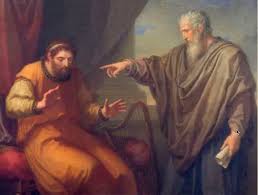
The major turning point in David’s life was his adulterous affair with Bathsheba. His lust for her led him to orchestrate her husband’s murder, a murder executed by his ruthlessly loyal fixer, Joab. Enter the prophet Nathan, who calls the king to account and pronounces upon him God’s judgment and sentence. David confesses his sin. He accepts God’s sentence that the sword will never depart from his house. For the Deuteronomists, David’s downfall is also the defining moment of his greatness.

Through genuine repentance, David comes to know the power not only of God’s judgment but also of God’s forgiveness. God does not stop loving David and he knows it. It’s interesting to note that this growing sense of forgiveness does not avert the chain of personal tragedies, the sentence must be served. It changes the way David responds in the face of adversity. David has received both punishment and forgiveness at the hand of the Lord. In response to being nurtured by God’s continued love, we watch David rejecting his personal vanity and lust for power, and we watch him learning to become tenderhearted.

David is transformed by his experience of being forgiven and the evidence for this can be no more clearly seen than in the story of David and Absalom.

***

Last week I suggested that in his seduction or was it really his rape of Bathsheba (as a woman her voice is absent from the Biblical record, so we don’t know how she felt about this incident), David tried to erect a wall separating his personal choices from his public responsibilities. But God will have none of this and rejects the falsehood much parroted in our own time – that a lack of personal honesty and integrity has no effect on the holding of public office. David is forced to live through the consequences of private choices disrupting his public life.

We also seek to build a wall between the practice of our faith and life in the public square. Last week, I noted that when out of a sense of middle-class, liberal squeamishness we practice our faith privately, we ignore the consequences in the public square resulting from our decoupling of faith from action. Whenever someone tells me that politics should be kept out of religion, they are telling me that their faith has nothing to say about the evils perpetrated in the public square of political life. To follow that path renders our faith next to useless.

***

David and Absalom are two case studies on the power of forgiveness. His repentance brings him to realize the limits of his vanity and the glorification of power. In Absalom, vanity and the arrogance of beauty coupled with a grievance-fueled rage and lust for power, consume and compel him to spurn his father’s forgiveness, leading him to sin even more egregiously. So, to the story.

***

Previously, as they say on TV, Absalom murders his brother Amnon to avenge Amnon’s rape of their sister, Tamar. Absalom not only kills Amnon but rages against David for his inaction in failing to punish Amnon for his crime. Following the murder of Amnon, Absalom flees to the north, but under the auspices of Joab, a kind of reconciliation allows him to return to Jerusalem. But although back in Jerusalem, physically, an emotional estrangement between father and son continues for two years before Absalom eventually returns to the king’s house.

David forgives his son, but Absalom secretly spurns his father’s forgiveness. Under the guise of a ruse of needing to fulfill a vow, Absalom goes to Hebron, where he has himself proclaimed king. He raises and an Israelite (northern) army and moves on Jerusalem. David flees the city with only his household, for Joab has forbidden the king to accompany the loyal (southern) army. Before he flees, in the presence of his retainers David makes Joab promise to:

 deal gently, for his sake, with the young man Absalom.

***

We might note an interesting aside, that on his way out of Jerusalem David ascends the summit of the Mount of Olives on his way to cross the Jordan, an ascent that finds an echo for us in Jesus’s journey via the Mount of Olives to the Cross.

***

Meanwhile, Absalom enters the city. His first demonstration of power there is to publicly rape the 10 concubines David had left to look after the palace. This action tells us something of how Absalom views the exercise of power.

images-1The two armies eventually meet in the Forest of Ephraim, where Joab and David’s southern army routs Absalom’s northern army, killing we are told, some 20,000 men. Absalom flees alone. As he does his long hair catches on a low hanging branch, suspending him in midair while his mule keeps moving forward.

The beauty of Absalom’s long, thick hair was the source of legend in those days. Afflicted by vanity the young man had failed to cut his hair in preparation for battle. We cannot miss the symbolism here, caught by his vanity, Joab and his shield bearers separate Absalom not only from his hair but from his life.

When news reaches David, he ascends to his chamber weeping. He cries out:

O my son Absalom, my son, my son Absalom. Would I had died instead of you, O Absalom, my son, my son!

Some commentators have wondered, having made Joab publicly promise not to kill Absalom, is David’s demonstrable grief an expression of plausible deniability in the death of his son? This takes the hermeneutic of suspicion too far, missing the fact that since his encounter with Nathan and confession of repentance, David is a changed man whose heart has softened.

God punished David but nevertheless continued to love him. David’s experience of God’s love as a sign of being forgiven led to his own transformation from the man who had lusted after another man’s wife and murdered her husband to get what he wanted, to a man who deeply loves his admittedly, ill-gotten wife, and now grieves for the death of the son who sought to take from him not only his crown, but his life.

 The lust to possess, the pain of rage that feeds a hunger for power, the fragility of vanity that abuses the trust of those we serve, the arrogance of beauty that demands satiation, the rage of the fire that consumes the heart when forgiveness is spurned; these are no match for the power of the tenderheartedness of forgiveness received. God and David – David and Absalom – two stories: of forgiveness accepted and of forgiveness rejected.

David was a man of his time. He lived guided by the stark and usually brutal moral standards of his age. He had seven wives and numerous concubines. He is silent in the face of his daughter’s shaming. He is hardly the role model for modern-day Christian manhood. Yet, his fascination for us lies in his willingness to allow God’s love to transform him beyond the limitations of his culturally shaped imagination.

Are we not also creatures of our age with all the insight and blindness of our culturally formed limitations? How do we transcend the limitations of our shaping at the hands of our time and culture?

Failure and its bitter lessons forged in the heat of repentance is the instrument that breaks us open enough to allow God’s grace to shine through the cracks in our brittle facades.

As Leonard Cohen says in his song Anthem:

Rings the bells that still can ring, forget your perfect offering, there is a crack in everything, that’s how the light gets in.

I commend to you John Piper’s moving poem Absalom and David

Choices Made: Samuel 11:26-12:13


David said to Nathan: I have sinned against the Lord.

Paul implores: I, therefore, the prisoner in the Lord, beg you to lead a life worthy of the calling to which you have been called, with all humility and gentleness, with patience, bearing with one another in love, making every effort to maintain the unity of the Spirit in the bond of peace.

Jesus warns: Do not work for the food that perishes, but for the food that endures for eternal life, which the Son of Man will give you.

***

The doctrine of separation of church and state has led to two assumptions highly favored by secularists and liberals alike:

  1. That the antidote to ‘bad’ religion is ‘no’ religion.
  2. The practice of religion is a personal and private right that has no legitimate voice in the public marketplace of debate and ideas.

The reality is however that while religion may be intensely personal, it is never private. Faith and its expression is always a public affair.

Throughout the Biblical record, the lesson learned ad nauseum is that the antidote to bad religion is not no religion, but good religion. Stanislav Volf uses the terms weak and strong religion in an attempt to avoid the more pejorative connotations of good and bad.

Weak religion is narrow, sectarian religion. Despite the megaphone voice of its proponents, it’s insecure religion, that seeks to impose narrow sectarian interest through force of law upon the body politic. Weak religion must be countered by strong religion – that is, a religiously rooted public interest attitude that embraces pluralism and insists on being heard as one voice among others in the space of civic debate.

***

The catalyst for my revisiting some of these thoughts is the story recorded in the book of Samuel concerning David and Bathsheba. In last week’s portion in the David saga, we heard about David’s covert discovery of Bathsheba bathing on the roof of her house. The sight of her excites David’s lust. He has her brought to him and then commits adultery with her.

Because the Biblical record hardly ever preserves the woman’s voice we don’t know if Bathsheba is a willing participant or not, so we don’t know whether the adultery is rape or consensual. The differentials of power here might give us a clue, however. Having taken and made Bathsheba pregnant, David then engineers her husband, one Uriah’s death, so that she can be totally his. Like men of power, David has a fixer. Joab, commander of the army is David’s chief fixer. While David orchestrates, Joab executes Uriah’s murder.

Today’s portion opens with the only recording of Bathsheba’s voice we have and it’s the clearest indication of her feelings about the situation she now finds herself in. We are told that when she learns of Uriah’s death, she cries out in loud and public lamentation. Her grief at the death of her husband is further aggravated when the child she bears David dies (is taken by the Lord as punishment). The only redeeming element in this sorry saga is that it seems David loves Bathsheba. He comforts her, and together they conceive another child, a son, Solomon, who will eventually succeed his father on the throne. We will get to learn more about Solomon in a couple of weeks.

The focus of the action in this section of the David saga concerns the arrival of Nathan the prophet God sends to speak truth to power. In ancient Israel, the only check on the king’s power was the office of the prophet. Nathan skillfully confronts the king by telling him a story designed to provoke David’s outrage at an injustice committed. Moved by Nathan’s contrivance, David condemns the man in Nathan’s story for his act of injustice, at which point Nathan proclaims: You are the man!  images

David, having condemned himself out his own mouth, Nathan then pronounces God’s verdict:

Thus says the Lord, the God of Israel: I anointed you king over Israel, and I rescued you from the hand of Saul; I gave you your master’s house, and your master’s wives into your bosom, and gave you the house of Israel and of Judah; and if that had been too little, I would have added as much more. Why have you despised the word of the Lord, to do what is evil in his sight? You have struck down Uriah the Hittite with the sword, and have taken his wife to be your wife, and have killed him with the sword of the Ammonites. Now, therefore, the sword shall never depart from your house, for you have despised me, and have taken the wife of Uriah the Hittite to be your wife. Thus says the Lord: I will raise up trouble against you from within your own house, and I will take your wives before your eyes, and give them to your neighbor, and he shall lie with your wives in the sight of this very sun. For you did it secretly; but I will do this thing before all Israel, and before the sun.”

David does not respond to Nathan with threats typical of a tyrant called to account; threats of retaliatory violence or banishment from future news briefings He simply utters five words of repentance: I have sinned against the Lord. 

Like all men of power corrupted by their autocratic instincts, David has tried to erect a wall of separation between his private (secret) acts and the domain of public affairs. From this point onwards, the rest of David’s reign is the chronicle of his increasing failure to maintain a separation between personal and public affairs as his personal choices have consequences that spill over into the public sphere of his kingship.

God’s verdict: I will raise trouble against you from within your own house, is fulfilled. David’s daughter Tamar is raped by her brother Amnon, and his complicity in Amnon’s crime through his silence and refusal to punish Amnon provokes his first-born son, Absalom. Absalom bides his time and eventually murders Amnon to avenge his sister. There is now only sourness between father and son, king and heir. Absalom flees from his father’s wrath. A deal is eventually struck allowing Absalom to come home. But things are not healed between them and Absalom looks for the opportunity to overthrow his father, but more of that next week.

***

David is remembered as the greatest of Israel’s kings. It is from his line that the prophets proclaimed the Messiah would be born. Being of David’s lineage is for the New Testament writers a crucial confirmation of Jesus identity as the Lord’s anointed one.

David is an autocrat with feet of clay. A strong man with a vulnerable heart. An autocrat, but unlike others who will follow in the long sorry list of Israel’s kingly failures he never confuses the fact that he is king under God, not king instead of God. The Deuteronomist identifies David’s true greatness as lying not in his achievements and power but despite his all too human weakness, in his humility before God. It is with five simple words that David accepts Nathan’s declaration of God’s verdict upon his actions.

***

Biblically rooted Christianity does not recognize a separation between private faith and public responsibilities. Like David, we come to grief when we try to separate the two. In our case, the attempt to keep faith a private affair renders us completely ineffectual as agents for God’s kingdom in this world. For private belief has public consequences. Even if we hide our faith under a bushel and never proclaim it in the market square – this is still a public action against which we will be judged by the promises of our baptismal covenant.

As the Christian Right understands only too well the public expression of faith is a political action. When out of a sense of middle-class, liberal squeamishness we seek refuge in the illusion of faith practiced privately, we fail to proclaim the fundamental connection between what we believe and how we act. This failure has catastrophic consequences in the business of the public square.

Nonaction is nevertheless a political choice made and a negative action taken. The public nature of the Christian faith requires from us the courage to expose and actively resist what Paul identifies as the dark forces of this world – forces of systemic violence and injustice. Our failure to do so will have consequences we may neither desire, nor eventually be insulated from.

The Apostle Paul issues the following plea:

I, therefore, the prisoner in the Lord, beg you to lead a life worthy of the calling to which you have been called, with all humility and gentleness, with patience, bearing with one another in love, making every effort to maintain the unity of the Spirit in the bond of peace. 

In John’s gospel Jesus warns the crowds clamoring for another miracle feeding:

Do not work for the food that perishes, but for the food that endures for eternal life, which the Son of Man will give you. 

What is the food that endures for eternal life? It’s not a ticket into heaven; it is not the pie in the sky when we die which is a grotesque distortion of Christian hope. No, the food that endures for eternal life, which the Son of Man gives us is:

                                        To do justice, love mercy, and walk humbly with our God.

You don’t have to look too hard to contemplate what this looks like in today’s world, where individuals benefiting from a legal blindness to corporate enrichment at the public expense; where ordinary people languish, and the perpetration of injustice thrives barely concealed behind a barrage of outrageous falsehoods.

                                                    When the proponents of strong religion remain silent, might this not be the greatest falsehood of all?


10 Pentecost Proper 12 Year B    29 July 2018

                                           A sermon from the rev Linda Mackie Griggs

2 Samuel 11:1-15; John 6:1-21

 “’This is indeed the prophet who is to come into the world.’ When Jesus realized that they were about to come and take him by force to make him king, he withdrew again to the mountain by himself.” 

Kings and prophets; prophets and kings. Biblical images, yet resonant today. Scripture speaks to us in its own kind of timeless language, calling us to respond to a world that, for all it has changed, hasn’t changed as much as we might have expected. Or hoped.

The question we hold when reading a Bible passage is, what is it saying to us right now about who we are and whose we are?

In the context of today’s readings, how does an understanding of the language of ancient kings and prophets uniquely equip us as followers of Jesus to serve in a time of turmoil more closely aligned with the kingdoms of the world than the kingdom of God?

A few weeks back we heard the people of Israel demand from the prophet Samuel,“Give us a king!” And after warning them to be careful what they wished for, he gave them what they wanted, anointing first Saul (who was a bust)and then David, the shepherd boy. Over the past few Sundays, our Old Testament lessons have documented David’s adventures as he defeated Goliath, mourned Saul and Jonathan, danced before the Ark of the Covenant as it was restored to Jerusalem, and received God’s promise of a temple and a legacy.

Sometimes you can hear the Deuteronomist author speaking ironically through the text; reminding the reader that there is only One who should rule Israel, and that is God, who commanded, “You shall have no other Gods but me.” When God instructed Samuel to capitulate to the people and anoint a king, God warned them, you will regret putting your faith in kings- they may do good sometimes, but ultimately they will fail you. Yes, even David.

The Deuteronomist opens today’s story by throwing a little shade at David, noting, “in the spring of the year, the time when kings go out to battle… David remained at Jerusalem.” In other words, he seems to have lost his military touch. He who had made his reputation as a mighty warrior wasn’t on the battlefield because he was staying at home to take care of more important business. No: he was lazing around the palace: He “rose from his couch and was walking about on the roof of the king’s house…”

The story of David, Bathsheba and Uriah is no romance. Not once in this account does the writer say that the two were in love. No; David saw something he wanted and he took her. Because he could; because he was King. And when faced with the consequences of what he had done,.he tried to cover it up by twice giving Uriah leave to make a conjugal visit to his wife, and failing that, he had Uriah, who had been nothing but faithful to his commander-in-chief, murdered in the field.

Please come back next week to find out what happens next, but spoiler alert: It involves the words of a prophet and comeuppance for a king.

A prophet is an intermediary for the Divine. The function of the prophet is to hold principalities and powers to account, to critique unjust systems and to demand change. If the people will insist upon putting faith in kings, then prophets will be called to keep them in line and call them— the people and the kings— to repent. Prophets are the keepers of God’s Vision. Their job is to proclaim the true Kingdom— the Dream of God for all of creation.

In today’s Gospel lesson from John, the people see Jesus multiply the loaves and fishes, and perceive that he is a prophet. But not just any prophet: This is the Messiah foretold in the Scriptures.

And to make this clear John packs this episode with allusions: to Moses (Jesus goes up the mountain to teach; he provides ‘manna’ in the form of bread,) and Elisha (an episode in 2 Kings tells of multiplying bread and fish for 100 people) and to the Tribes of Israel (twelve baskets of leftovers). Any Jewish observer of Jesus’ multiplication miracle or early Christian hearer of this text would draw the connection between Jesus and the prophetic tradition.

And yet. What do the crowds do in the next breath? They try to make him a king.  Like David.  Jeepers. No wonder he headed back up the mountain.  “Give us a king!” Brought face-to-face with the Kingdom of God as Jesus feeds the multitudes, people stubbornly remain blind to the vision of God’s yearning for reconciliation/union with God’s children. They fear taking a leap of faith into the arms of a God who says, “It is I; don’t be afraid.” Too steeped in the culture of what they think a king is, they are unwilling to give themselves over to a new vision of kingship; of abundant life and loving relationship in God.

Relationship. That’s the key. There is a fundamental difference in the nature of relationship between kingdoms of the world and the Kingdom of God.

Martin Buber’s 1923 book, I and Thou, described it this way (This may be a refresher for some, but it is profoundly worth revisiting):  On the one hand, a person’s attitude toward another may be as if toward an object; something experienced or used as a separate entity. This is what Buber called an I-It relationship.

On the other hand, a person’s attitude toward another may be as if it is toward something that is not distinctly separate; something that is not simply used or experienced as an object as much as it is understood as a kindred entity. It is a connection from the heart of one being to the heart of another. This is an “I-Thou” relationship. A different, more grammatical, way of putting it would be that an “I-It” relationship is from subject to object, while an “I-Thou” relationship is from subject to subject.

Look at the relationships in our two stories. David sees Bathsheba. He wants to have her. He takes her. He sees Uriah as an obstacle. He removes him. I-It, I-It, I-It, I-It. Subject to object, user to used, every time.

Now, look at Jesus on the mountain. Jesus sees the crowd. He wants to feed them. He invites a child—a child— to share his bread and fish, and connects, I-Thou; the divine within Jesus to the sacred within the child and his small meal. He sets a table of abundance where all have a seat, and all eat until they are satisfied, with “nothing lost.” Nothing left behind. No one left out. I-Thou, I-Thou, I-Thou.

God yearns for an I-Thou relationship with us and with all of Creation. Subject to subject, heart to heart, sacred to sacred, not as consumer and commodity, but as lover and beloved. It is the grammar of Eucharist, spoken at God’s Table.

Think about it— no, scratch that— don’t think about it just do it; come to the Table to be fed unconditionally, the divine and broken in Christ reaching out to the divine and broken in you, offering pardon and renewal, solace and strength, and then sending you out to make those same kinds of connections in the world with everyone you meet— I-Thou, I-Thou, I-Thou. The grammar, not of kings of the world, but of the Kingdom of God.

This is how Jesus calls and equips us. This is the language of the One who comes to us in ways and at times we would not believe possible and says to us, moment by moment, “It is I; do not be afraid.”

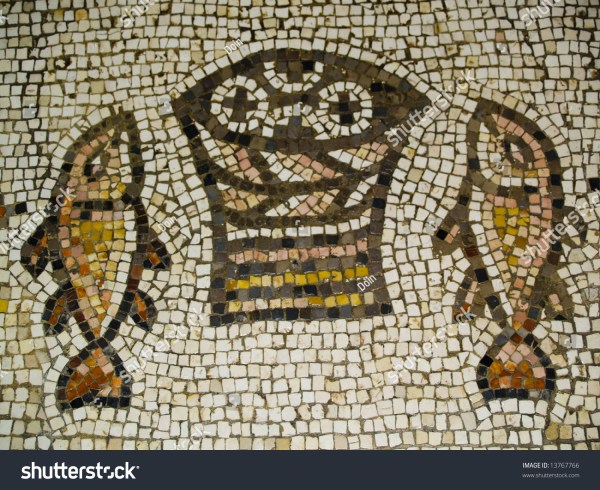
loaves and fishes Tabgha mosaic


Interstices

Pentecost 9, Year B  22 July 2018

A Sermon from the Rev.Linda Mackie Griggs

(Mark 6:30-34, 53-56)

“Come away to a deserted place all by yourselves and rest a while.” 

As I was thinking about this week’s readings in the context of last week’s sermon and of this past week’s events I realized I had made an incorrect assumption. I spoke about the importance of continually seeking God—of asking the question, “Where is God in this?” as a spiritual discipline. I talked about the potentially world-transforming power of the practice of theological thinking, which would prioritize God over self-preservation and self-interest in our decisions.

That hasn’t changed. But in the process of making the argument I said that it is easy to find God in the beautiful, the good and the true.

Based on some conversations I’ve had lately I’m not sure if I’m right about that anymore. To say that it’s easy to find God in the beautiful the true and the good these days seems glib and naïve. It sounds like a platitude. And I hate platitudes. Platitudes are band-aids. Platitudes don’t heal the exhaustion and the worry and the feeling of helplessness in the face of an endless onslaught of bad and confusing news.

There’s a John Prine song whose refrain begins, “Blow up your TV, throw away the paper…” I can relate to this.

Is it any wonder that today’s Gospel had me rethinking part of what I said last week? This passage is almost claustrophobic. The crowds are everywhere; Jesus moves, and the crowd moves with him; not just following him but anticipating where he’ll be next. It never seems to stop. The disciples are exhausted and overwhelmed. And Jesus says,

“Come away to a deserted place and rest awhile…”

Seriously, Jesus? Have you looked around? We can’t even eat in peace!

Jesus knows. He knows, but he gazes at the milling crowd, and:

“…he had compassion for them, like sheep without a shepherd. And he began to teach them many things.”

Jesus doesn’t follow his own advice to withdraw and rest. Instead, he takes a deep breath and plunges back in.

Why? Why does the Evangelist highlight this tension between a need for rest and the demands and needs of a broken world? Because that is our story. Some days more than others. There’s something we need to notice here, and it has to do with who God is.

Jesus acts out of Compassion. The Gospels refer to Jesus feeling compassion at least eight times. This is crucial: Compassion is not just a feel-good term indicating pity and sympathy. Pity and sympathy can be felt at a distance. Compassion is something done up close—it means to feel with—in the gut. You can’t mail in compassion—you have to put skin in the game. Jesus feels with his people. It is this feeling with that manifests to us God’s very identity. The Incarnate one—the Word made flesh– shows us that God is Compassion.

“Come away to a deserted place and rest awhile.”

How does Jesus’ compassion for the suffering mesh with the call to rest? How do we resolve the tension between rest and the needs and concerns and worries that crowd behind us and run ahead to meet us, and demand that we fix, resist, heal, or listen right now?

A God of Compassion knows this—knows that we are exhausted and anxious. A God of Compassion asks us to remember something: God is God, and we are not. The world is desperately in need of healing in so many ways, but God knows that we are no good to anyone without rest and renewal. Without Sabbath.

“…rest awhile.”

God, who created and liberated, rests. If God rests, how much more should we do the same? But I’m not talking as much about the importance of a Sabbath day, though that is the ideal minimum; I’m talking more about finding Sabbath spaces in a world that seems to be going bonkers.

Walter Brueggemann, in his book, Sabbath as Resistance, writes,

“That divine rest on the seventh day of creation has made clear (a) that YHWH is not a workaholic, (b) that YHWH is not anxious about the full functioning of creation, and (c) that the well-being of creation does not depend on endless work.”

God is God, and we are not. Our call to Sabbath is a call to remember who is in charge, and to remember that our efforts are only as good as our balance—our ability to pause and to be present to God and what God has given us. That’s what Sabbath is: Time to stop. To say that, yes, there is work to be done. It will be there when I return to it, but for now, what I have is enough. I am thankful right now. This is what a Sabbath moment looks like.

Sabbath is not a platitude, it is the Fourth Commandment. The key is to understand that work and rest are not separate entities. They go together. God’s first acts of Creation were not separate from rest; they included it.

What if our work included Sabbath in such a way that the two were deeply interconnected, like when water is poured into a container of sand and flows into all the little gaps between the grains? A Sabbath mentality invites us to let Sabbath seep into the interstices—those tiny gaps– of our work and ministry, cooling the anxiety and softening the edges of cynicism and exhaustion. Interstitial Sabbath takes to heart Jesus’ admonition that the Sabbath was made for God’s children, not God’s children for the Sabbath. An interstitial Sabbath state of mind opens our eyes to see God’s hand in the world about us. It transforms platitude into healing balm and renews us for the work ahead.

This isn’t anything new. Honestly it isn’t a whole lot more than setting the concept of mindfulness in a theological context. The terminology isn’t as important as the practice of paying attention, whether it is to the feel and smell of working in the dirt of the garden, the taste of a good meal, the sight of a work of art that gives you chills, or the sound of a sublime piece of music; all of these are moments that invite us into a sacred pause: This is enough. I am thankful.

Or as a wise person once said to me after a wonderful outdoor concert: “It’s things like this that remind you that the world doesn’t suck.”

And that’s the point. Our work and ministry are important. The challenges of the world are urgent. But attending to them is useless if we don’t have a deep understanding of why we do what we do—why we serve in the world. The beautiful, the good, and the true—these are all descriptors of the compassionate God who created us and calls us into work and renewal. The world needs us, yes; but the world needs us whole. 

I’d like to conclude with a prayer by Ted Loder, from his book, Guerrillas of Grace: Prayers for the Battle:

O God of the miracles,

            of galaxies

                        and crocuses

                                    and children,

I praise you now

            from the soul of the child within me,

                        shy in my awe,

                                    delighted by my foolishness,

                                                stubborn in my wanting,

                                                            persistent in my questioning,

                                                                        and bold in my asking you

to help me unbury my talents

            for wonder

                        and humor

                                    and gratitude,

so I may invest them eagerly

            in the recurring mysteries

                        of spring and beginnings,

                                    of willows that weep,

                                                and rivers that flow

                                                            and people who grow

in such endlessly amazing

            and often painful ways;

that I will be forever linked and loyal

            to justice and joy,

                        simplicity and humanity,

                                    Christ and his kingdom.       

The Unasked Question

Pentecost 8 Year B Proper 10 15 July 2018

                                        A sermon from the Rev. Linda Mackie Griggs 

Mark 6: 14-29 

Immediately she rushed back to the king and requested, “I want you to give me at once the head of John the Baptist on a platter.” The king was deeply grieved; yet out of regard for his oaths and for the guests, he did not want to refuse her. “

Power, sex, religion: An unholy trinity. If we didn’t know better we’d swear this was the plot of an HBO series and not Holy Scripture. Except we do know better—the Bible is filled with conflict, drama, and violence, and why not? It’s about us. But of course it’s not just about us, it’s about God’s relationship with us. And if that is the case, then our response to even the most lurid and violent passages in the Bible must always be a theological one: Where is God in this? Where indeed?

Herod Antipas was not the favorite son of Herod the Great. He wasn’t even the second favorite. He was passed over three times to be named the heir to the Herodian Kingdom. He was finally declared heir, only to have his father change his will at the last minute so that Junior became merely a tetrarch—ruler of a fourth of the kingdom, while his brothers and sister ruled portions of their own.

Herod’s ambition far exceeded his inheritance—he fought his father’s will all the way to the Emperor in Rome, more than once making the trip to lobby for full kingship and for greater territory. But to no avail. So…he did what any self-respecting petty despot would do; he married his sister-in-law Herodias, whose first husband Philip held a much larger portion to the east. Convenient.

Herod also fancied himself in the mold of his father; a builder of great things. Seeking to boost his reputation with the Jewish community, possibly because he wanted to be seen as their king in the tradition of David, he rebuilt the city of Sepphoris for them after the Romans destroyed it.  He also built a great resort capital on the Sea of Galilee named for his Roman patron, Tiberius, complete with a stadium, a palace, a sanctuary for prayer, and access to nearby warm springs at Emmaus. Lovely, except he built it on top of a graveyard, making it ritually impure for pious Jews, so for the first several years he had to colonize his capital with Gentiles. Oops.

In his desire to ingratiate himself with the Jews and the Romans at the same time, even as he continued to badger the emperor for more territory, we see a pretty clumsy and chaotic tetrarchy, led by a man whose chief focus in life was one thing: himself.

Enter John the Baptizer. Repent! Turn your life around! Turn to God! Rethink your priorities! Oh, and your marriage is unlawful.

And we know how the story unfolds from there. We see Herodias’ anger and John’s imprisonment. Then Herod’s birthday party; the dance, the stupid (drunken?) promise, the murder of a prophet. We watch, transfixed, as Salome bears the bloody platter to her stepfather. It is done. No going back.

There had been a glimmer of hope in the heavily-shadowed Herod:

“When he heard him, he was greatly perplexed; and yet he liked to listen to him.”

We had hoped that John’s message might take root, but apparently, Herod’s interest was merely self-serving—just another example of hedging his bets and adding a prophet to his Rolodex of potentially profitable contacts. Either that or a case of ‘keep your friends close, and your enemies closer.’ Regardless, when it came down to it John’s message wasn’t as compelling as the approving smiles of Herod’s cronies as they watched him wave his hand in an ‘off with his head’ gesture.

Where, oh where in this debacle of hubris, ambition, and manipulation is God to be found? Where is God in this story in which self-interest and expediency win out over integrity and transformation? In the battle between power and truth, power has won; how is God manifest here?

God is in the dungeon with John. God is beside his friends as they bear his body to the tomb. God’s tender grace is with them in their grief. God is there because we can trust that God hears whenever the blood of the innocent cries out for justice in the face of those who would choose expediency and self-interest over compassion and truth.

You see, the powerful only seem to have won the day in this story. In its beginning and ending we hear a premonition–an echo of hope. Firstly, as Herod hears of Jesus’ deeds of power and wonders if John has come back from the dead. It’s a whisper of what will come; not for John, but for Jesus. And again, at the end of the story, the whisper takes on the hint of a melody as the final line foreshadows Good Friday and the inevitable trumpet shout of Resurrection:

“…they came and took his body, and laid it in a tomb.”

God is there, woven throughout. We can see it all if we look closely; we can hear it if we listen.

God is always in the Question—not just as we engage with Scripture, but as we walk in the world. God is always present when we ask, “Where is God in this?” Because when we ask, we are doing something existentially crucial to our identity as spiritual beings and as Christians: We are thinking theologically. 

According to scholar Karen Yust, it is easy for us to look at Herod’s decisions and see where he went wrong, and find God in the process, as we have just done. We already know the context—the life, death, and resurrection of Christ. But it prompts a challenge for those of us who are outside of the story. How do we view our own decisions? Herod’s were bad-faith decisions—we can see that. We sometimes make them too—make choices out of self-interest rather than out of a sense of greater good.

Might it be that our need to be expedient and self-protective in our choices is a way of avoiding thinking deeply and theologically? What would the world look like if we asked, “Where is God in what I am doing or observing? What if we thought theologically as naturally as breathing?

It’s easy to do when in the presence of the beautiful, the good and the true. It is more difficult in the face of suffering and evil. But that is when it is most necessary and potentially transformational— when we find the beautiful, the good and the true in the darkness.

Steven Charleston, retired Bishop of Alaska, wrote about the boys trapped in the cave in Thailand:

“This long ordeal has made me think deeply about the meaning of rescue. To be lost in darkness, to be isolated, to be found: it seems the classic model of being brought back to life. But the one element made even more clear to me is the willingness to take the risk of rescue. Coming out of the cave takes courage, skill and trust. It takes teamwork. The spiritual metaphor we have been watching unfold in Thailand is a lesson to be learned as we pray these young lives to safety.”

Lost and found. Light and dark. Death and life. Emergence. Courage. Prayer. Trust.

These aren’t arcane theological terms. Thinking theologically doesn’t require special training. Simply ask the Question. Where is God in this event? This illness? This tragedy? This person? Ask. The mere act of seeking God is an act of finding, and being found—possibly even being rescued.


Bound Together

Pentecost 7 Year B Proper  8 July 2018

                                 A sermon from the Rev.  Linda Mackie Griggs

Mark 6:1-13

I’ve been thinking lately about fifty years ago. The events of the spring and summer of 1968 were like a kick in the gut for many in this country: Cold war with the Soviet Union; An unpopular hot war in Vietnam; Unrest and revolt in many cities, including at the Democratic Presidential Convention in Chicago; And the assassination of Martin Luther King and Bobby Kennedy—two figures who had embodied hope to those who cried for justice for the poor and marginalized. Imagine: Two “I remember where I was when….” events in the course of just three months. It was a scary time—no one knew what was coming next.

It’s not dissimilar to when the Evangelist wrote the Gospel of Mark—late in the first century. It was around the time of the Jewish Revolt of 66-69. Persecutions of Jewish Christians by the Romans. And the martyrdom of Apostles Paul and Peter—two figures who had embodied hope to those who cried for justice for the poor and marginalized. A kick in the gut. No one knew what was coming next.

Mark was writing to scared people. People who feared for the future. His message, meant to be read aloud in Christian communities, was urgent and powerful. Perhaps comforting would be to take it too far since the call to follow Jesus wasn’t a call to be comfortable, but it was hopeful. It told the Good News of Jesus the Messiah—come to change a broken world and bring hope to the downtrodden. It was a call to everyone to repent—to wake up—to renew their lives.

Good News for scared people in scary times. Today the Evangelist tells us a disturbing story: Jesus goes to his hometown and receives a dubious welcome. He begins to teach…he hasn’t gotten two words out before the neighbors interrupt: “Wait a minute! This can’t be little Jesus, from next door? I remember when he was just so high, helping Mary’s husband in the workshop—by the way, did you hear Joseph’s not his real dad?…”

And they took offense at him.

THEIR Messiah wouldn’t be just the kid from Podunk, Galilee. THEIR Messiah would be someone of more…what? Sophistication? Erudition? Not born out of wedlock? (Word gets around…)   Whatever it was, Jesus didn’t meet their expectations of what THEIR Messiah should be like.

Expectations. Anne Lamott says that expectations are resentments under construction. And he was amazed at their unbelief.

The thing is, Jesus can’t be parochialized. He can’t be made into something proprietary, someone who’s been narrowed down, domesticated into what we expect—whatever that is. The people of the time expected a king with a capital K—to overthrow the Romans and restore Israel to her former glory. Many of the people of our time expect Jesus to be a personal guarantor of a ticket into the afterlife—Jesus as a personal savior of my soul. Both of these are narrow expectations.

Jesus is bigger than that. This is not to dismiss the intimacy of Jesus’ healing presence, as we saw in last week ’s powerful stories about the healing of Jairus’ daughter and the hemorrhaging Woman. Jesus’ care and tenderness are seen throughout the Gospels and are a sustaining force in the lives of countless people. But as today’s story shows, that is just part of the picture, and if we seek to tether Jesus to our expectations of what we want him to be, there will be disappointment all around.

But Jesus shows us how to deal with disappointment. He moves on, and he sends his disciples out. Keep moving, he says.  Travel light. Remember you’re not alone.

He sends them out on short journeys—this is why they didn’t take a second tunic—the second one was used to double as a blanket if they spent the night on the road. Not taking an extra tunic, money or bread meant that they would be in fairly well-populated areas where they could rely on the hospitality of others. And if they were not welcome, move on and leave the rest to God.

This commissioning, according to scholar Ben Witherington III, is notable for a couple of things. First, note the fact that this is one of the few instances in this Gospel in which Jesus isn’t berating the disciples for not getting what he’s talking about. Perhaps this is because he has them doing something. There’s something comforting in thinking that maybe sometimes it’s okay to be better at doing the ministry than understanding it. Second, it is telling the hearers and readers of Mark’s Gospel that their survival as a community depends on evangelism and hospitality: Preach the Good News, using words if necessary, and get to know the people. The disciples were empowered by Jesus to exorcise and heal, and to call/challenge/invite everyone to turn their lives around—to live lives of compassion, justice, and care for the marginalized; to become part of the inbreaking of the Kingdom.

Jesus wasn’t about meeting anyone’s personal expectations. He was about transcending and confounding them. He was about realizing the Dream of God, and that meant letting go of what wasn’t working and getting back on the road. That’s what praying with your feet looks like.

The Evangelist wrote his Gospel for scared people, fighting despair and trying to make sense of their world. He wanted to offer a message of hope in trying times. He was calling them to follow Jesus on a challenging and deeply enriching journey of hard work, fellowship, and healing.

Jesus is still on the move. 68 AD, 1968, 2018–Jesus is still telling us to pray with our feet—but traveling light–carrying only enough righteous anger to give us courage to speak truth in love and to listen well.

I heard a song the other night at a 4th of July concerti, and the encore was powerful—as it began everyone recognized James Taylor’s “Shed a Little Light”, which was a tribute to Dr. King; you could feel in the hush that fell that the audience was especially thirsty for a song of hope in a scary time:

…there are ties between us, all men and women living on the Earth. Ties of hope and love, sister and brotherhood, that we are bound together in our desire to see the world become a place in which our children can grow free and strong.

We are bound together by the task that stands before us and the road that lies ahead. We are bound and we are bound.

There is a feeling like the clenching of a fist

There is a hunger in the center of the chest

There is a passage through the darkness and the mist

And though the body sleeps the heart will never rest.


It’s a Man’s World


For over a month we have been riveted by the unfolding stories from the 1st and 2nd books of Samuel. Samuel comprises one book, later divided into two – and forms part of the Deuteronomic history, a history focused on the ups and downs in the relationship between Isreal and Yahweh. The storyline in Samuel covers the period of transition Ancient Israel from a confederation of tribes towards becoming a unified nation ruled by a king.

As we heard last week, this was a chaotic and tension-filled transition. Samuel, the last of the Judges is now the king-maker and without telling Saul he secretly anoints David as king in his place. Saul becomes increasingly suspicious of David and is jealous of David’s growing popularity.

Last week’s reading also introduced the relationship between David and Jonathan, who at their first meeting experience love at first sight!

When David had finished speaking to Saul, the soul of Jonathan was bound to the soul of David, and Jonathan loved him as his own soul.

In today’s installment, we skip forward to listen as David learns of Saul and Jonathan’s death; father and son together having taken the last stand in battle against the Philistines. David’s response to the news of the deaths of Saul and Jonathan is to compose one of the great love eulogies of all time. He cries out in anguish –

see how the mighty have fallen ……I am distressed for you, my brother Jonathan; greatly beloved were you to me; your love to me was wonderful, passing the love of women, How the mighty have fallen, and the weapons of war perished!

***

Issues of gender and sexual identity continue to fuel our current culture wars making for an interesting answer to the question: were David and Jonathan in a homosexual relationship, or were they just platonic, Oxbridge-style soul-friends; the kind of tortured attraction between men characterized in the novels of E. M Forster and Evelyn Waugh; men desiring one another while keeping it in their pants so to speak, or in David and Jonathan’s case, under their kilts?

Biblical commentators under the influence of a traditional homophobic reading of this story have over the centuries gone to considerable lengths to deny any homosexual inference in the love that David openly declares for Jonathan. The difficulty that has confronted such commentators is how to interpret this love poem in fraternal terms that avoid its clear homophilic (love between men) or even homoerotic (sex between men) content.

Contemporary liberal commentators no longer directly deny the homophylic or homoerotic content of this text. However, many take refuge in their concern to avoid the danger of anachronism. Anachronism is where we project back into history our current attitudes, values, and ideas. There is, however, a growing body of commentators committed to a queer reading of this text (Bruce Gerig) who openly embrace the homosexual nature of the love between David and Jonathan.

                                                     David and Jonathan are clearly an emotionally bonded couple. From their first meeting, Jonathan places his love for David above his loyalty to his own father- a very big statement in a patriarchal society. On a number of occasions, Jonathan protects David from the dangers of Saul’s murderous paranoia.

On the face of it, by declaring that Jonathan’s love is love beyond that of a woman, David, the inveterate womanizer, makes it clear that there is a homoerotic component to the love between them.

I share the view that the love between David and Jonathan appears to be certainly homophilic if not homoerotic in nature. So some ask, were these great historical figures gay?

***

Gayness is the recognition of homosexuality as a stable emotional, developmental state existing along a continuum of sexual identification and gender attraction.

It is, therefore, a completely modern concept. The Bible, whether here or elsewhere has no concept other than that all men are ‘heterosexual’.

I place the term ‘heterosexual’ in inverted commas, Like homosexual, it’s a term that conceives a variety of possibilities along a developmental continuum. Biblical writers had no conception of a continuum of different possibilities.

In the Biblical worldview, normative sexual identity was capable of distinguishing between the duties of procreation and the pursuit of pleasure; the latter holding the potential for what today we recognize as homosexual as well as heterosexual object choices.

The term homosexual comes from the Greek homos meaning the same, rather than the Latin homo meaning man and was first coined in mid-19th-century Germany. Thus, to read a modern concept of homosexuality – gayness or heterosexuality back into the relationship between David and Jonathan is anachronistic.  The terms homosexual and heterosexual, and the distinctions they imply are products of the modern age.

David and Jonathan were not gay in the sense that I am, for instance, gay. The love between David and Jonathan is the sexually charged love common in intensely patriarchal-warrior cultures, evidenced in such cultures as diverse as those of Classical Greece and Samurai Japan. In these tribal-warrior cultures, the social and emotional inferiority of women was so great that while suitable as the bearers of children, women could not be considered as emotional partners with men.

These were in the general sense homophilic societies where the primary emotional identification for men could only be other men – a man’s men’s world. In such a world there is a discrete tolerance for men having sex with men, usually involving age difference relationships between older and younger men. Our social concept of homosexuality as a stable emotional developmental state, existing along a continuum of identity and gender fluidity has little relevance when reflecting on men’s sexual arrangements in such societies.

***

Therefore, is there value in this story for us as 21st-century readers? I think it warns us to be careful in our assumptions of the Biblical past. We need to question the assumption that in the patriarchal past, same-sex relationships were always forbidden. The predominant Jewish anxiety about homosexuality, evidenced in the early texts of the Torah, is rooted in a tribal society’s concern about diverting sexual energy away from procreation; babies meant survival. Yet, in societies where the primary emotional identification is between men and not between men and women, erotic expression was clearly tolerated. Thus, the Bible itself is a very unreliable witness to call in the attempt to use it to prohibit modern same-sex relationships.

The Anglican tradition of interpreting Scripture understands that interpretation shifts as each generation encounters the text from within the challenges of their own time and place. Anglican tradition accepts that meaning emerges in the dynamic of an encounter between interpreter, community, and text. As we encounter this ancient story, what are the questions we might bring to bear on this text?

Although there will always be dissenters, the prevailing Western view in the 21st-century is of sexual development in as a psychologically and environmentally driven, developmental process. Along the continuum of possibilities of sexual and gender identity, no one position is preordained for every person. Even biological gender is no longer considered the sole determinant of gender identity because as we are increasingly coming to accept, identity is a psycho-spiritual issue and not simply a matter of chromosomes.

So much for psychology and environment, but what about theology.

The story of David and Jonathan reminds us that the theology of human relationships rests not upon issues of gender but on the experience and expression of love.

Love as emotional commitment and ethical fidelity is the theology that underpins the experience of a love relationship between significant others.

   We may be biologically gendered for the purposes of reproduction, yet, this cannot be the final statement on either the purpose of sex or what it means to be made in the image of God.

God, despite the frequent use of the male pronoun, is non-gendered. Male and female are not terms we can ascribe to God. Yet, animus and anima are. These principles of masculine and feminine energy are central characteristics of the divine. When thought about in these terms the masculine element of creating comingles with the feminine elements of receiving and sharing – as God the lover beholds God the beloved, and God the love sharer.

For 21st-century Christians, it is no longer the gendered identity of the object of our desires that matters, but the integrity of the love that comes to bind two persons in a relationship that is of primary significance for both. The longing that characterizes such relational love- the giving, the receiving, and the sharing of love is a direct reflection of the divine nature and is the keenest indicator we have of our longing for God, and the longing God has for us.

blessed be the longing that brought you here
and quickens your soul with wonder.

may you have the courage to listen to the voice of desire
that disturbs you when you have settled for something safe.

may you have the wisdom to enter generously into your own unease
to discover the new direction your longing wants you to take.

may the forms of your belonging – in love, creativity, and friendship –
be equal to the grandeur and the call of your soul.

may the one you long for long for you.
may your dreams gradually reveal the destination of your desire.

may a secret providence guide your thought and nurture your feeling.

may your mind inhabit your life with the sureness
with which your body inhabits the world.

may your heart never be haunted by ghost-structures of old damage.

John O’Donohue

Blog at WordPress.com.

Up ↑